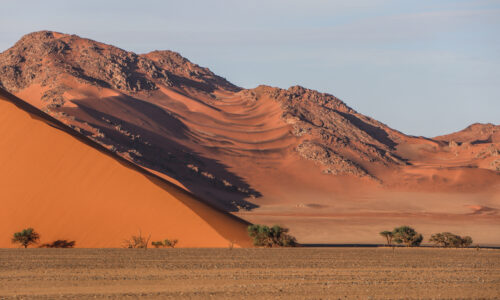
The Dune 7 hike & climb
 Ivana
Ivana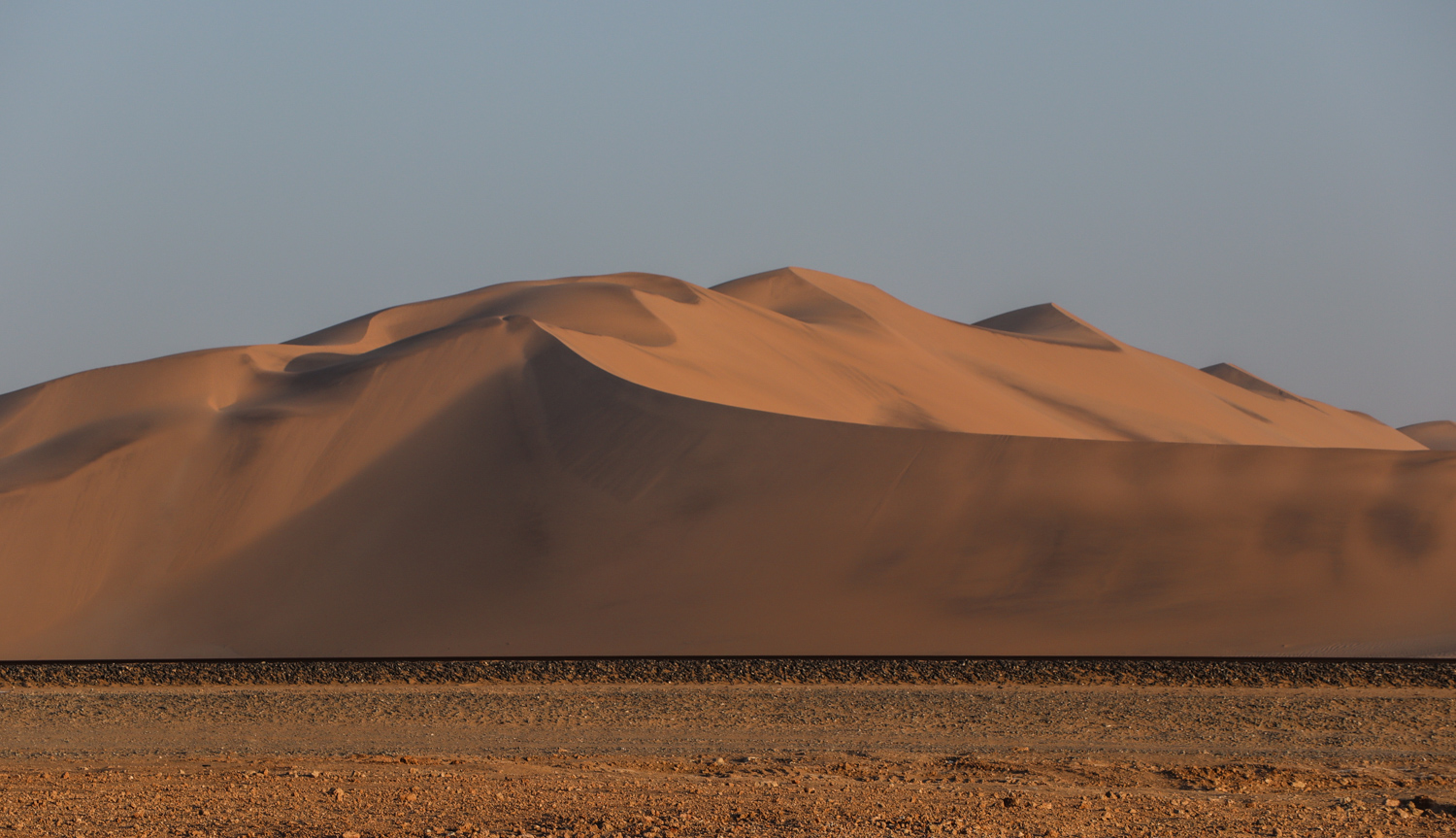
Walking challenges are something I do organically and I do not even perceive them as challenges anymore – I am so comfortable doing them that I just need to arrange and adjust the circumstances and go outside. The hike to Dune 7, done the next morning after I arrived to Walvis bay, was INSANELY beautiful, rich in experiences and mega rewarding. Let’s begin by explaining the place that I flew 11 000 km for.
Dune 7 – the highest african dune
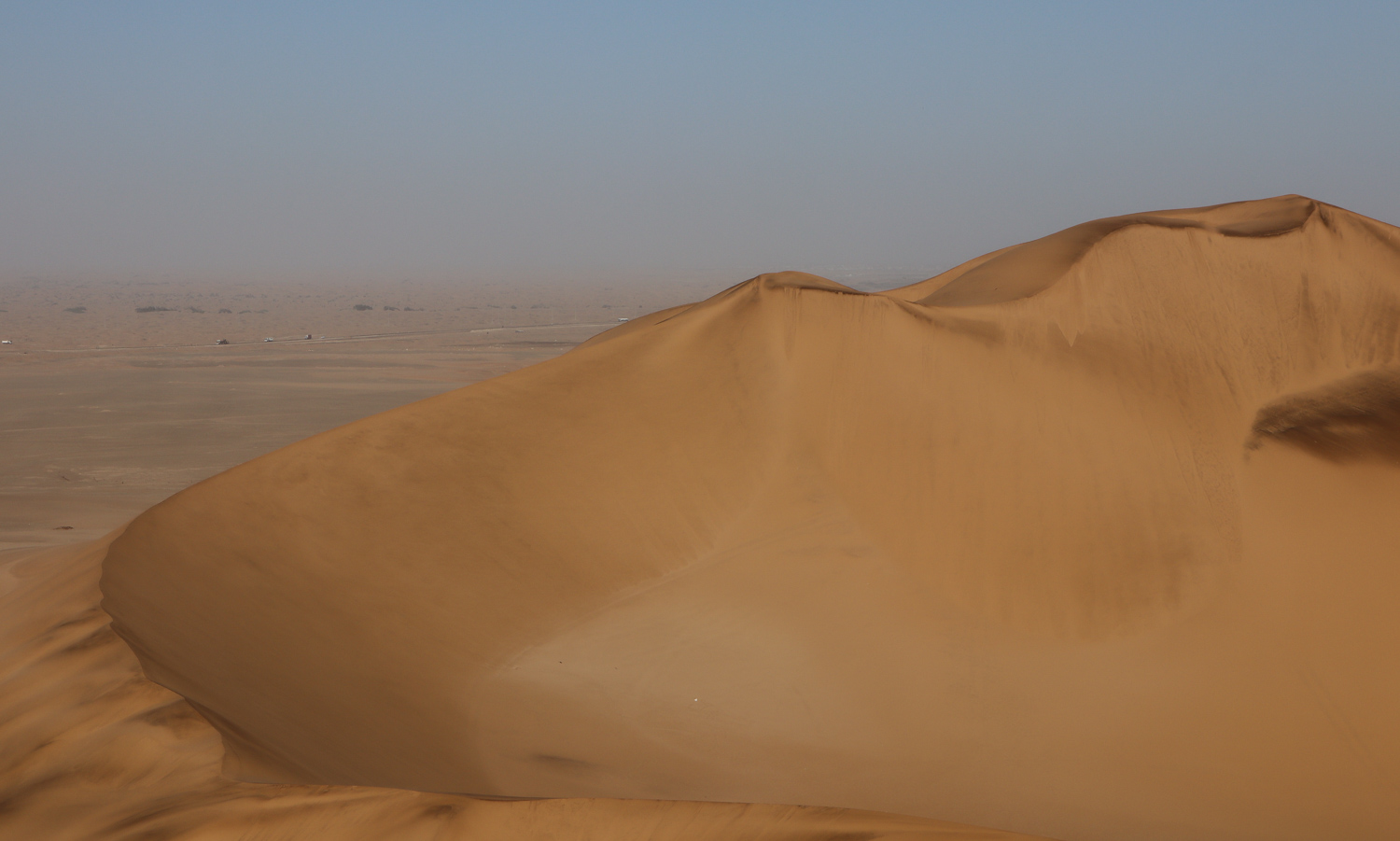
Dune 7 is the highest sand dune of the entire african continent. It rises to an estimated height of approximately 383 meters above ground level, although exact measurements vary due to constant wind-driven reshaping. It is part of the Namib Sand Sea, a UNESCO World Heritage site composed of shifting dunes formed over millions of years.
The name “Dune 7” originates from its position as the seventh dune encountered after crossing the Tsauchab River, according to early survey maps. The dune is classified as a star dune due to its radial symmetry and multiple slip faces.Its composition is primarily quartz sand with a high iron oxide content, which gives the sand a reddish-orange hue. The sand originated from weathered rock in the interior of southern Africa and was transported westward by the Orange River and wind activity. Due to this activity, Dune 7 is in a state of dynamic equilibrium – constantly shifting but maintaining its general structure over time. The color and reflectance of the sand vary with solar angle, giving the dune different appearances throughout the day. In the early morning and late afternoon, low-angle light produces high contrast in dune features, enhancing visibility of ripples and slip faces.
The surrounding region is classified as hyper-arid, with annual precipitation rarely exceeding 100 mm. Fog is a significant moisture source in this desert ecosystem, generated by the cold Benguela Current interacting with warmer inland air. Flora around Dune 7 is sparse but includes xerophytic species adapted to extract moisture from fog and deep underground reserves. Fauna includes Namib-adapted arthropods, reptiles, and small mammals, many of which are nocturnal or burrow to avoid extreme surface temperatures. Examples include the fog-basking beetle (Onymacris unguicularis) and the shovel-snouted lizard (Meroles anchietae).
Surface temperatures on the sand can exceed 60°C during midday, posing physiological challenges for exposed organisms. Human visitation typically occurs during early morning or late afternoon to avoid heat stress and intense solar radiation.
Vegetation does not grow on the dune itself due to constant sand movement and lack of water retention. The dune is part of a large erg system, with adjacent dunes interacting aerodynamically and affecting local wind patterns.
The walk towards the Dune 7
My hostel was at the edge of Walvis bay, near the roundabout from which the only thing you need to do is to walk straight to Dune 7. The distance between them is 12 km and it is a great start to prepare yourself for the climb.
I left the room at 4 AM packed with a massive amount of water, some food and my cameras + drone. I calculated the amount of water I need to have with me at all times in order not to be a dumb tourist who was found behind a massive dune lifeless and dehydrated like an accidentally dropped raisin behind the couch. These places, in such conditions, leave no space for mistakes of any sort.
The street looked like it was enveiled in a strange fog. I noticed not long after that those were tiny particles of sand, floating and giving the area a certain smokey and soft vibe.
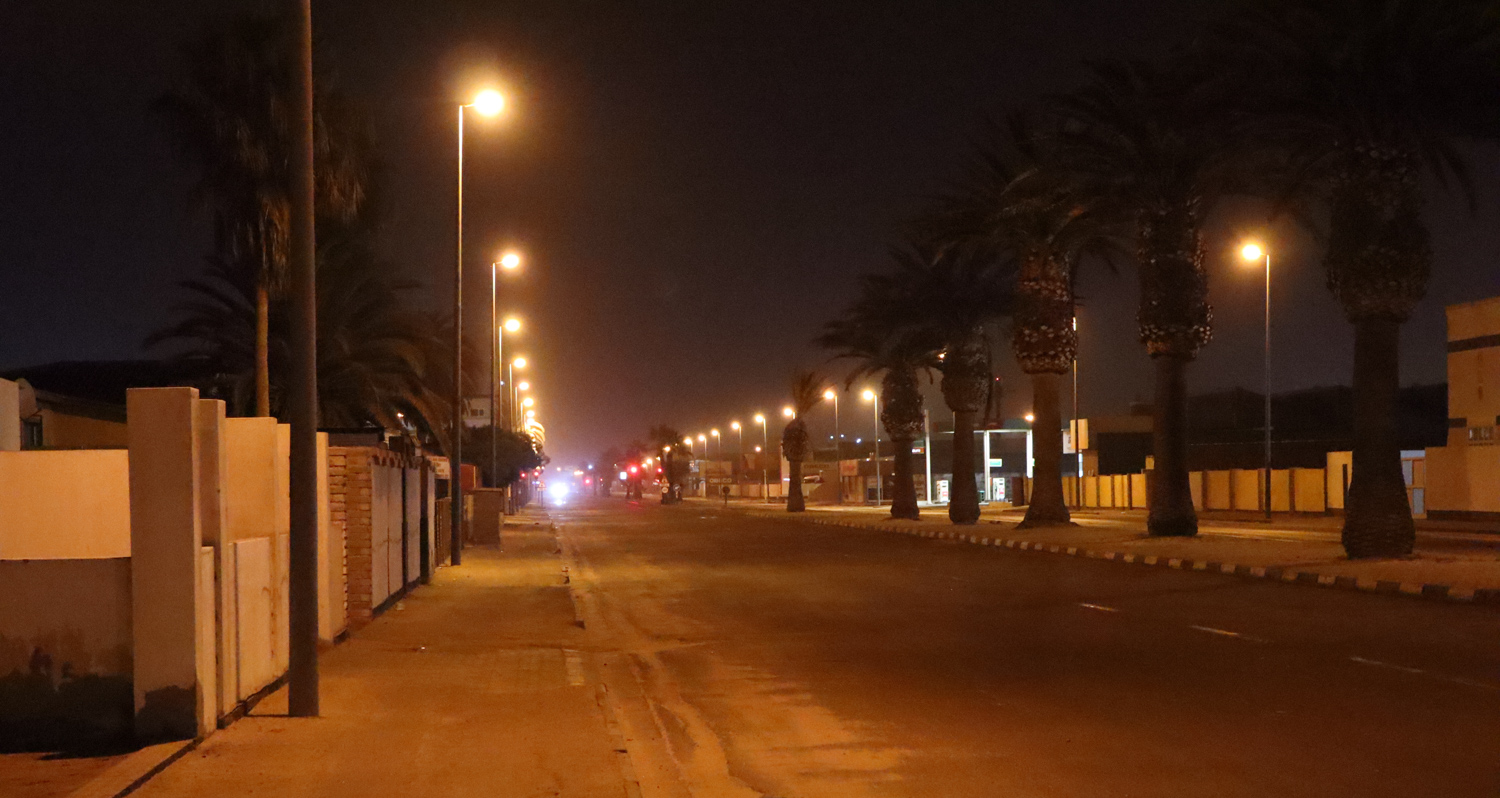
I calculated that around 6:30 I would be at the base of Dune 7. I was the only person walking the distance towards the dune and back. Seeing signs like this did not really give me confidence
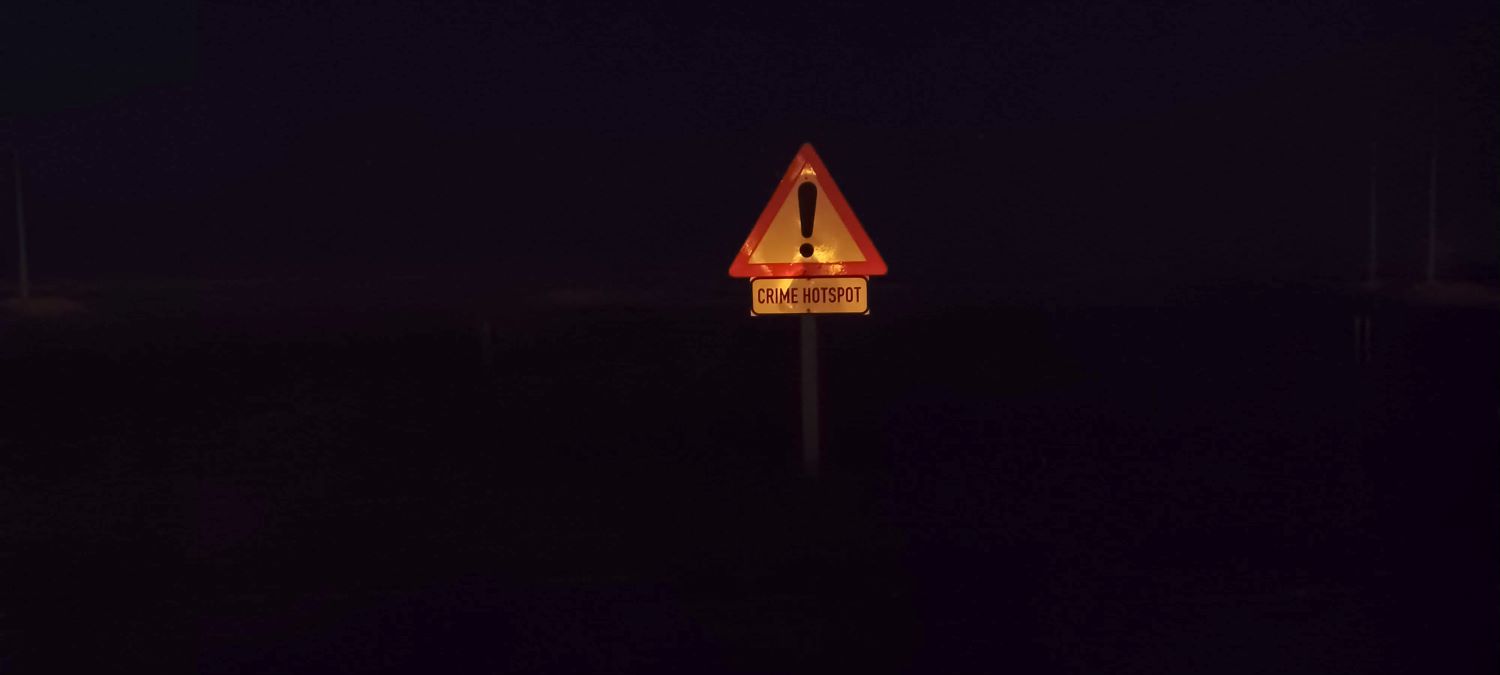
but it did not scare me entirely either. Being someone who rarely cares enough to stop, I just continued walking to the ancient sand monstrosity that the Dune 7 is.
It was so worth it.
I was super excited when I approached it. When I realized in front of what I was standing.
The words cannot describe how beautiful this place is in reality.
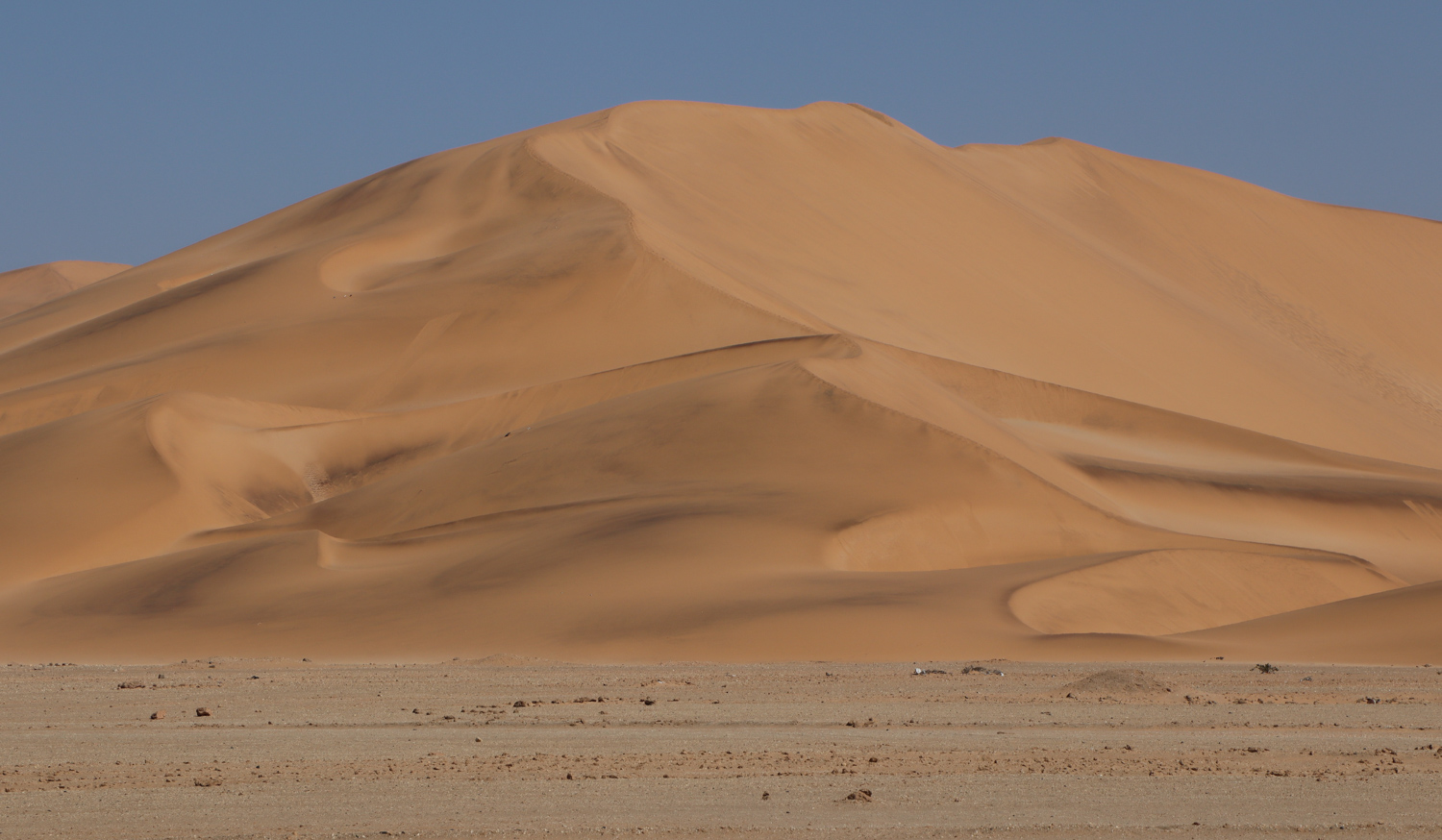
I did not want to walk to start on the other side, “the starting side”, with a gentlier angle. As soon as I was able to ascend, I ran towards to the dune and started to climb it. I did not want to waste any moment by traipsing around it. My train of thoughts was: “Dis Dune 7? Hey ho, let’s go!”.
It did not disappoint me in any possible way.
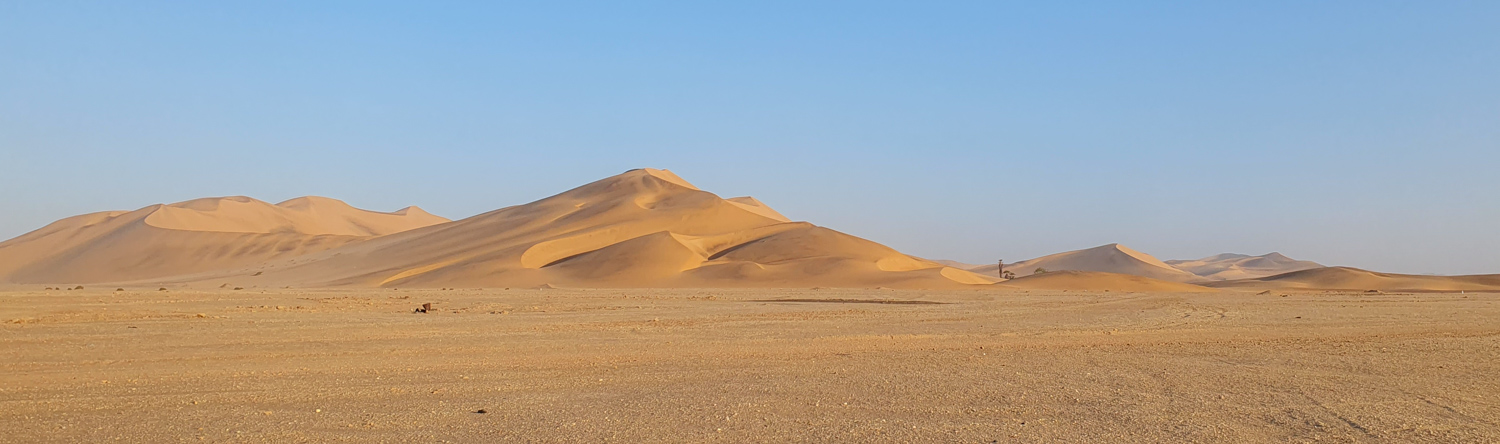
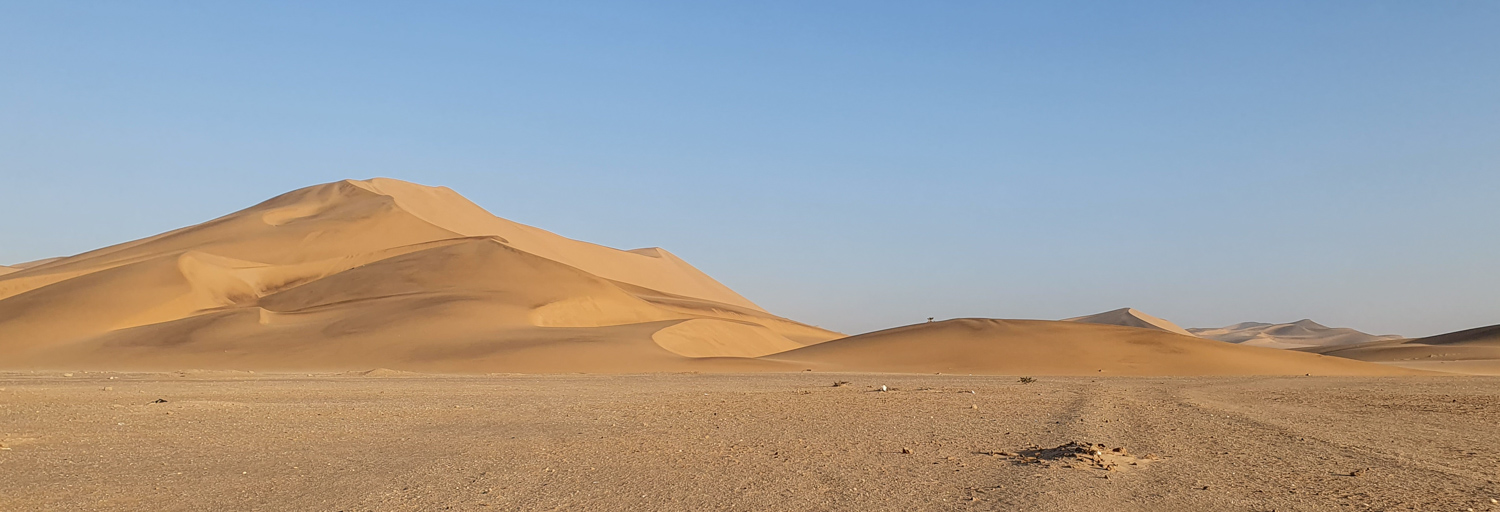
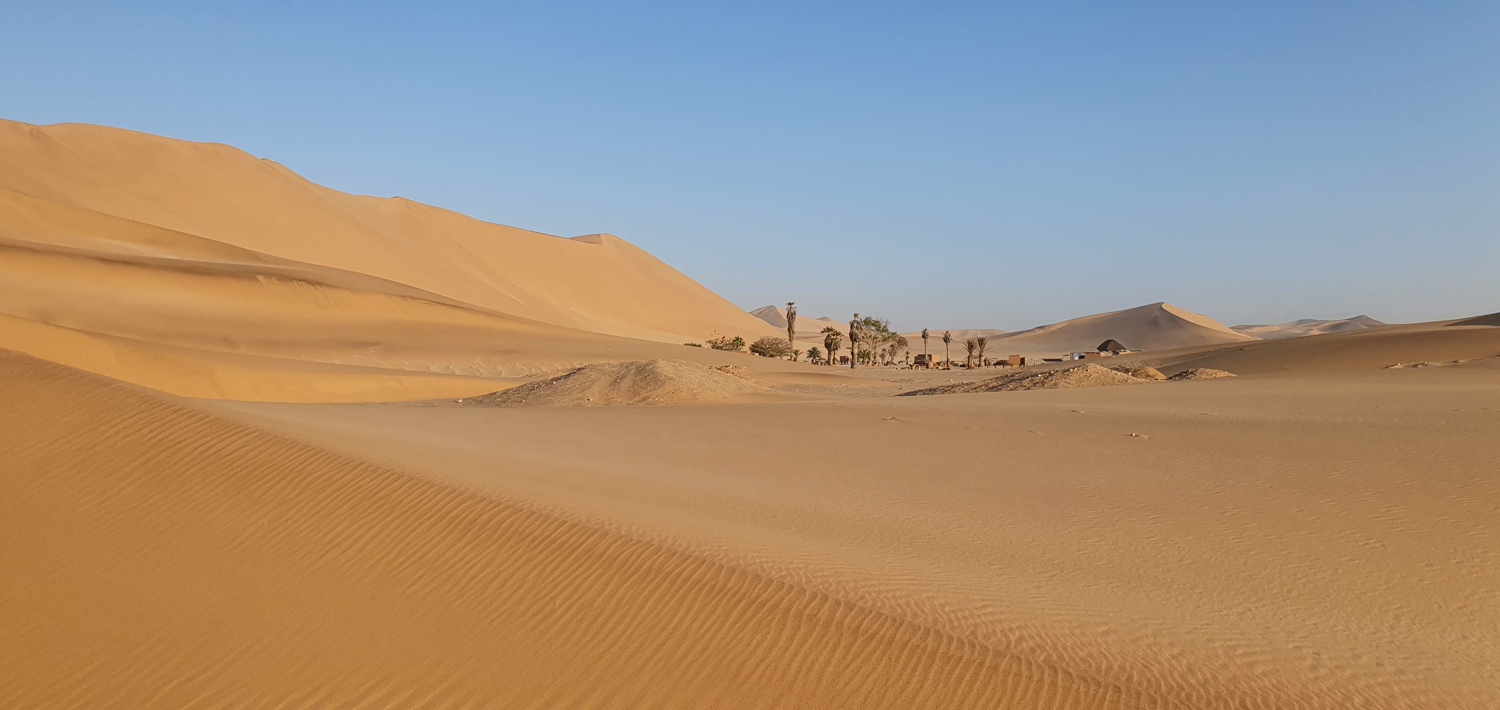
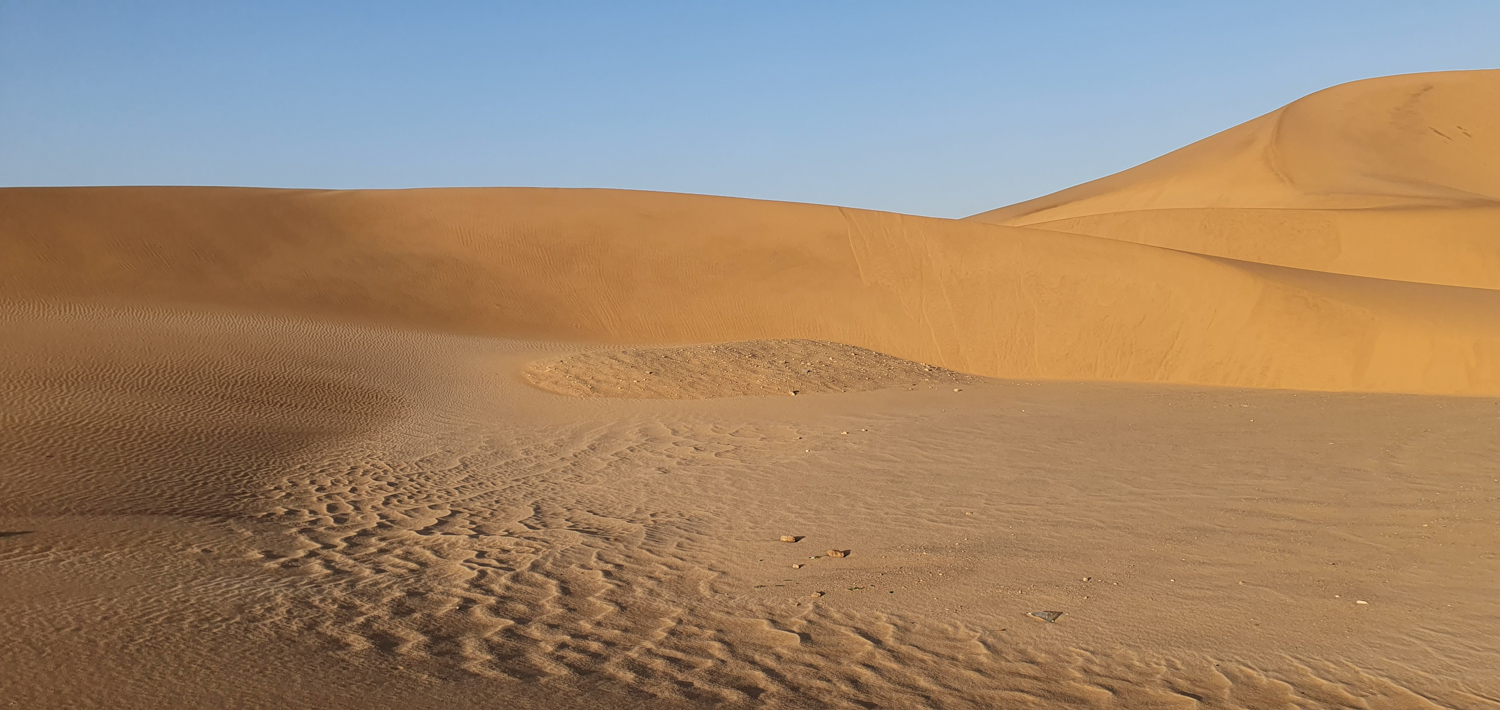
I really took time to enjoy it. The climb to the top was superb and it took me approx 20-25 min. It was warm but the wind was blowing from every direction at every second. The steeper parts demanded that I crawl on my knees along the ridges, with my fingers dug deep into the early morning cold sand like Wolverine. The top layer of sand crumbles each time my feet penetrate it so it’s a bit challenging on the steeper parts, but reaching the flatter ones while being blown by the ocean winds heading towards the continental regions of Namibia felt like a proper blessing.
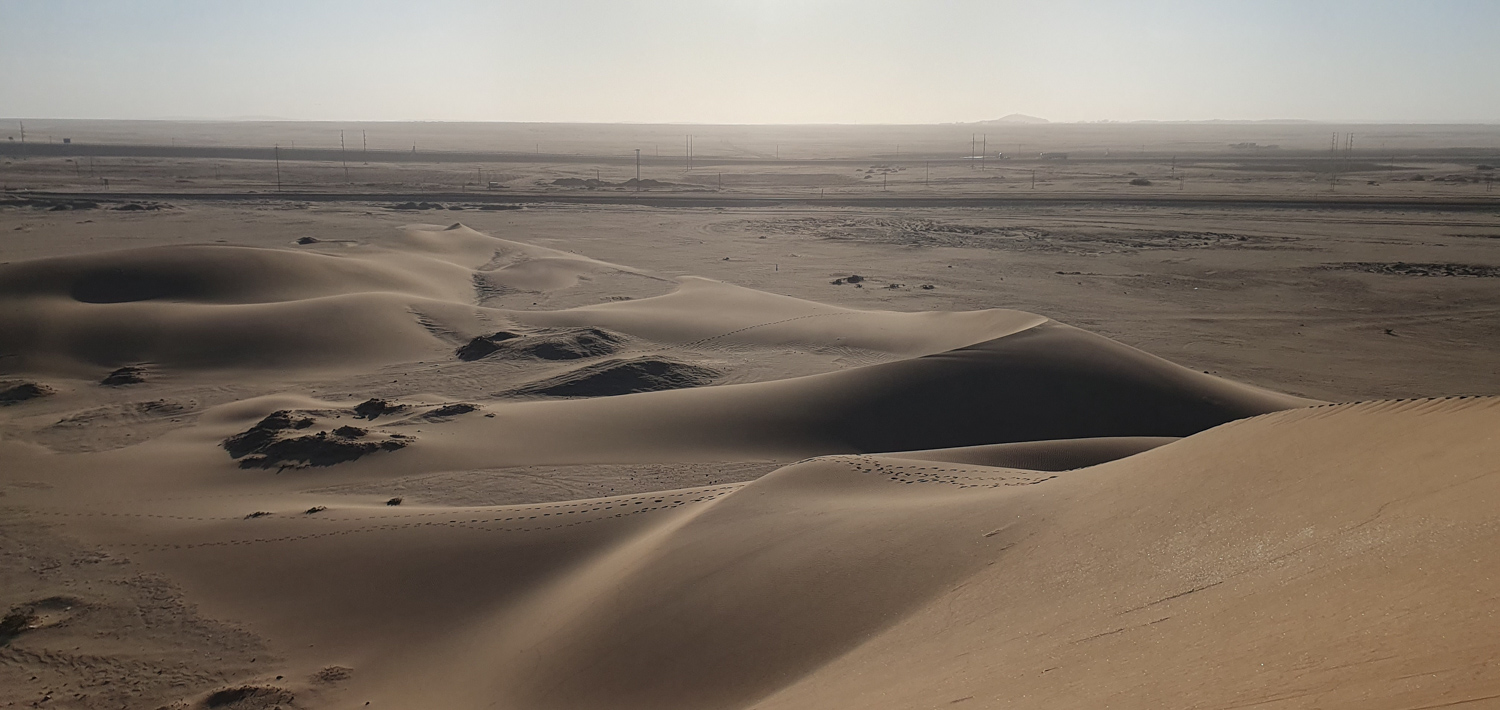
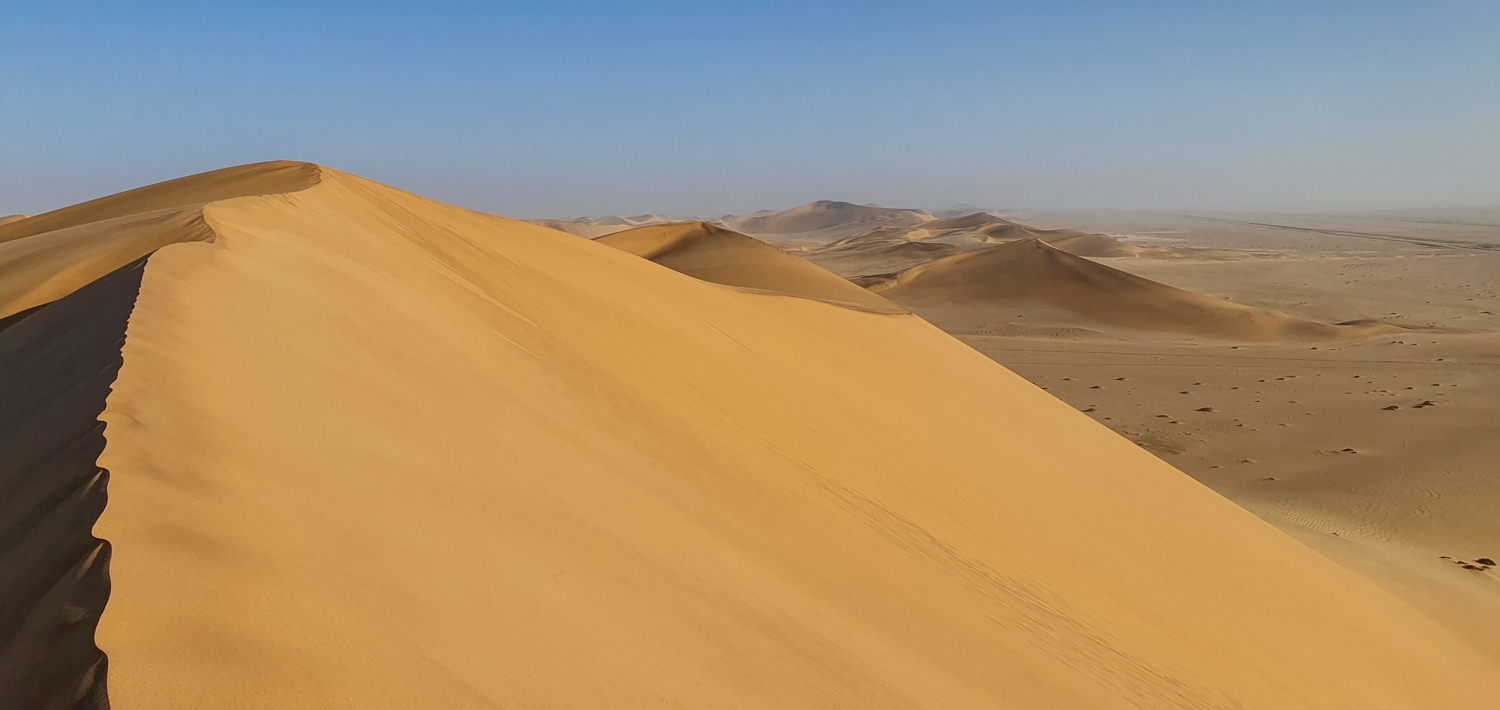
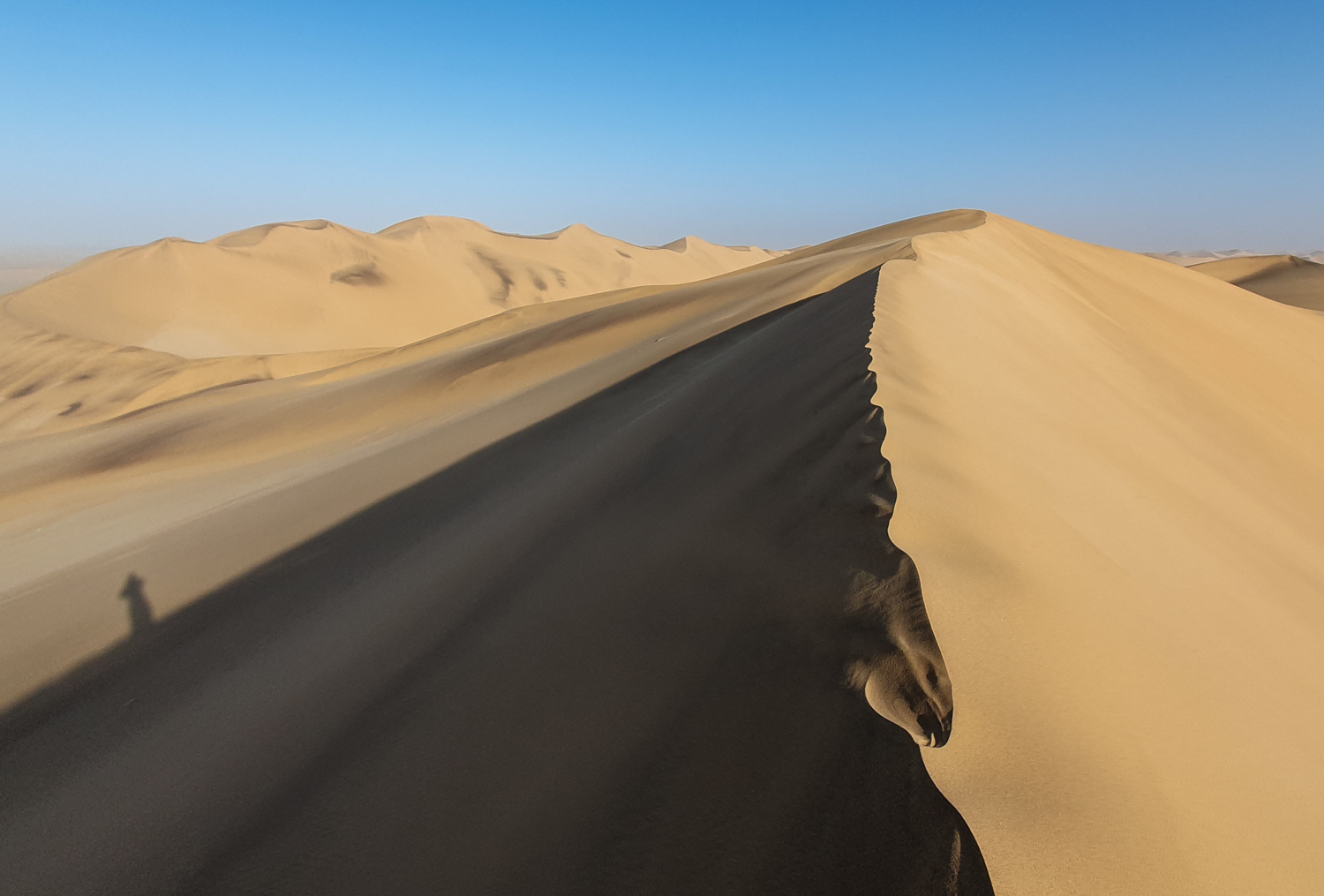
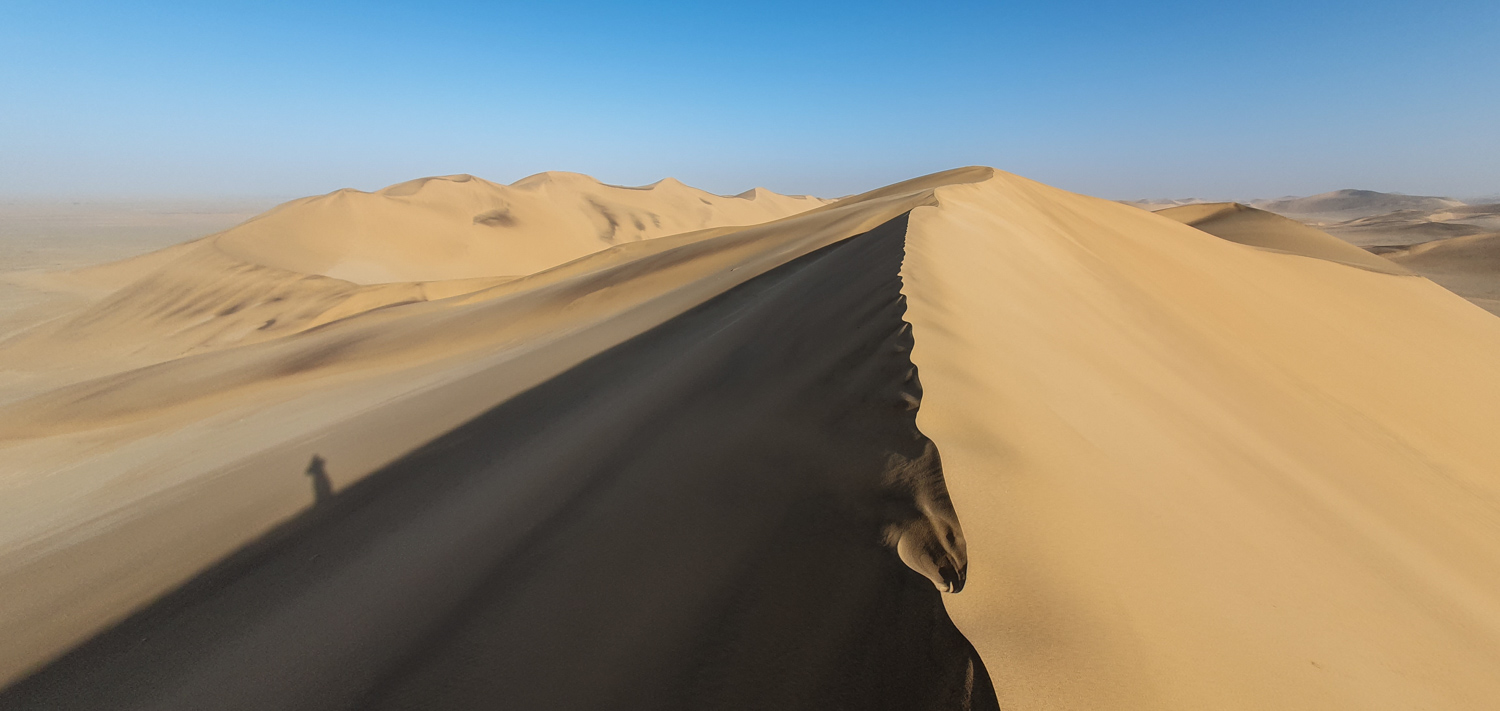
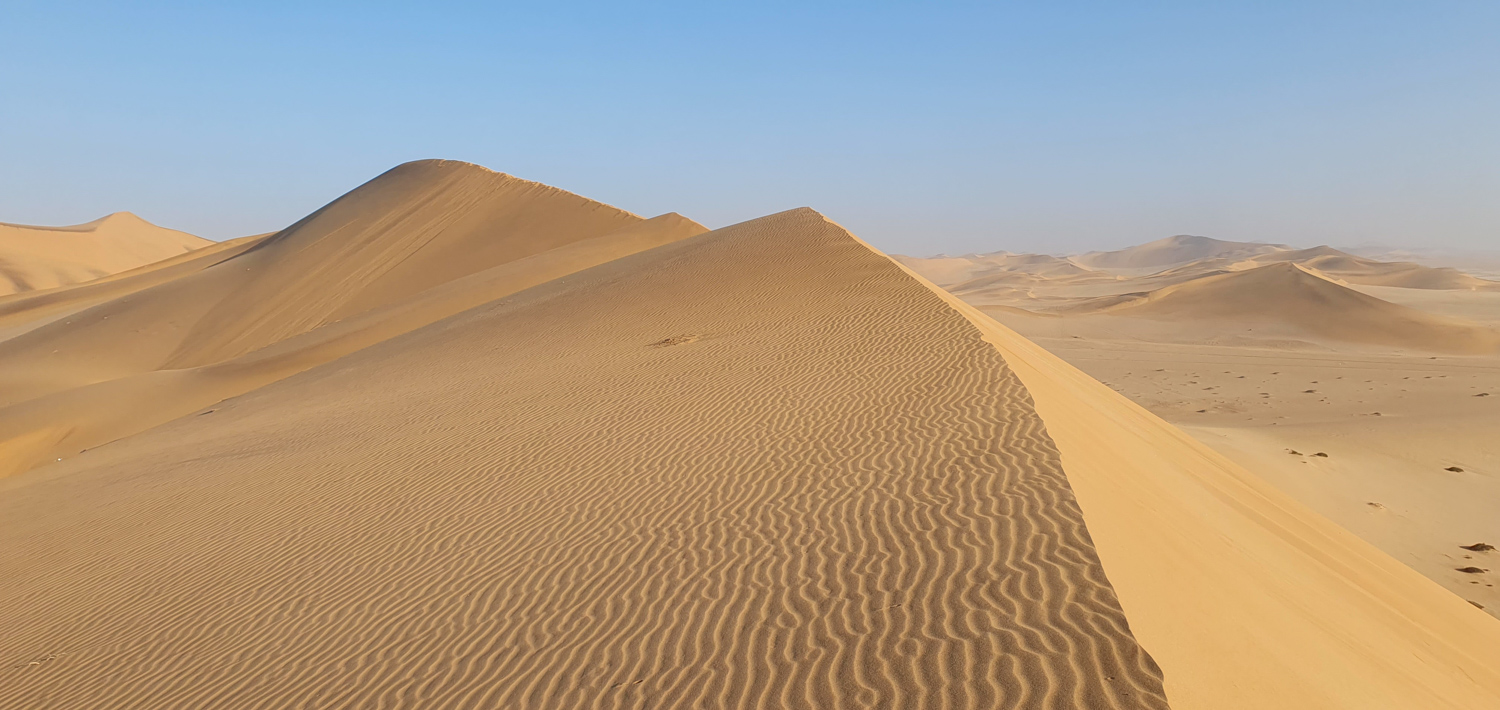
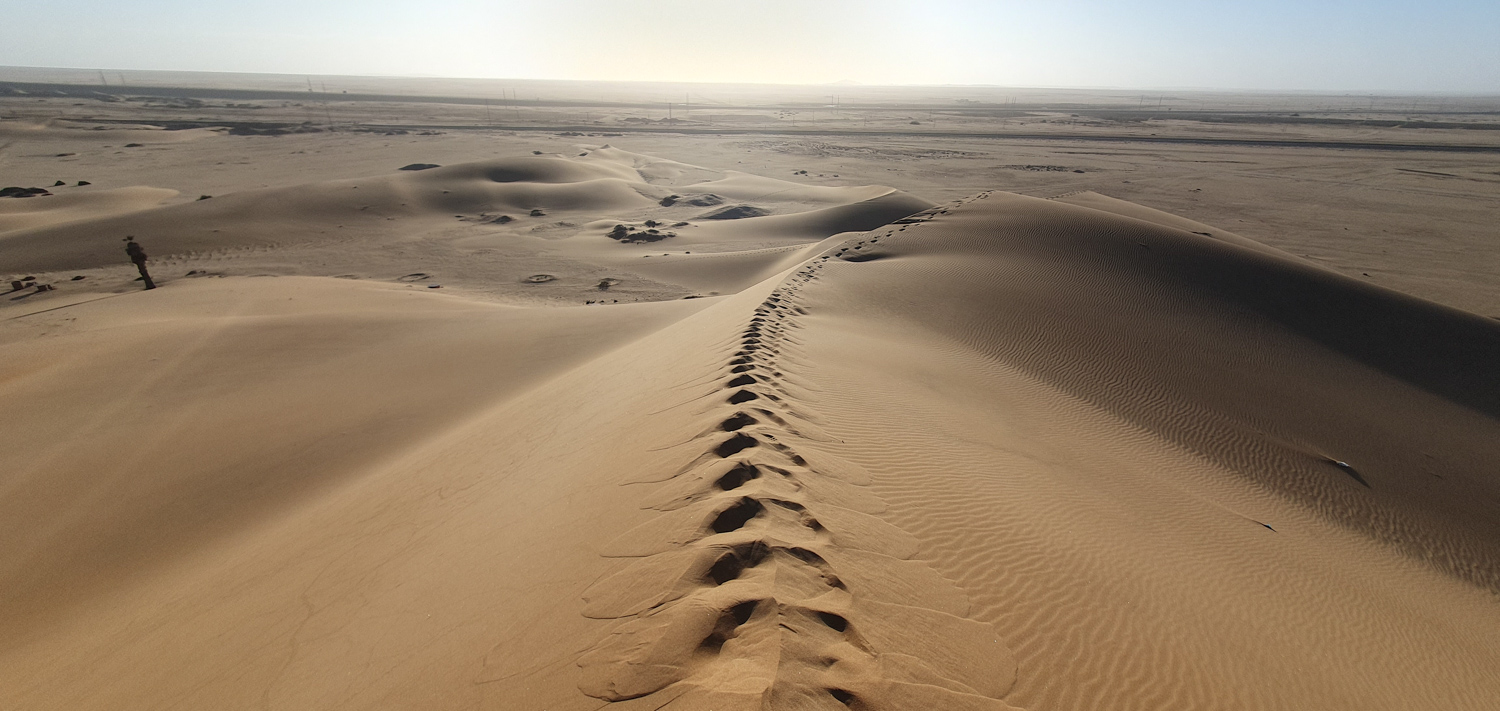
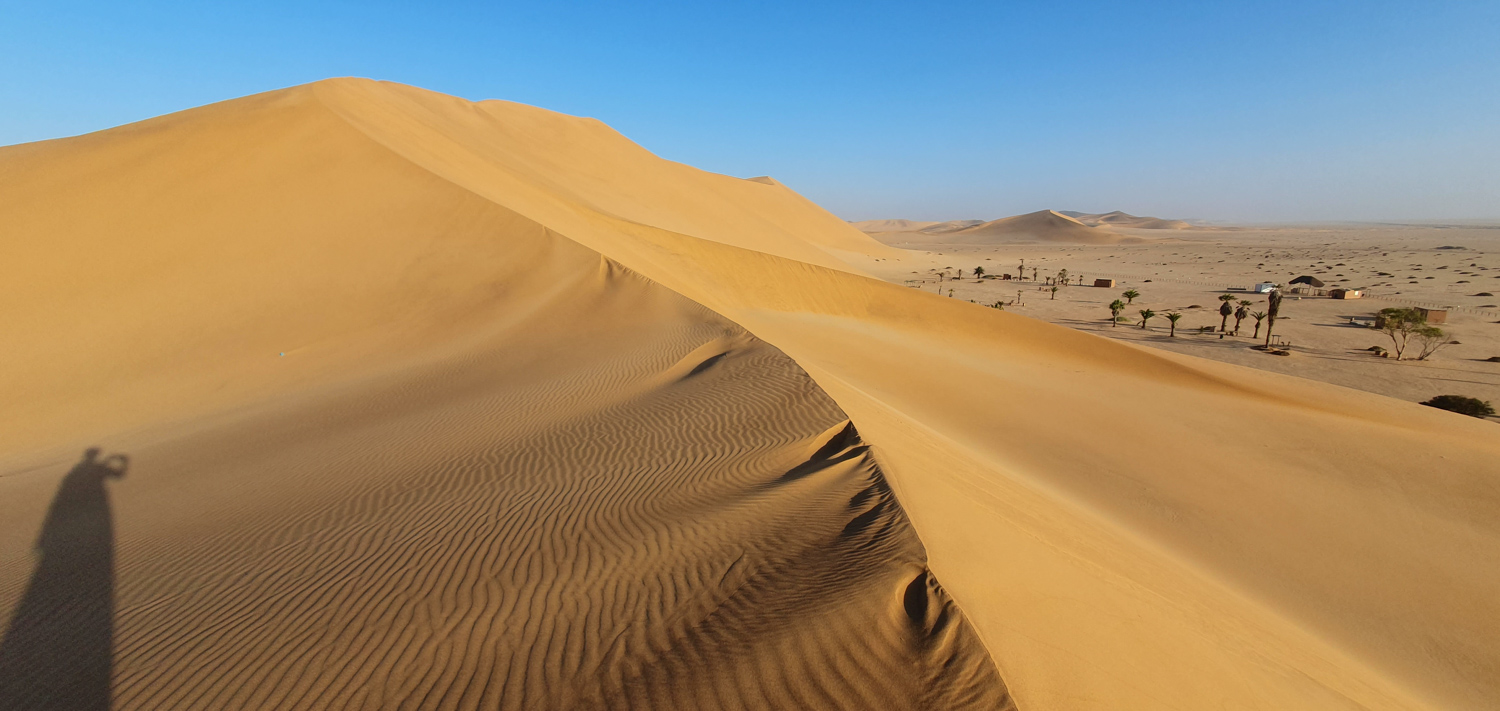
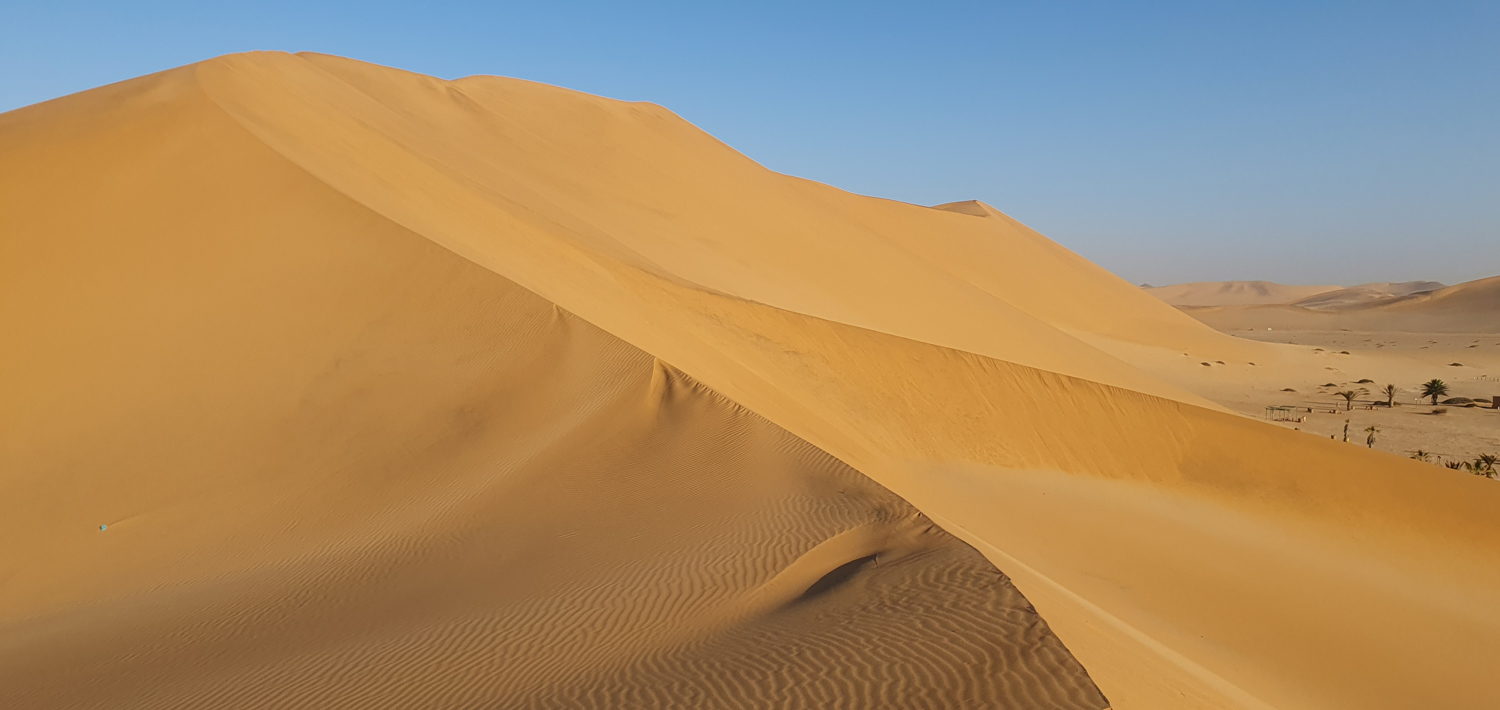
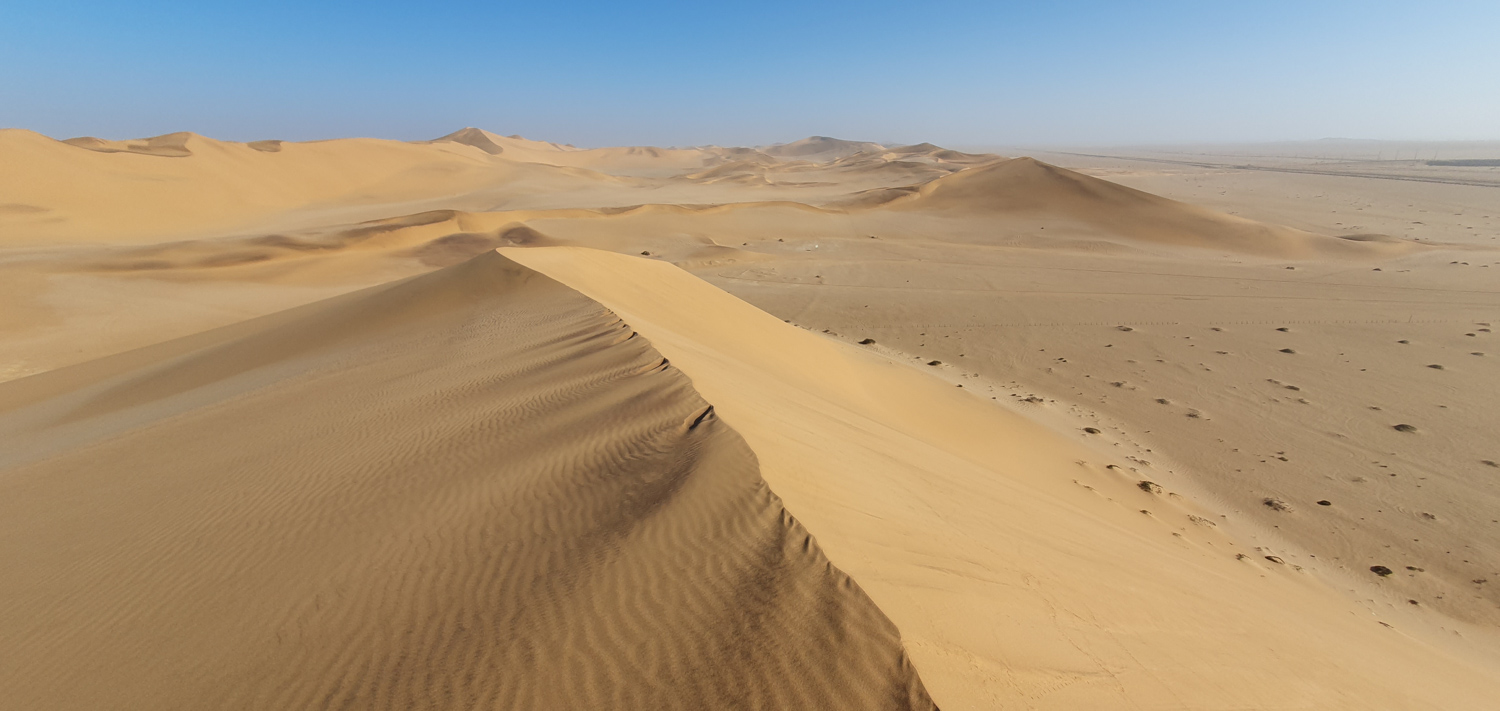
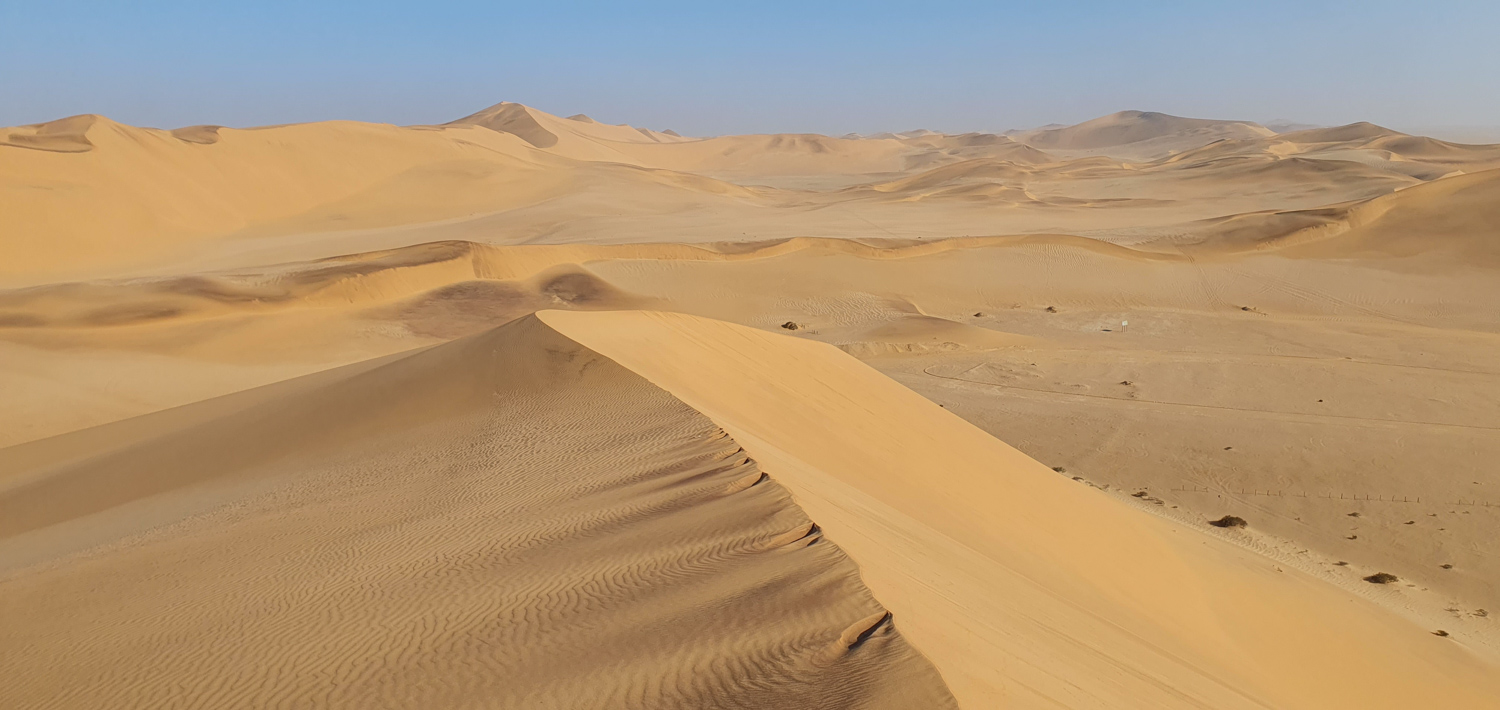
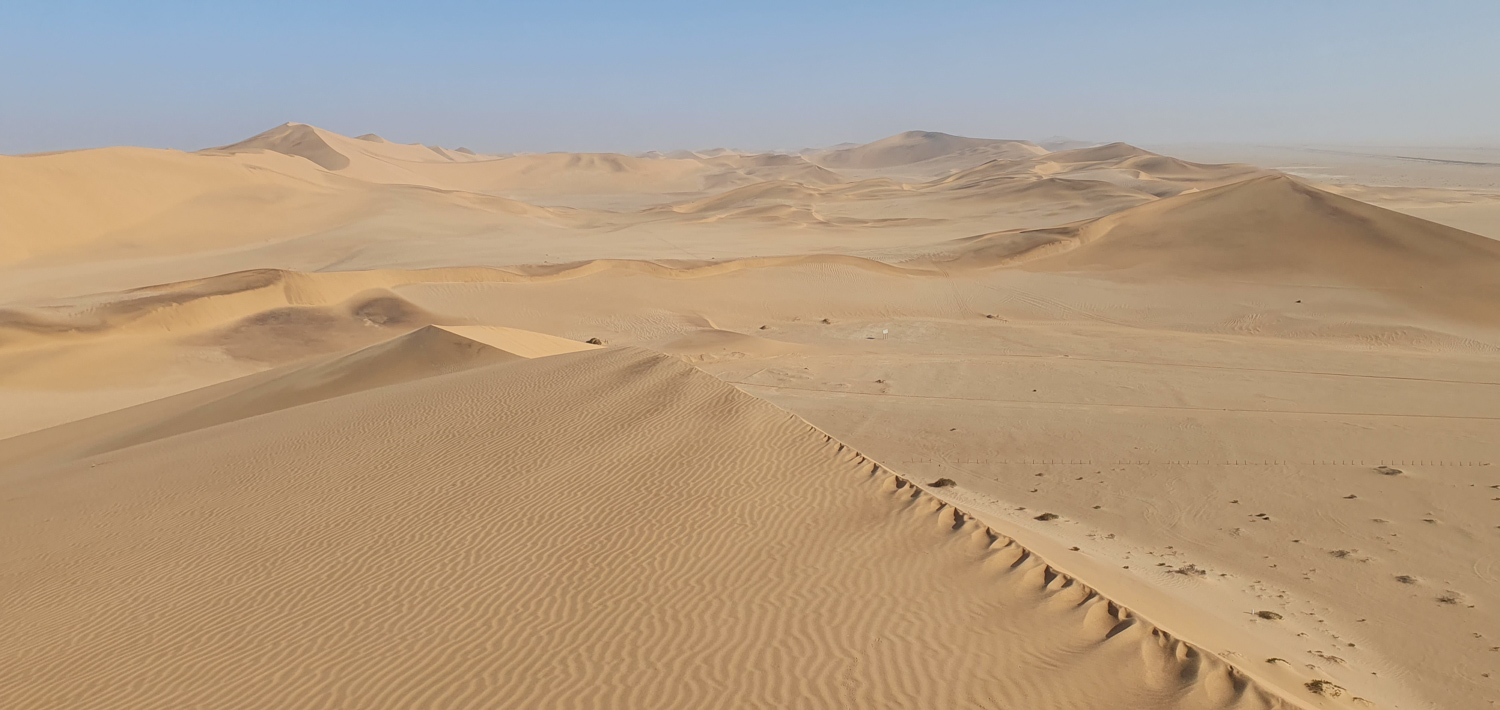
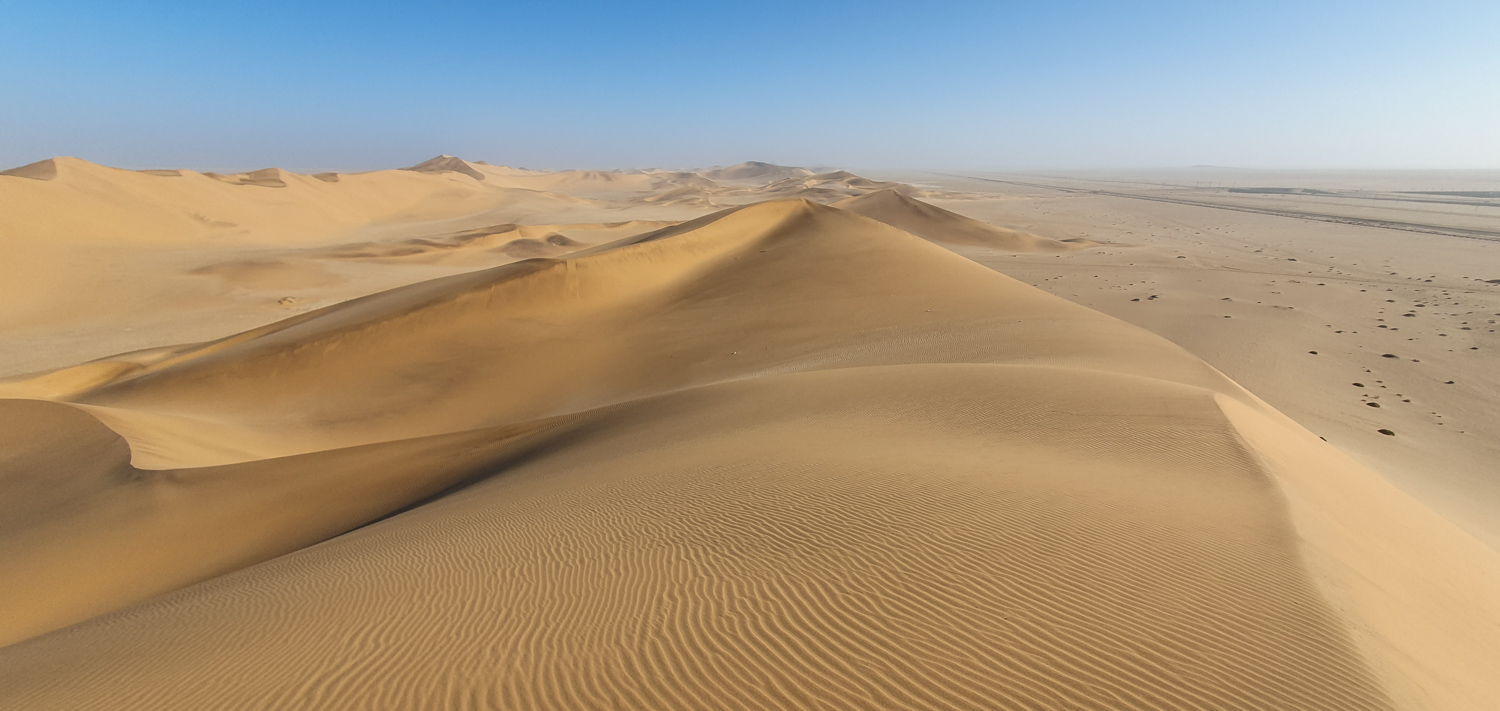
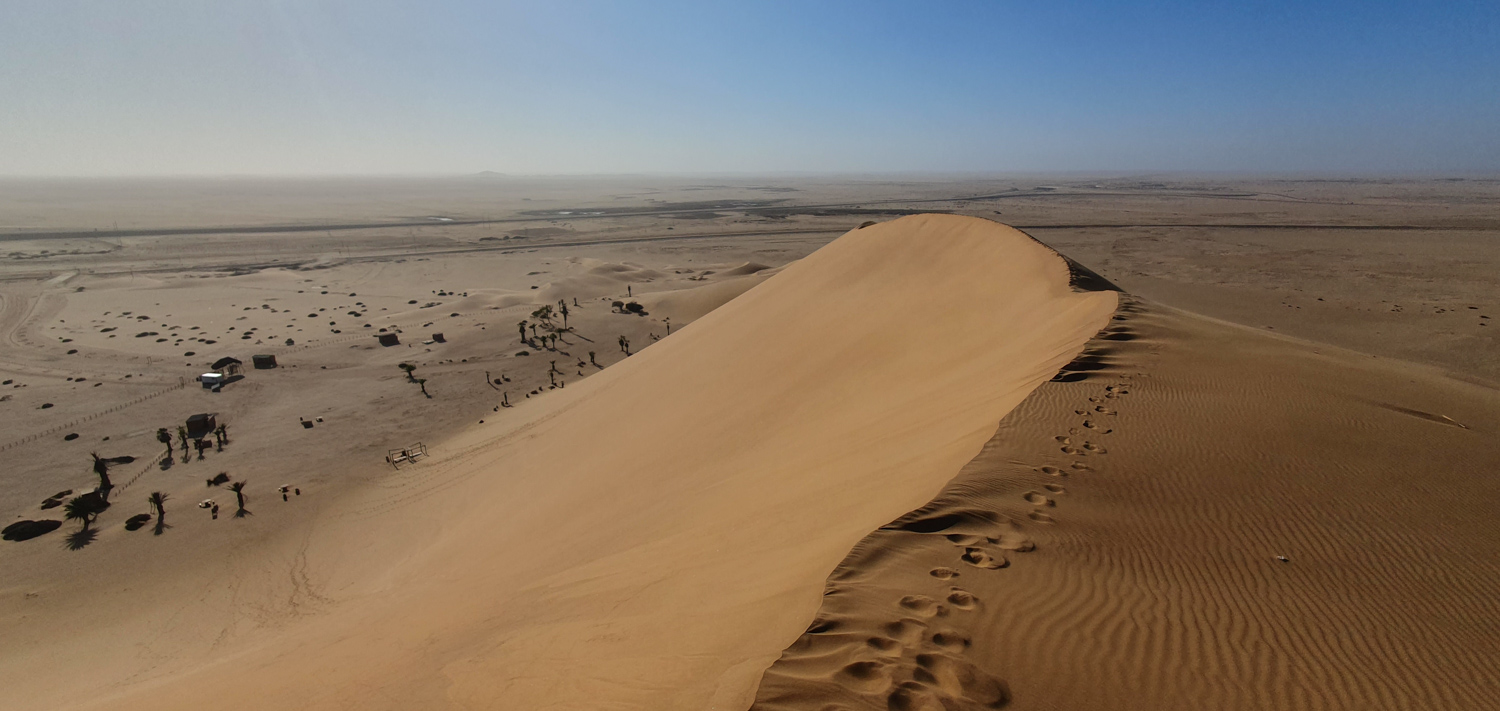
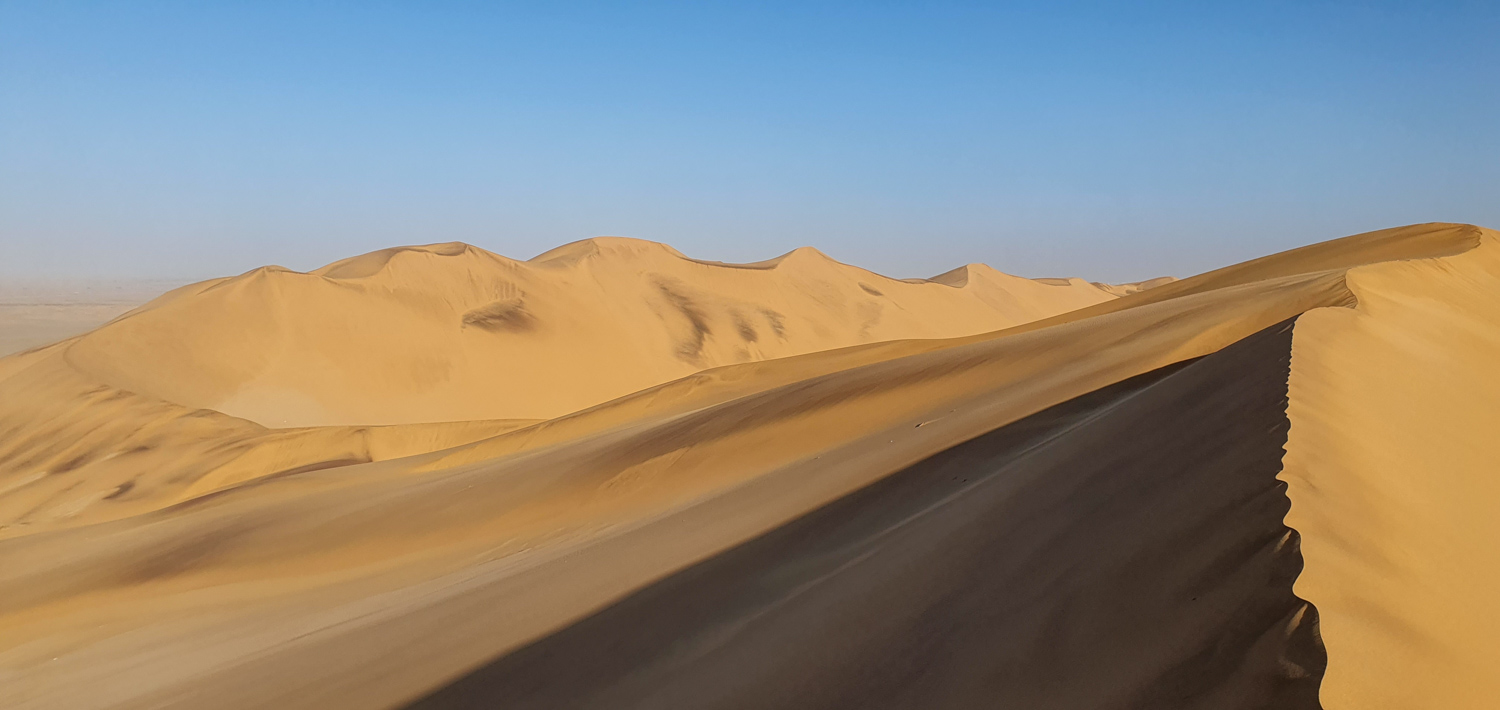
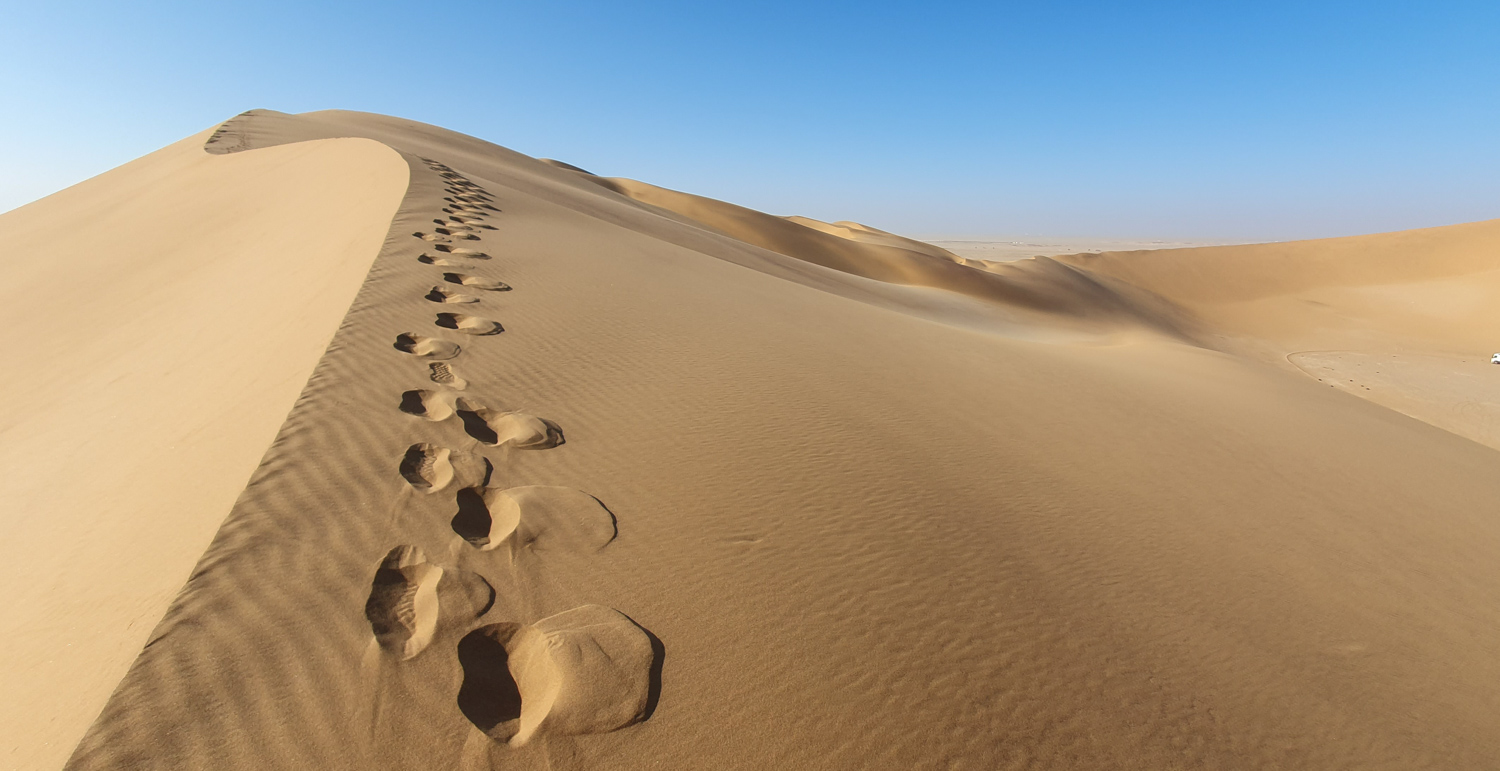
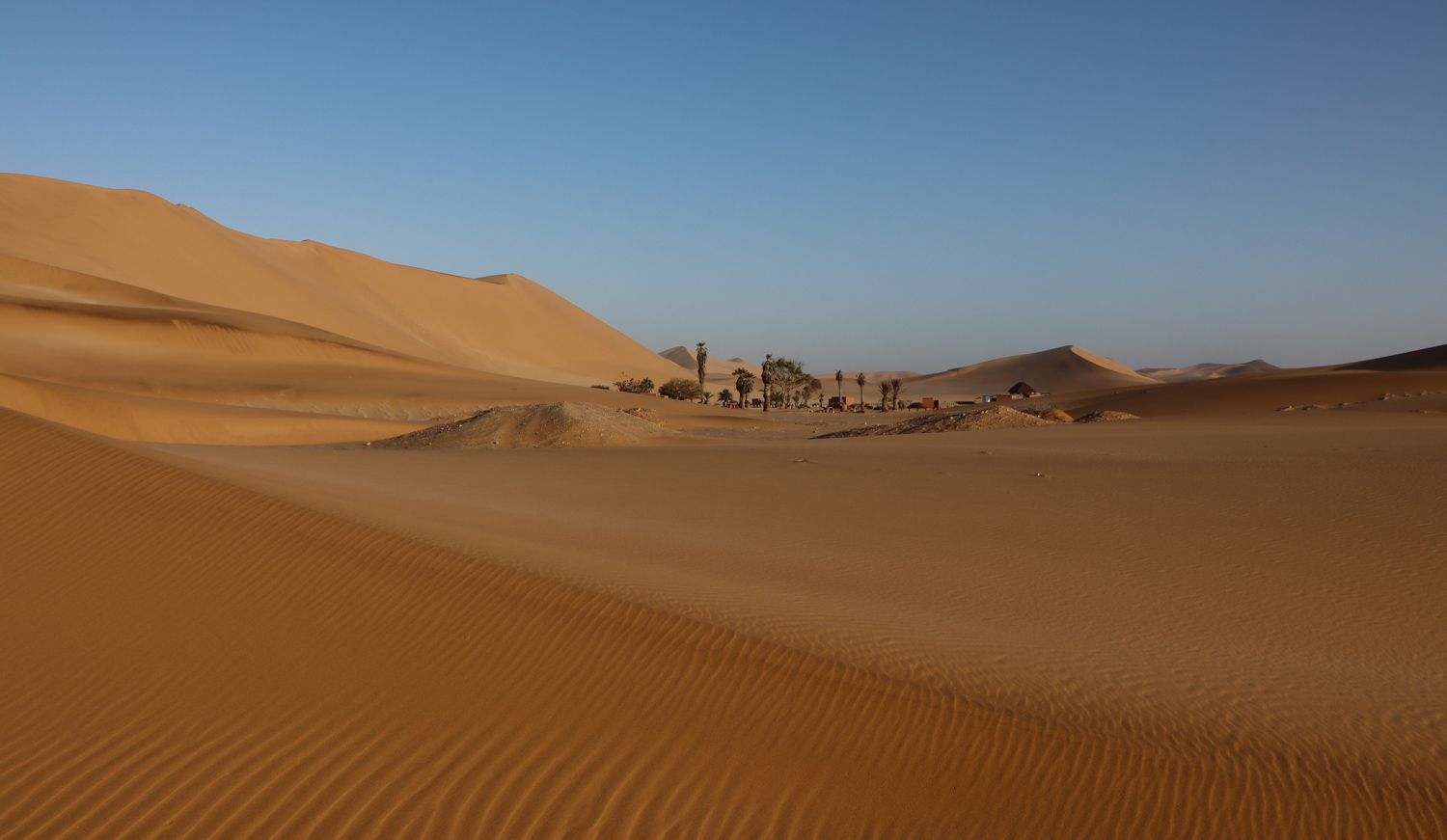
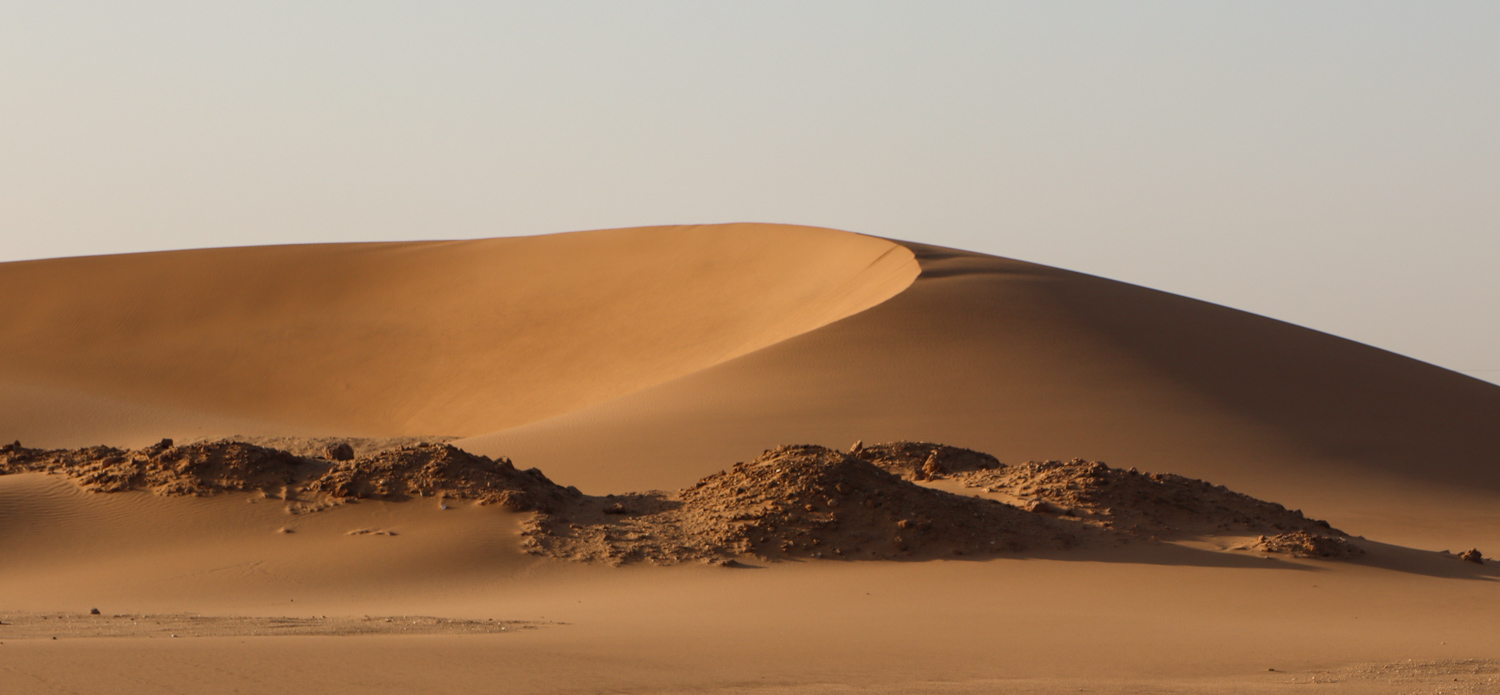
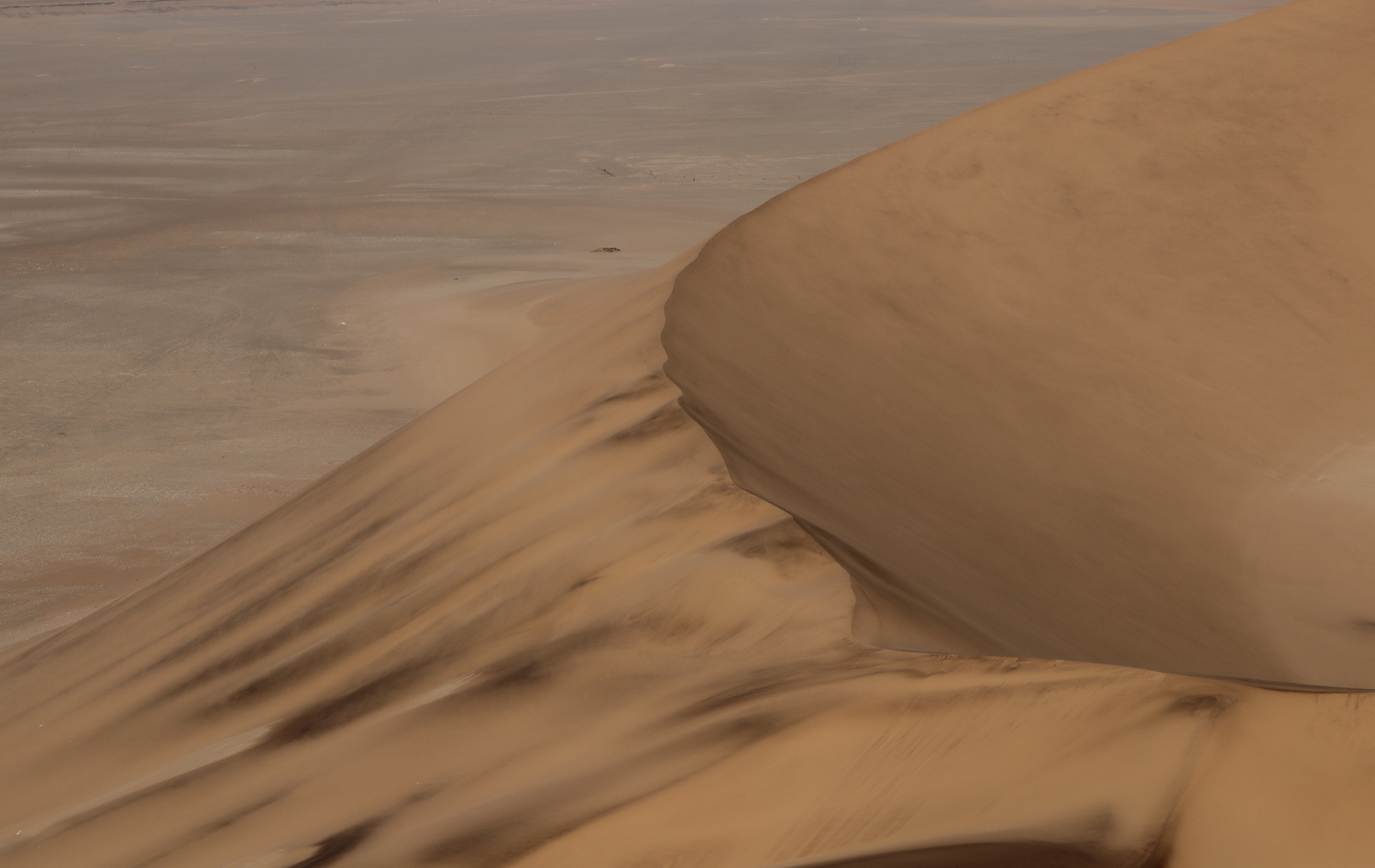
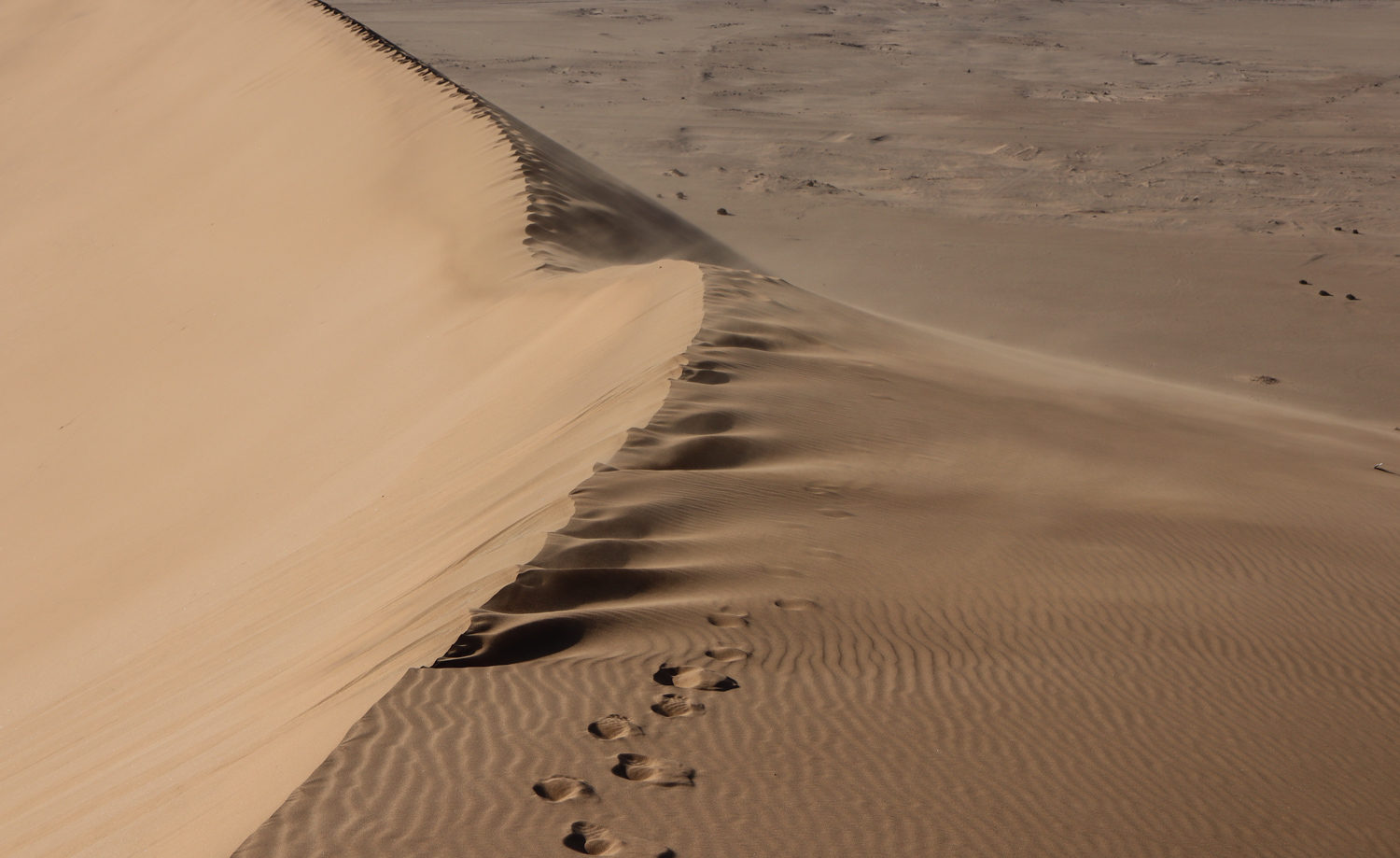
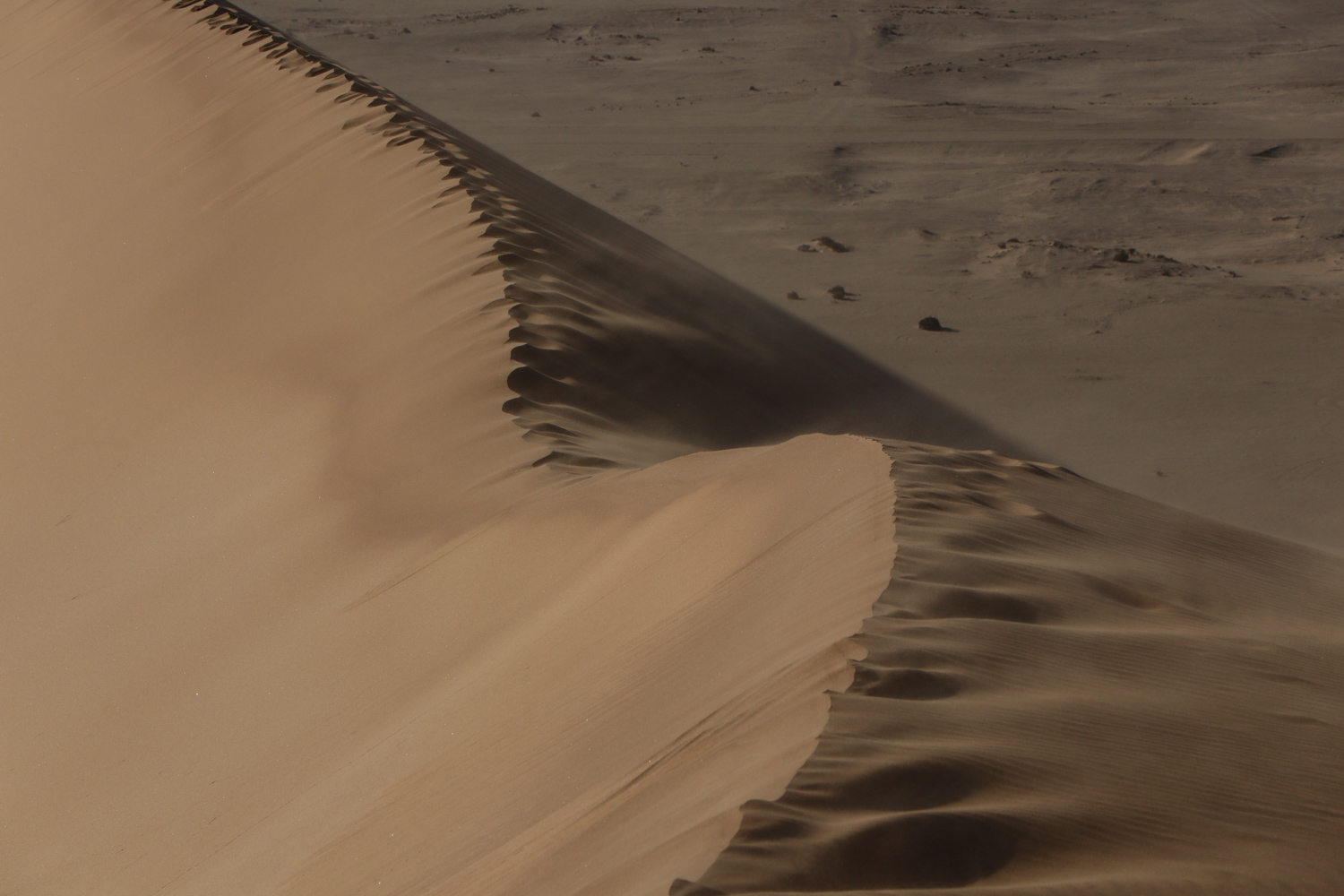
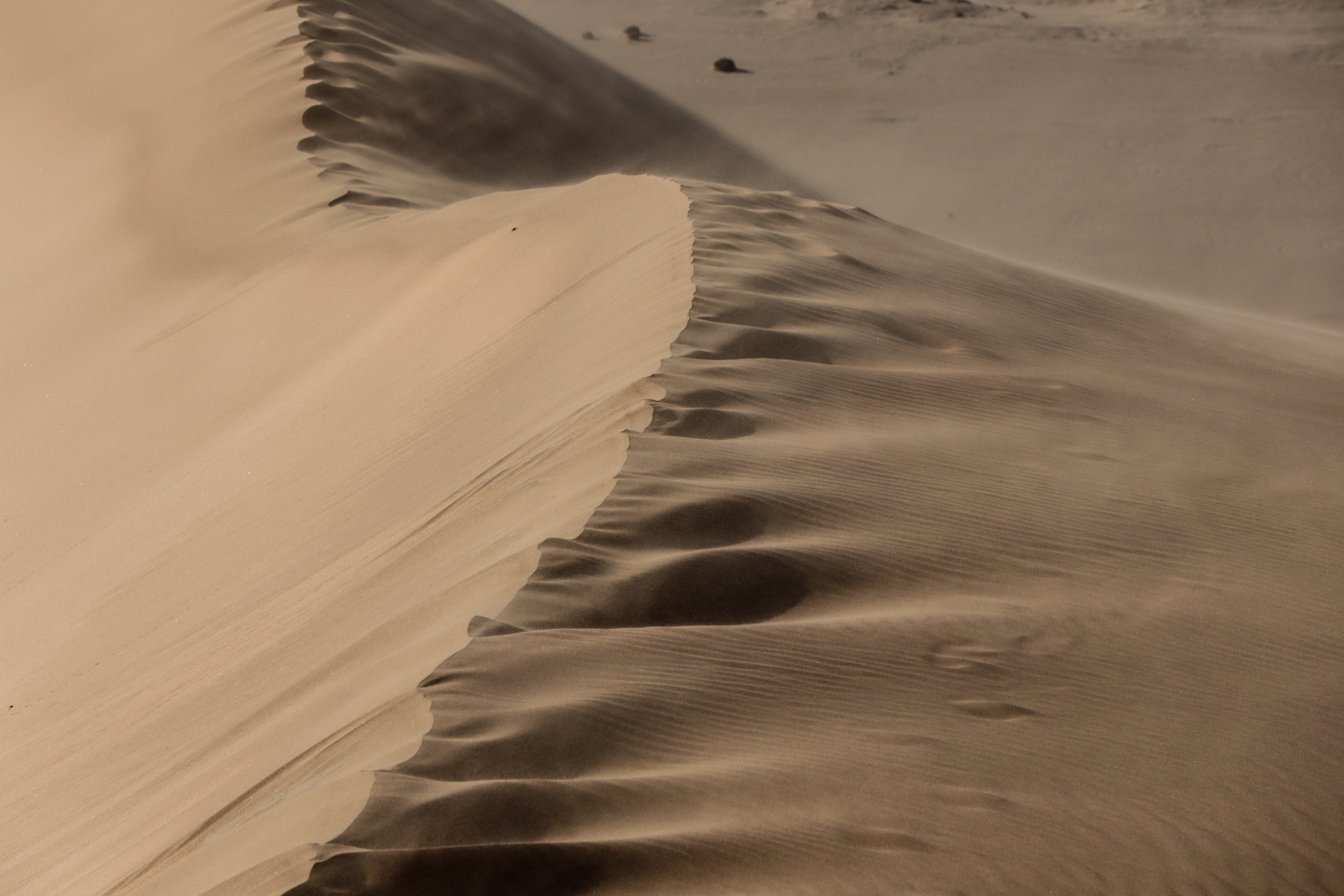
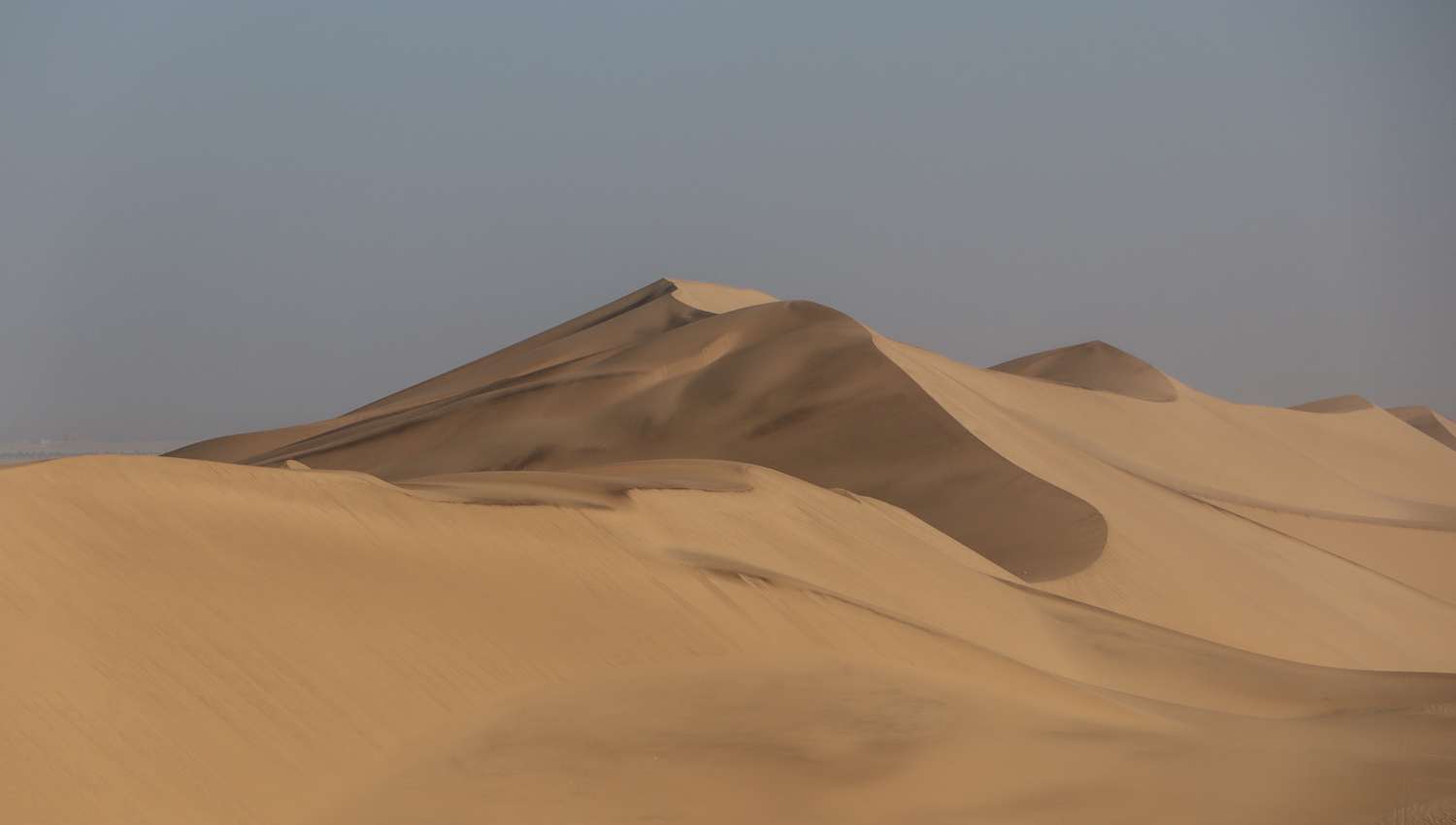
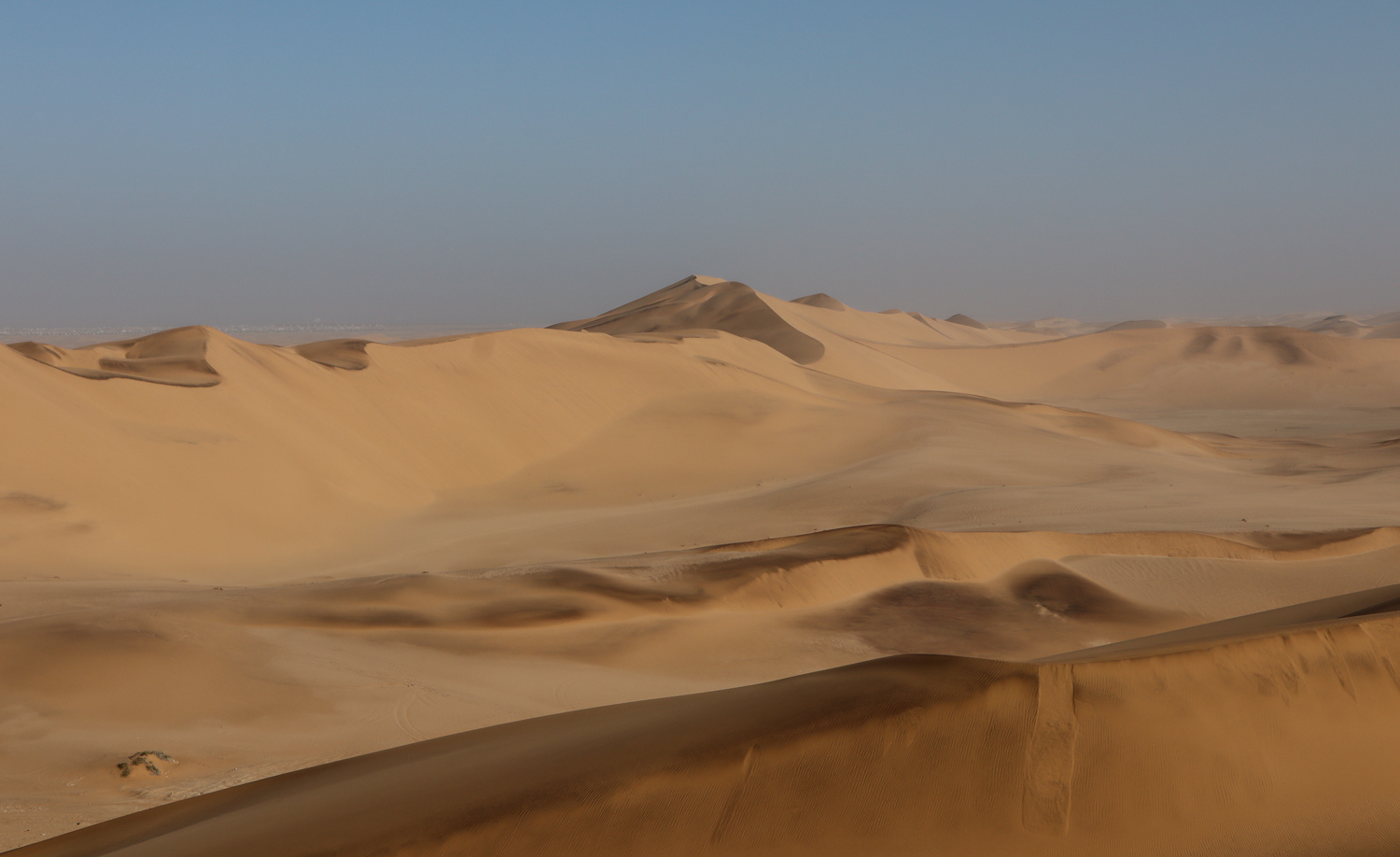
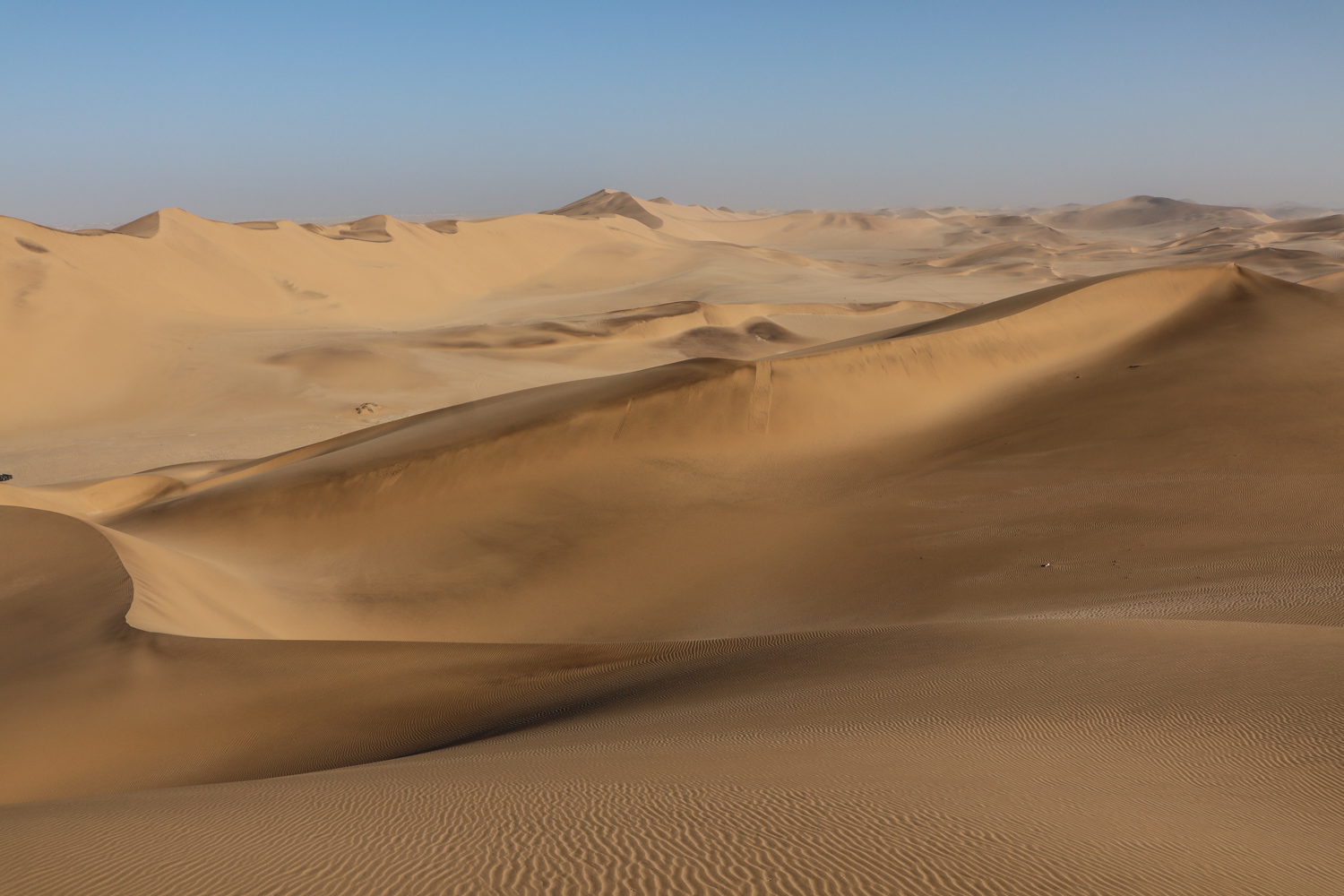
This is just a small moment, a tidbit in time on my way to the top. I would return anytime to experience this again.
The descent from the top was not like the one usually advertised in travel blogs and YT videos. Everyone says to sit on your behind and slide down. Some use the surf lookalike boards, promising fun. For me it was intended to be meditative – I walked along the ridge several times, forwarding and backing, CRUSHED by the beauty visible from the top. It felt magical and so intense. I took time by paying attention to small creatures running across the sand which would in several hours become seemingly uninhabitable.
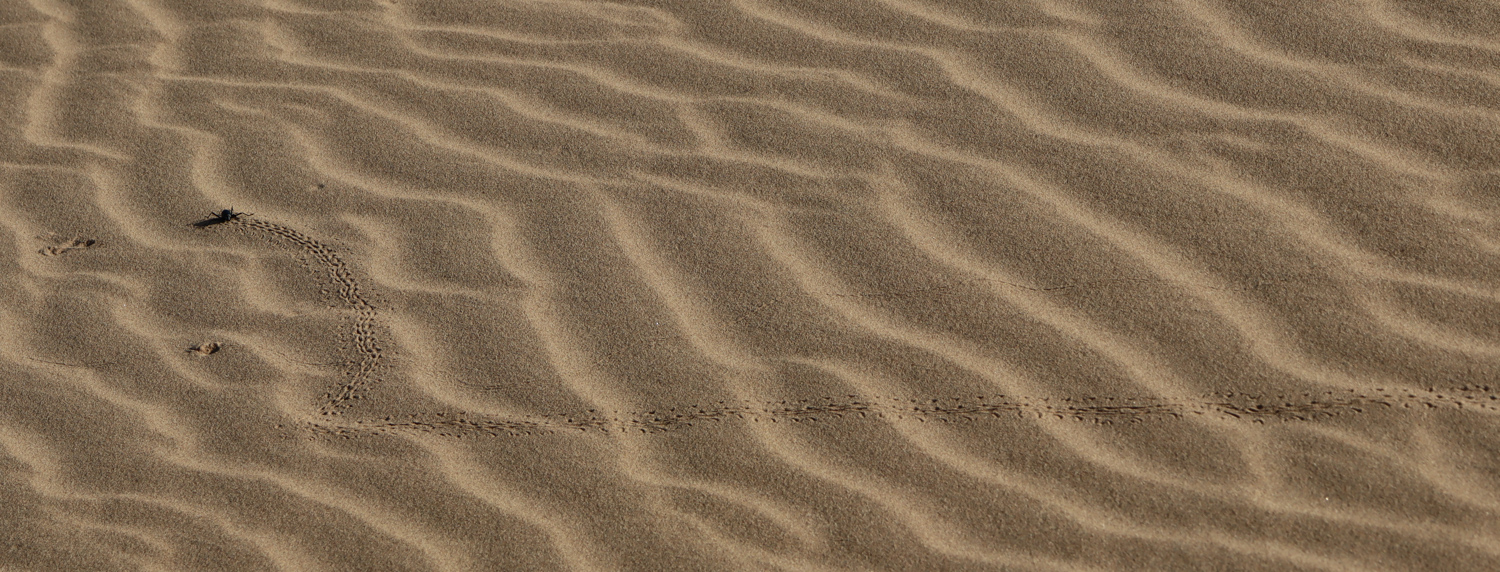
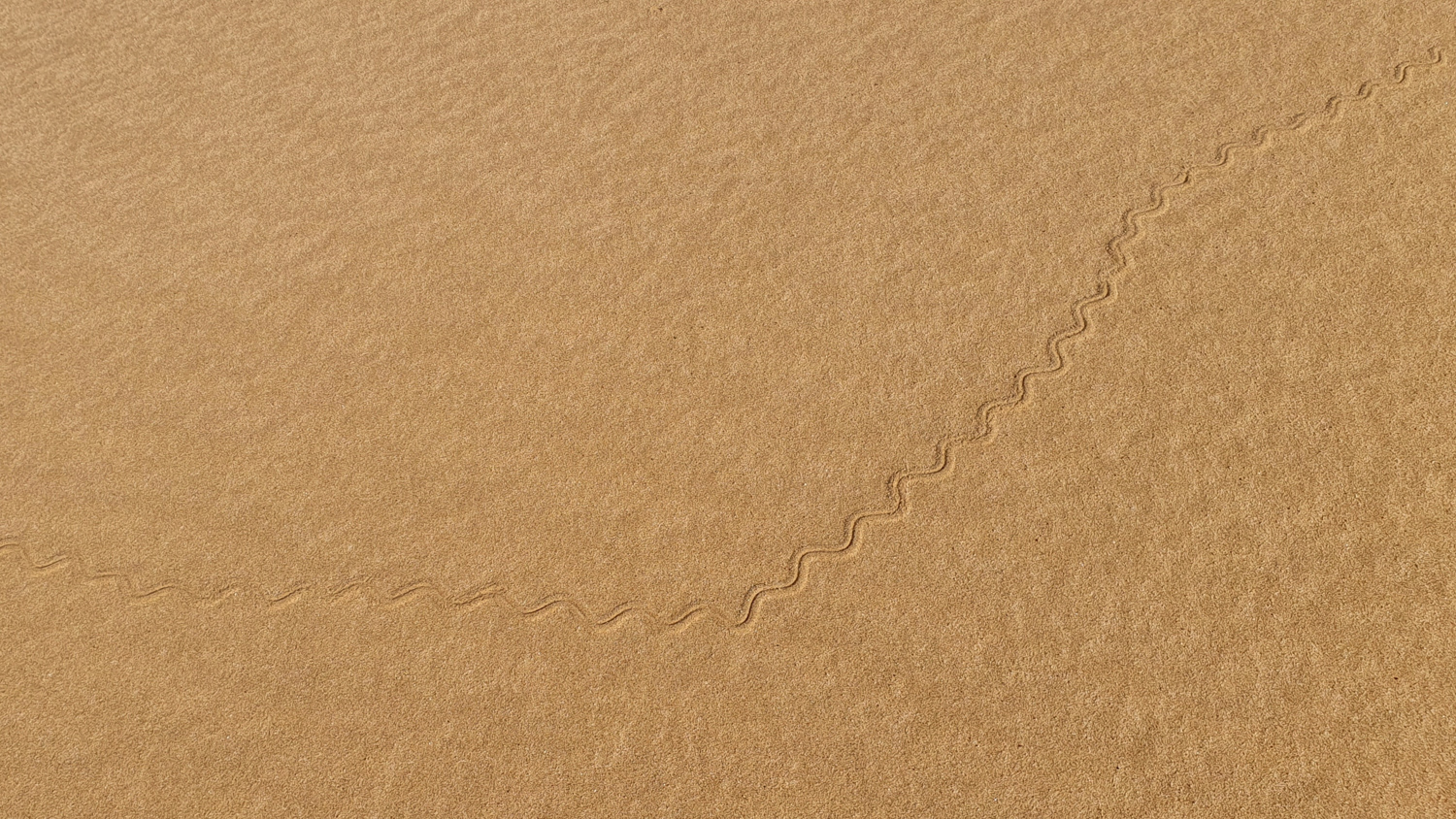
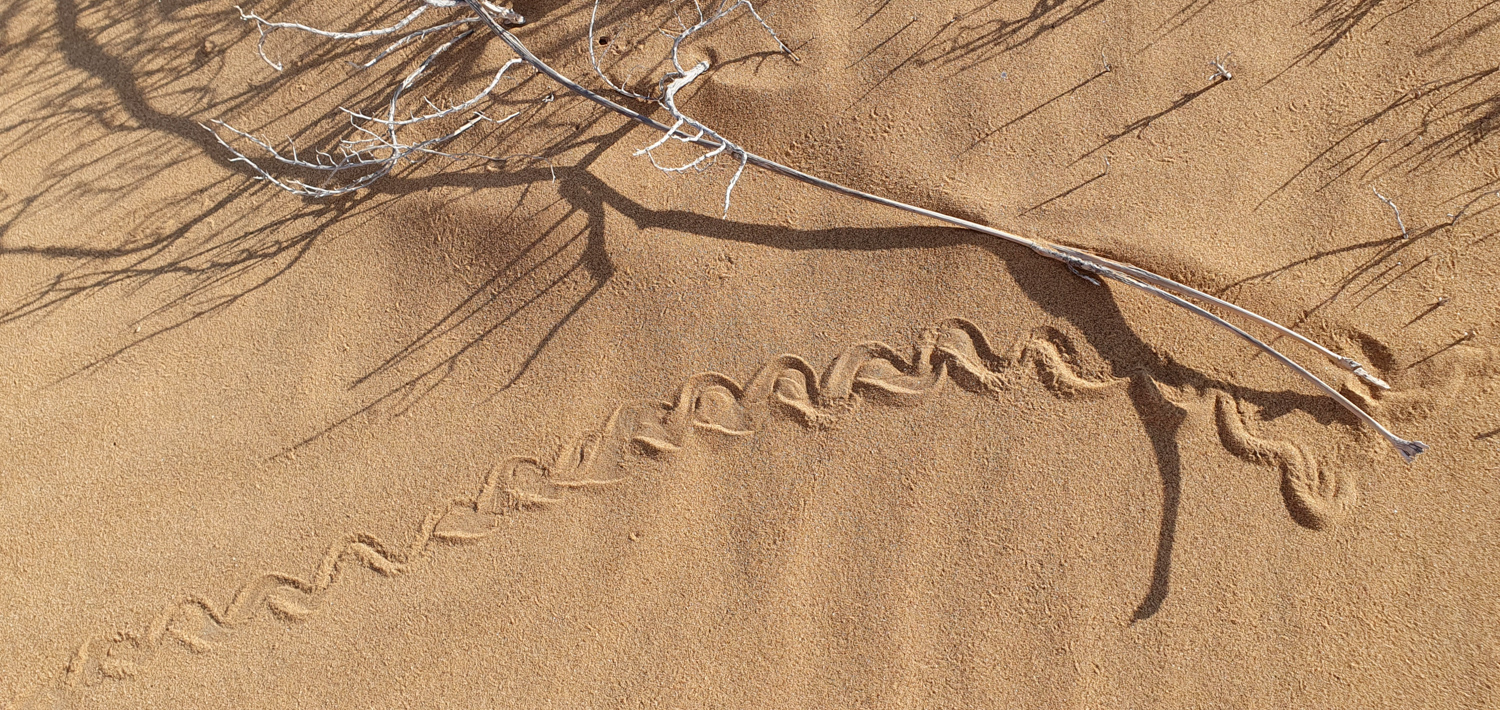
Also, some danger noodle trails are always an interesting sight. Even though I never stop being worried about being bitten by something which would paralyze me in such environment, destroy my blood, or simply destroy the tissue just by being in my body, I am in awe by the fact that we shared the environment, even if only for a moment.
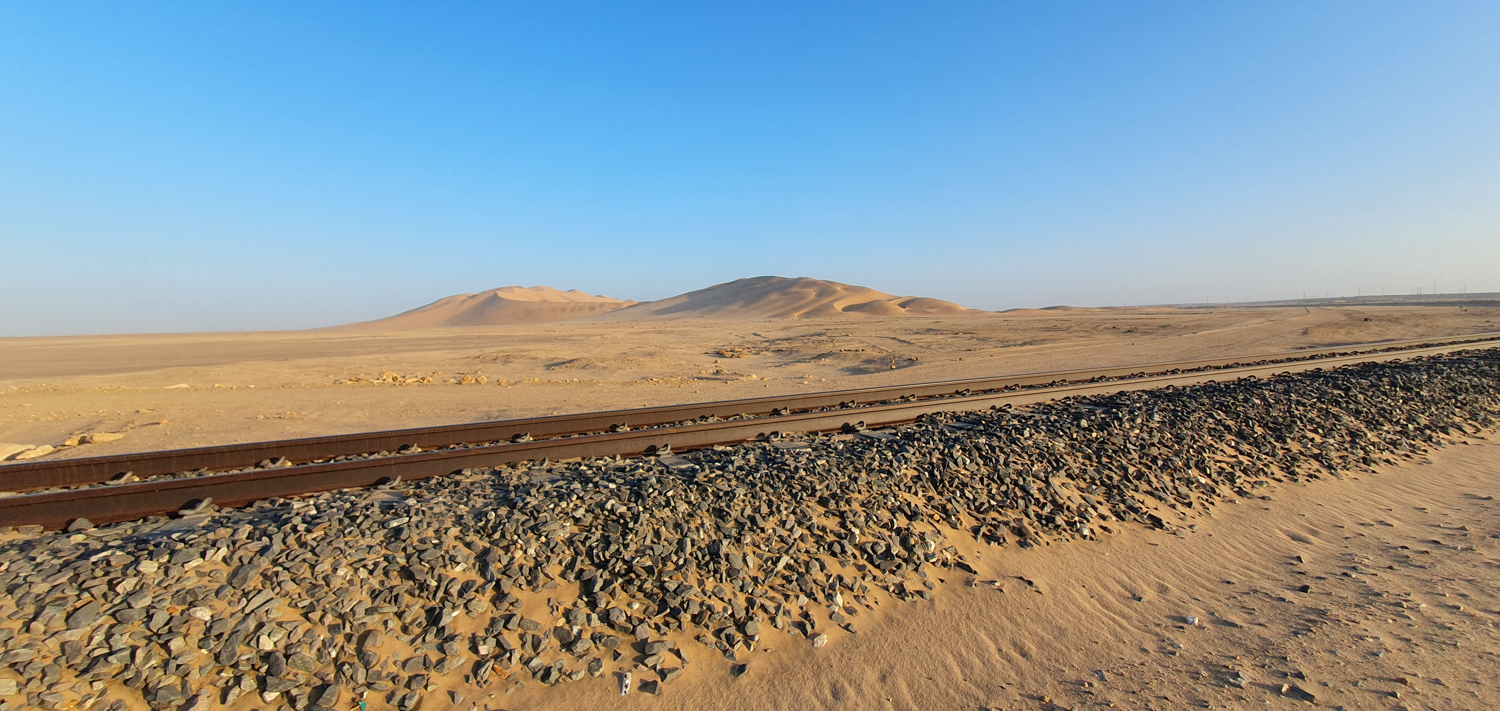
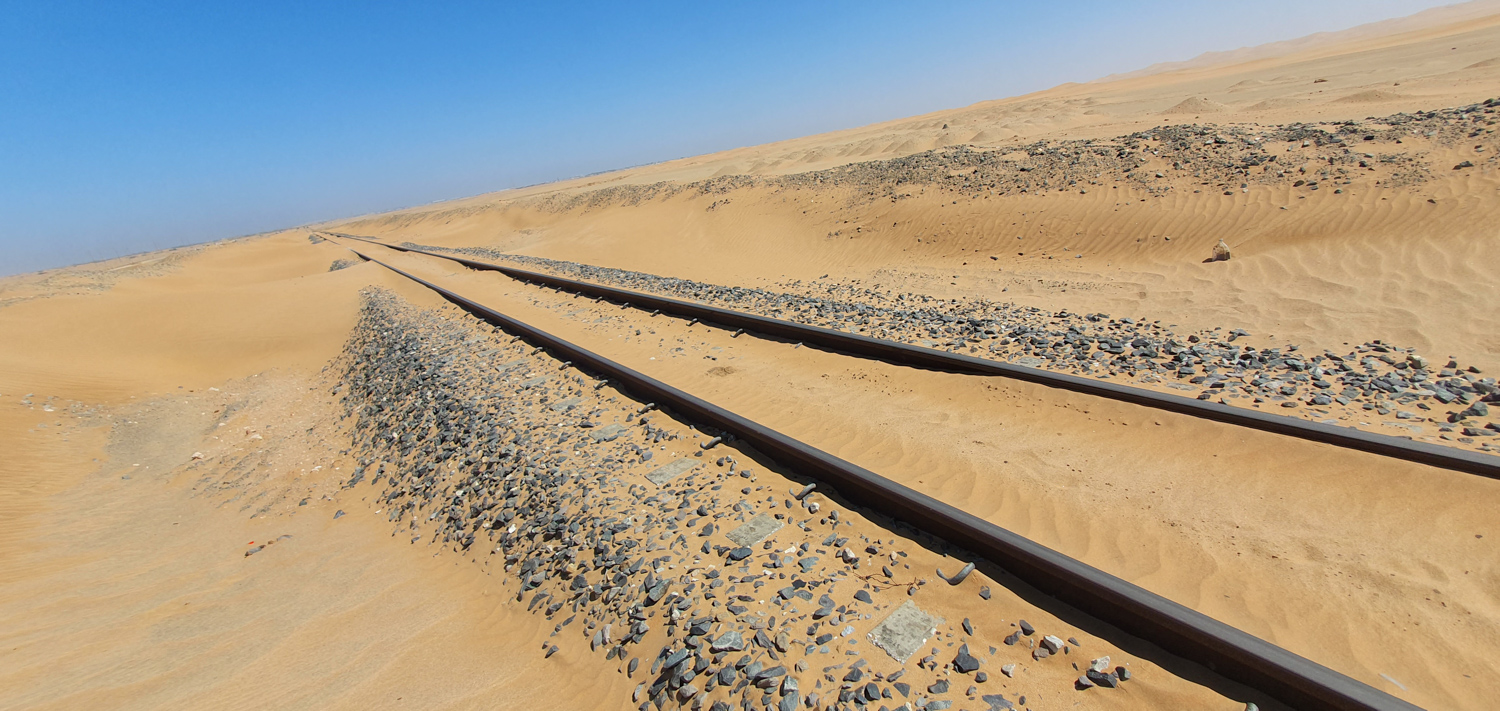
The only sad thing about this place is the railroad which loosely follows the shape of the ocean coast. To have the ability to travel via trains in Namibia would be an OUTSTANDING option, but unfortunately, even though the country has almost 3 000 km of railroads, they are not in use.
I can only imagine how such trips would look like. *.*
While observing the Dune 7 on Google maps long time before I came to Namibia, I noticed that in the vicinity lies an unusual object. It was marked with the “Quarantine ruins” name. Being someone who always loved such locations (if a location has diseases, death, nuclear disasters, lacking human life in correlation to it… – I am up for it) I just had to visit it.
Quarantine… what kind of quarantine is this supposed to be?
… I was asking myself while zooming in the Dune 7 on maps.google.com, while preparing for the trip.
One and a half kilometers from the Dune 7 lie the quiet remains of a once-active quarantine station. These ruins mark a forgotten chapter in the region’s colonial and maritime history. Constructed during the era of German South West Africa, the station served a critical role in public health policy. It was designed to isolate and monitor passengers arriving by sea, particularly during outbreaks of infectious diseases. The port of Walvis Bay was an important entry point for goods and people, necessitating strict health controls.
Diseases such as smallpox, cholera, bubonic plague, and typhus were primary concerns during the late 19th and early 20th centuries. Anyone suspected of carrying illness was held at this quarantine station for observation. The facility included basic accommodation, administrative quarters, and likely isolation wards. Buildings were constructed using stone and brick, offering durability in the harsh desert environment. Despite this, only partial structures and foundations remain visible today.
The site’s location – on the edge of the Namib Desert – was intentional, offering isolation from the general population. Being close to the port yet distant enough to contain disease spread made it a practical location. Quarantine procedures were common practice in colonial maritime outposts worldwide. Walvis Bay, as a strategic harbor, followed these global health protocols closely.
The use of the station likely continued into the South African administration of the territory after 1915. However, its importance declined over time. Advances in medical science, such as vaccination and antibiotics, reduced the threat of epidemic diseases. Improvements in shipboard hygiene and onboard screening also lessened the need for land-based quarantine. As these public health measures took hold, the station gradually lost its relevance.
By the mid-20th century, it appears the facility had been fully decommissioned. No official records publicly pinpoint the exact year of closure. Left abandoned, the buildings began to succumb to wind erosion and desert sands. Today, only partial walls, collapsed roofs, and scattered bricks remain.
There are no information boards or signs identifying the site. It is not formally protected or restored. Still, it attracts curious visitors who pass through on their way to Dune 7. The site offers a rare glimpse into colonial-era disease control infrastructure. It also reflects the logistical challenges of managing public health in remote and arid regions.
Despite its decay, the station holds historical value. It represents a blend of maritime trade, colonial administration, and early epidemiology. The ruins are a physical reminder of a time when isolation was the frontline defense against pandemics. In a modern context, the site resonates with renewed awareness of quarantine practices. As Namibia continues to develop its historical tourism, such sites may one day receive formal recognition. Until then, the quarantine ruins near Dune 7 remain a silent witness to the past.
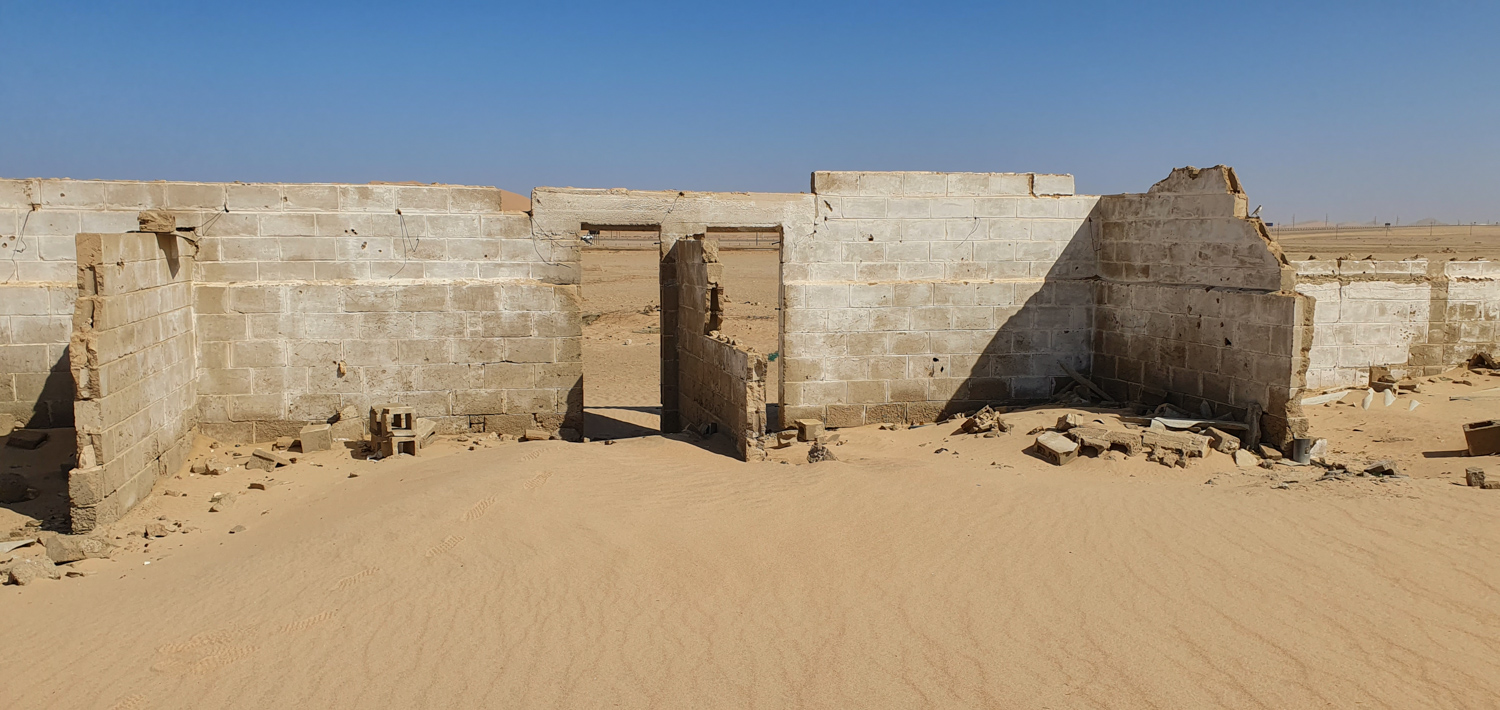
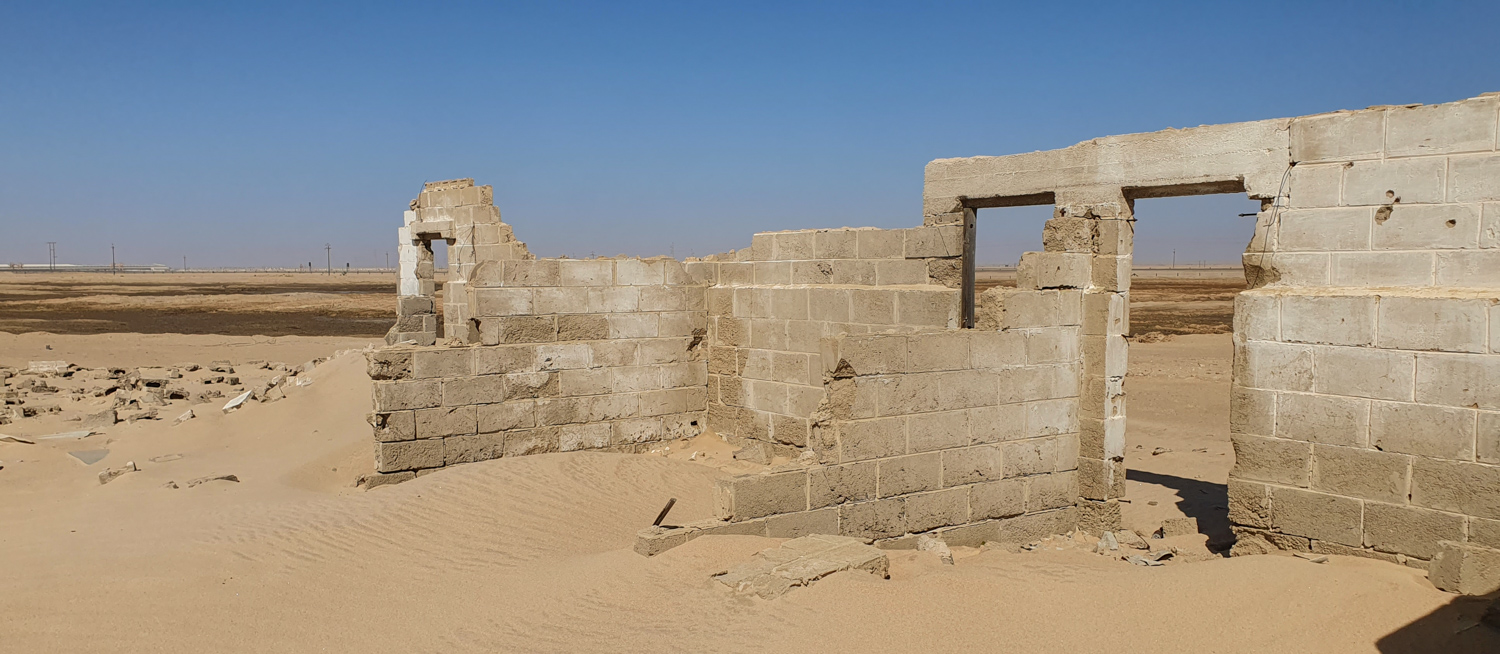
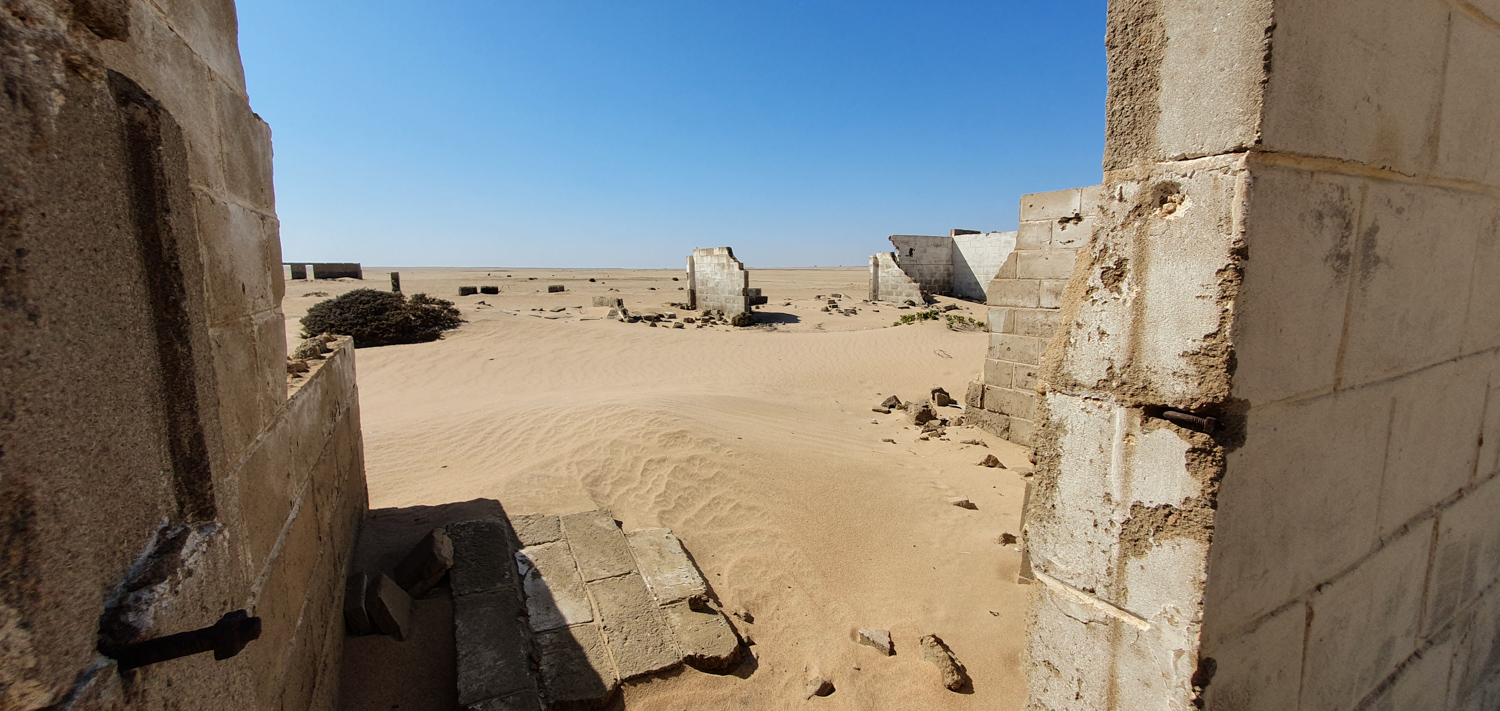
I explored the ruins and took pics from many angles. If I was in the Witcher 3, there would be some mastercrafted gear for sure. Then, of course, I set a course to a burger joint afterwards. The plan was to recover enough to start walking from Walvis bay to Swakopmund next morning, the last proper activity in Namibia.
Exploring Walvis bay
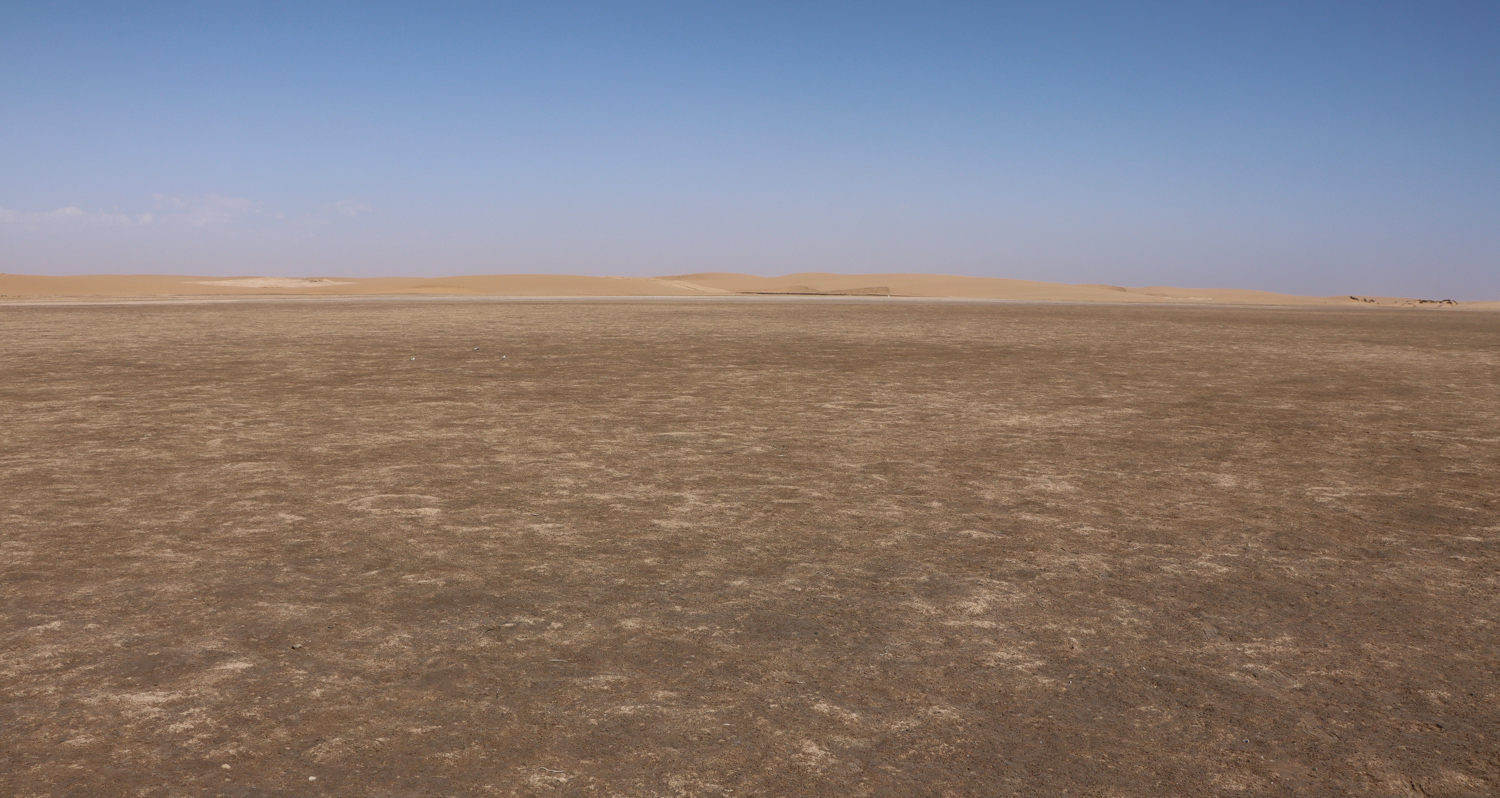
I would not be myself if I lied down and decided to sleep afterwards. After a long shower I vent outside to the area behind the city, away from the Atlantic ocean and towards the desert.
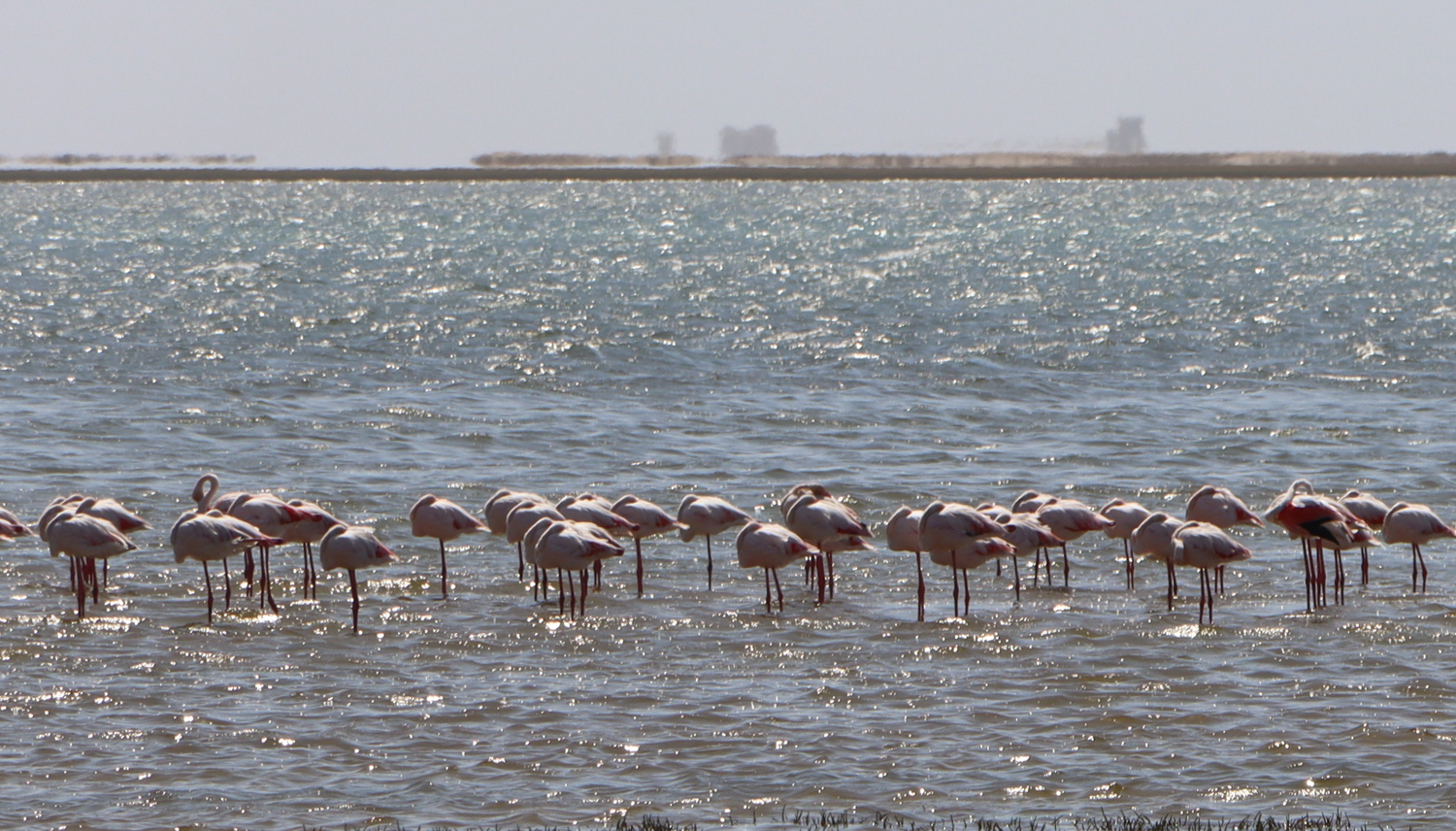
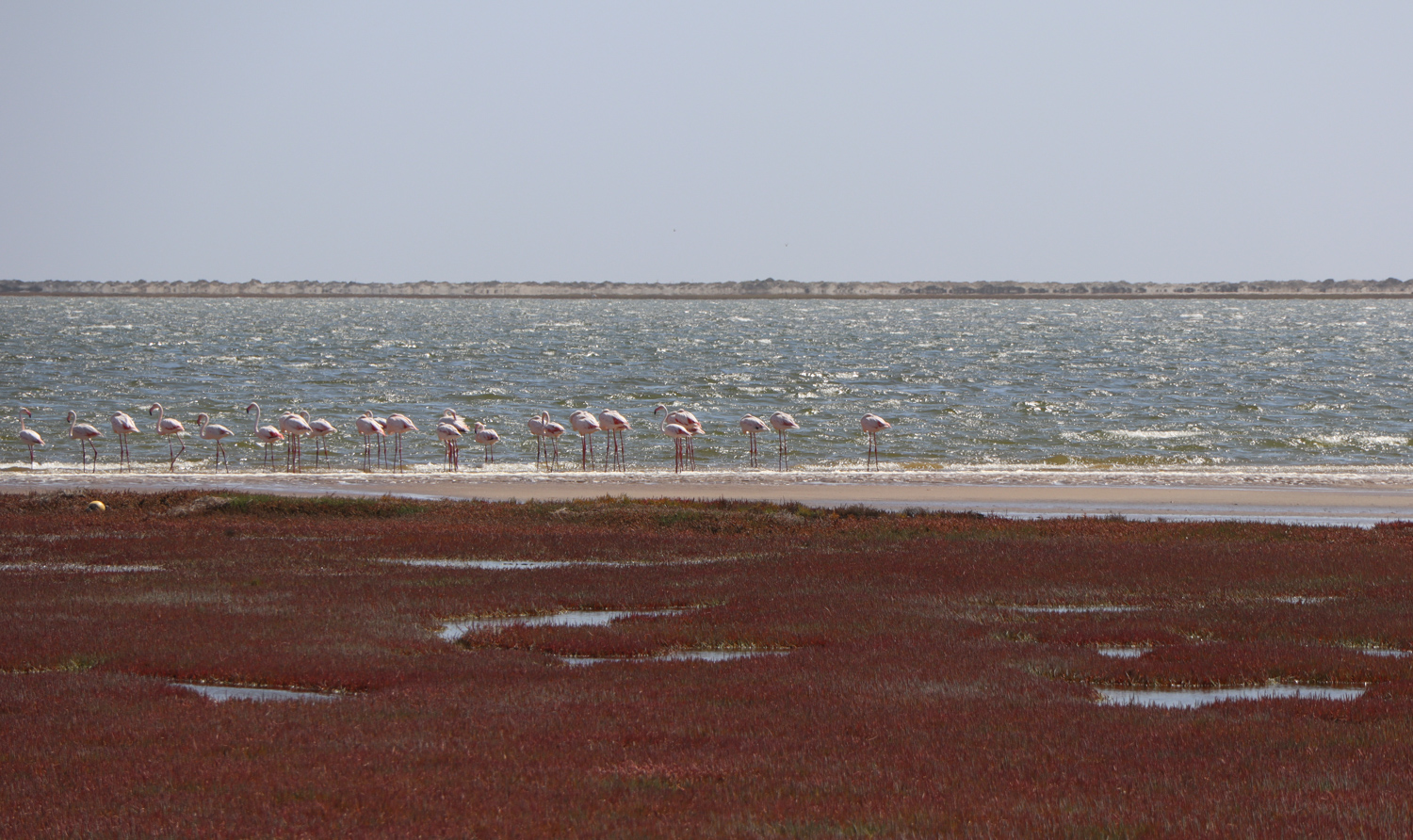
Besides seeing thousands of flamingos, I was walking across the Moon-lookalike surface, adoring the landscape and light sea breeze.
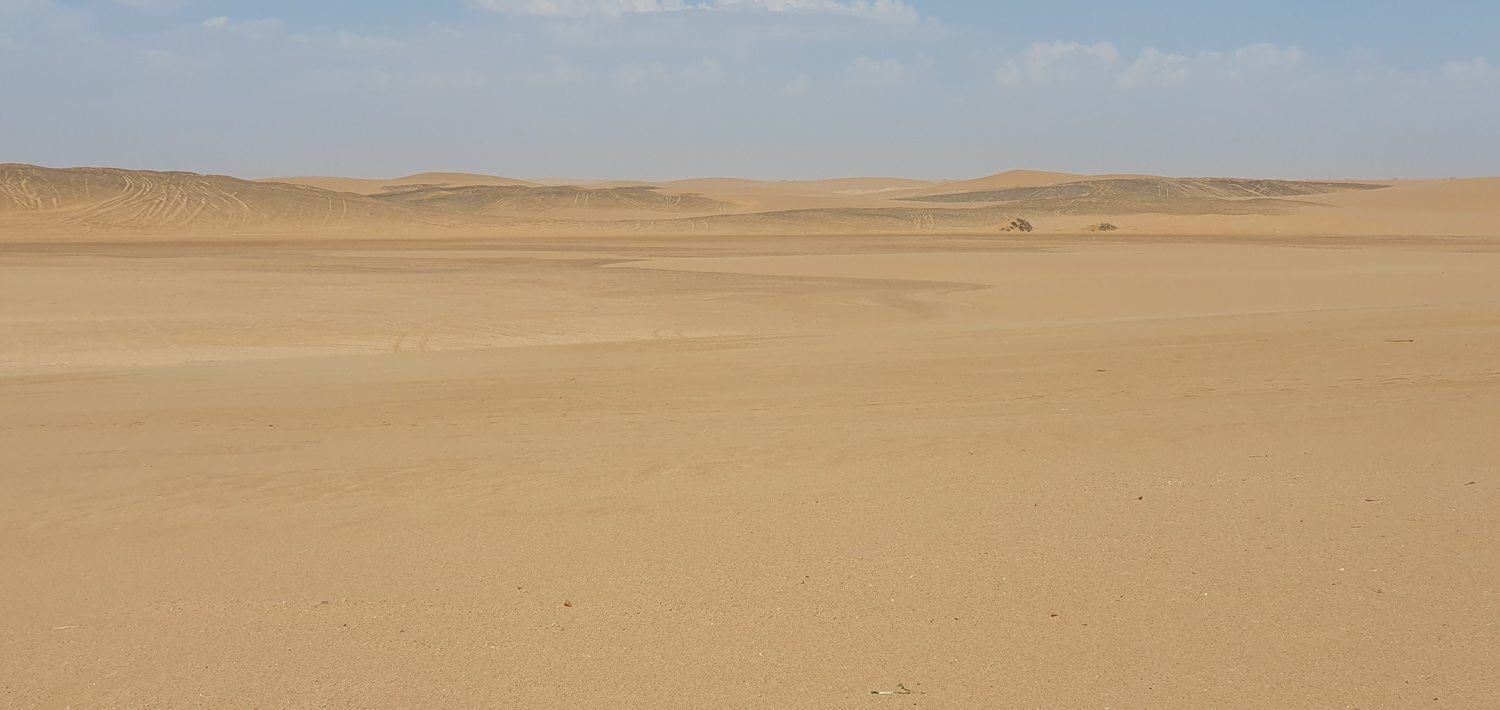
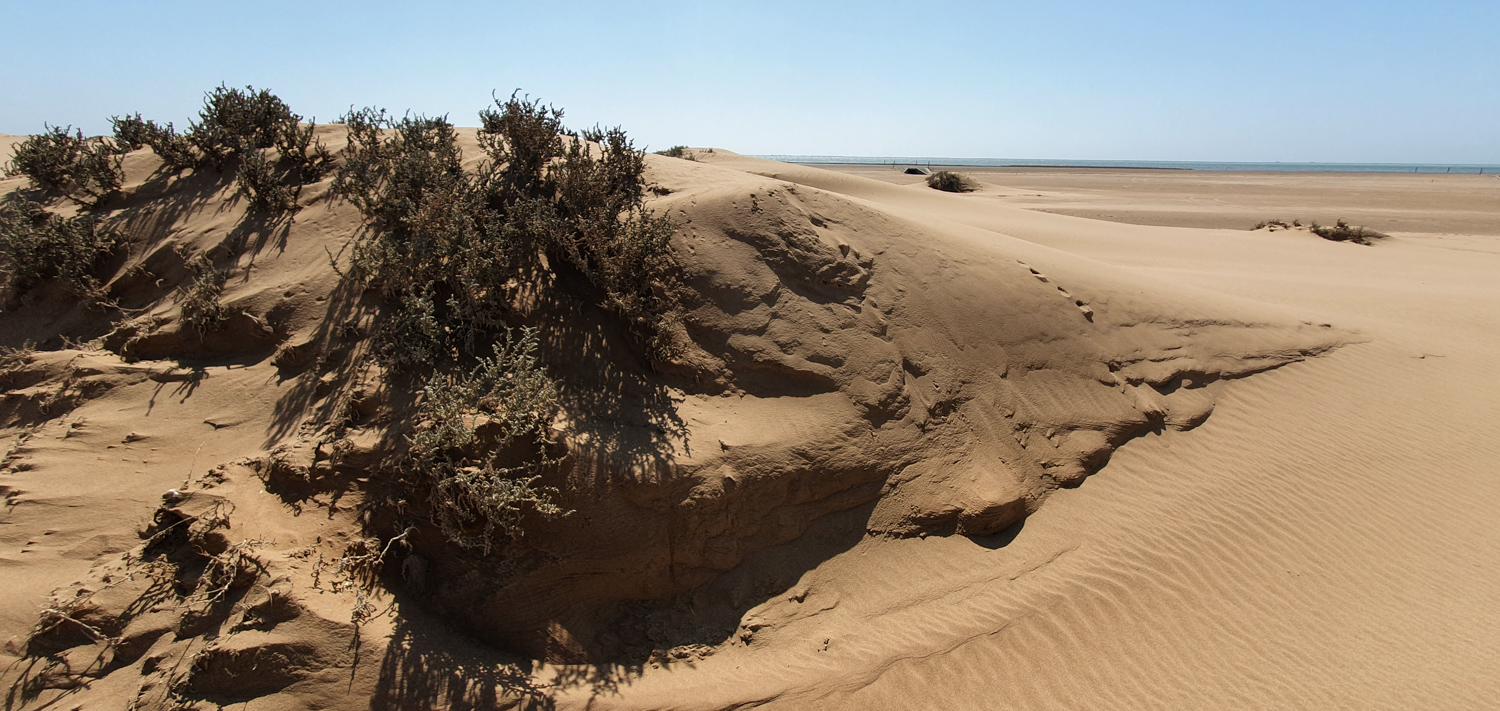
Now the rest and preparation for the walk to Swakopmund could begin.