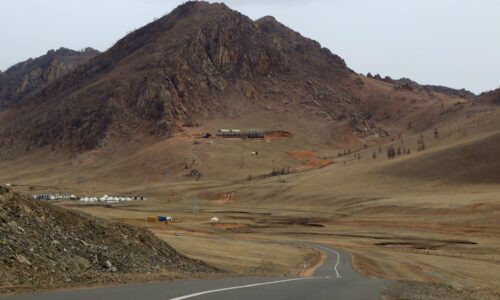
The oldest desert in the world
 Ivana
Ivana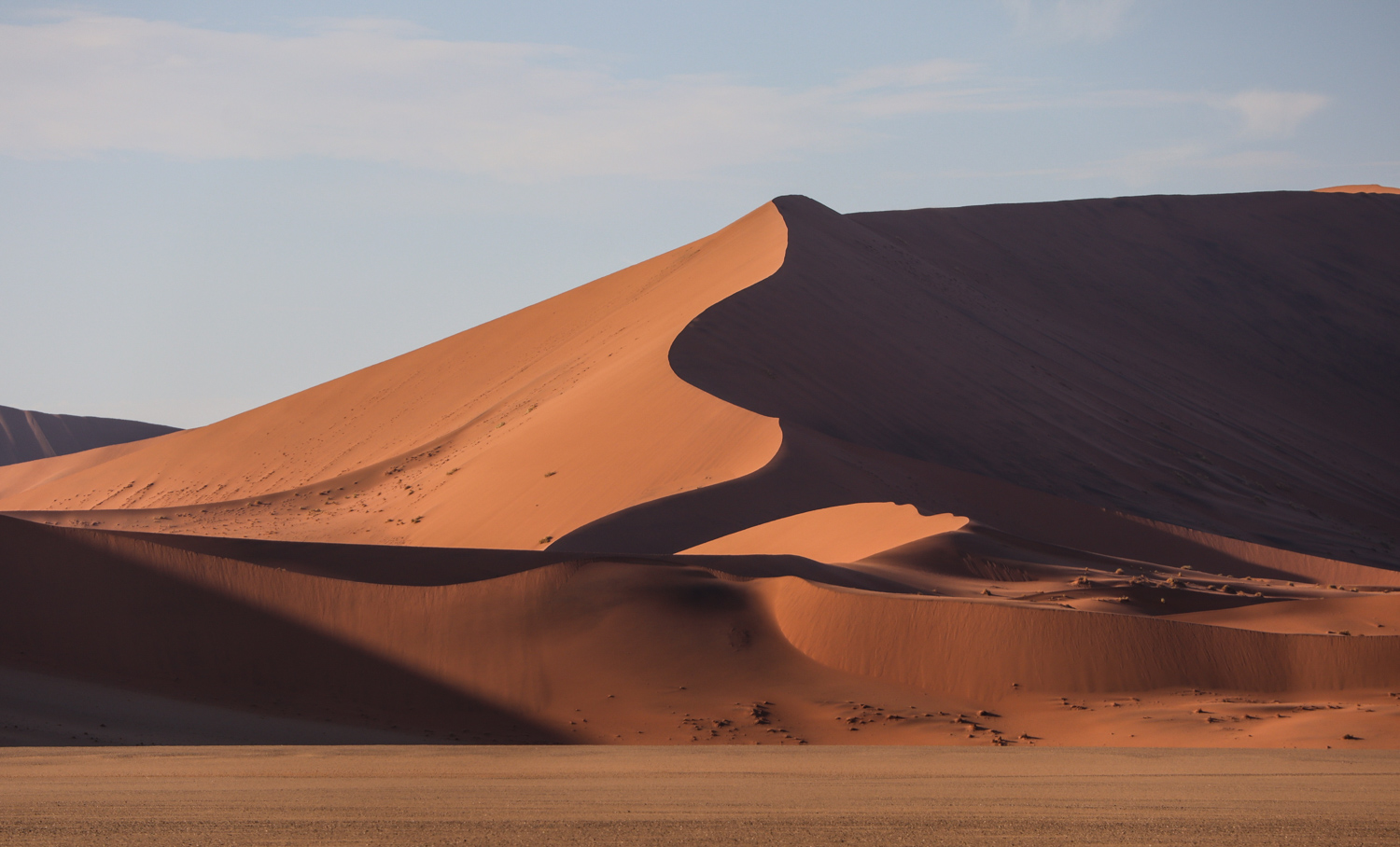
One of the crucial moments which made me choose Namibia as a destination for my solo trip was realizing that by entering the Namib desert I would be visiting the world’s oldest desert. This is a very special place – let me tell you why.
Its name comes from the Nama word “namib”, meaning “vast place,” a fitting description for this expansive, silent wilderness. Its shape is very elongated; it follows the coast of the Atlantic ocean like a belt, spanning over 2 000 km from Angola to the South African republic, wide up to only 150 km. Its core is in Namibia, though.
It is very unique due to specific geographical circumstances. The sand came from the african inland Kalahari region, and at the same time, it collided with a very opposite force – the Benguela atlantic current which brings an immense amount of cold antarctic water towards the equatorial line, and provides fresh air in the coastal region. This, of course, wildly impacted the local flora and fauna and there are many autochthonic and unique species residing in this sand covered belt.
The desert is not a monotonous landscape but a tapestry of shifting dunes, gravel plains, rocky outcrops, and dry riverbeds. The most famous part is the central Namib’s dune sea, particularly around Sossusvlei and Deadvlei, where colossal red-orange sand dunes rise up to 300 meters. These are among the tallest dunes in the world. The sand is over five million years old, blown in from the Kalahari and other inland regions over vast time spans.
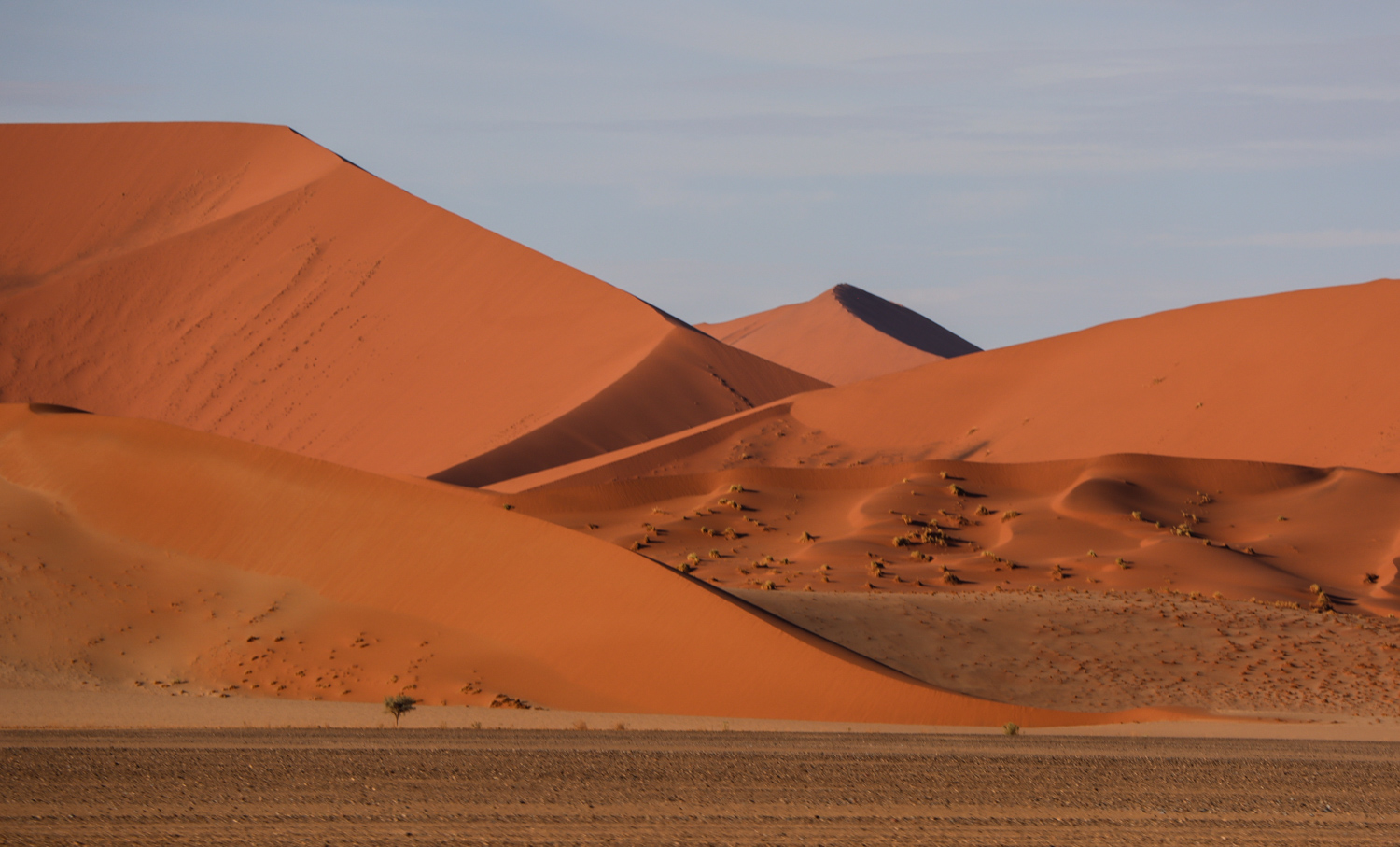
Geologically, the Namib is ancient – some estimates place it at 55–80 million years old. Its bedrock varies from old crystalline rocks to younger sedimentary layers. The constant erosion, wind, and temperature extremes have created unusual rock formations, including inselbergs and desert pavements. Salt pans, clay pans, and ephemeral rivers like the Kuiseb and the Tsauchab carve through parts of the desert, though they rarely hold surface water. Despite its extreme aridity, the Namib is rich in life – much of it specially adapted to survive in fog, wind, and heat.
Fog from the ocean plays a crucial role. Many organisms harvest moisture directly from the fog, a vital adaptation in a place where rain may not fall for years.
The flora of the Namib is sparse but remarkable. Near the coast, lichens, mosses, and succulents thrive on fog moisture. Further inland, one finds Welwitschia mirabilis, a plant that can live over a thousand years and has only two ever-growing leaves. It absorbs fog water through its leaves and roots, perfectly adapted to its surroundings. Other desert plants include dollar bush (Zygophyllum), camelthorn trees, and grasses that spring to life after rare rains.
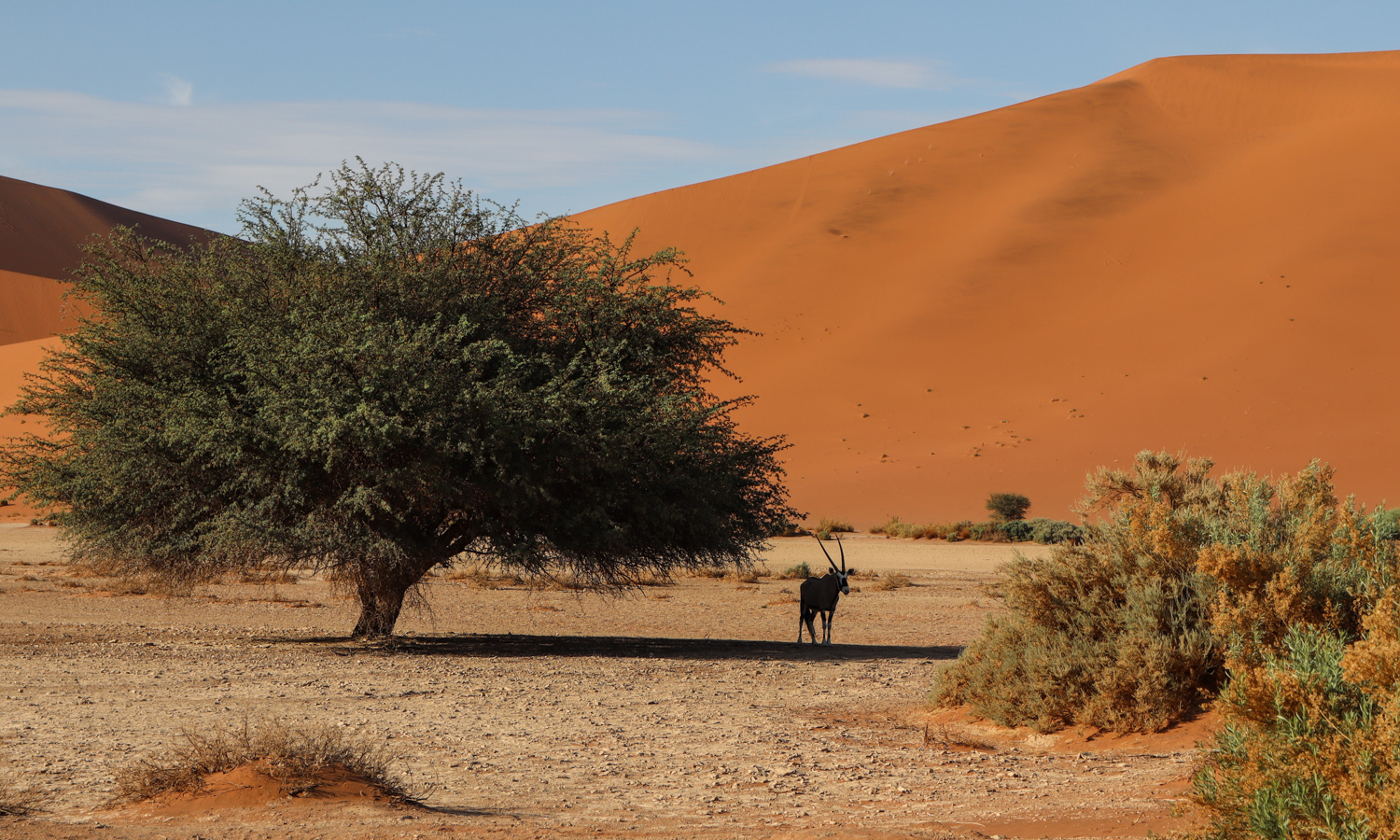
The desert’s fauna is equally specialized. Insects, especially beetles like the fog-basking Stenocara, have evolved clever strategies to drink water directly from fog. Reptiles, such as the shovel-snouted lizard, use “thermal dancing” to keep from burning on hot sands. Mammals like oryx, springbok, and desert-adapted elephants roam the gravel plains and dry riverbeds, often traveling vast distances in search of water. Smaller mammals include the bat-eared fox, aardwolf, and gerbils.
Birds such as the dune lark, endemic to the Namib, and raptors like the black-breasted snake eagle patrol the skies. Coastal wetlands and lagoons, especially around Walvis Bay, support flamingos, pelicans, and other migratory birds.
Perhaps most remarkably, the Namib is not barren but full of movement – slow, subtle, and ancient. Dunes migrate, plants twist toward fog, animals emerge by night, and dry rivers occasionally roar to life. It is a desert of paradox: inhospitable yet inhabited, ancient yet ever-changing.
The Namib Desert is a UNESCO World Heritage Site and a global treasure. It offers a glimpse into Earth’s geological past and the relentless power of adaptation. For scientists and travelers alike, it is a place of awe, silence, and discovery – a living monument to resilience in the harshest of conditions.