Tashkent metro hopping
 Ivana
Ivana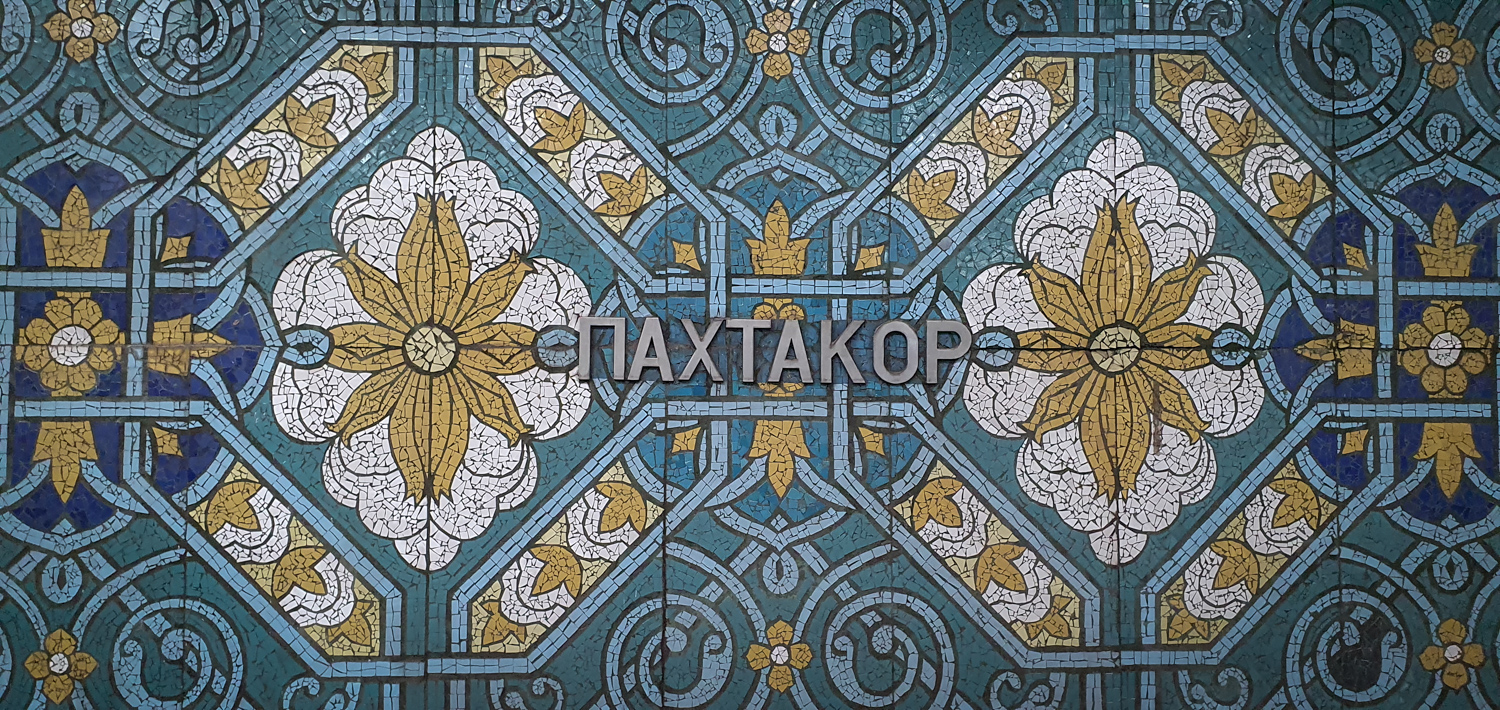
Soviet metro stations – made to last and endure
There are many ex soviet capital cities which are proud to have a metro station network and which are oftentimes beautifully decorated. The most famous ones are the Moscow metro and the Kiev metro networks, of which the Arsenalna in Kiev is the deepest one in the world – many of them were also built to serve as bomb shelters during the Cold war, so they had a national security role as well.
Tashkent is one of them. The city’s metro network is large and covers 50 stations. The stations are branching in four directions, and the branches are connected with a ring near the city centre. Many of them are decorated thematically and are a true work of art.
I also loved the names of the stations, beautiful words stemming from the Chagatai language with background from the Turkic language family, so I will gladly list them all, add their meanings and share the pictures I took while metro hopping.
Tinchlik, Paxtakor, Beruniy, Do’stlik,… 😍
The red branch / Chilonzor line (Chinor –> Buyuk ipak yo’li)
- Chinor – “plane tree”, oriental plane, a classic Central Asian tree
- Yangihayot – “new life”
- Sergeli – named after Sergeli (Sirg’ali) distric
- O’zgarish – “change, transformation”
- Choshtepa – “hill or mound of Chosh”
- Olmazor – “apple orchard” (olma – apple)
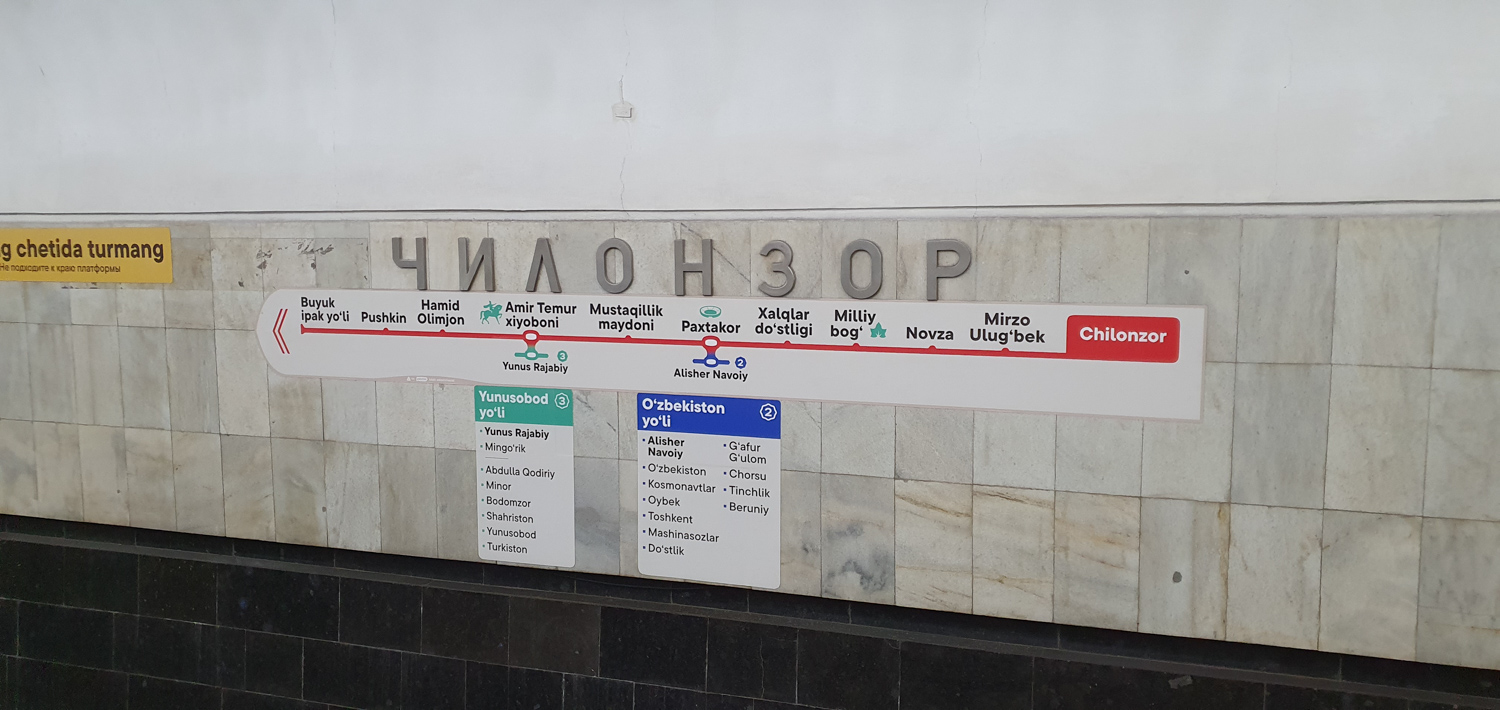
- Chilonzor – “jujube orchard” (chilon – jujube tree)
- Mirzo Ulugh’bek – named after the ruler and mathematician from the 15th century
- Novza – old district in Tashkent
- Milliy bog – “National park” – major public park
- Xalqlar do’stligi – “Friendship of peoples” – soviet ideal of ethnic harmony
- Alisher Navoiy – named after Alisher Navoiy, Afghan writer and poet
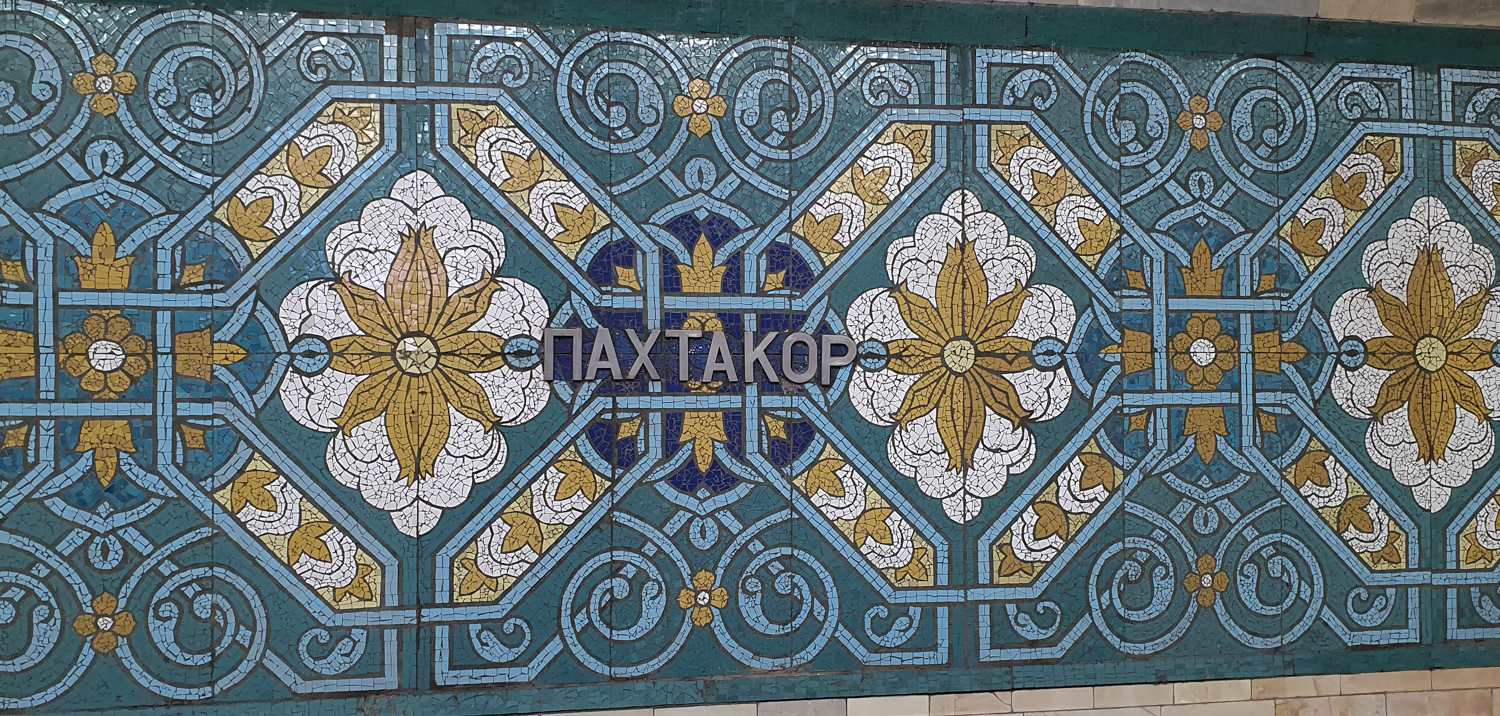
- Paxtakor – “cotton grower” – allusion to Uzbekistan’s cotton industry
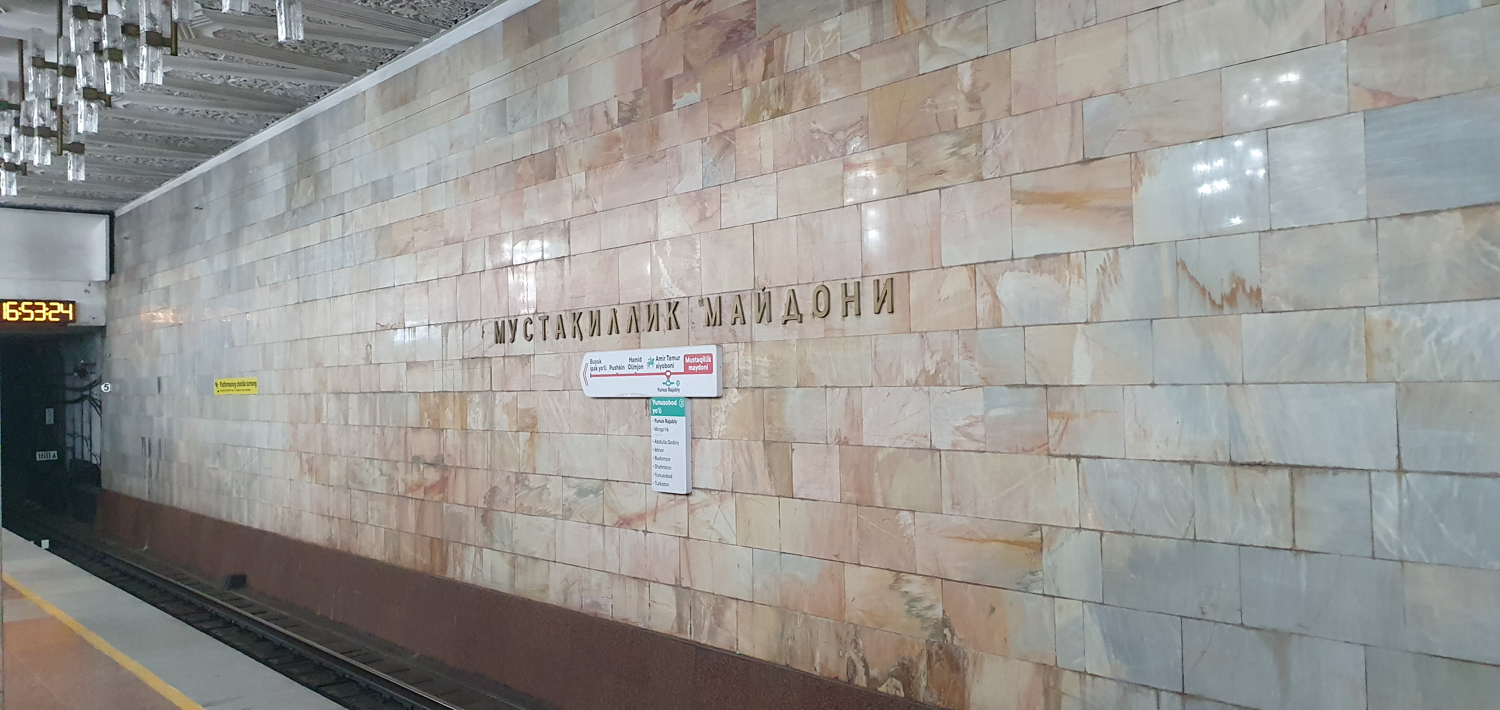
- Mustaqillik majdoni – “Independence square”
- Yunus Rajabiy – named after Yunus Rajabiy, uzbek composer and musician
- Hamid Olimjon – named after Uzbek poet and writer
- Pushkin – named after Alexander Pushkin, very well known russian writer
- Buyuk ipak yo’li – “great silk road”
The blue branch / O’zbekiston line (Beruniy –> Do’stlik)
- Beruniy – named after Abu Rahman Al Biruni, persian polymath from the 12th century
- Tinchlik – “peace”
- Chorsu – from persian “four roads”, traditional crossroads bazaar area
- G’afur G’ulom – named after uzbek poet and writer
- O’zbekiston – “Uzbekistan”
- Kosmonavtlar – “cosmonauts”, dedicated to Soviet space program and exploration
- Oybek – named after Oybek, Musa Tashmukhamedov, uzbek poet and a writer
- Toshkent – “Tashkent”
- Mashinasozlar – “machine builders”, industrial and engineering workers
- Do’stlik – “friendship”
The green branch / Yunusobod lone (Mingo’rik –> Turkistan)
- Mingo’rik – “thousand apricot trees”
- Amir Temur xiyoboni – “Amir Temur square park”, named after Timur / Tamerlane
- Abdulla Qodiriy – named after Abdulla Qodiriy, Uzbek playwright and poet
- Minor – named after the Minor mosque area, from Arabic minar tradition
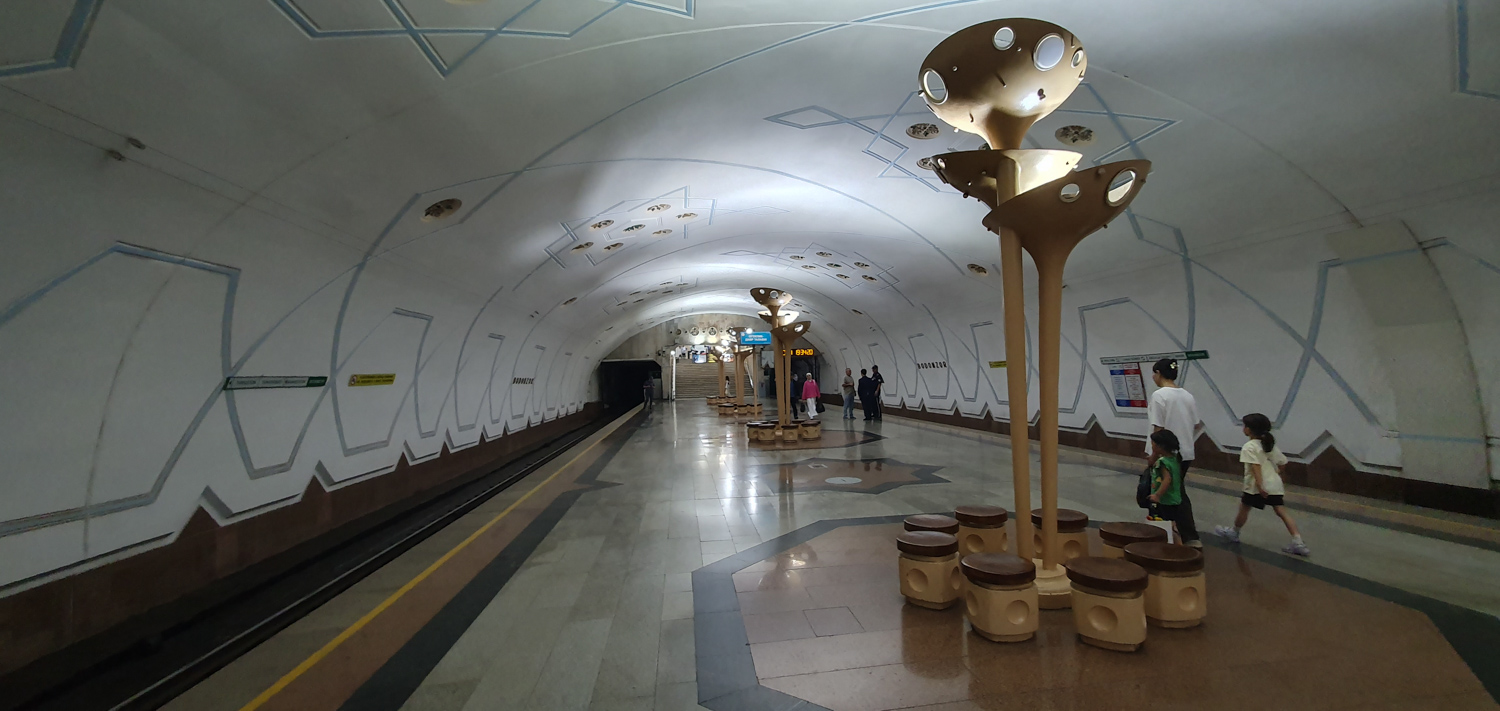
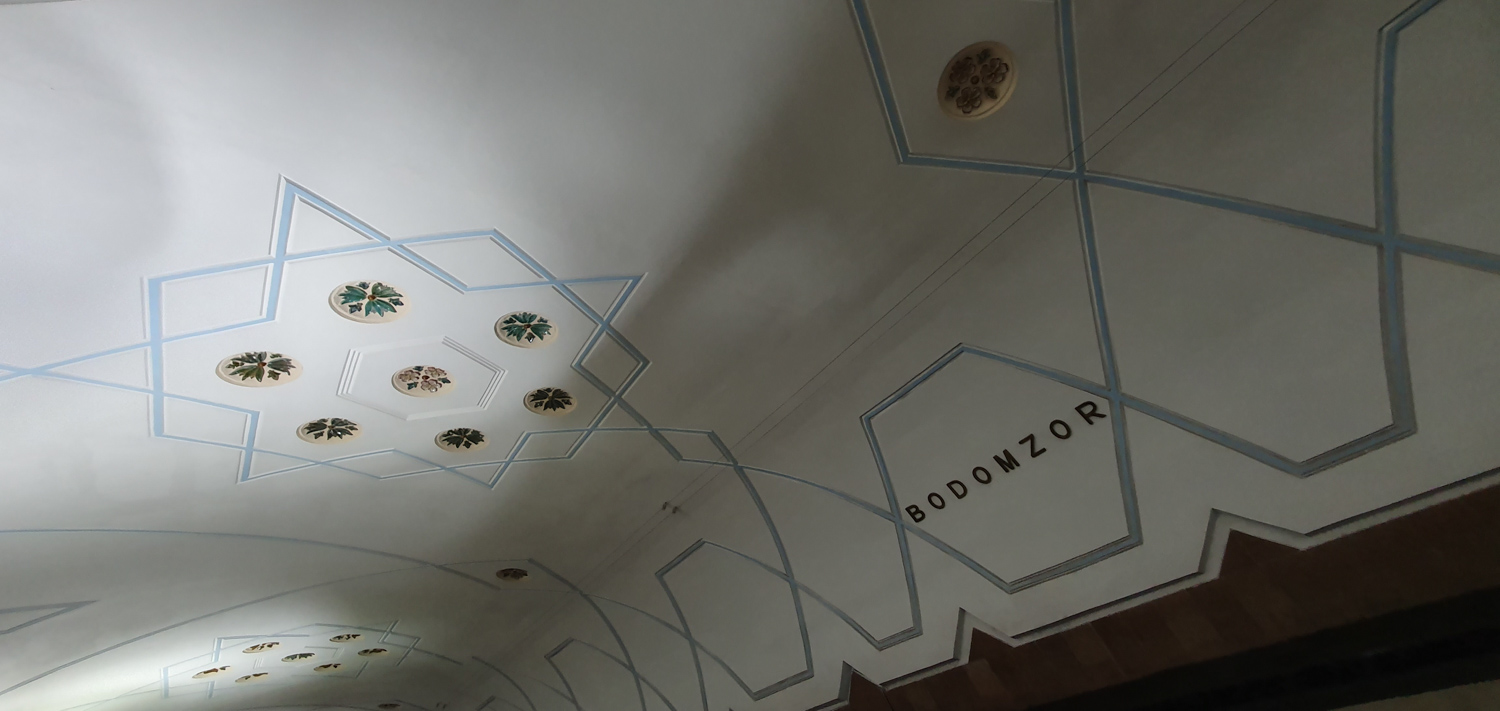
- Bodomzor – “almond orchard”
- Shahriston – persian word for “fortified town”
- Yunusobod – named after Yunusabad district
- Turkiston – “Turkestan”, historic Central Asian cultural-geographic region
The yellow branch (Chinor – Tehnopark)
- Chinor – “plane tree”
- Turon – ancient poetic-historical name for Central Asia
- Quruvchilar – “builders”
- Xonobod – khan’s settlement
- Tolariq – local historical place
- Qiyot – historic tribal and toponym name
- Matonat – “fortitude, resilience”
- Qo’yliq – district name, historically a settlement area
- Yangiobod – “new settlement”
- Rohat – “comfort, pleasure, ease”
- Olmos – “diamond”
- Tuzel – district name
- Yashnobod – “prosperious green settlement”, district name
- Texnopark – near the industrial zone
Some of the stations’ names were changed after Uzbekistan became independent.
- Buyuk ipak yo’li – was Maksim Gorkiy
- Amir Temur Xiyoboni – Oktyabr Inqilobi
- Milliy bog’ – Komsomolskaya
- Mustaqillik maydoni – Lenin square
Fun fact: up until 2018 it was forbidden to take photos of the stations’ artwork.
Luckily for me, I came to Tashkent’s metro to observe the stations and take photos when such activity is allowed. I saw many guards, on every station, they did pay attention to me taking photos and looking probably like a child in a lollipop store, but no one showed any intention to stop me for whichever reason.
Let’s go.
Kosmonavtlar
My absolute favorite. “Cosmonauts”. Reminded me massively of Star Trek TOS. Dedicated to the Soviet space program, including the retired Soviet (now Uzbek) Air Force Major General and a cosmonaut veteran of five orbital missions – Vladimir Aleksandrovich Dzhanibekov.
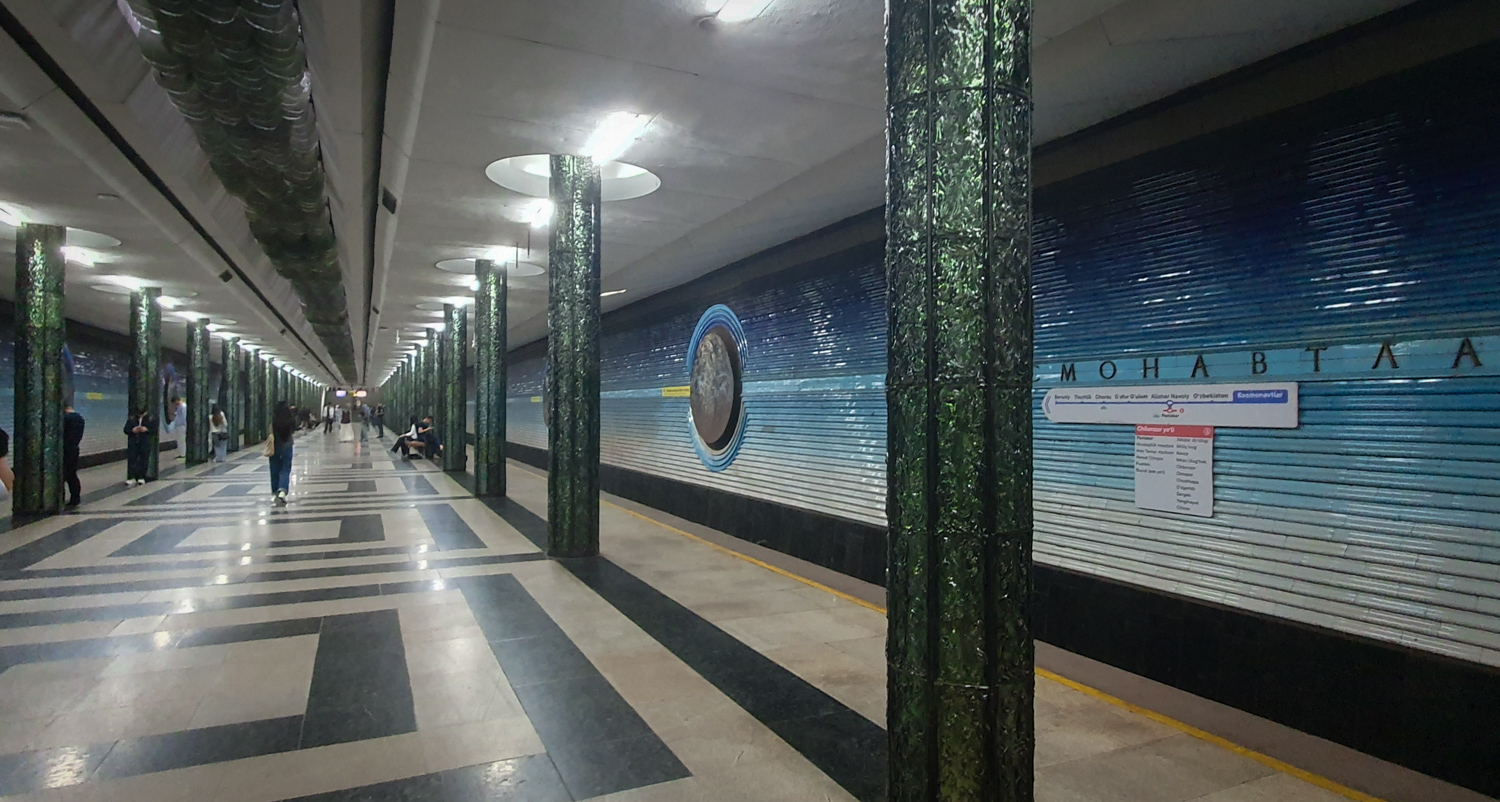
Kosmonavtlar metro station
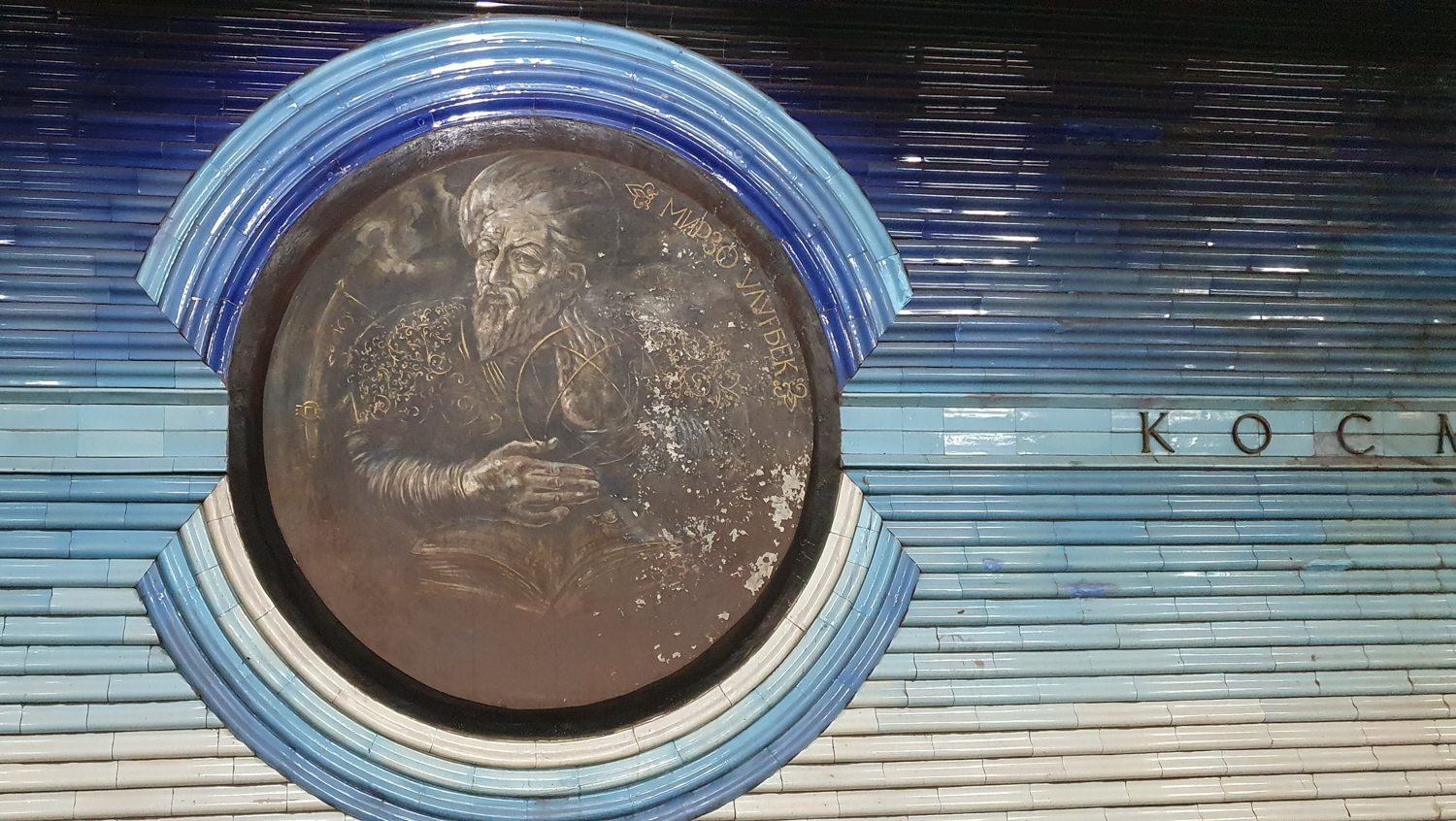
Mirzo Ulugh’bek, Uzbek mathematician and astronomer
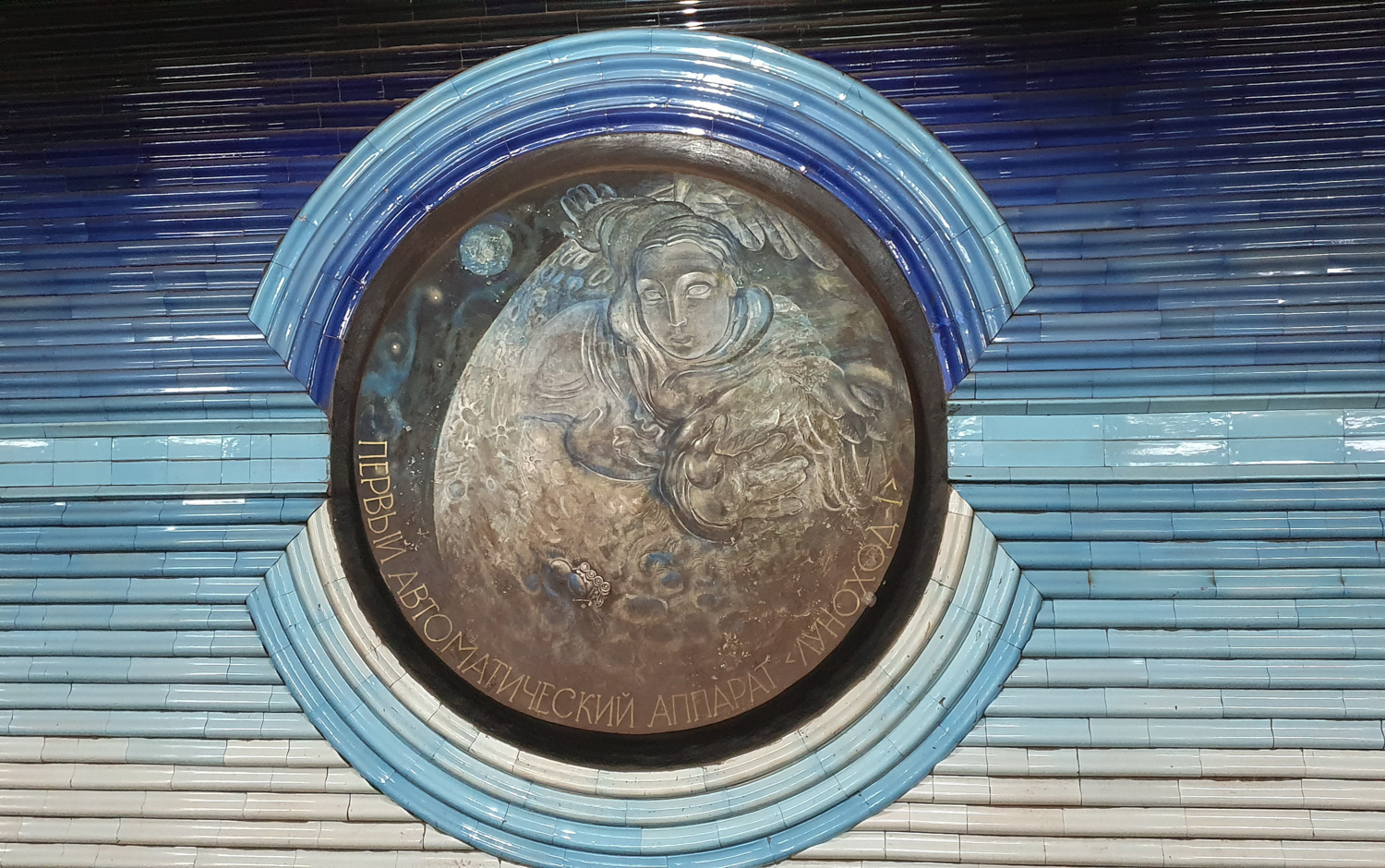
First automatic machine; Lunohod
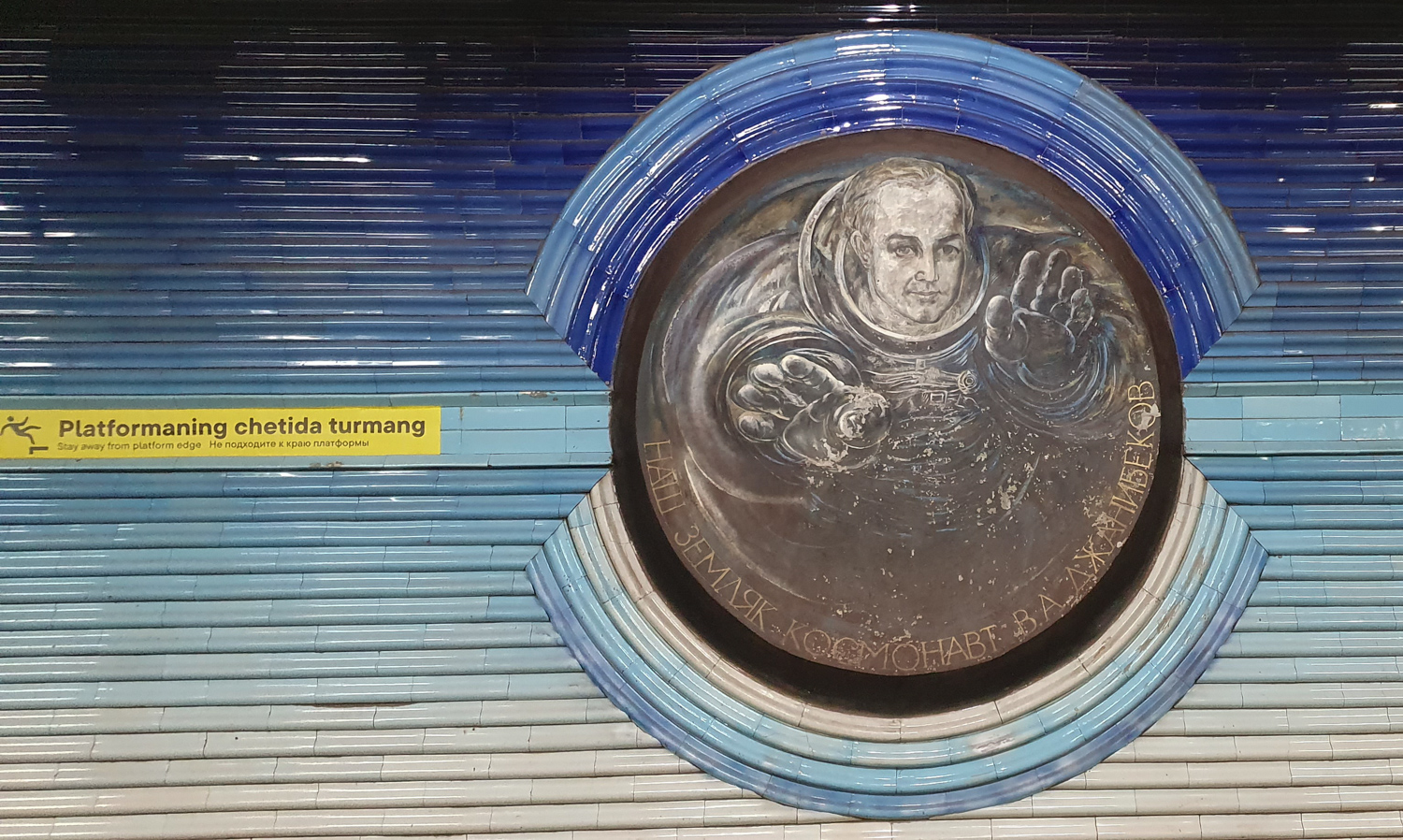
Our countryman, Dzhanibekov
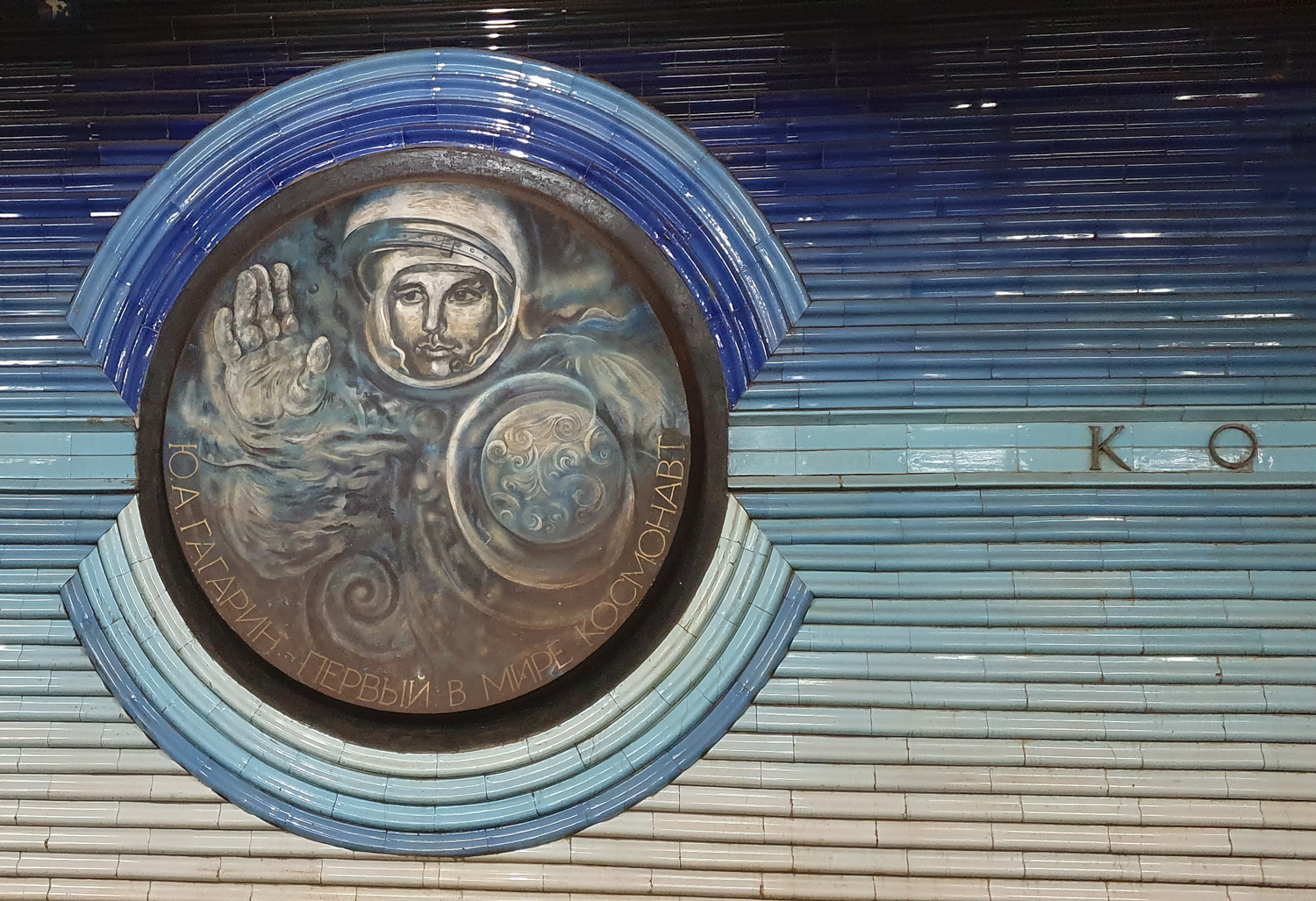
Gagarin, the first man in space
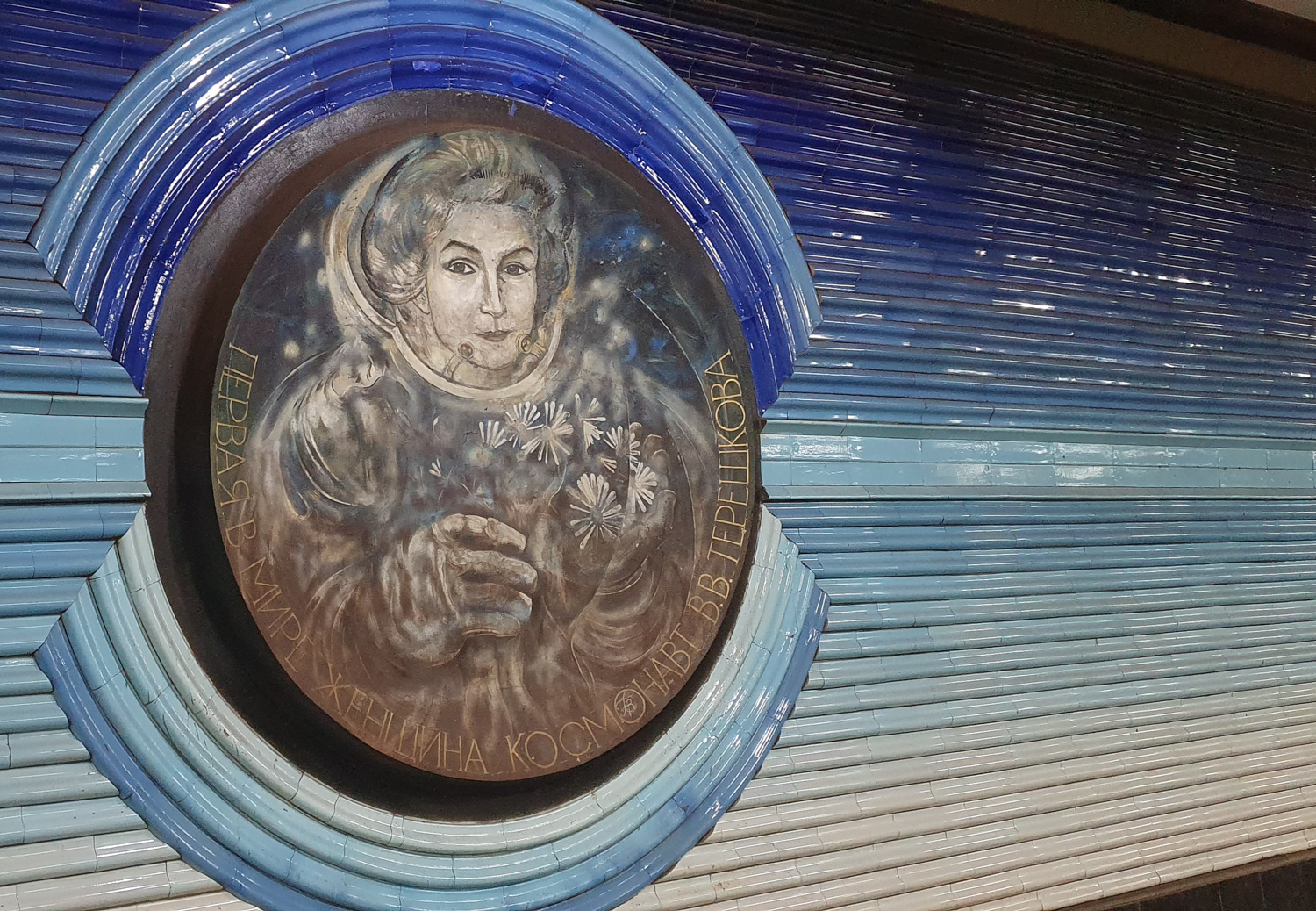
Valentina Tereshkova, the first woman in space
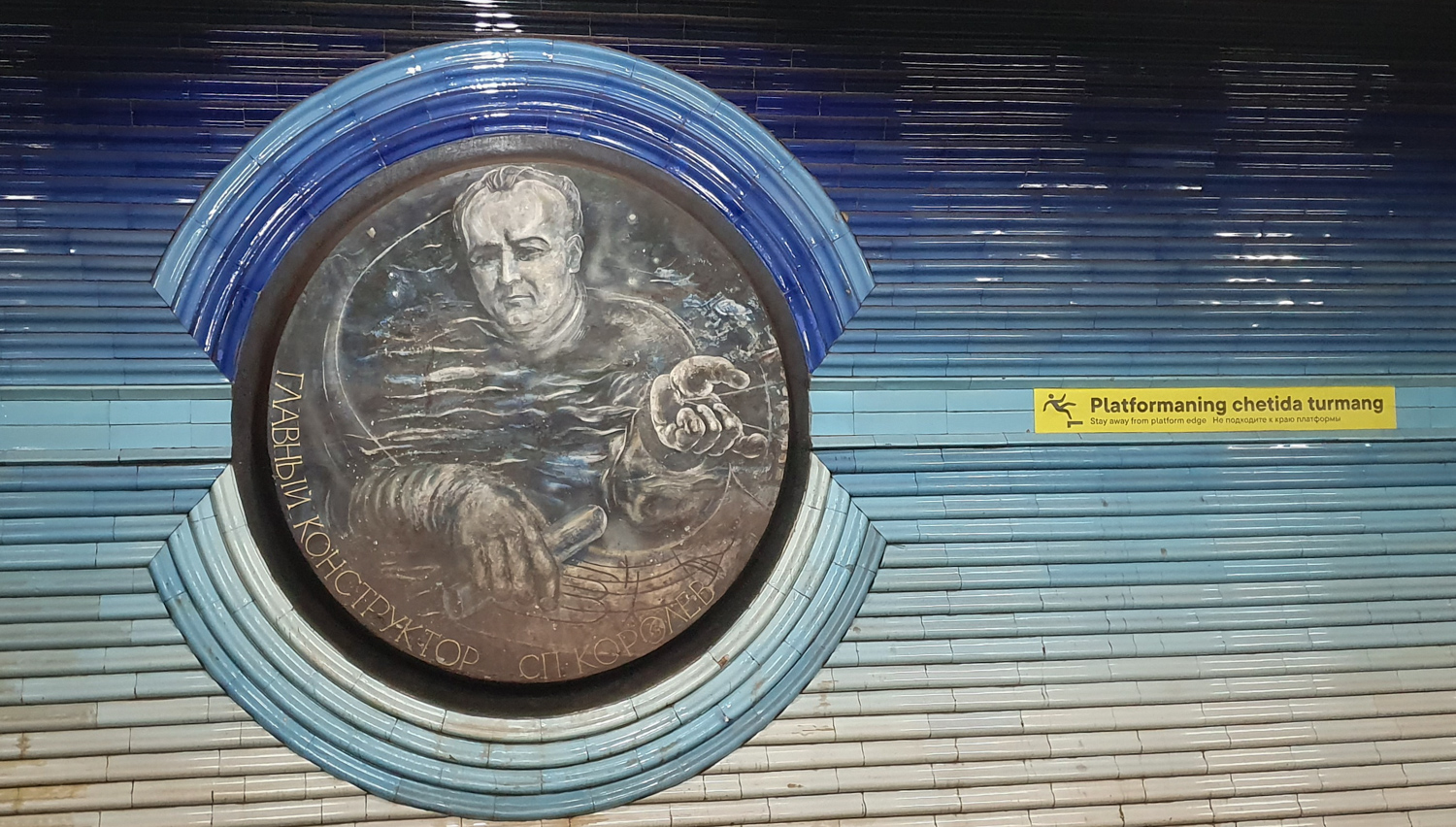
The main constructor, Korolev
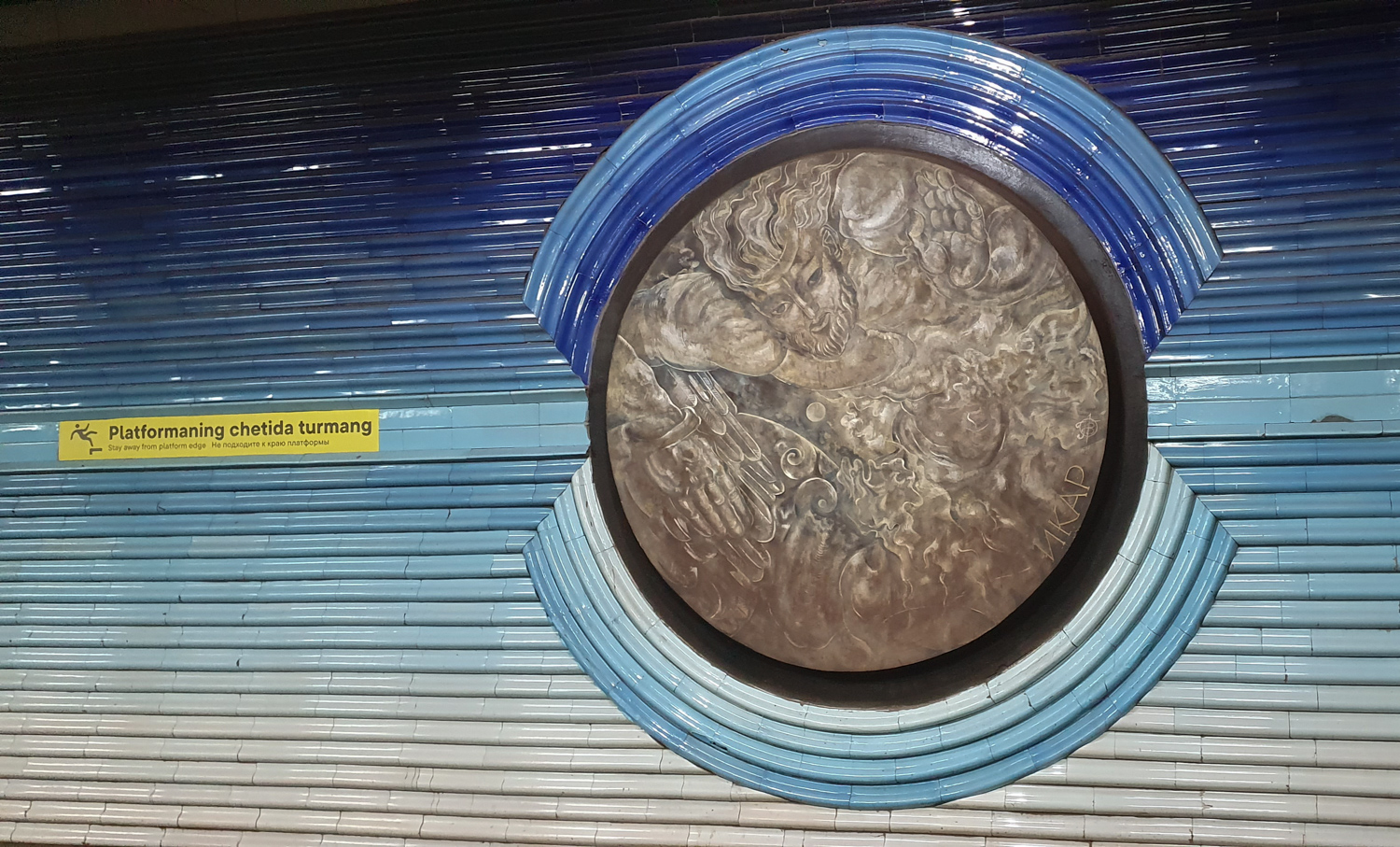
Icarus (from the greek myth)
Beruniy
I love the name Beruniy. No idea why but I love how it “rolls off the tongue”. This station is at the end of the Ozbekiston line, which means it was empty quite a lot when I reached it. This means that I could really explore it, almost in peace. The metro is, expectedly, very busy during any part of the day. Tashkent has 3M people so it does make sense.
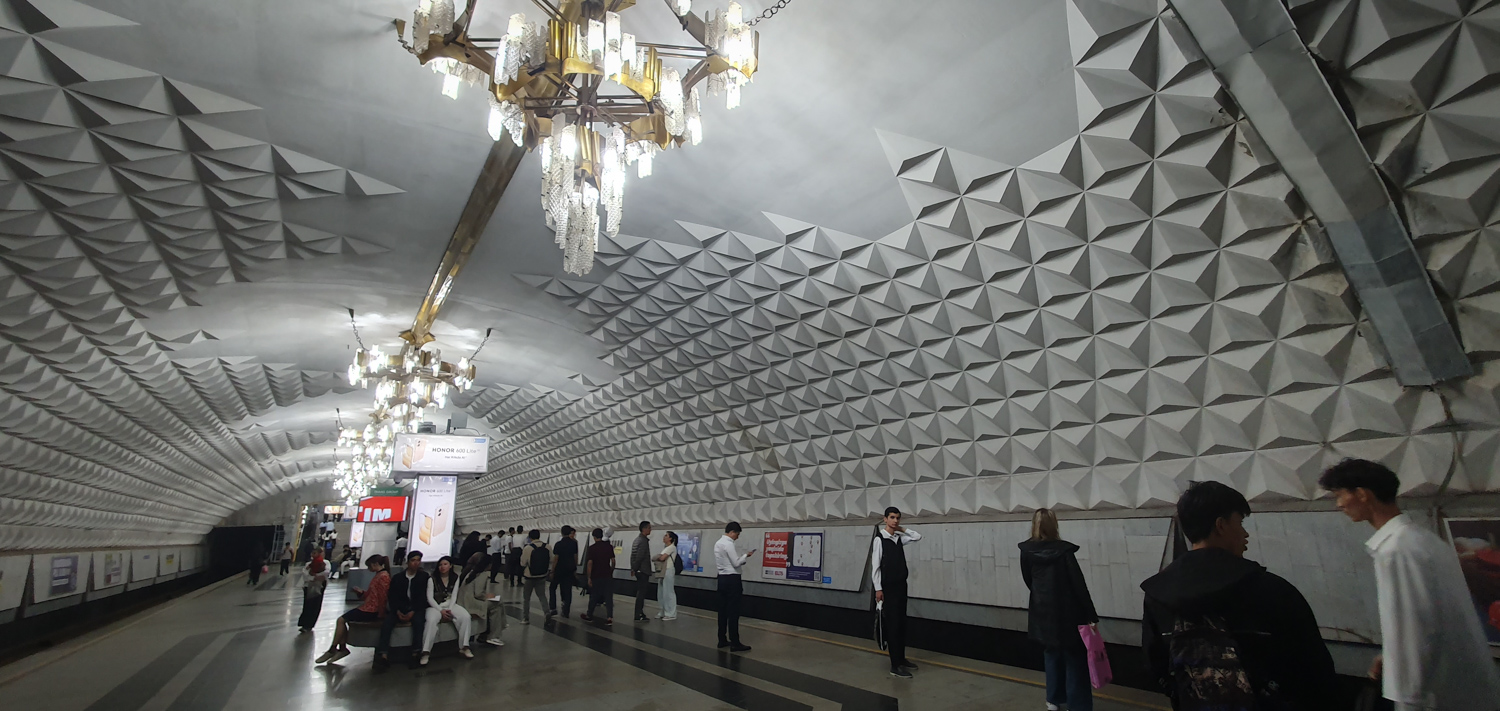
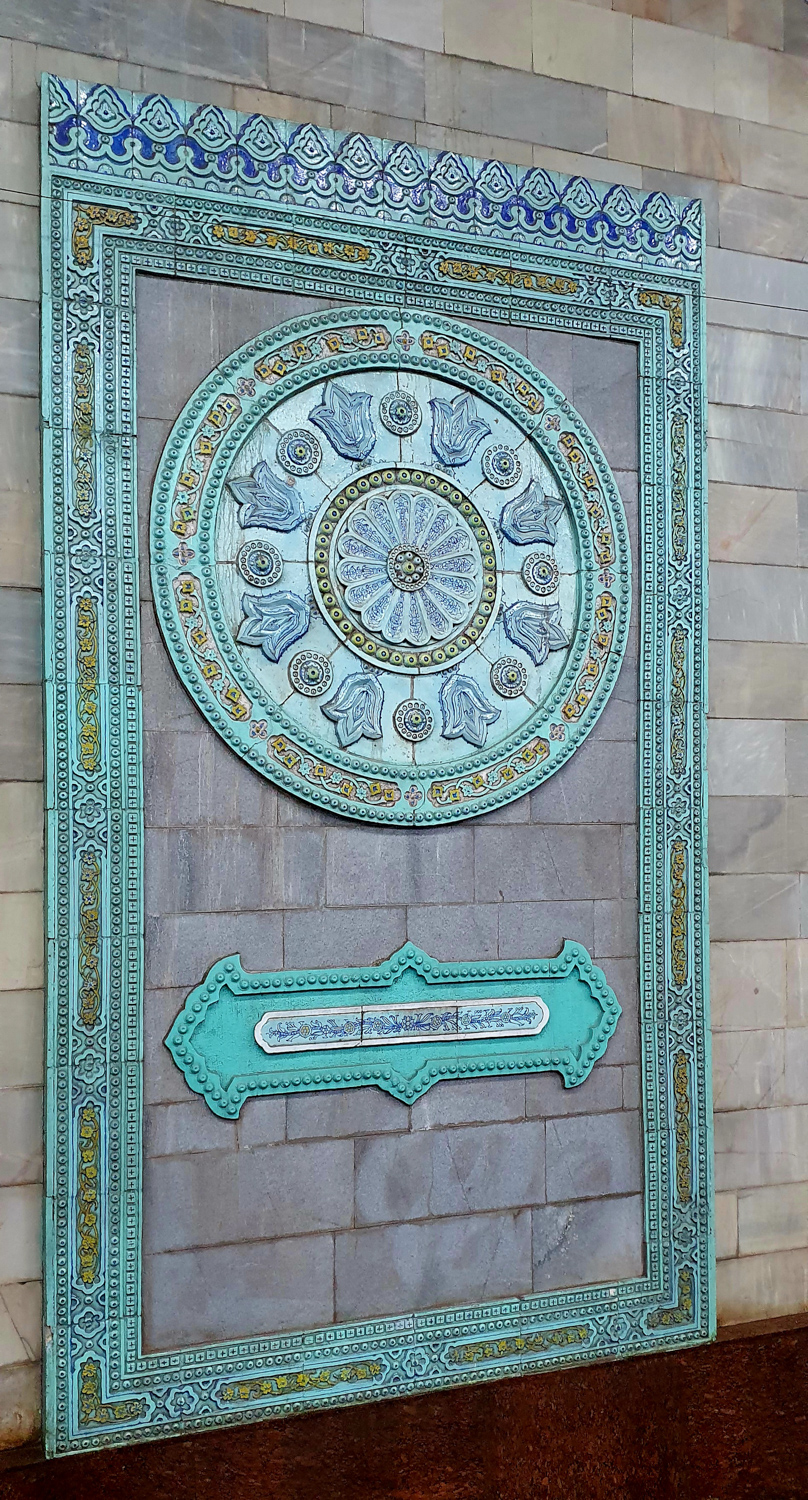
Alisher Navoiy
Named after a poet.
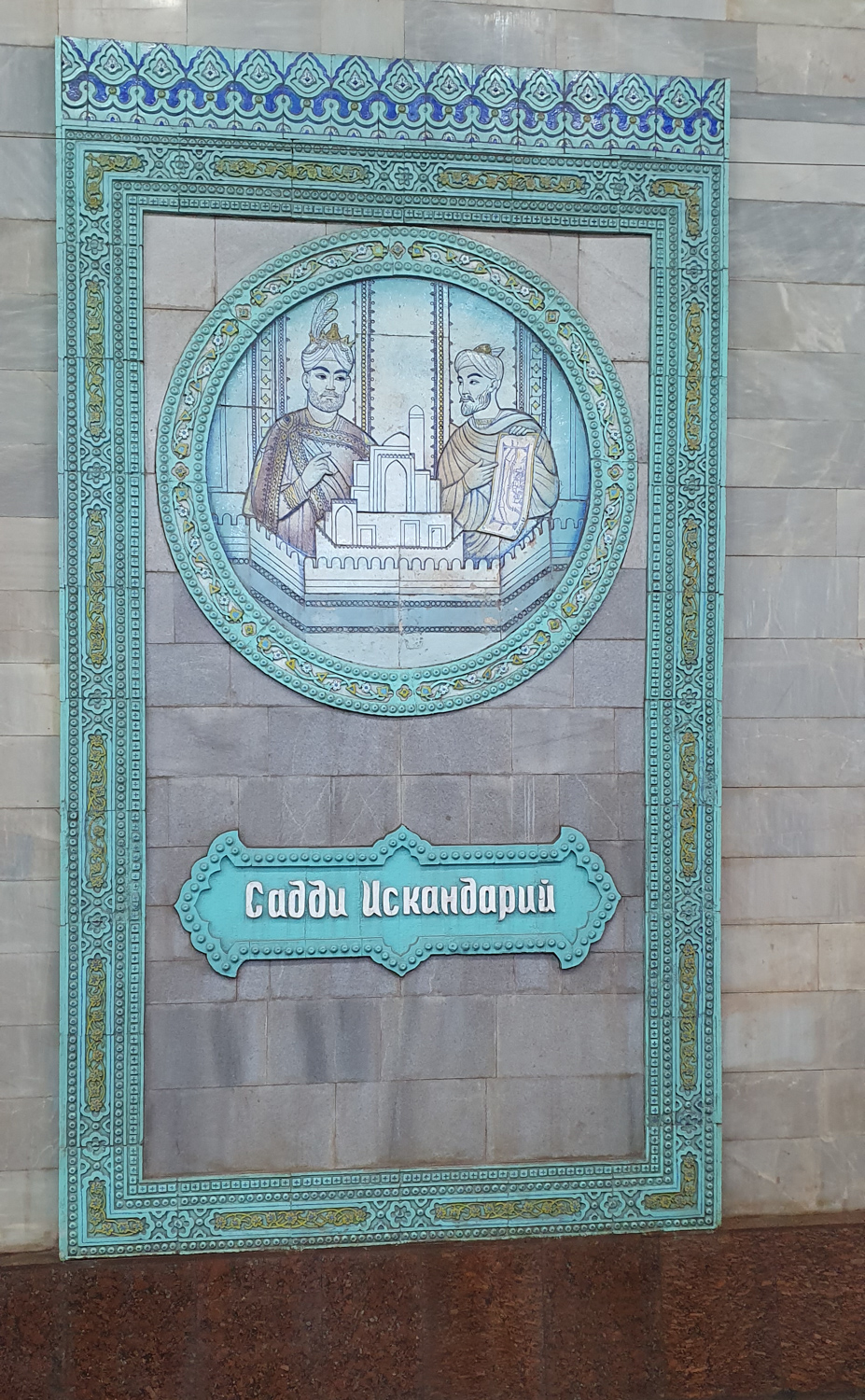
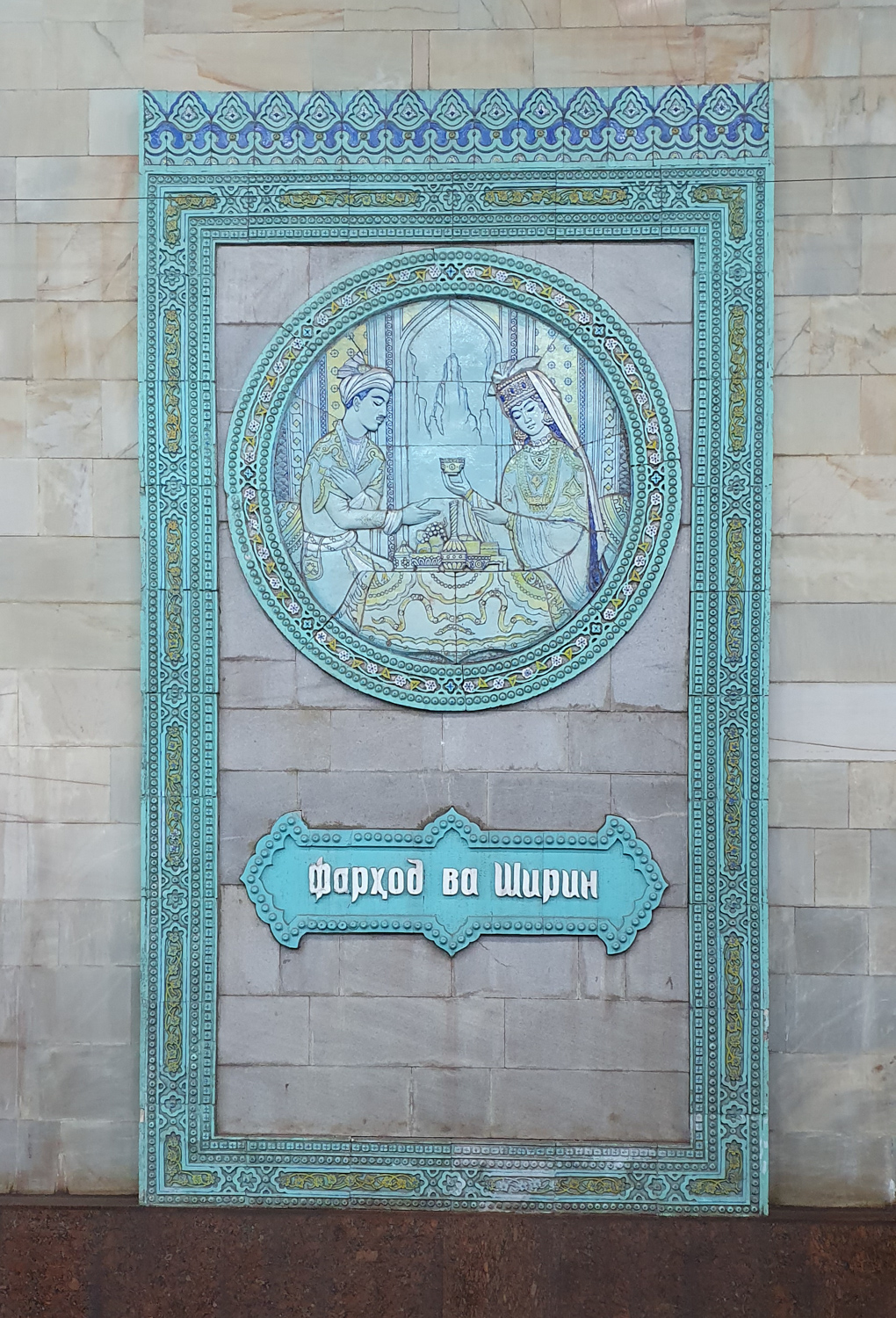
G’afur G’alom
Also named after a poet.
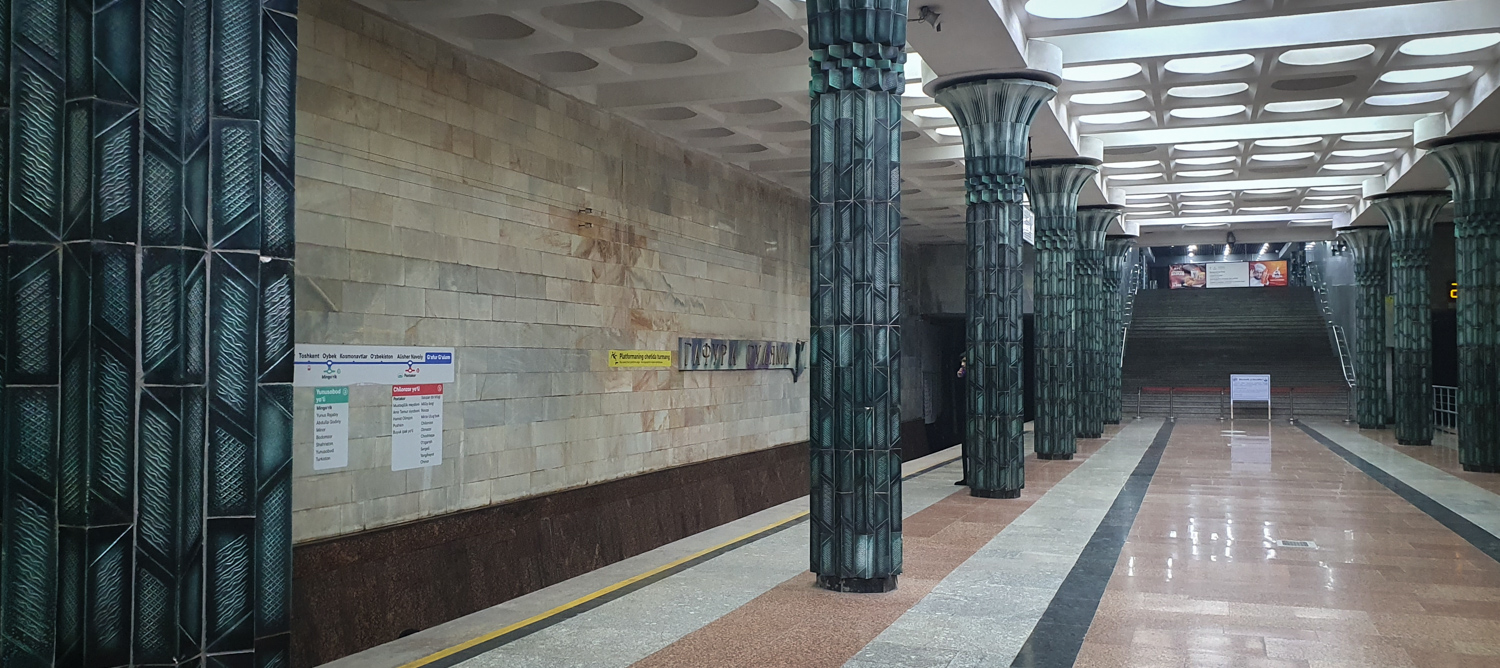
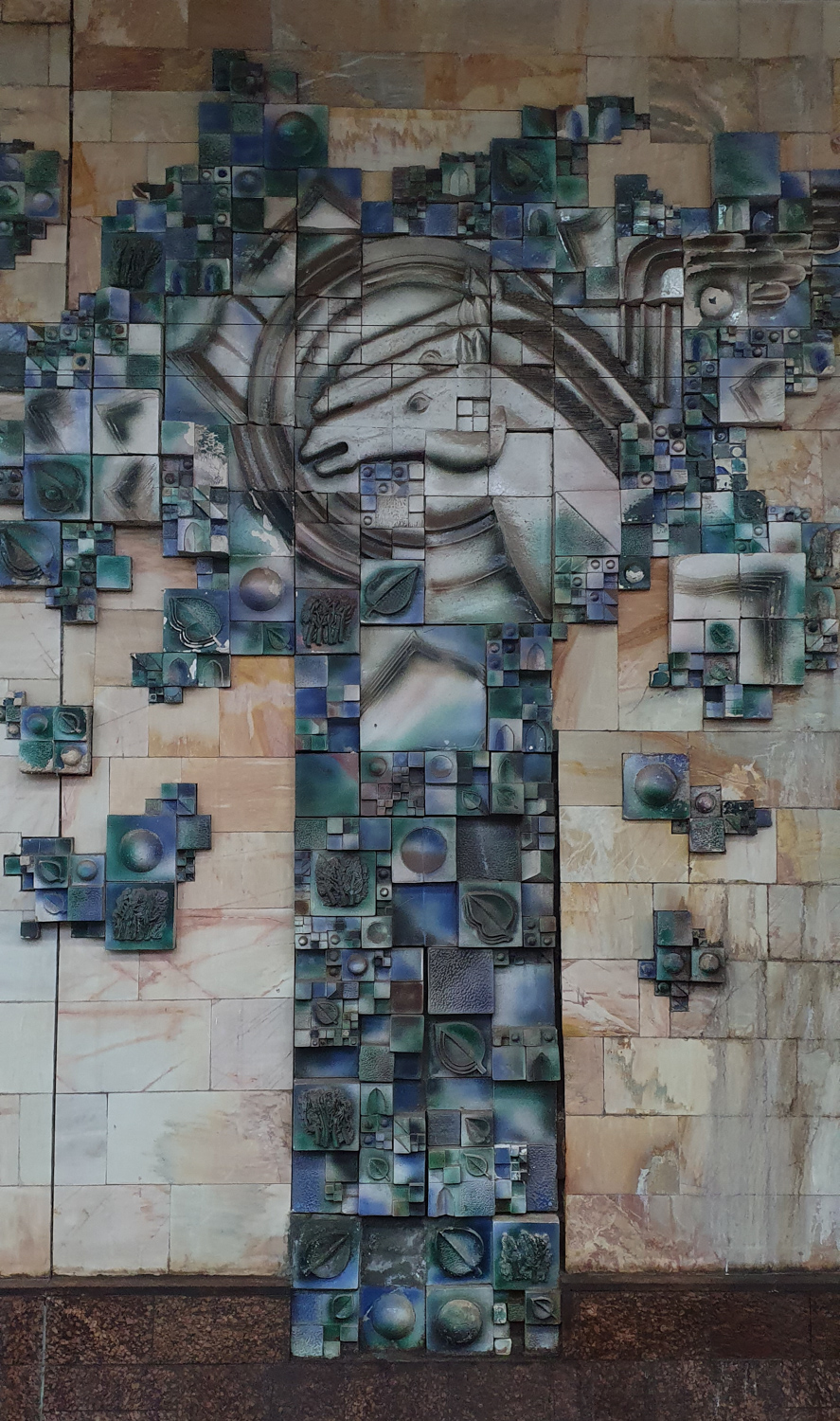
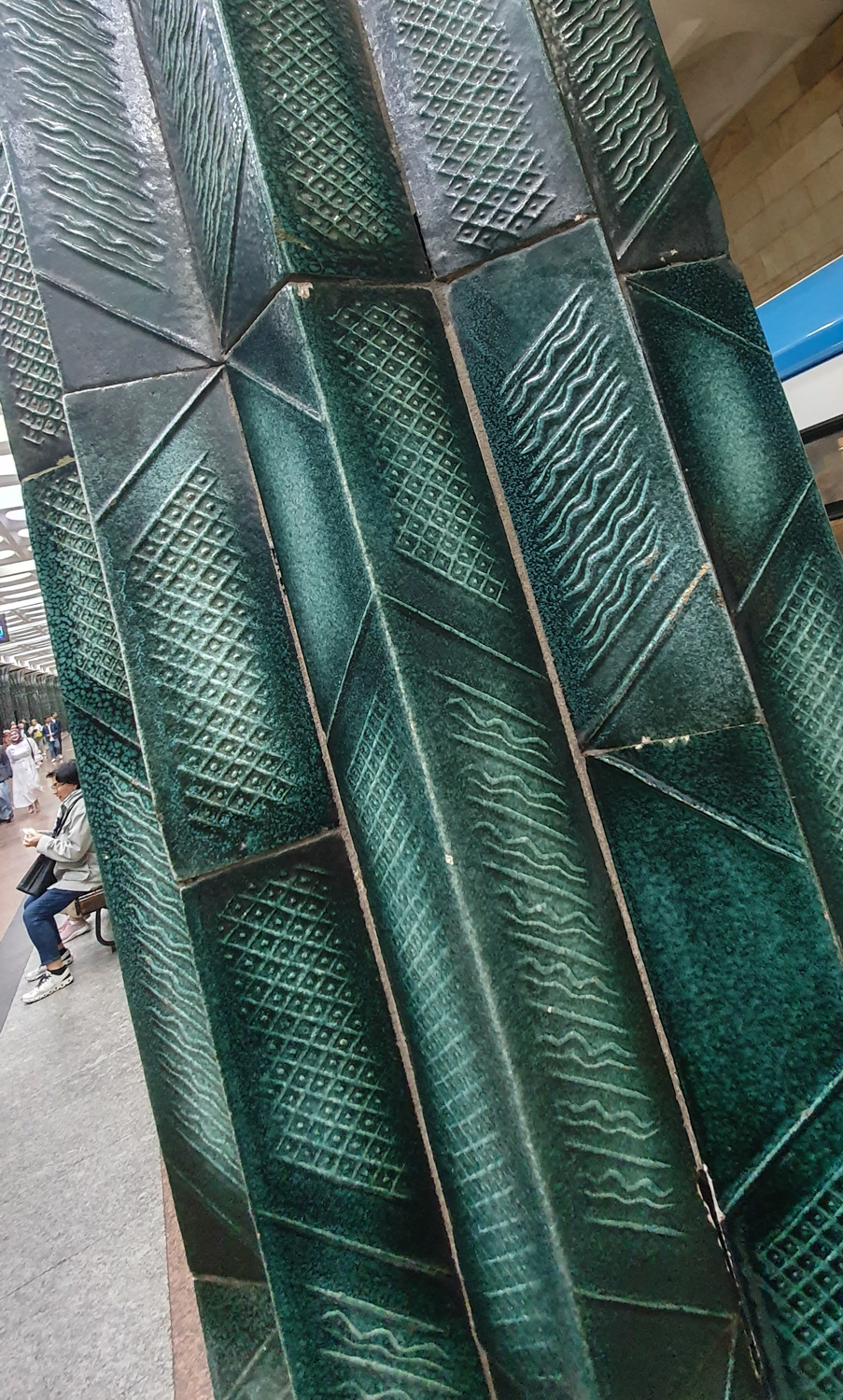
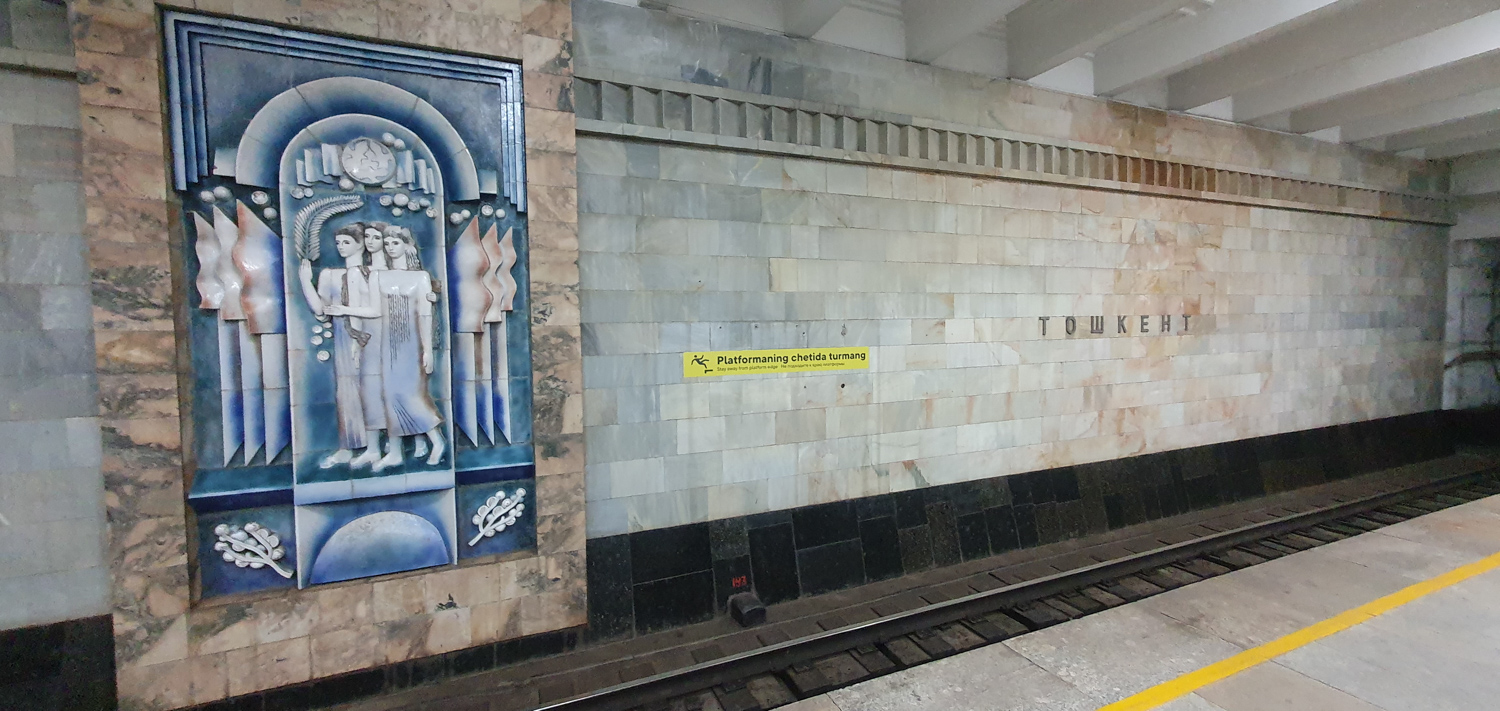
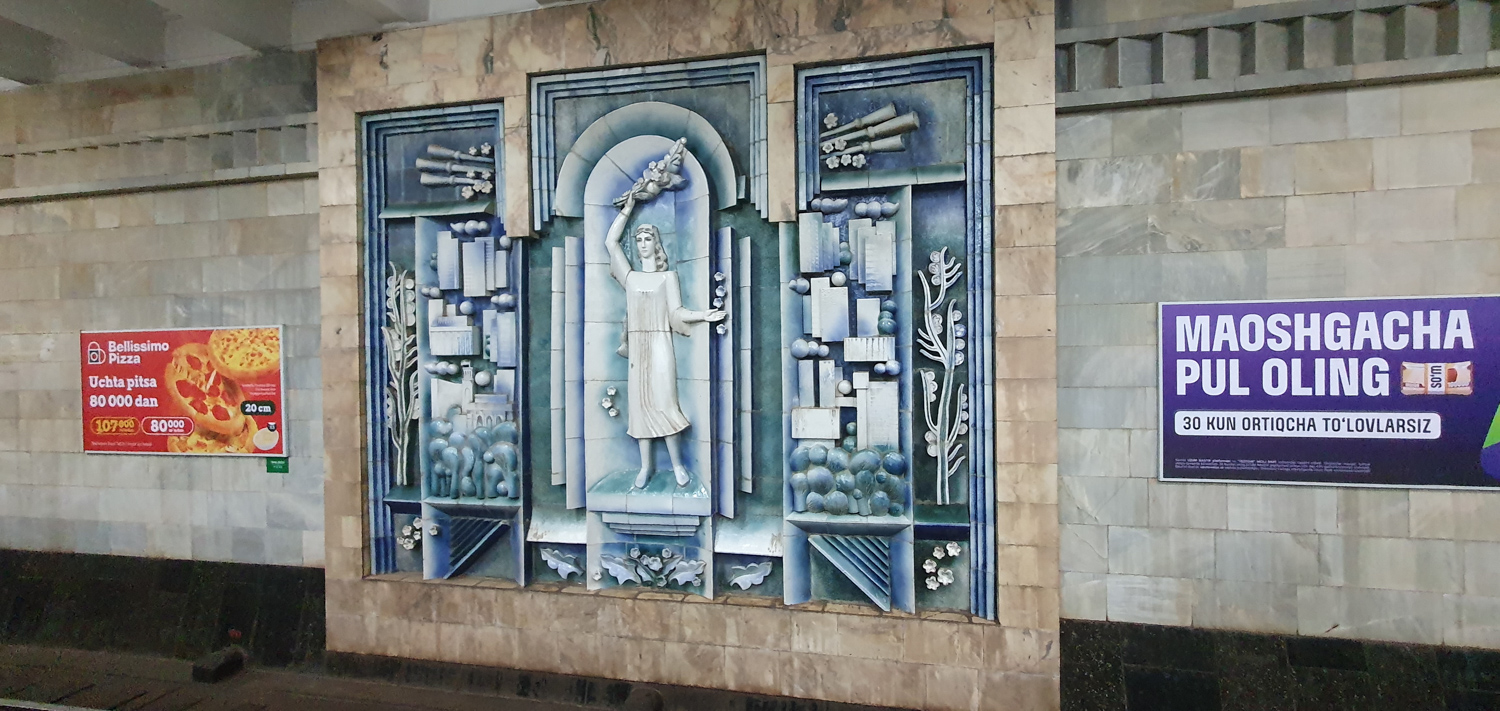
Toshkent
Simply “Tashkent”, near the city centre.
Chilonzor
Jujube orchard.
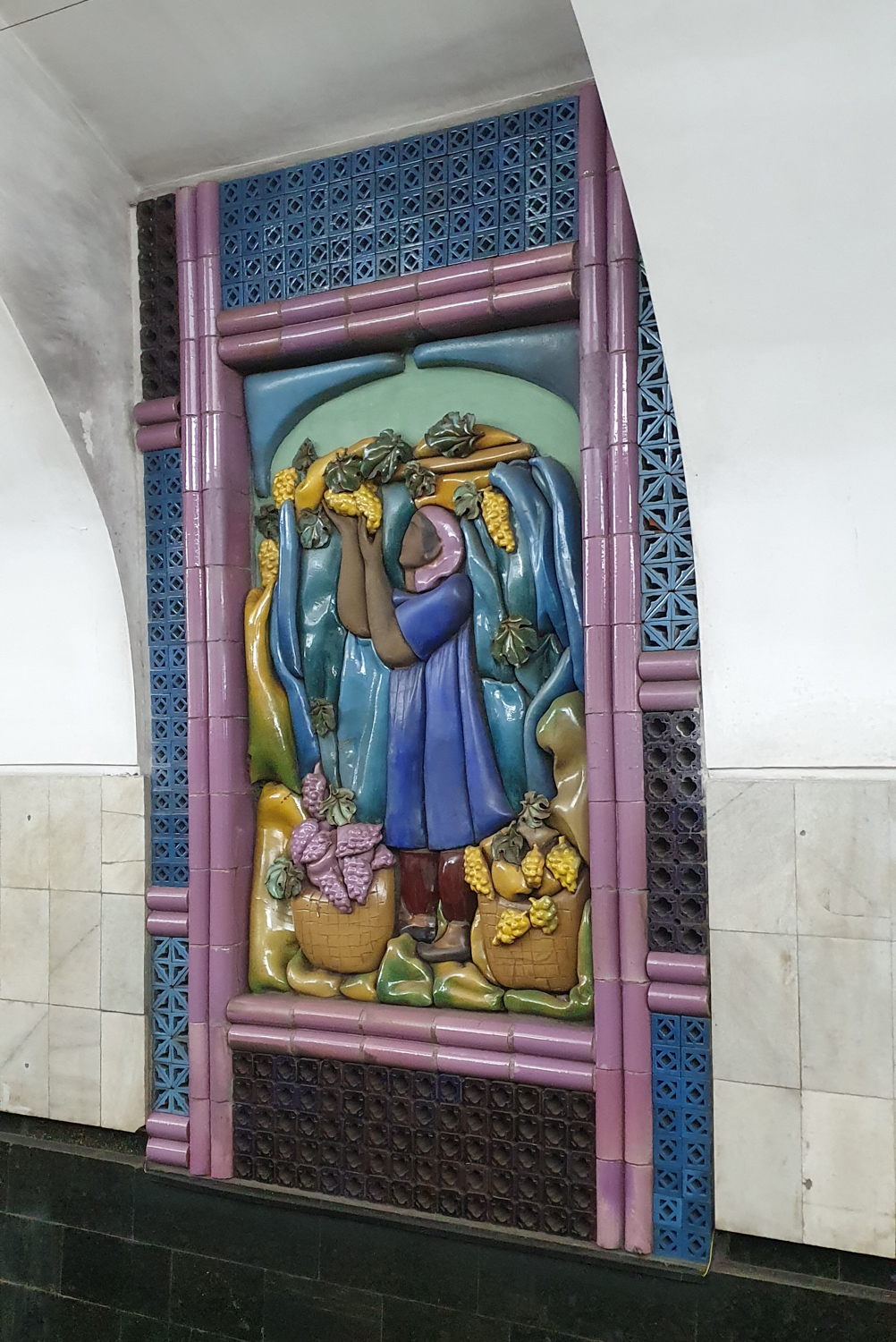
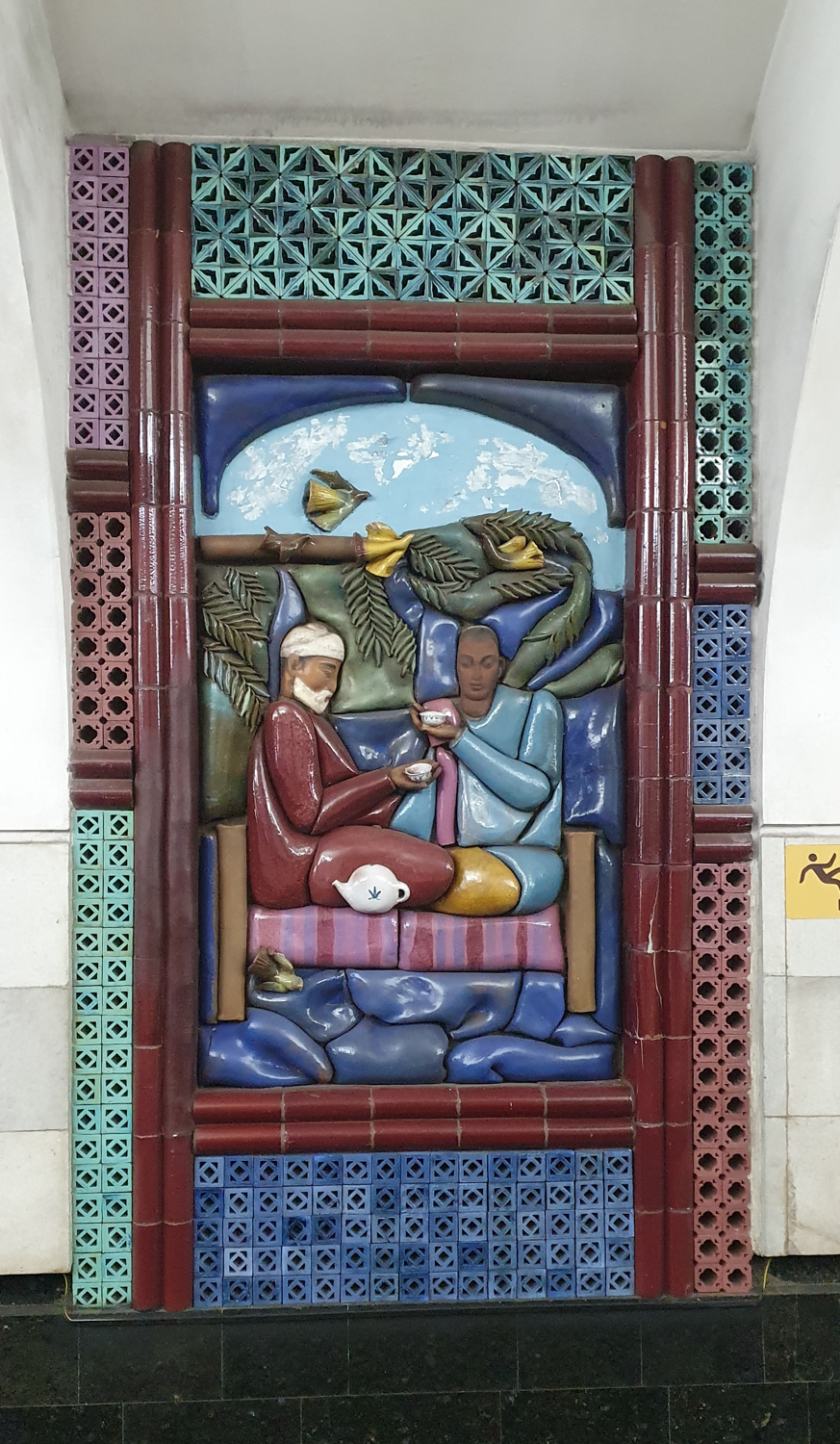
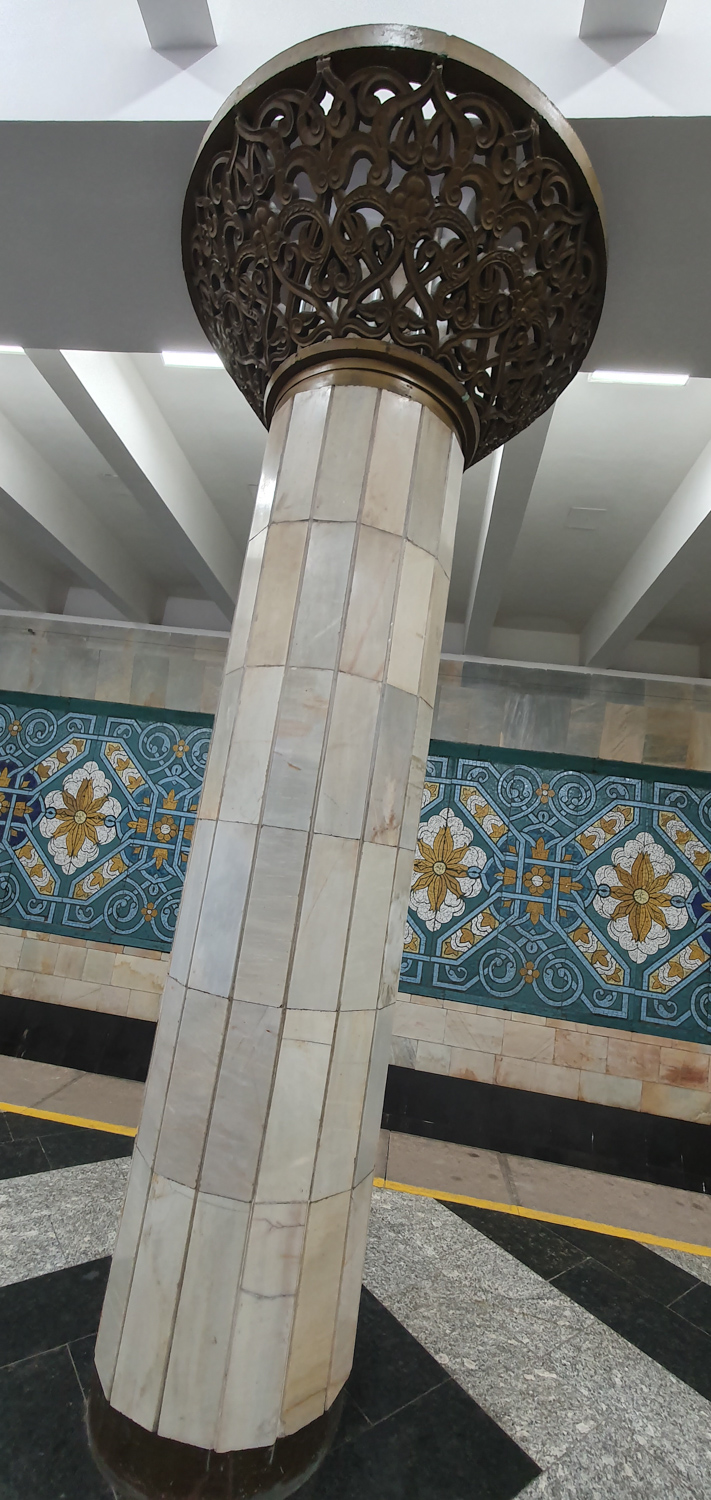
Paxtakor
Cotton pickers. Amazing. Shares the top first place with Kosmonavtlar.
Mustaqillik maidoni
Independence square. After departing from the Soviet union, a lot of effort was invested in creating Uzbekistan’s own identity. Islam Karimov, the first Uzbek president, carries a huge importance of the Uzbek nation due to being the key figure in establishing this national entity.
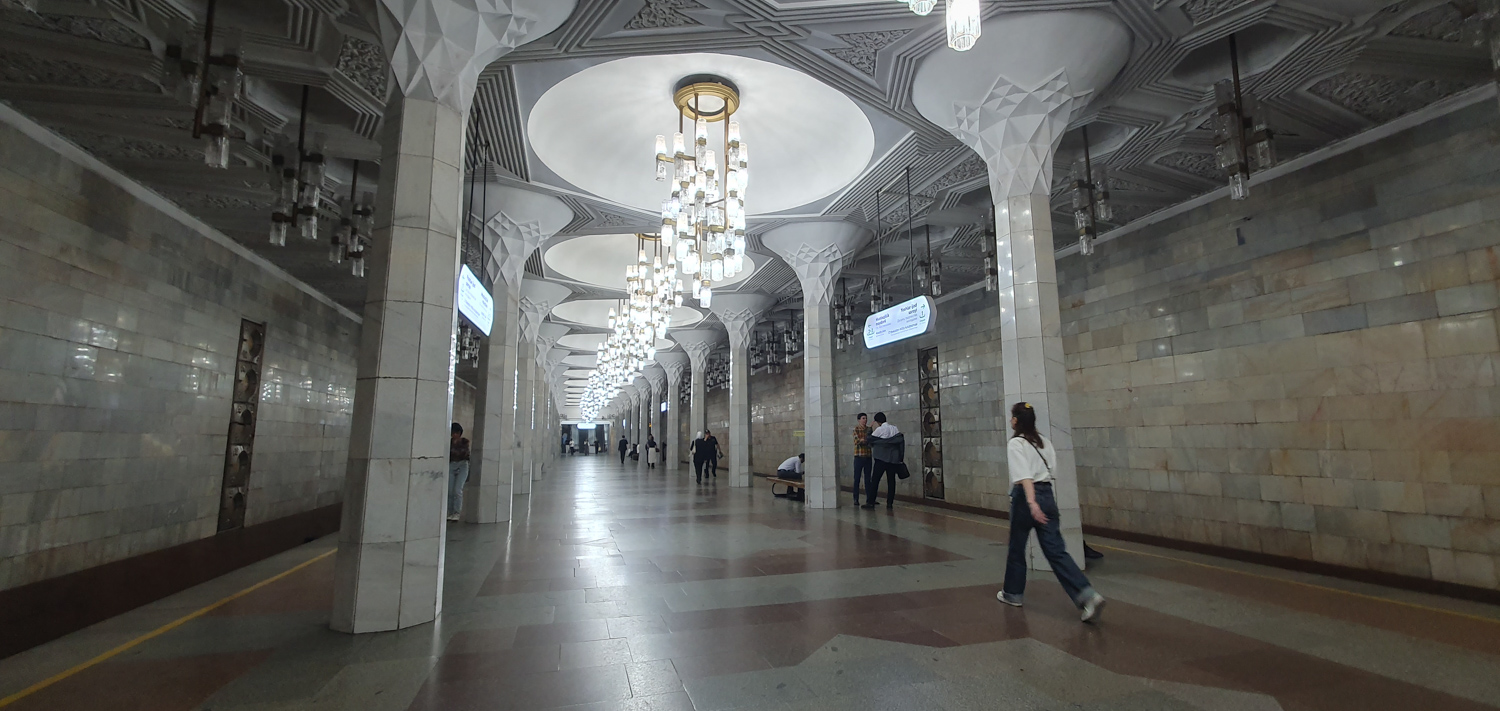
Toshkent
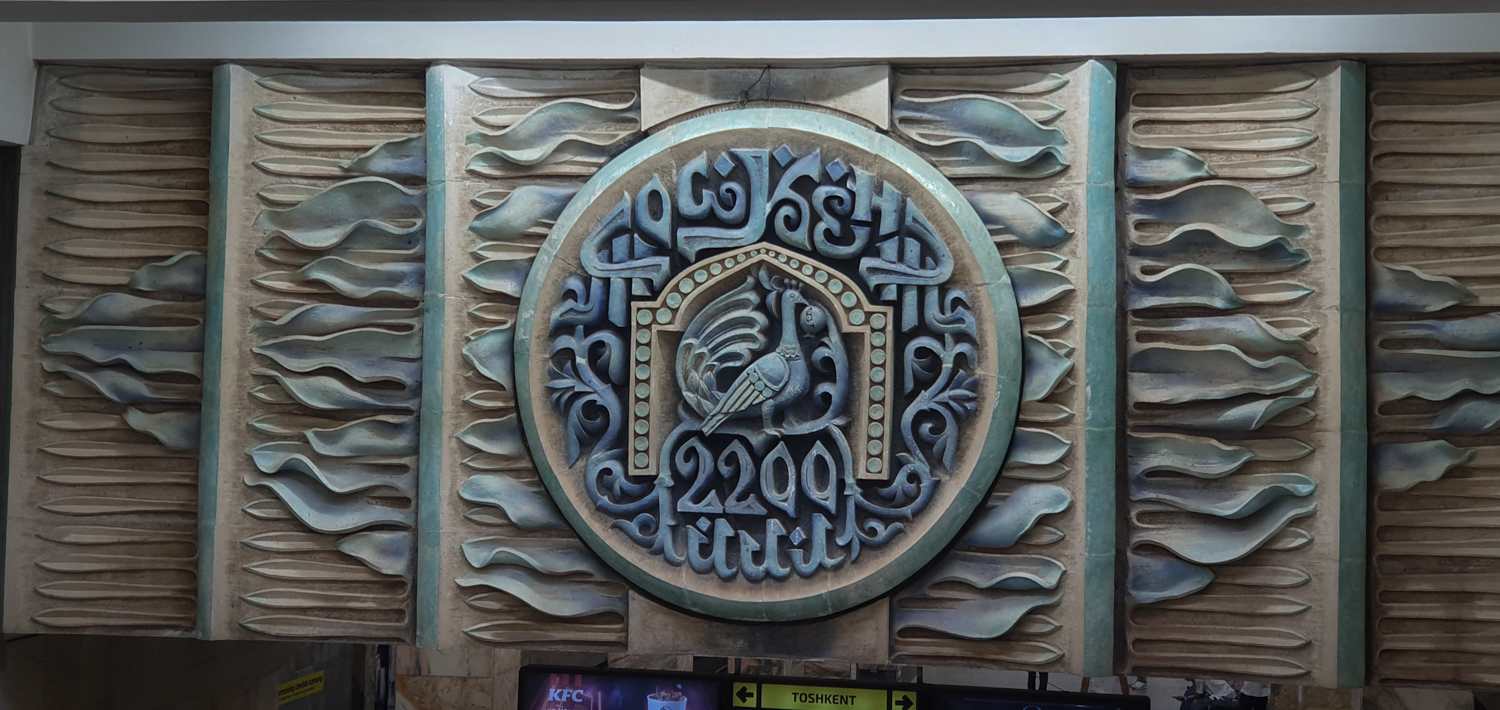
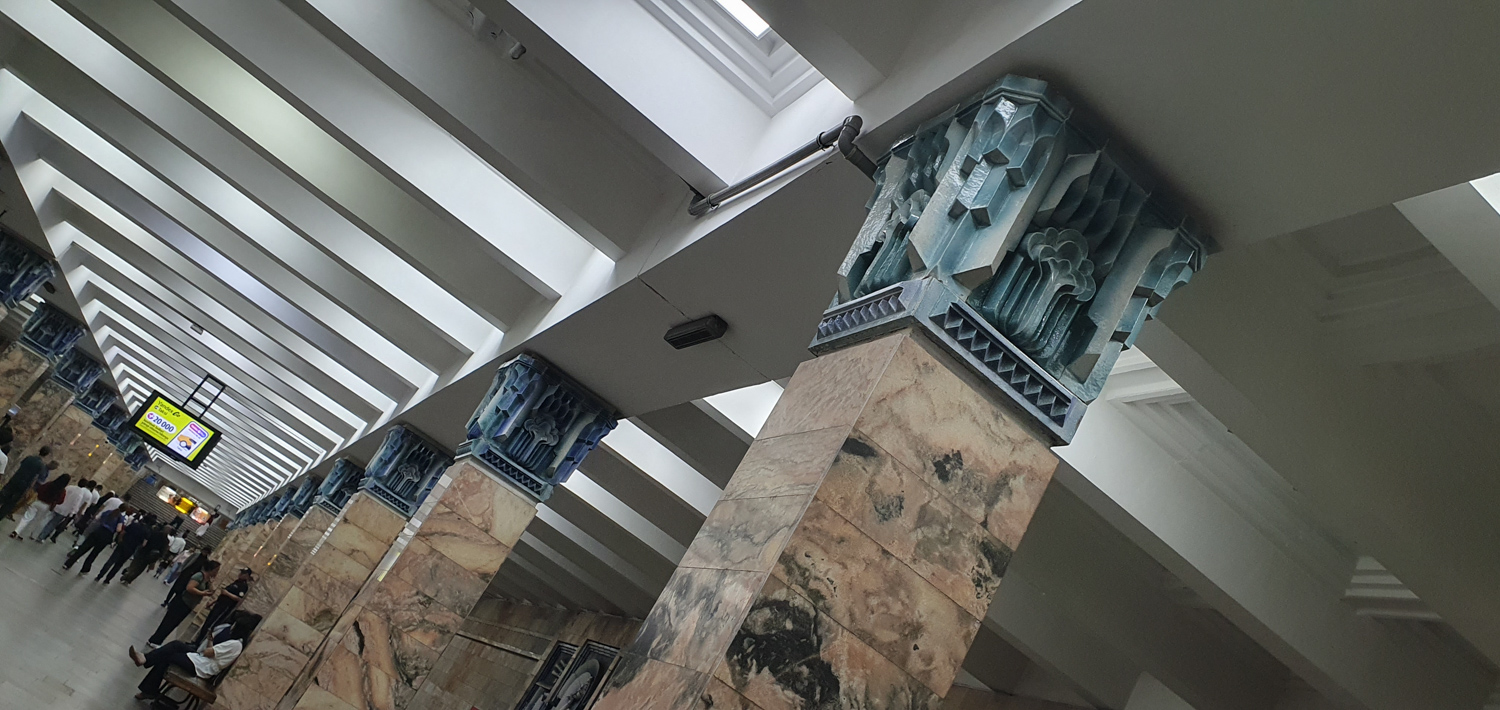
Uzbekiston
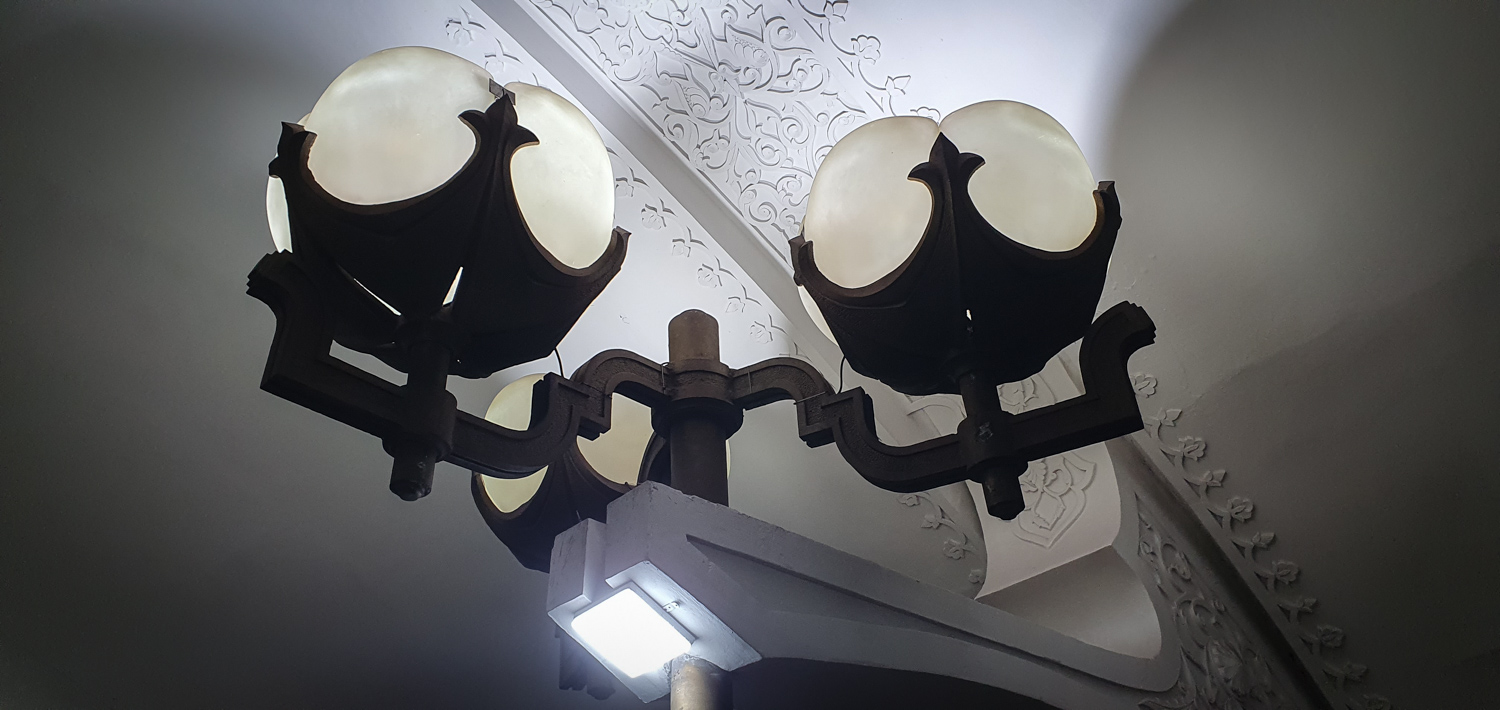
Pay attention to the chandeliers/lamps. These are shaped like cotton flowers.
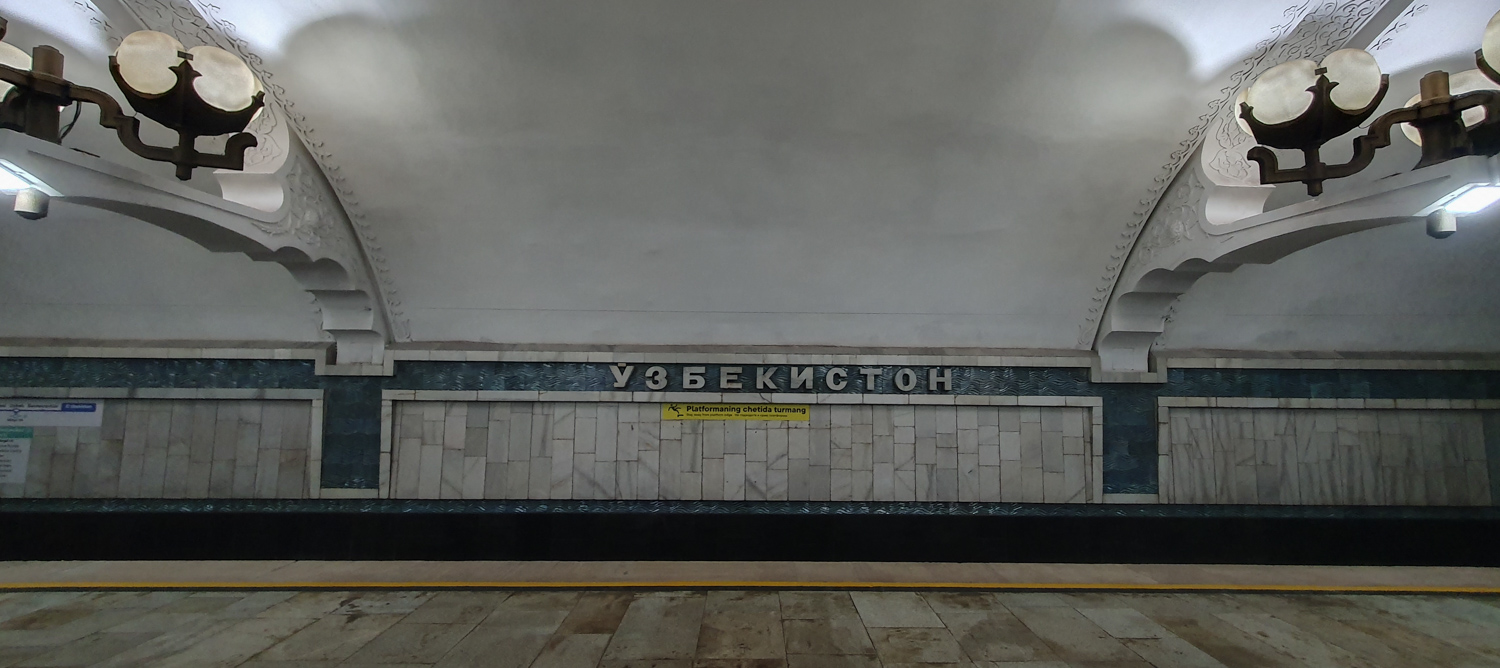
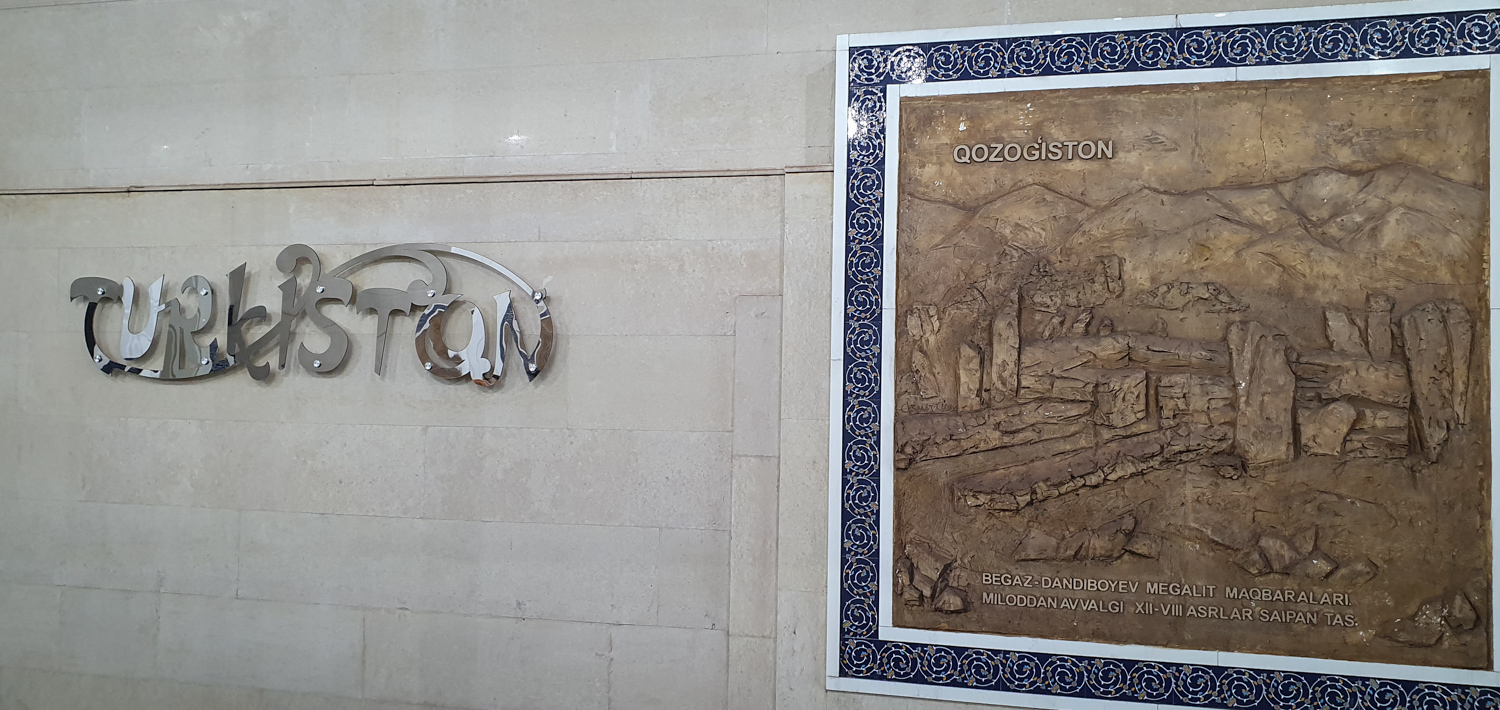
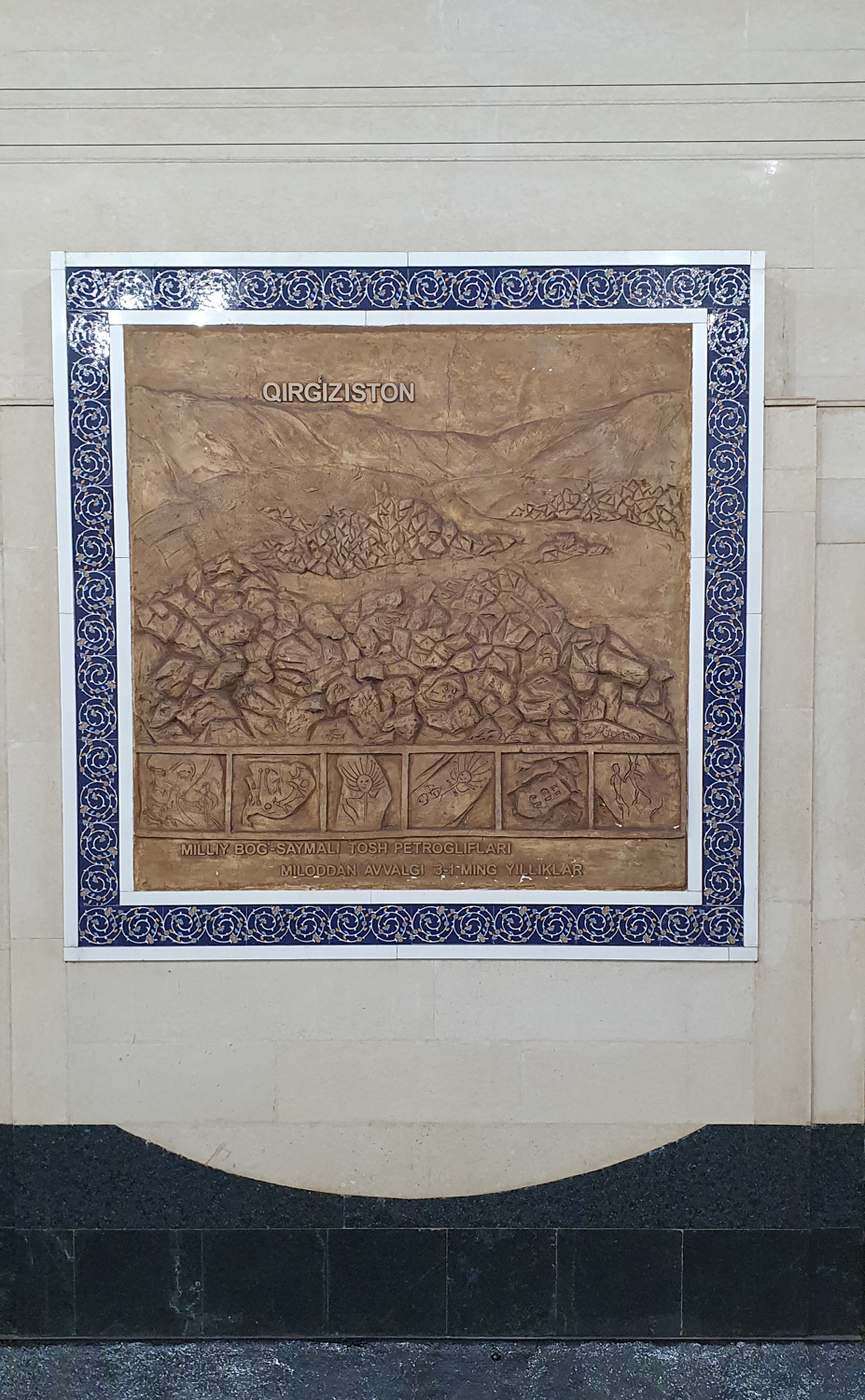
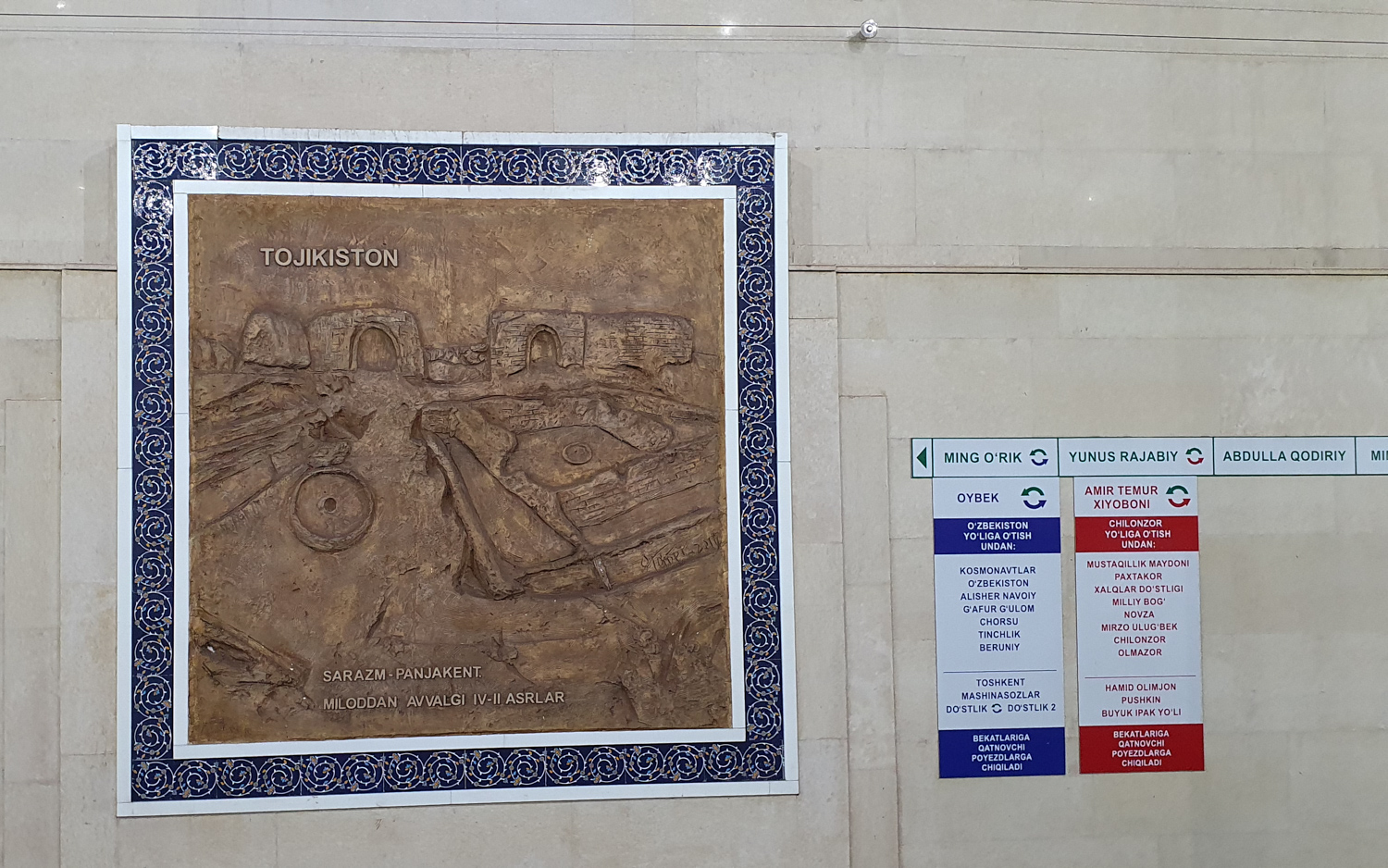
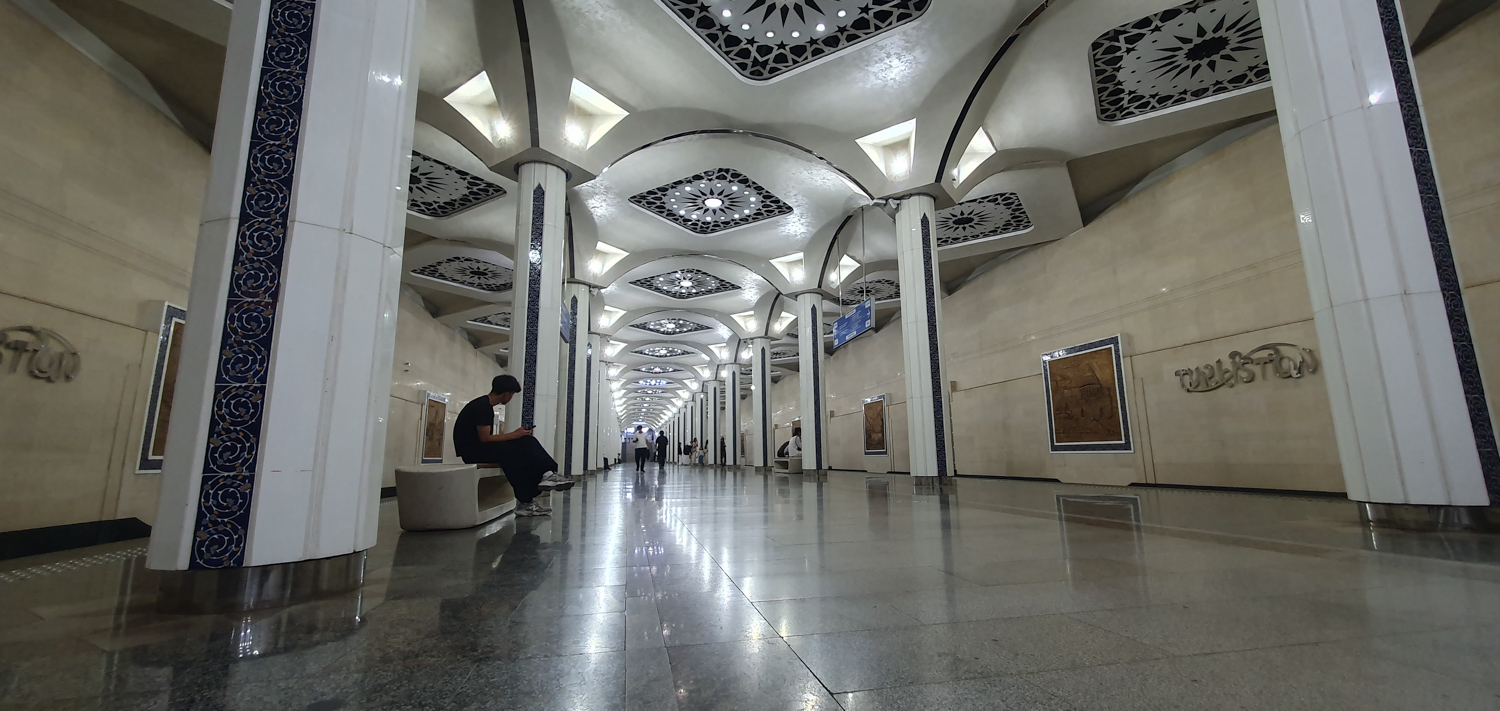
Turkiston
Named after the large historic region which included many -stands, including Uzbekistan.
Bodomzor
Almond orchard.
Abdulla Qodiriy
Named after a poet.
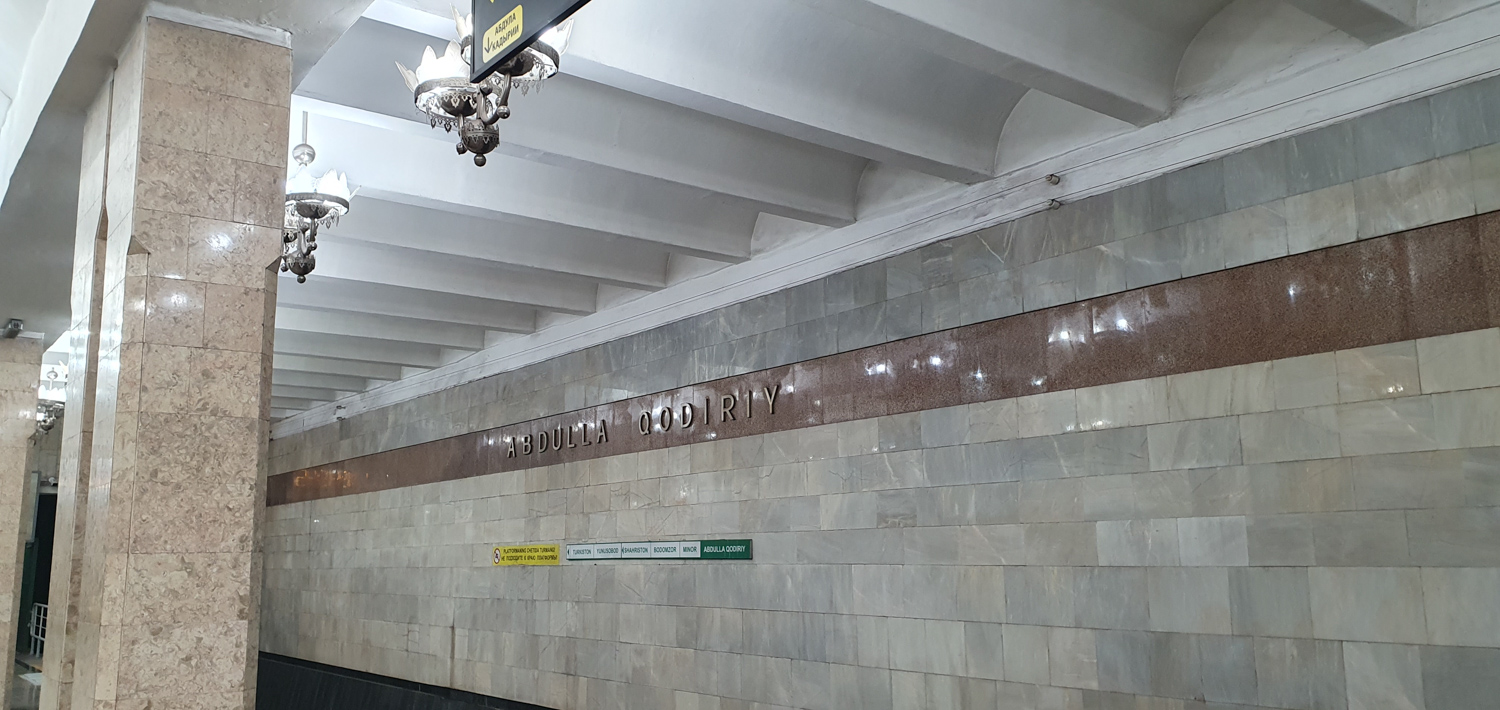
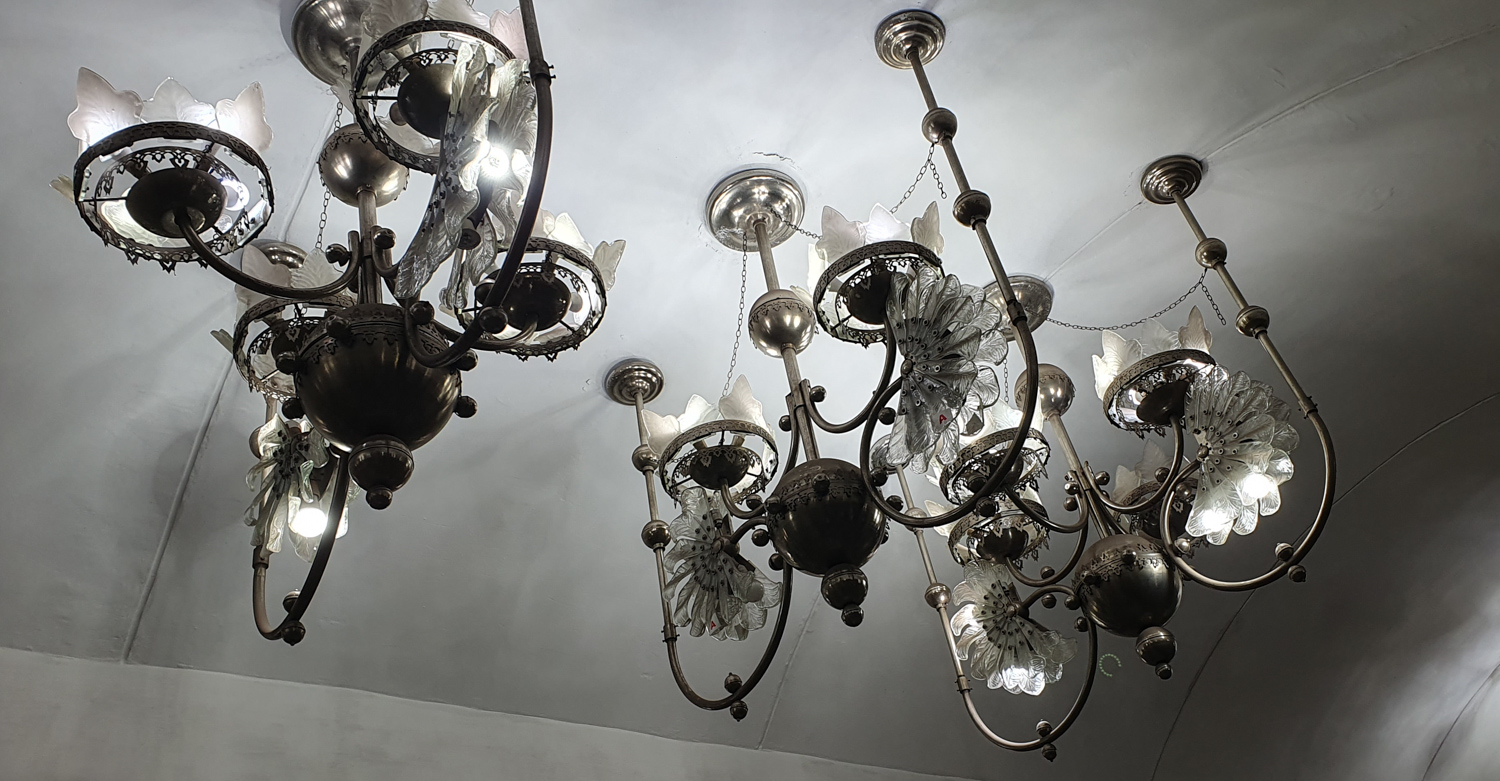
These chandeliers are very interesting, with these flower shaped details.
Here are some useful info about metro hopping in Tashkent:
- the price per ticket is very low – 1,75 NOK (which is 0,16 euros)
- the easiest and most convenient way is to pay by card – it takes 3 seconds to process the payment and you are ready to go; there is a possibility to pay in other ways, I saw some ticket dispensing machines, but I did not waste time for anything beyond a card payment
- before paying for the ticket expect security check up – guards, scanners, bag opening etc.
- the paid ticket applies for your ride for as long as you stay within the metro network – it does not matter if you are in for 2 or 22 stations
- the metro itself is very warm (I visited Tashkent at the end of April, temps outside were 30 every day) so be patient and have understanding
- it would be the best to avoid rush hour but the locals are mostly polite despite the overly packed metro wagons
- metro trains depart every 5 min in both directions, which is perfect if you want to explore metro stations. Hop on, hop off, until you cover your planned list of stations to visit
Enjoy!