Local food aka why are Uzbek people kings of good food
 Ivana
Ivana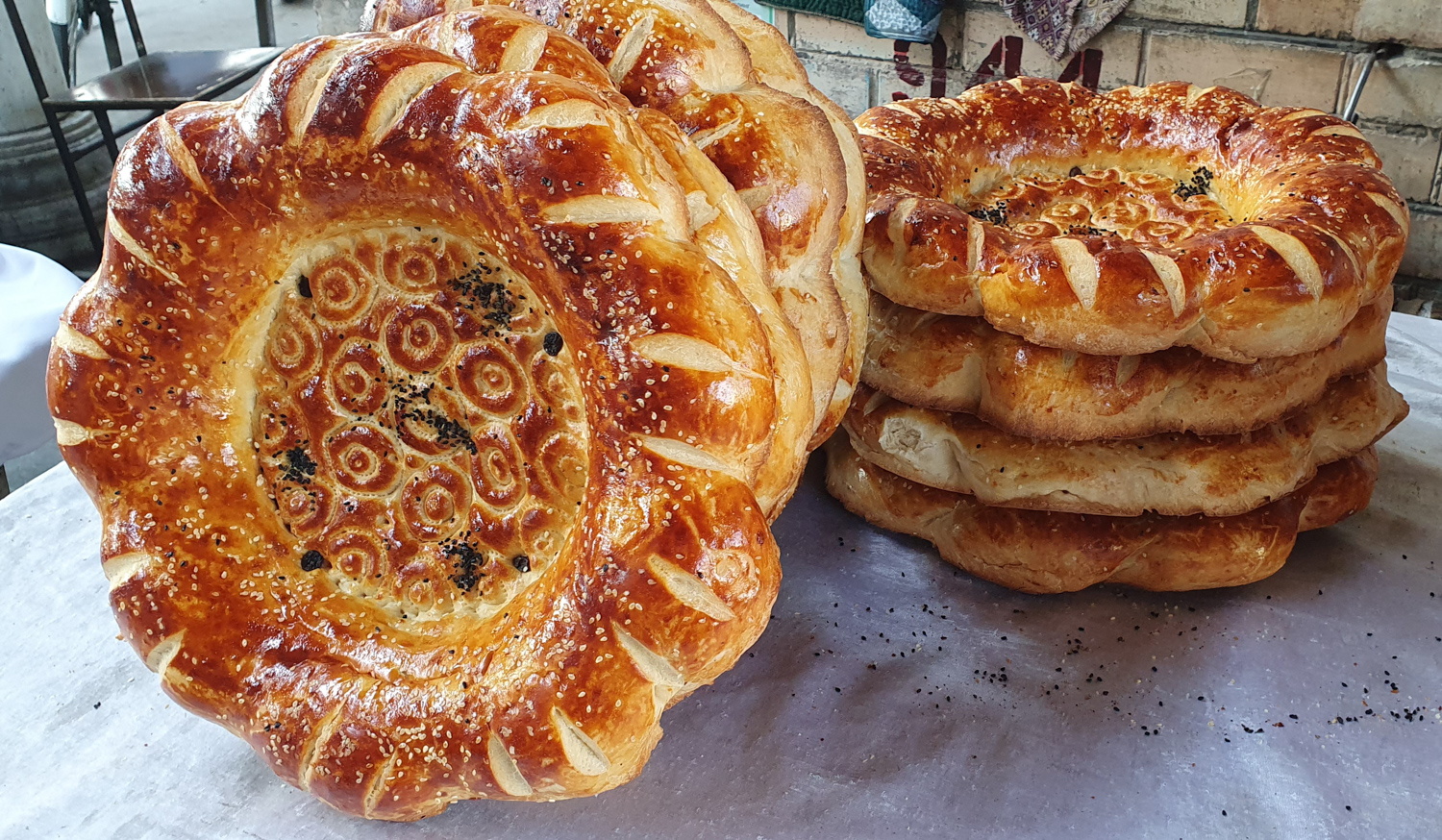
I travel a lot and tend to explore the local food as much as I can. Due to severe reactions to seafood, I avoid anything seaborne. My food walks on the ground using 2 or four legs – and meat based meals, especially made by using beef and lamb, are my absolute favorites, so it was very easy to integrate myself in the local eateries environment. Northern European cooking style suits me the least due to this fact. I bring Real turmat to keep my hunger on a short leash, just in case I am unable to find something edible. Uzbekistan requires no Real turmat. No safety nets, no backups. Just sitting and eating, in different places, with very affordable meals which are excellent in taste.
I researched the top tier most famous traditional meals belonging to the savory department, tried every one from the list, and here are all of them and descriptions of every one. Spoiler: everything is beyond delicious.
Plov / osh
The absolute most famous Uzbek meal is plov or osh. According to legend, the dish was invented when Alexander the Great demanded a light but filling meal for his soldiers. The cooks built a meal – it can hardly be simpler in terms of groceries needed – long grain rice, yellow and/or orange carrots, onions, meat – but it is absolutely delicious and rich in taste and texture.
Depending on the region, plov varies in terms of additional ingredients and ways of preparing it.
Bukhara plov is light. The rice (of the Laser type) is fluffy and airy. Along with the staple formula rice+meat+carrots+onions there are gram grains (chickpeas) as well, and even raisins and/or dried apricots.
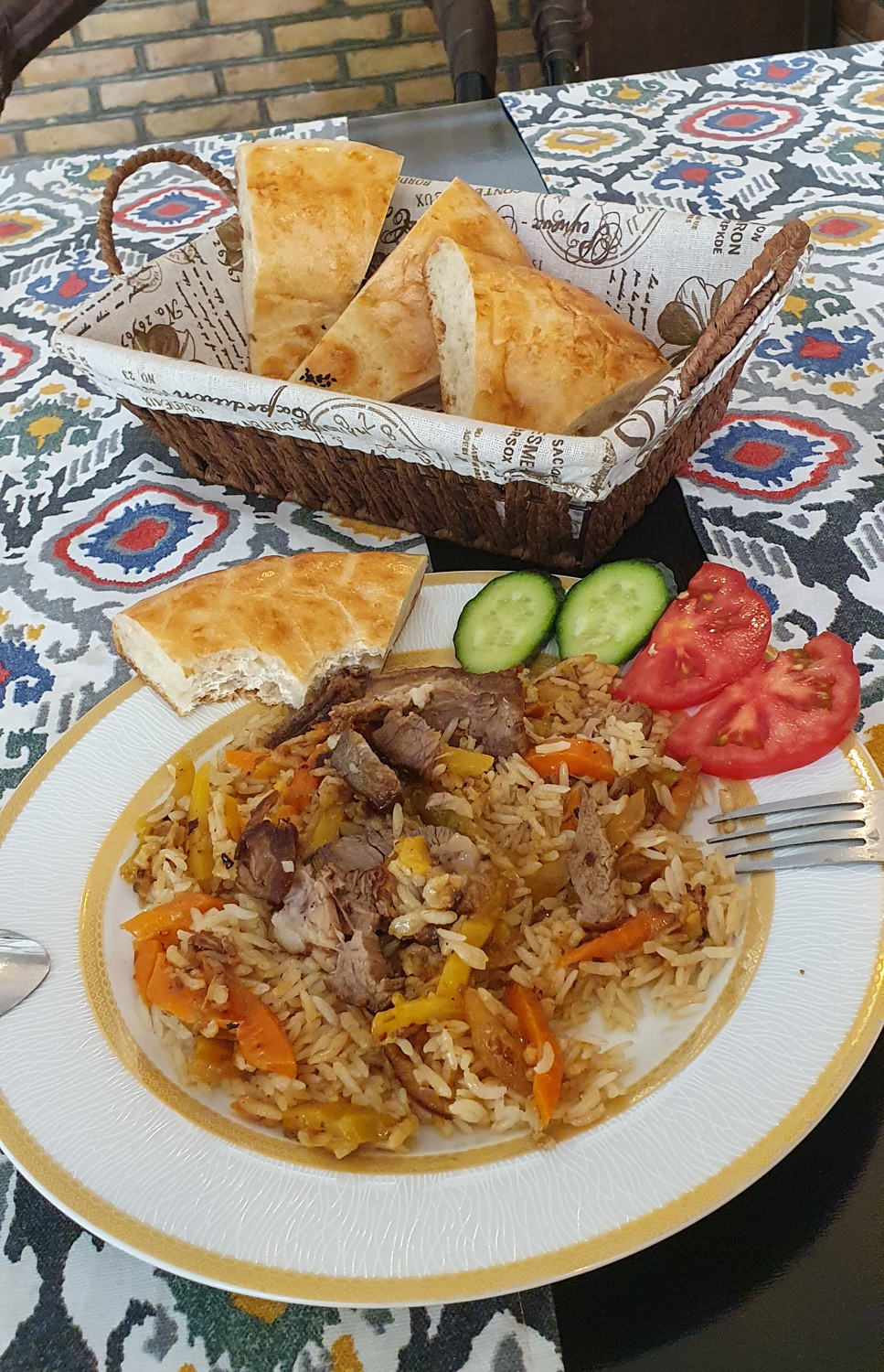
Samarkand plov is similar, but very strict in terms of layering rather than mixed. It is not stirred during cooking, allowing the rice to steam on top of the meat and carrots. (rice meal on the left; on the right is kazan kabob)
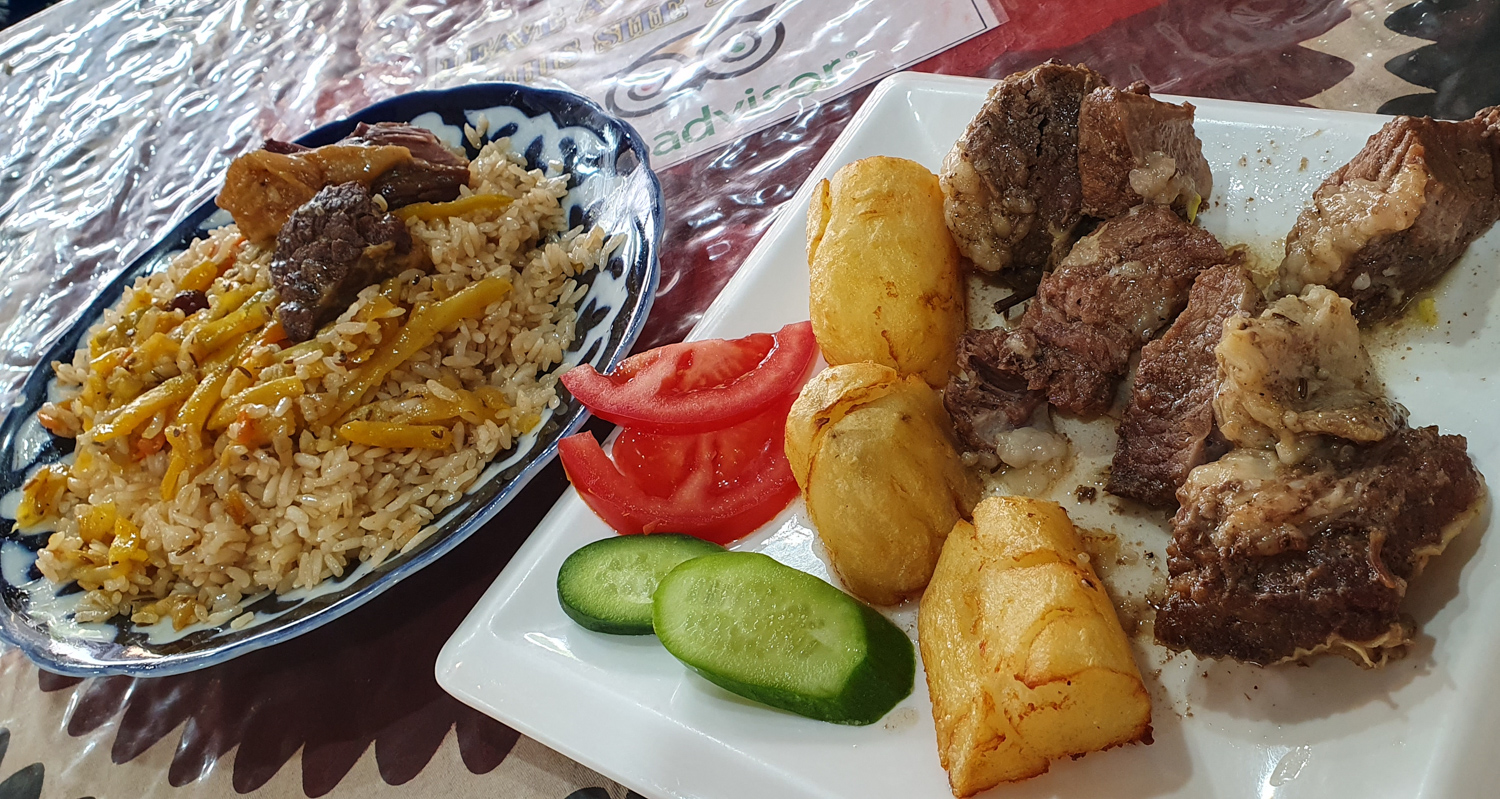
In Tashkent plov all ingredients are roasted at the beginning. It is known to be “the special occasion plov” and a true feast.
My favorite was Fergana plov, which I ate in east Uzbekistan, in Margilan. It looks and smells entirely different from the other types and I could not wait to try it, based only on descriptions I saw before. Rice used for Fergana plov is of Devzira type, it is fried on lamb fat before boiling it, so it looks brown and has an entirely different fragrance. It also contains cumin (zira) seeds which elevate the dish to high heavens.
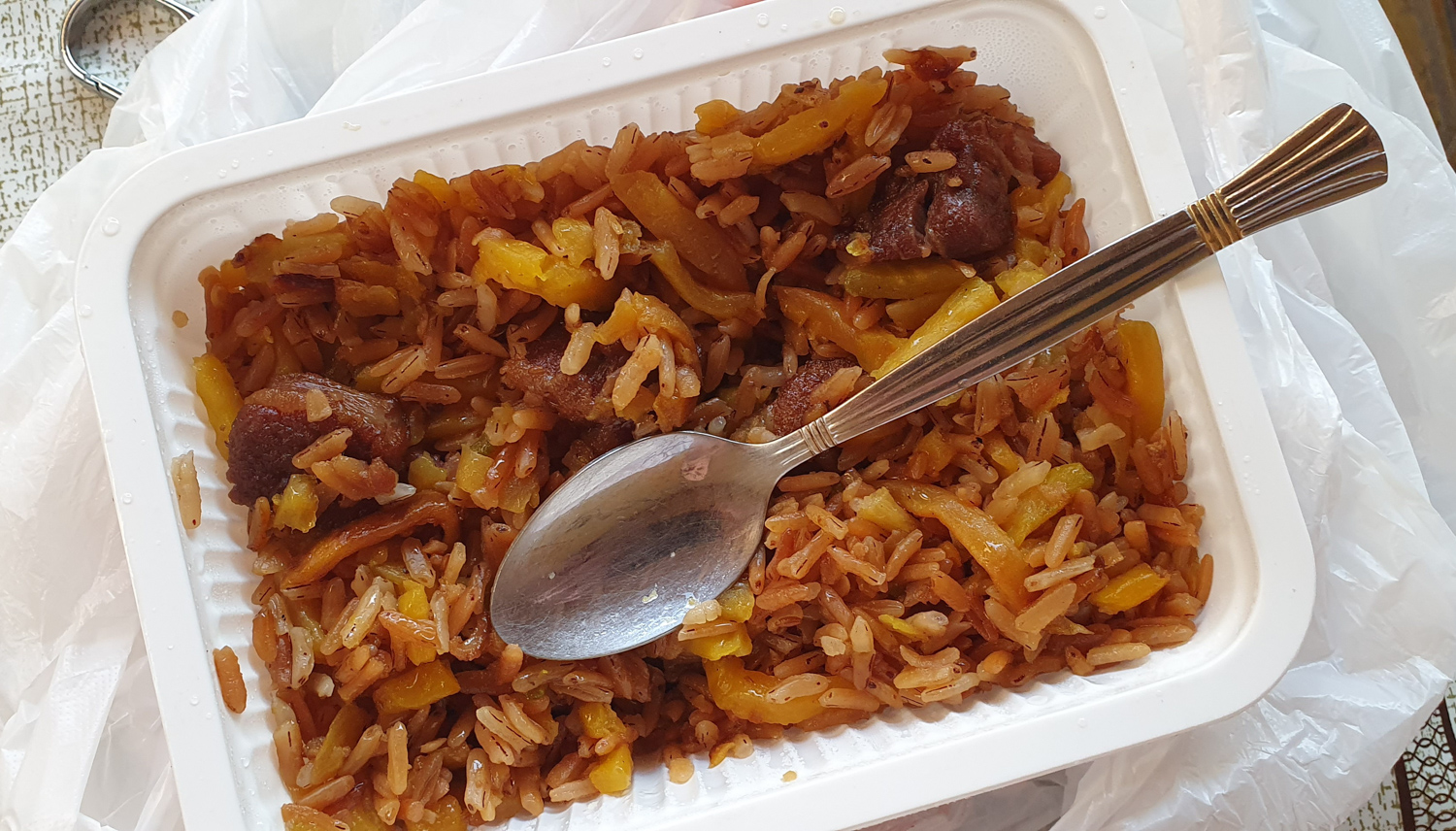
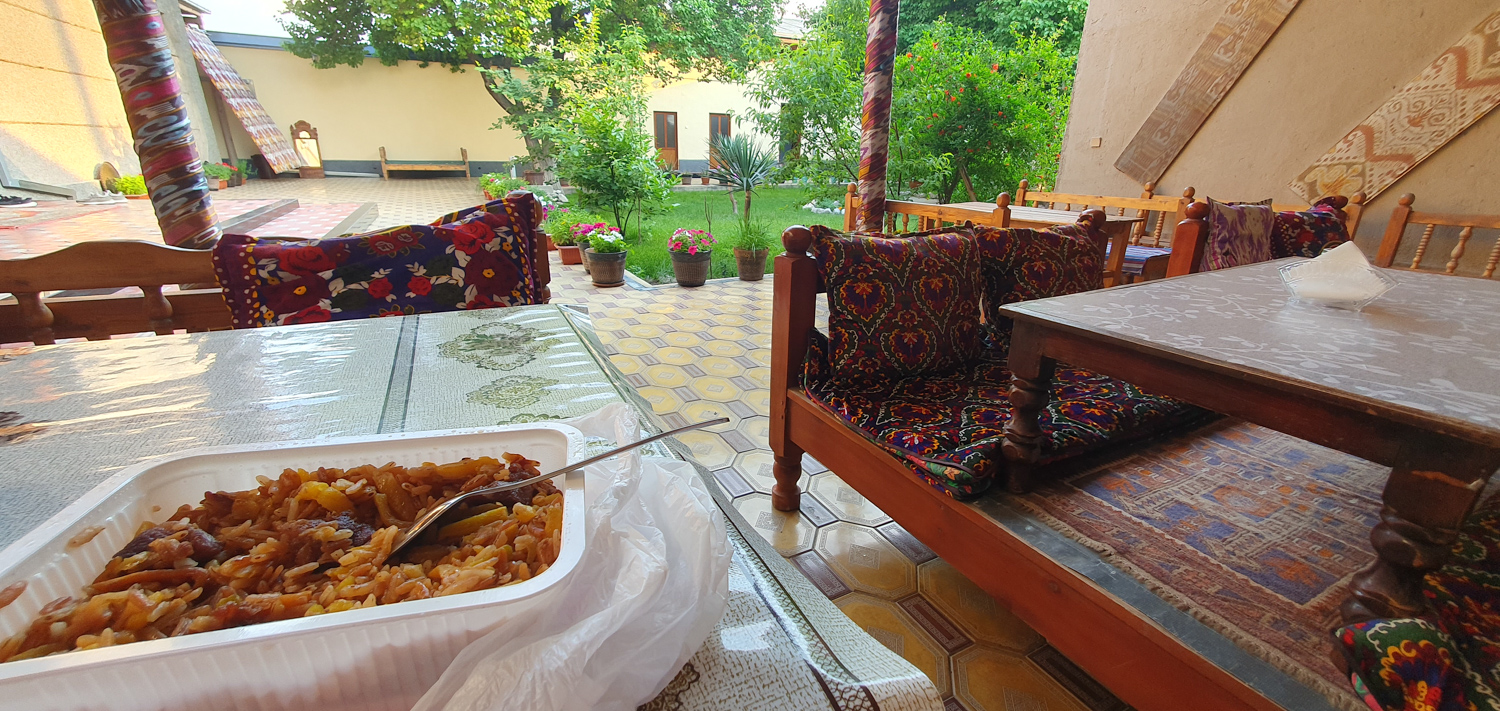
Plov is food for working people, not a fancy meal. The best plov is not found in an expensive restaurant with a shiny menu, but in smaller eateries along the road. If you see a trucker stopping to pick up a box of plov to go – there you should go and make an order.
Lagman
A meal which is richer in color and has different textures is lagman. It is made of pulled wheat noodles, covered in stew made of vegetable chunks, and poured over with tomato based soup.
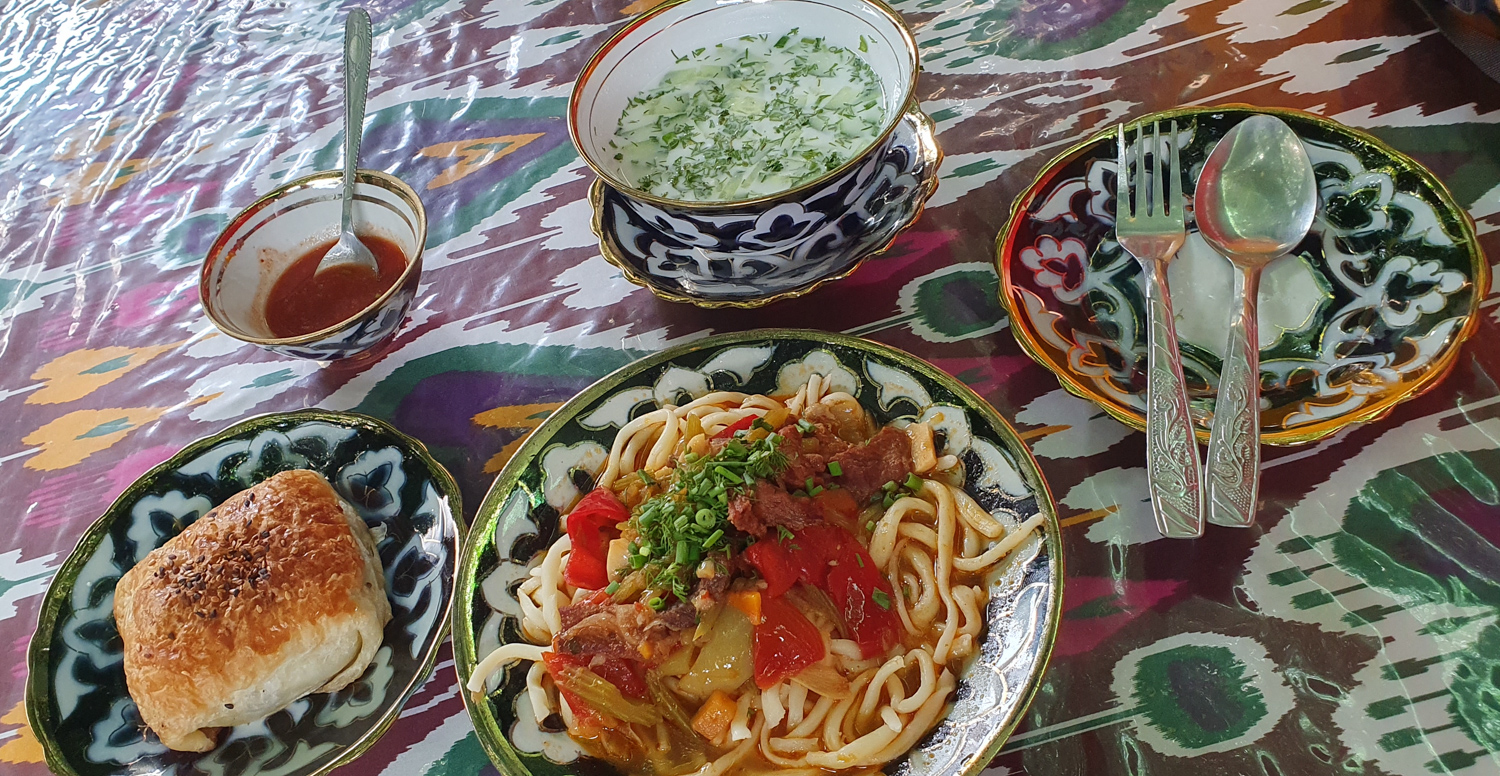
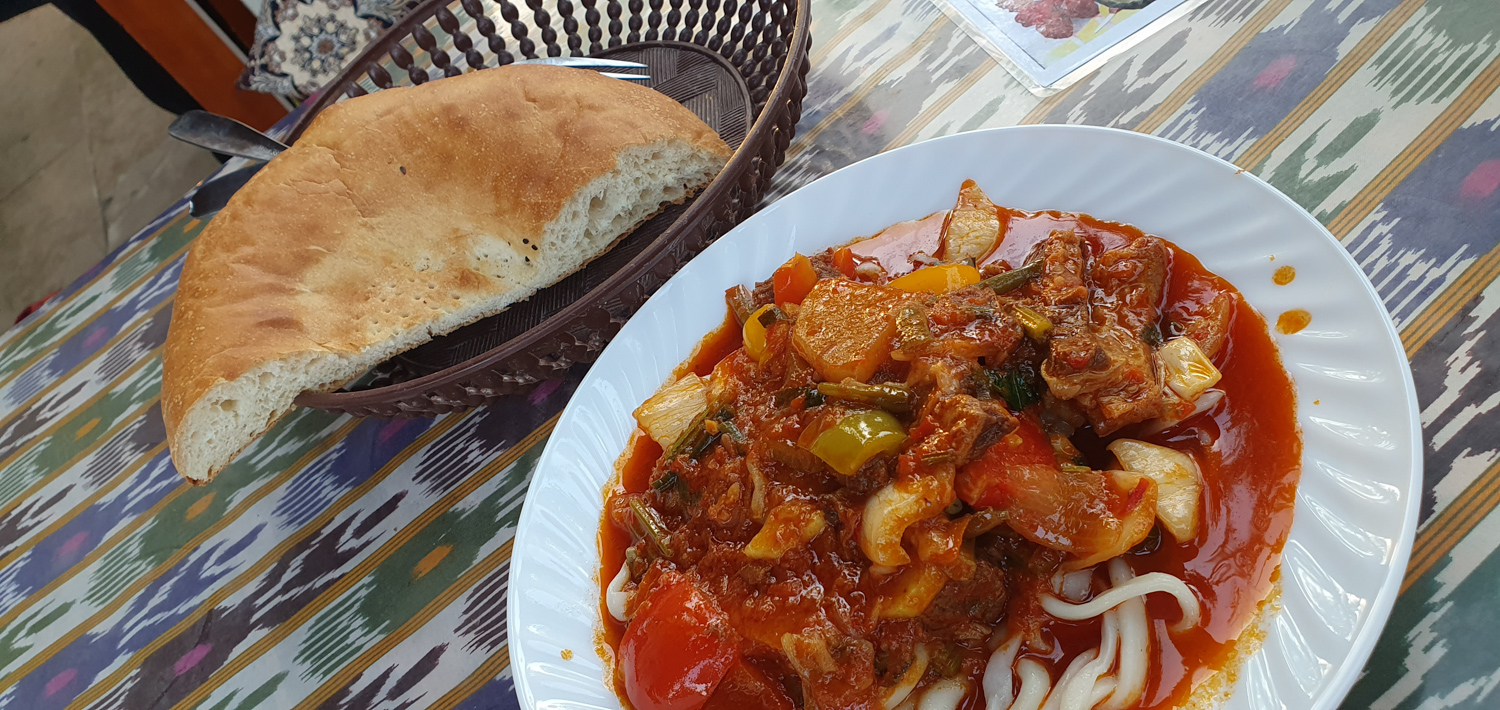
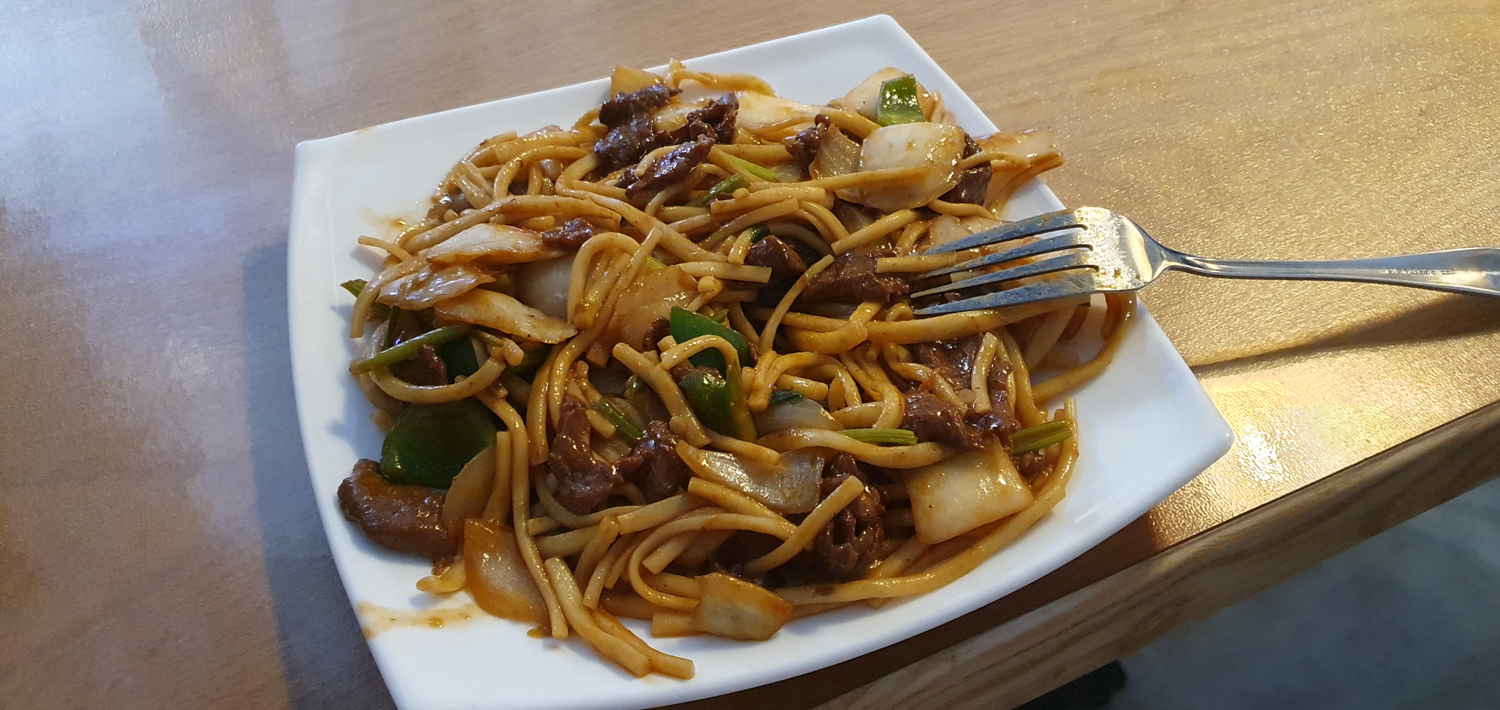
It comes in another version, soup-less and with fried noodles, which puts it in the wok-like noodle dishes category. I tried one in a Lagman 24 restaurant; it was absolutely delicious and beyond fragrant.
Manti
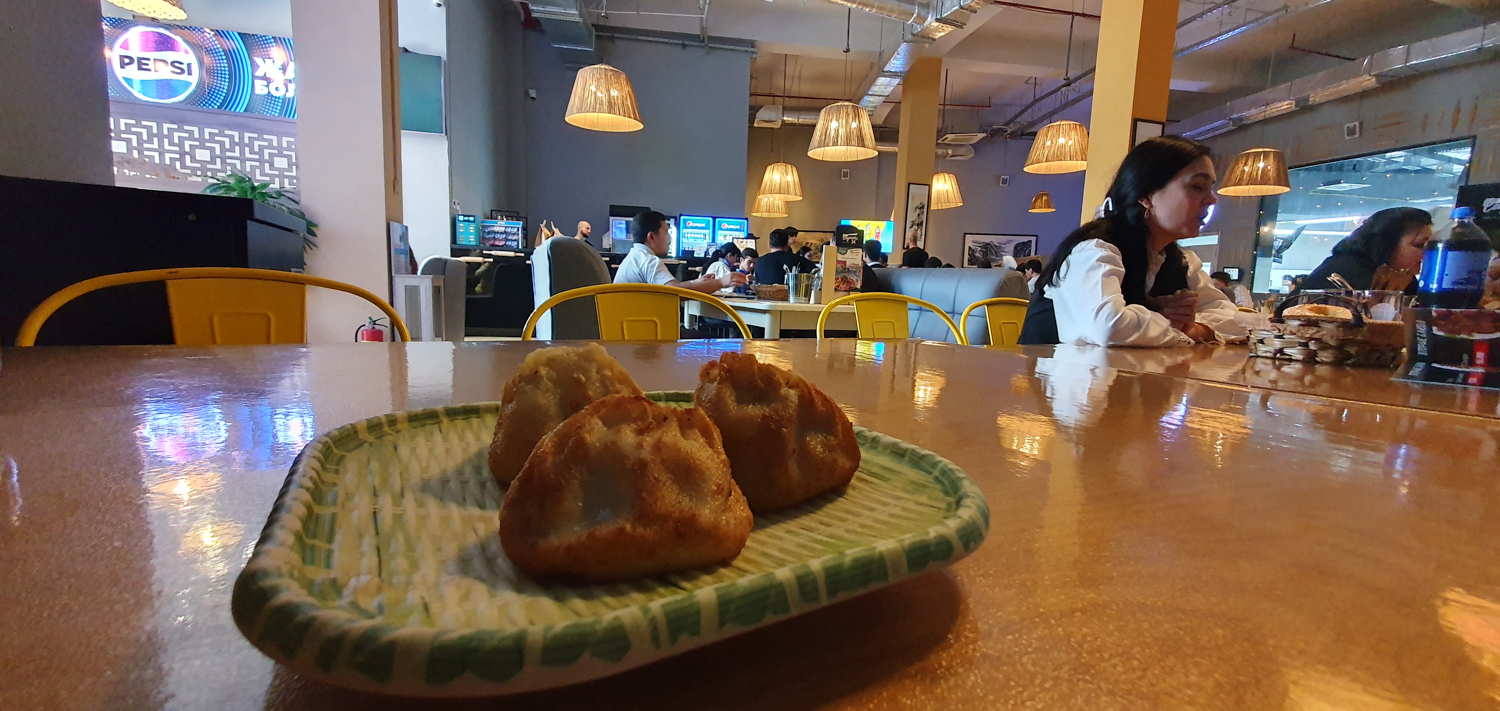
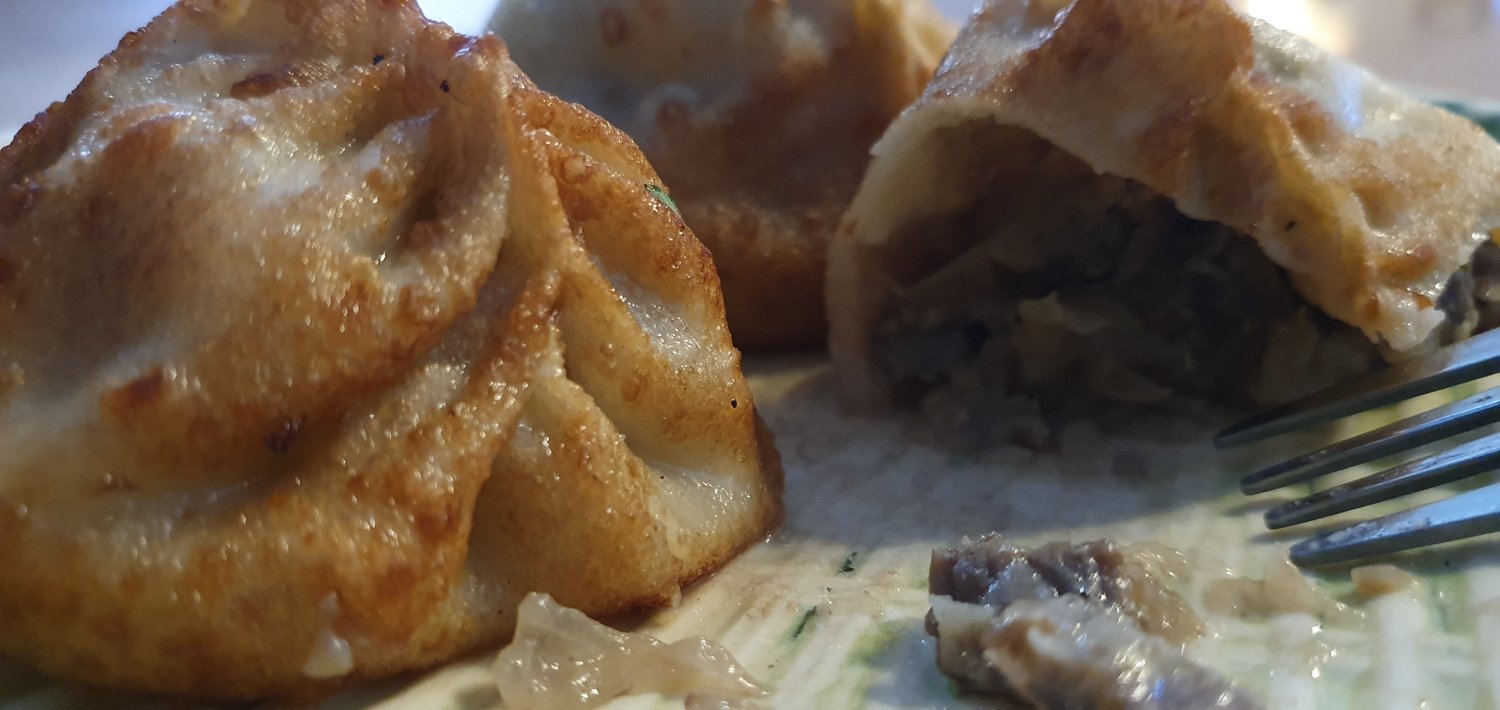
Dumplings. Manti are as simple as they can be. Dough filled with meat and vegetables. A staple local food. Really rich in taste and very easy to overindulge. Pro tip: avoid “cutting” them with forks. They are made to be eaten with your hands. Bite off a piece, let the steam vent for a second, and keep mantis like small cups in order not to spill juices from the inside.
Kazan kabob
This was a delicacy recommended by every local who asked me what I ate so far and decided to direct me to the nearest kazan (cauldron). Lamb meat is baked to get the sear and then stewed in its own juice. Served with the most simple side dish there is – potatoes.
Somsa
Somsa (read: samsa) is an umbrella term for many types of pastries, filled with savory goodies. What makes it special is the fact that it is baked in a large barrel shaped oven (tandir) – the raw dough filled mostly with lamb meat sticks to the inner walls of the oven.
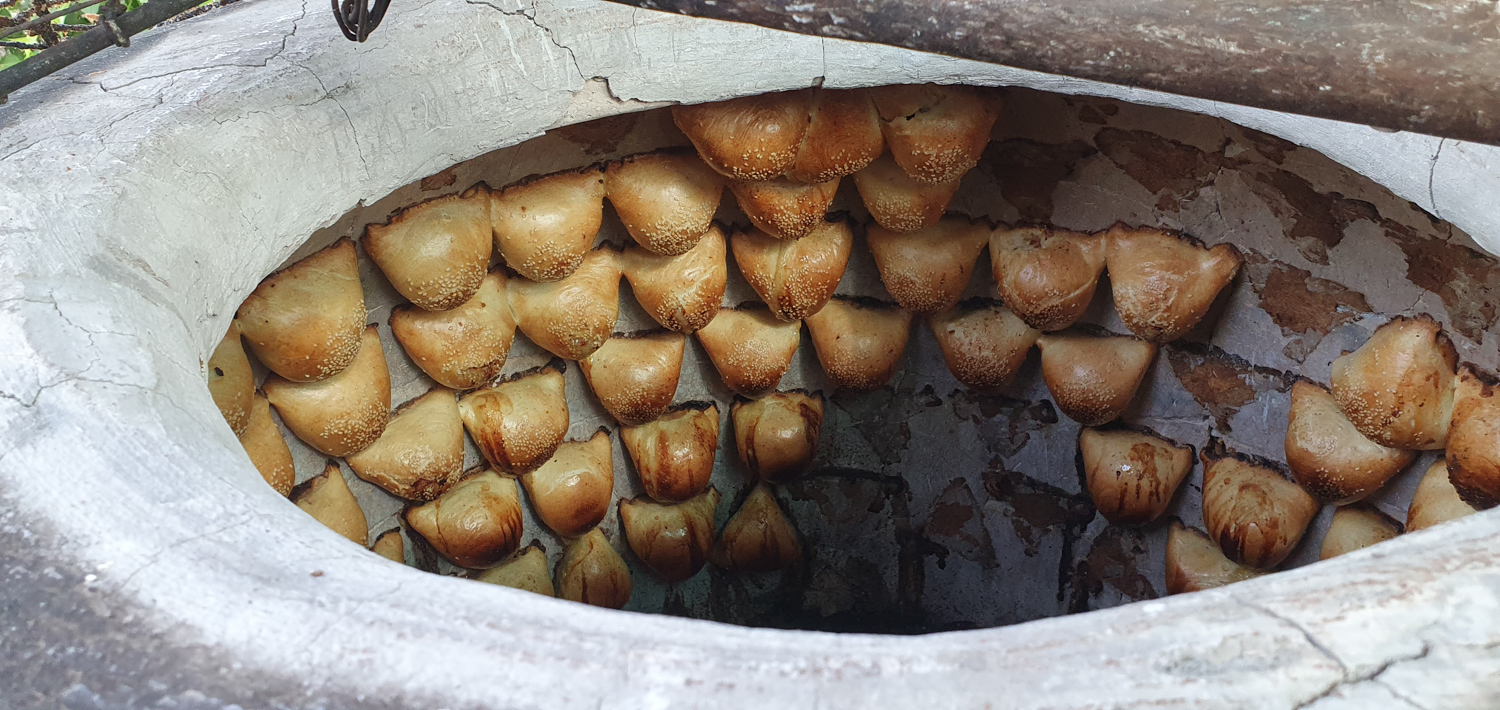
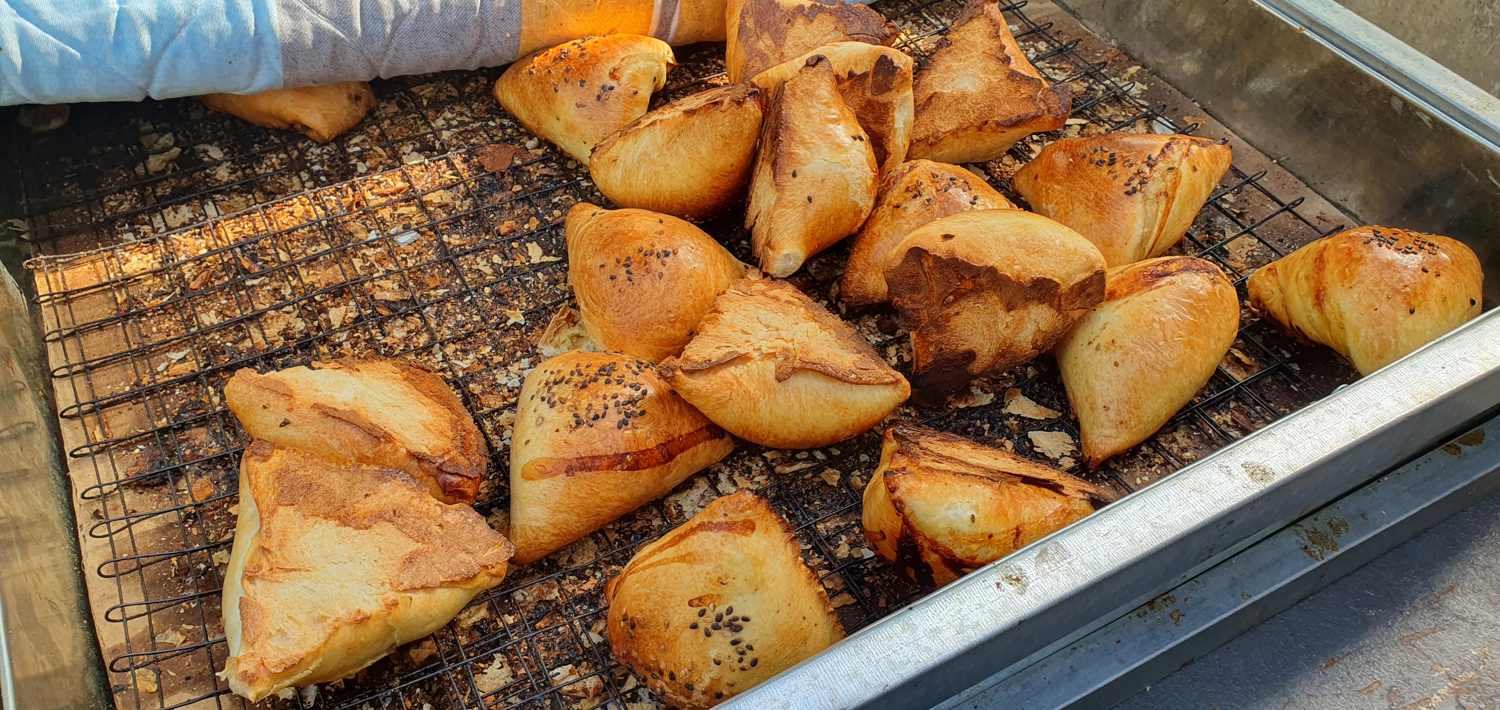
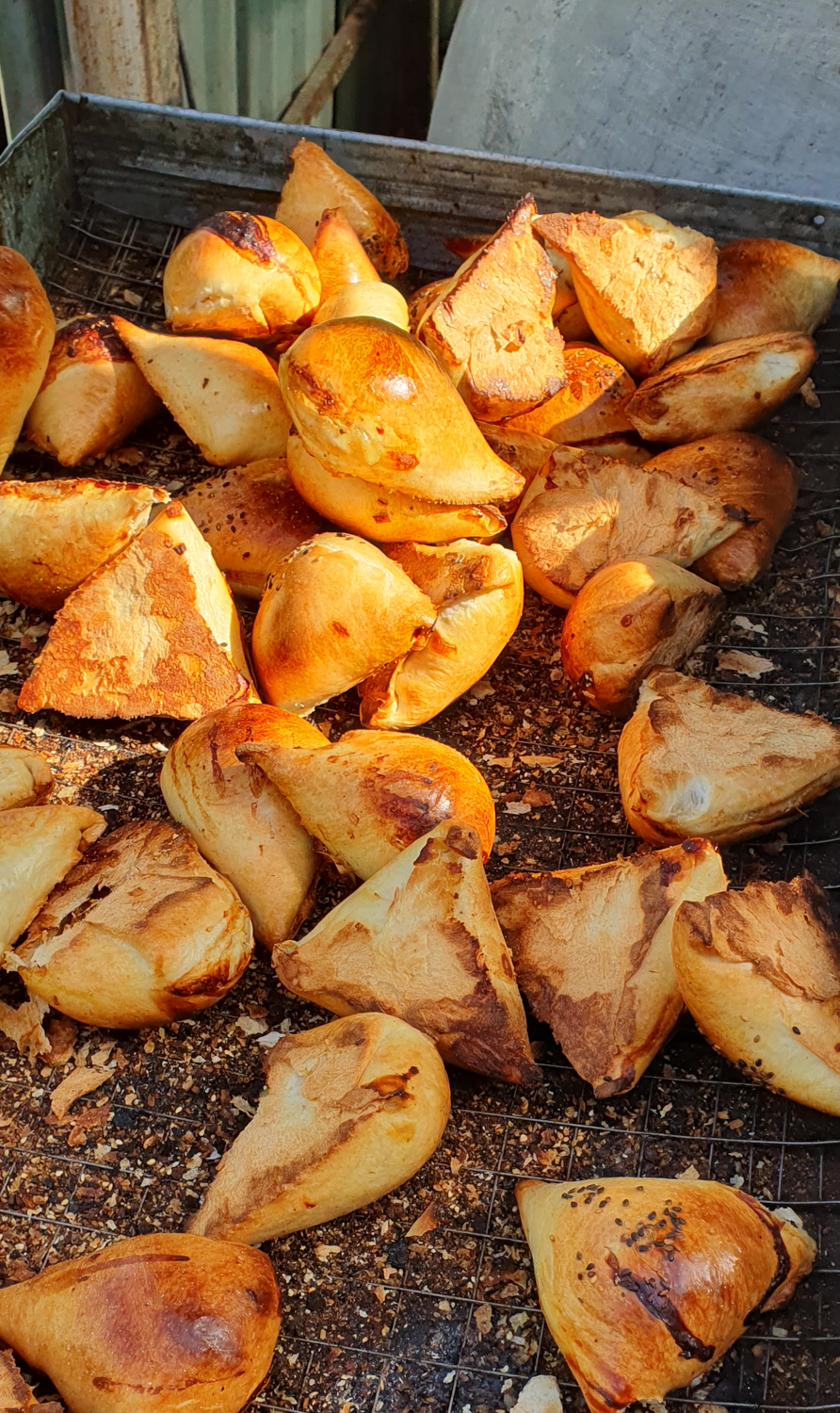
And of course – you can smell somsa from hundreds of meters away and feel instant hunger. Add to this the extreme hospitality that the locals are endowed with and you get a really unforgettable experience.
Žiz
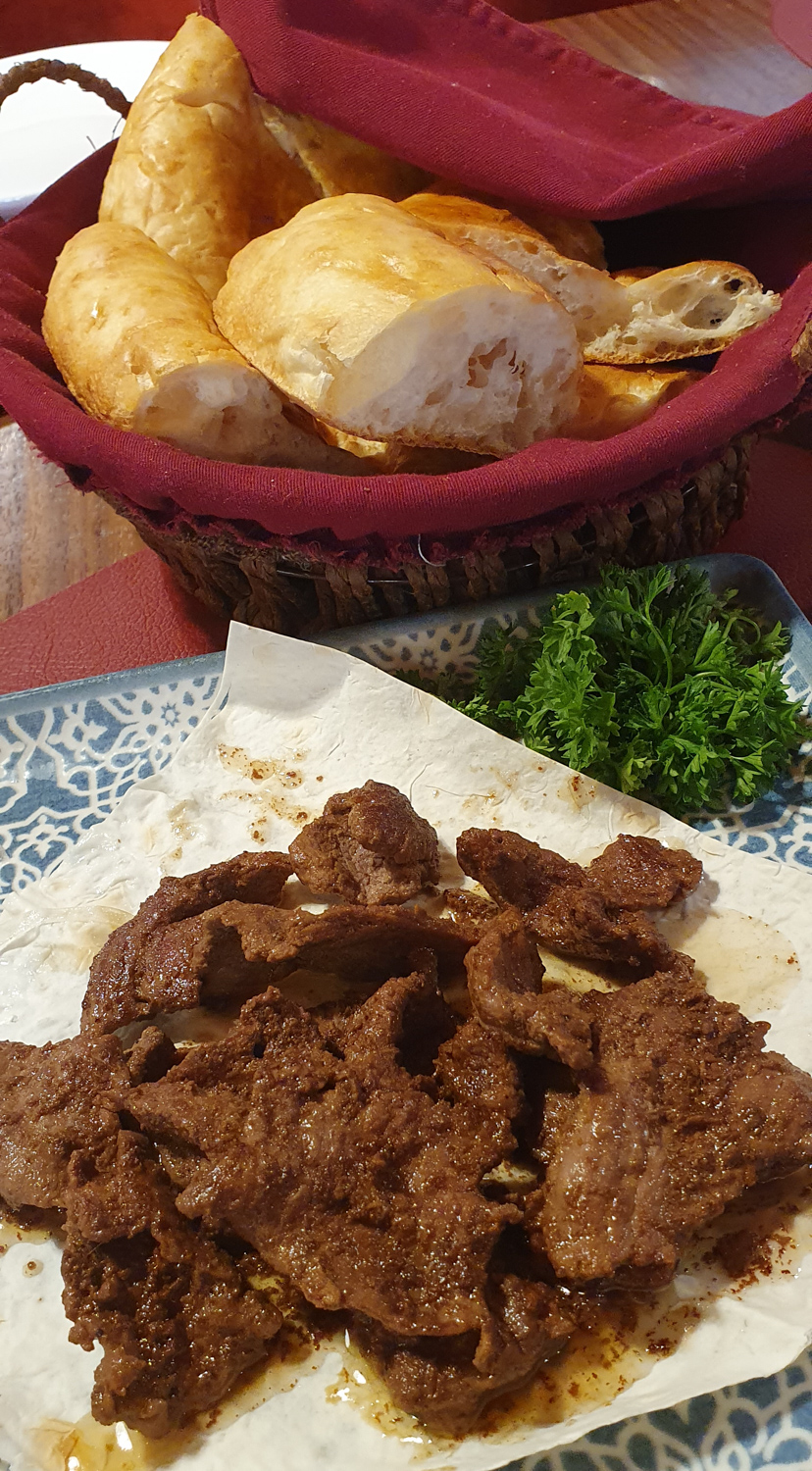
Žiz was the only meal which I ate in a very nice restaurant in Bukhara. Think Stradun in Dubrovnik, only with an endlessly more reasonable attitude towards the pricing. I had a massive meat craving and just walked into the first restaurant near me. This is beef meat, seared and stewed until tender. Epic.
Lamb ribs
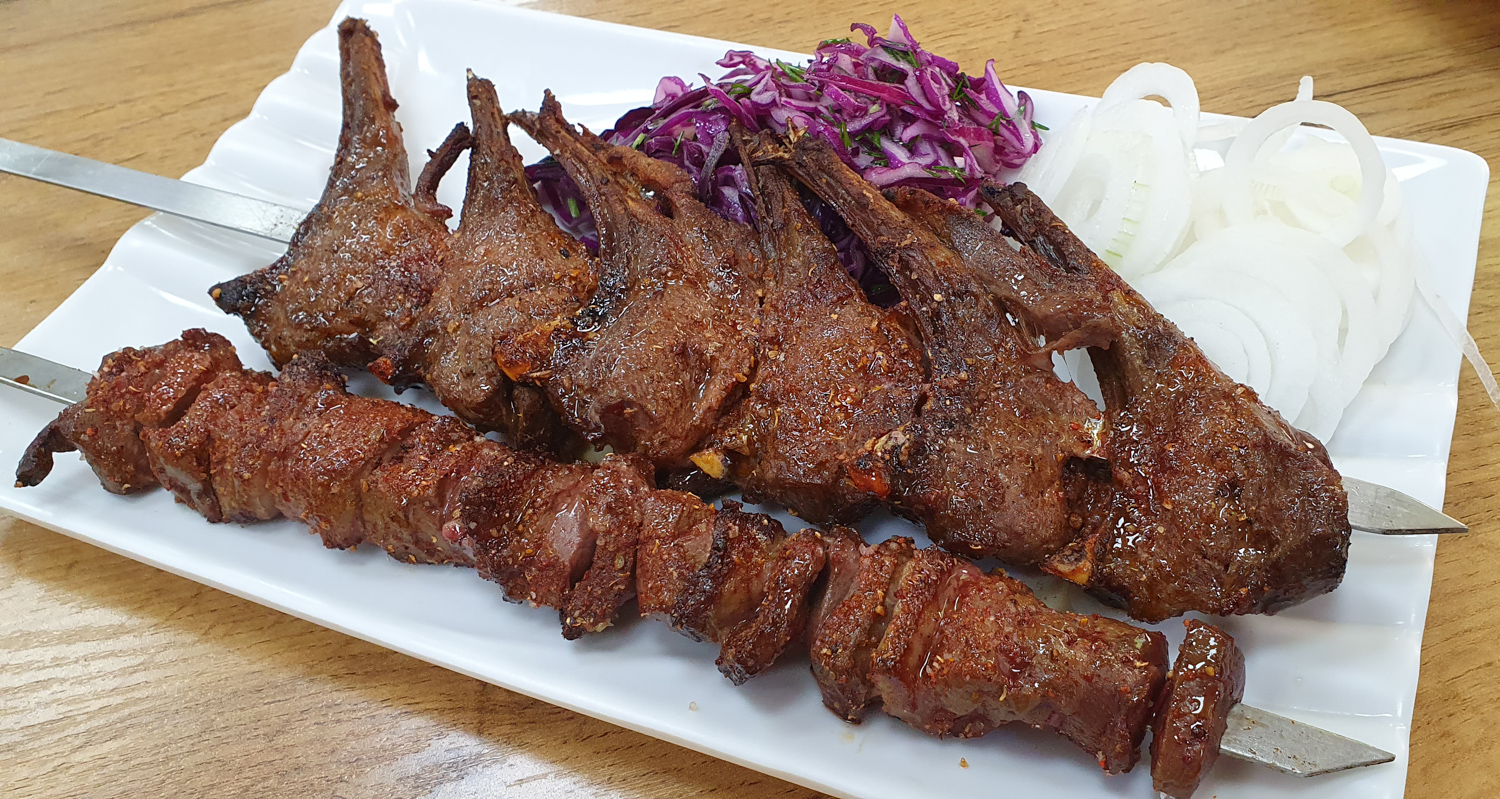
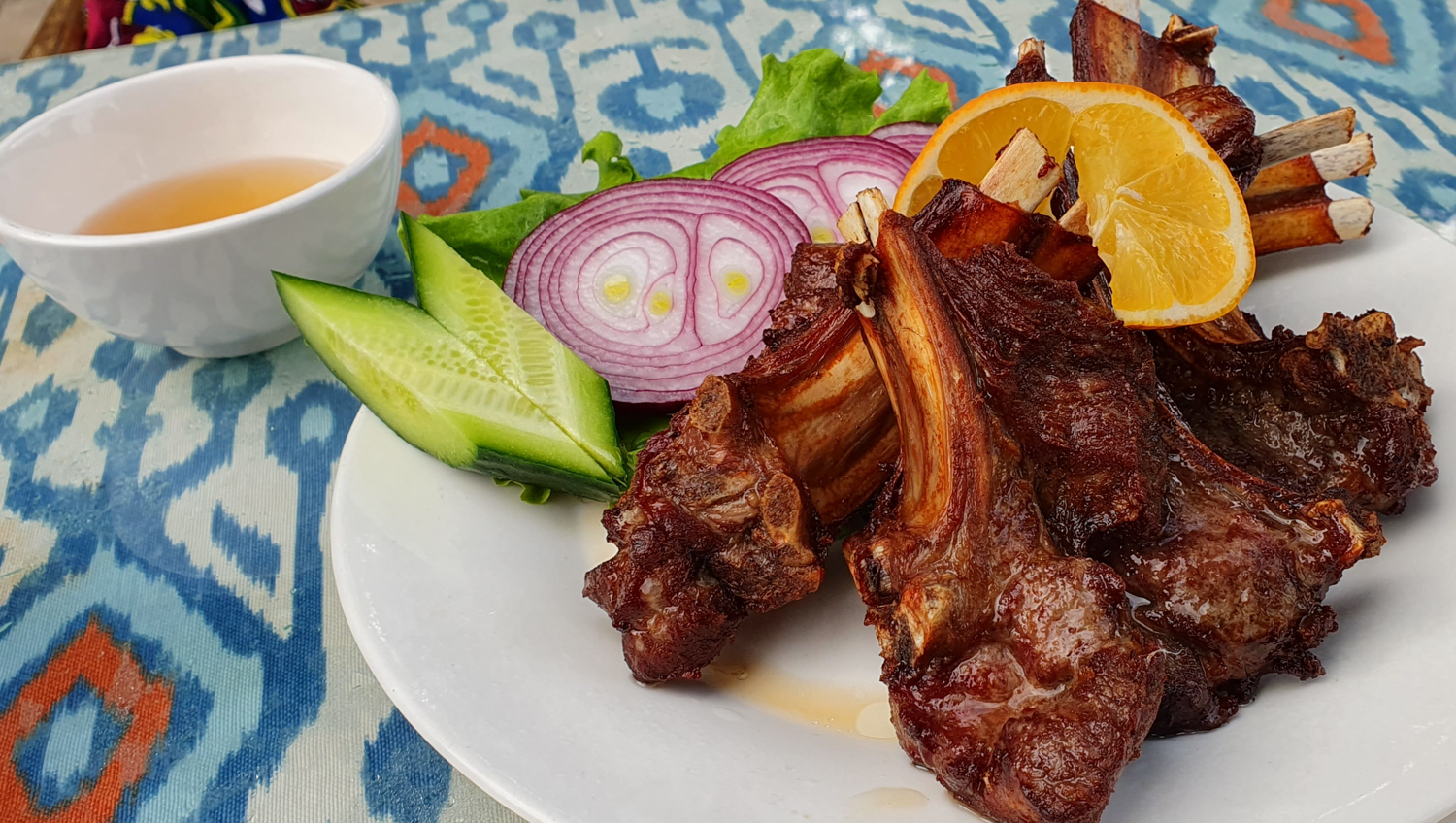
There are not many meals better than properly baked lamb meat. If I see lamb meat on the menu, there is no second thought about what to order. In Uzbekistan it is very hard to be disappointed – the meat is seared fully, there are no excess spices burned by the grilling process, just a healthy dose of salt and a bit of pepper.
Even more lamb
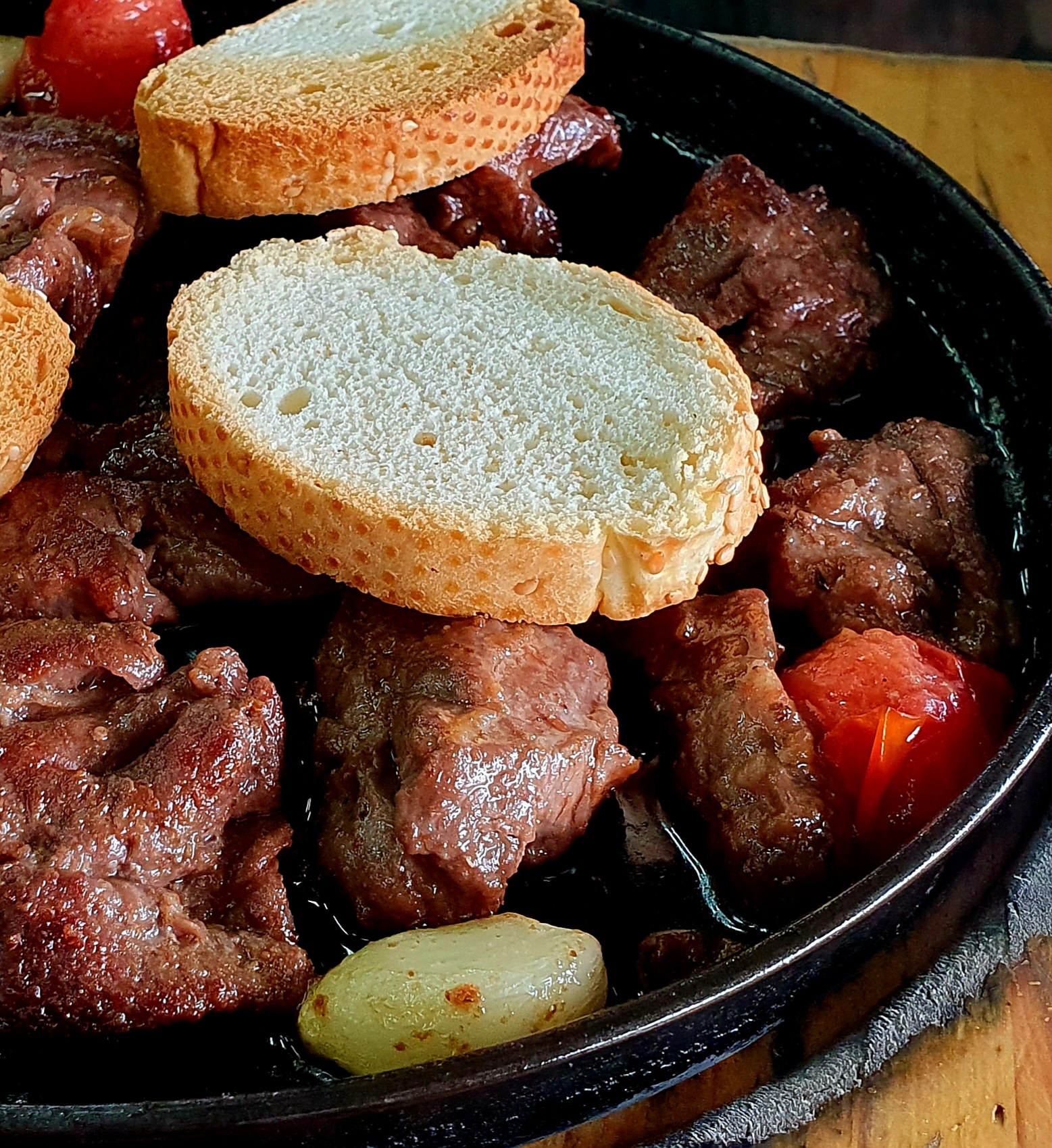
Because why not?
Shashlik
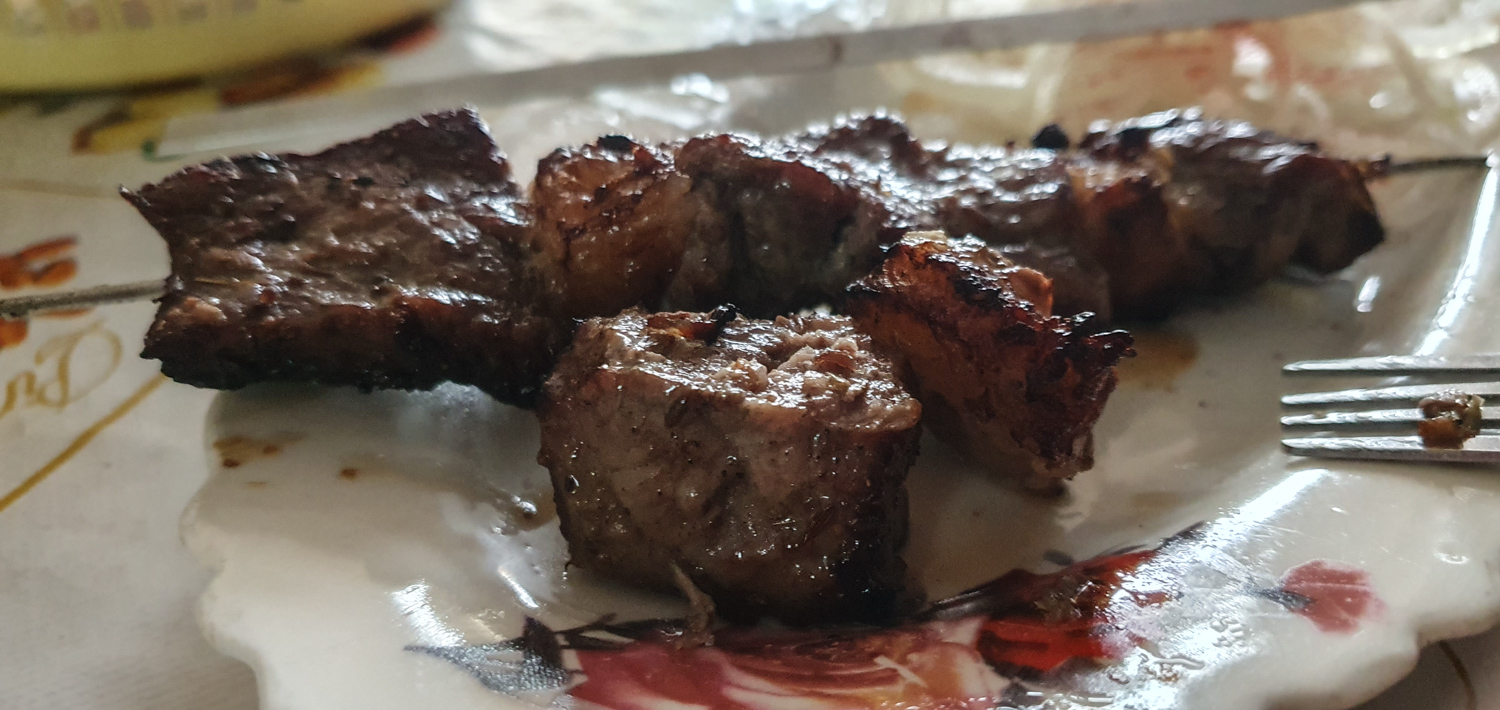
If there is one meal that everyone keeps talking about and recommends to try, it has to be shashlik. Its concept is very simple – just plain meat chunks stacked on metal skewers and grilled. Shashlik is very cheap (and I mean really really cheap) and works very well for those of us who like to indulge in lamb and beef on the go. I pity the staff who had to watch me swiping the perfectly seared lamb like there is no tomorrow 
Uzbek bread
Uzbek bread (non, nan, lepyoshka) symbolizes the soul of the table and Sun, a gift from gods. It is offered to guests to imply utmost hospitality and welcoming them. It is placed under the newborn’s head, used on wedding feasts, and it is treated by everyone as a symbol of fertility. It is forbidden to throw it away, place it upside down, or cut it. If it falls on the ground, lift it and kiss it, and then place it on a high place.
So, to summarize:
- Uzbek food is not spicy to begin with – its quality lies in simple savoury taste
- traditional food is mostly meat based and vegetarians could have an issue with finding proper meals while outside larger cities (I saw them myself, they were reduced to very thin and sad soups)
- the meals are very simple, but extremely efficient in terms of satiety (this is the power of whole foods which no one can deny and it shows)
- There are no knives on the table due to the traditional practice of tearing the bread instead of cutting it – it was believed that it is disrespectful to cut the bread and this concept persisted
- at the entrance of the restaurants one can wash hands, which I find very pleasing; I am very happy to tread directly towards the sink
Ice cream
The only sweet stuff I ate in Uzbekistan is the ice cream. During 10 days I ate over 20 different types, with a strict rule not to repeat any of them during the visit.
Besides prioritising Uzbek ice cream, which was excellent, I also gave a shot to some never seen before contemporary types.
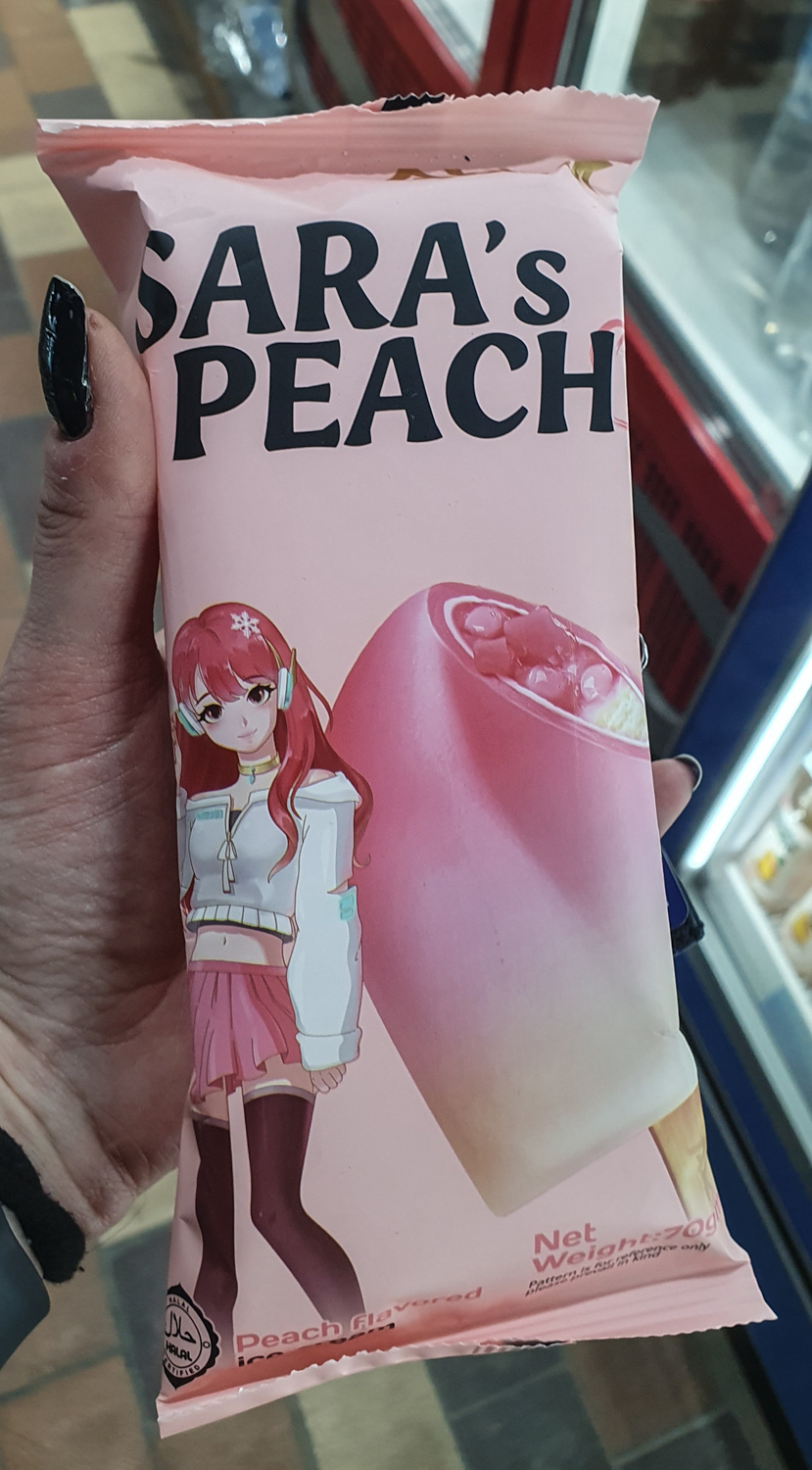
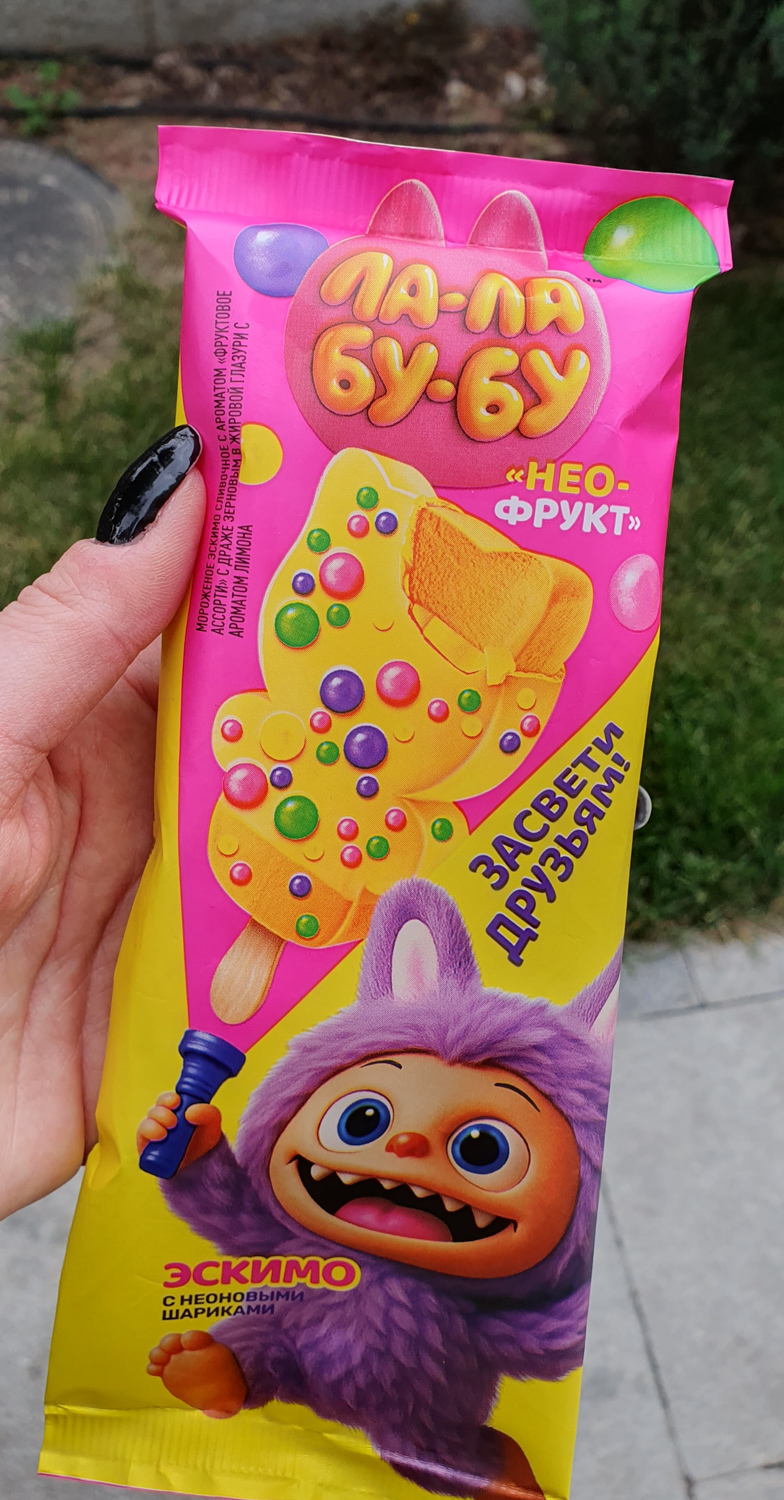
Each one was good in its own way and I really liked them. The absolute number one was the one made of pomegranate.
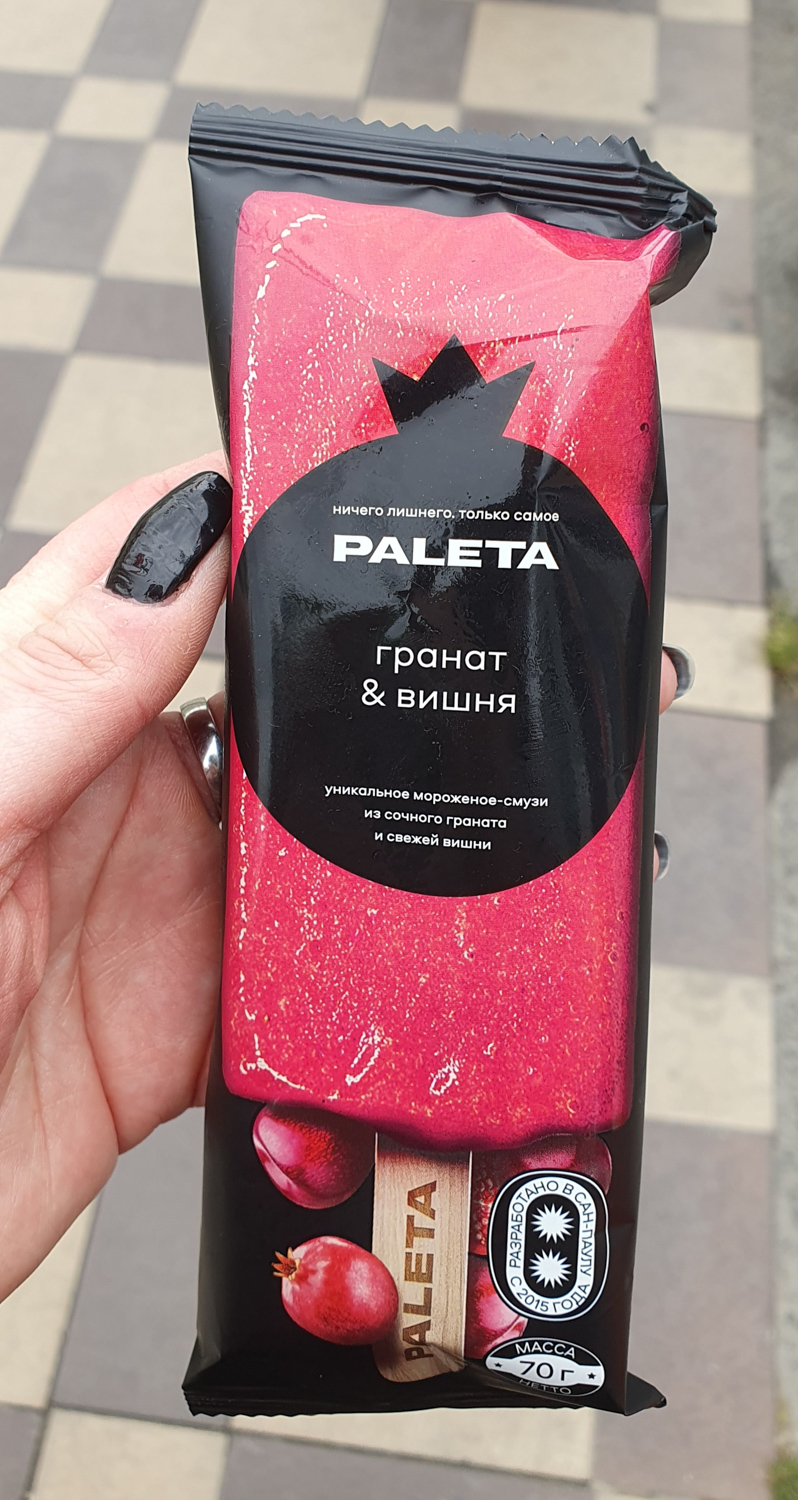
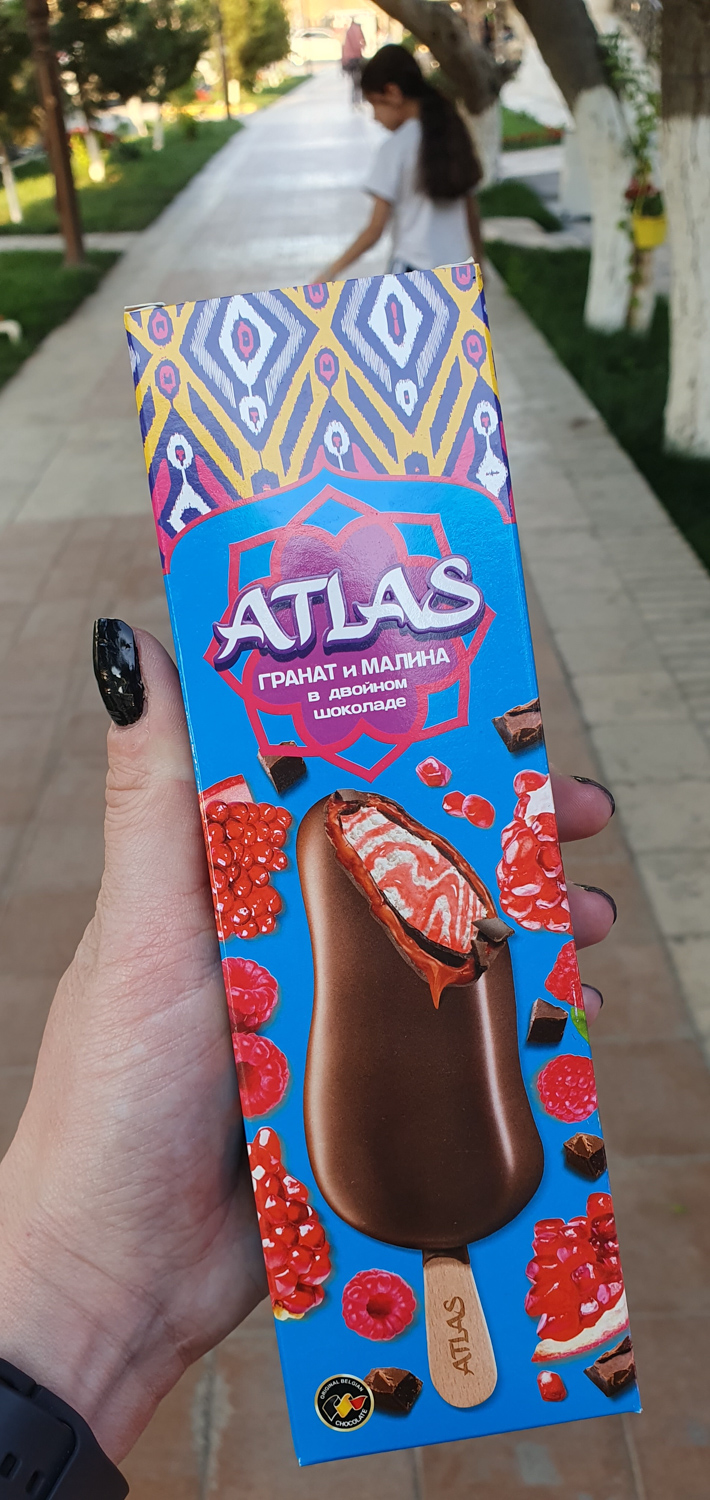
All in all – Uzbek food – yes please.