Train ride from Ulaanbaatar to Sukhbaatar (and back)
 Ivana
Ivana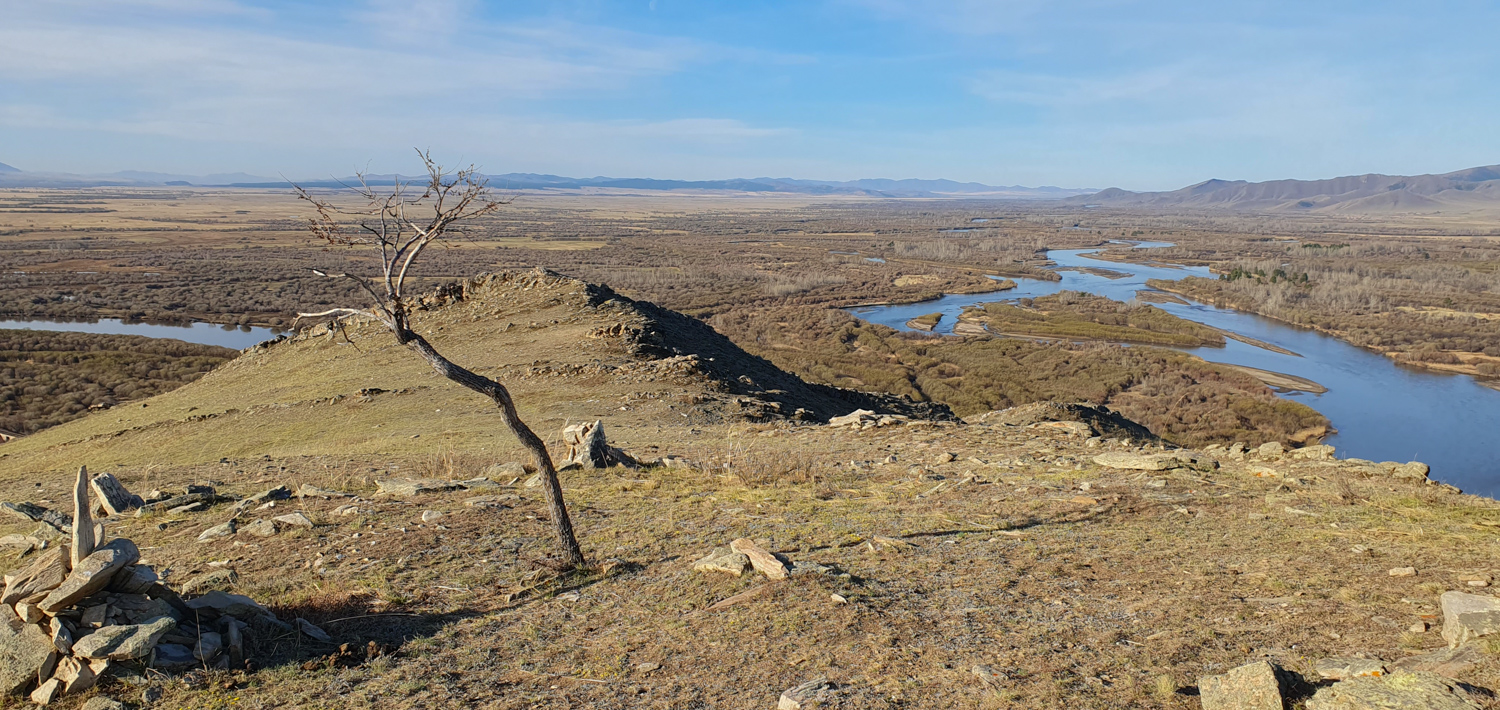
Mongolia can be roughly divided into three major parts based on its climate and vegetation type – the desert (Gobi), the steppe (Mongolian-Manchurian grassland) and the forest part (Siberia). This trip was supposed to cover all of them, as I cannot imagine visiting Mongolia in any other way.
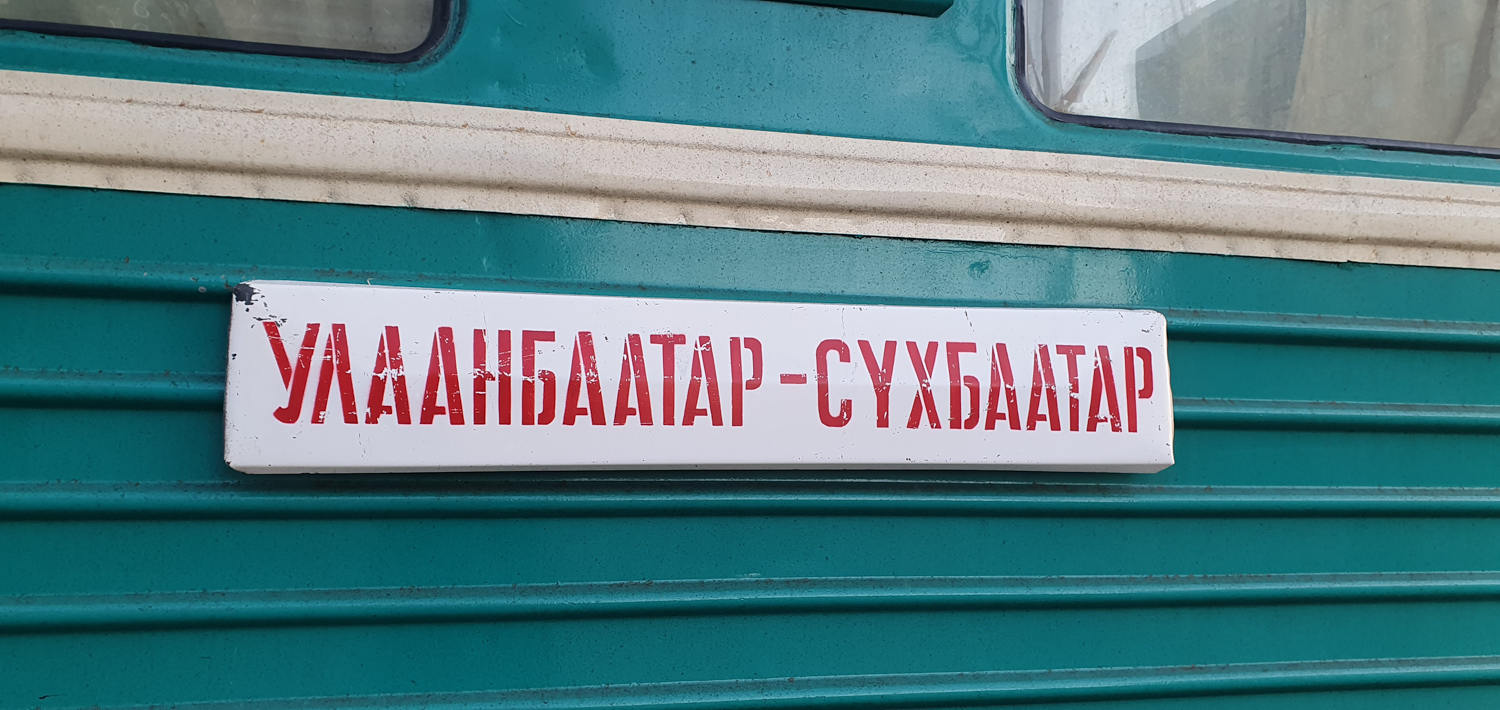
This meant that I needed to travel more towards the forest area after I was done with the desert area – I loved the train ride to Sainshand so much that I booked another ride in the opposite direction: to Sukhbaatar. This city lies on the opposite side of Ulaanbaatar compared to Sainshand (located 100 km from the border with China), near the border with the Russian federation, in Siberia. Due to the ongoing conflict between Russia and basically everyone else, I was unfortunately unable to include Russia in these plans. Only 200 km away lies the Baikal lake, the deepest lake on the entire planet – “How amazing would it be to be able to visit it” :deep sigh:, I was thinking while tailoring the plans for Mongolian trip.
For me it was only important that I have a buffer zone between returning from Sukhbaatar and the flight home in terms of possible delays, as I could not allow myself to be late for the flight. A ride to Sukhbaatar should have been very possible to do, considering the ride to Sainshand.
I came back to UB in the morning from Sainshand and simply returned to the station in the evening, eager AF to dive back into the mongolian train setting. The time in between was spent on reloading the backpack with clean clothes, recharging devices needed on the incoming trip, and preparing the fuel for the hike. Little did I know that it would be one of the most productive hiking days in my entire life.
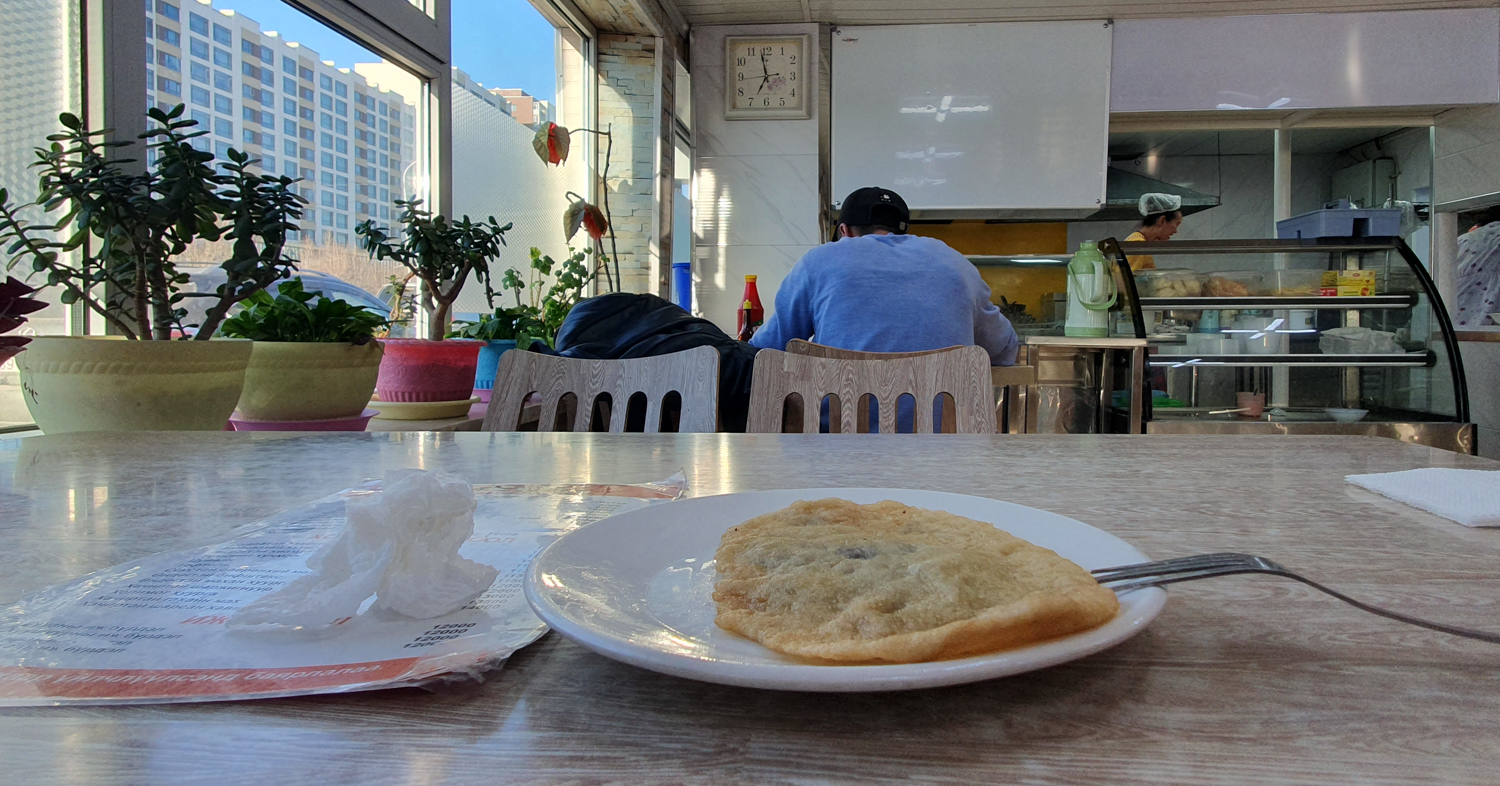
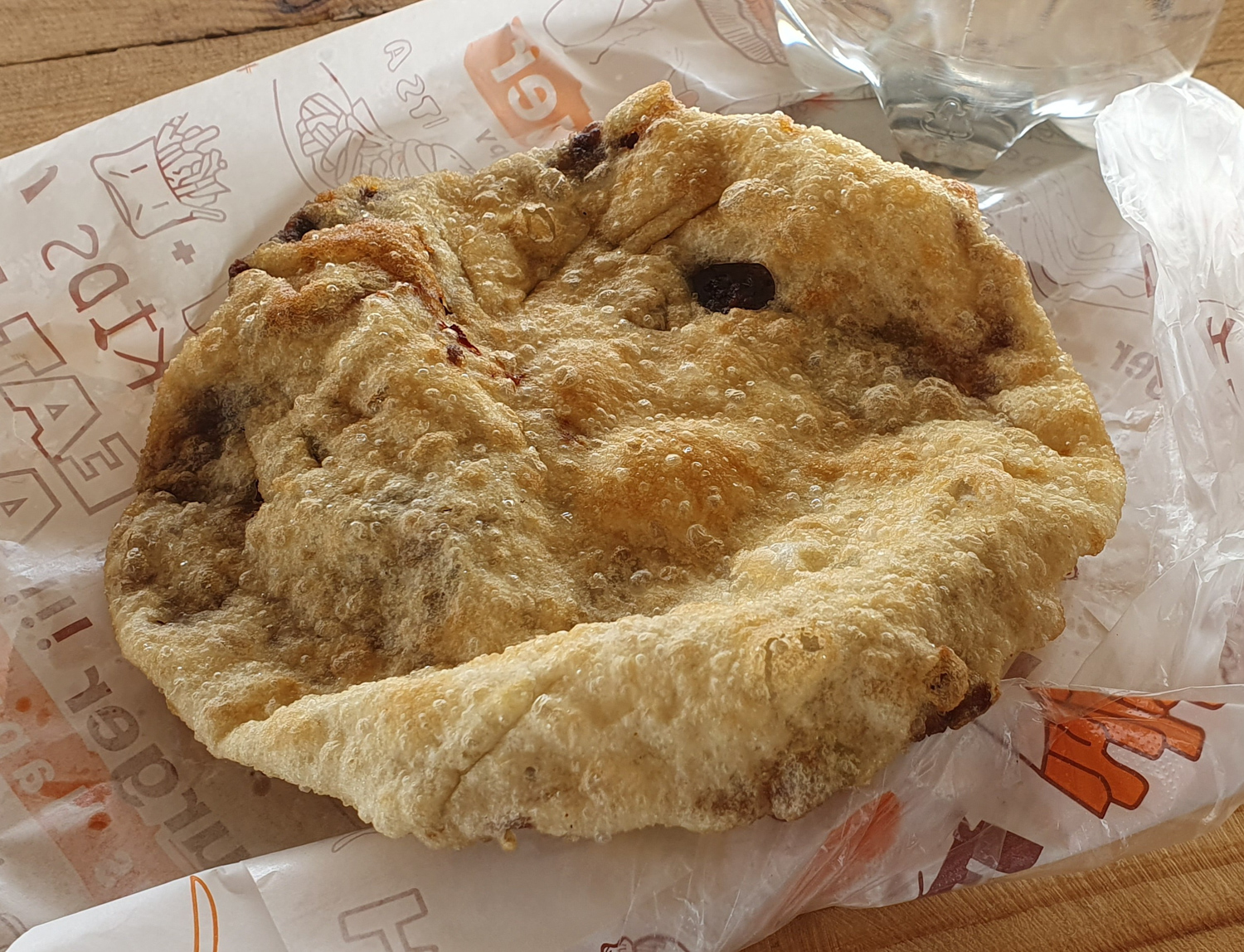
The crucial part of prepping was stopping at a khuushuur eatery. Generally, I eat sparsely but I adore khuushuur – it is a deep fried flat type of pancake filled with minced lamb. It was so good that I ate there several times more after I returned back from this trip. Those from my home country, Croatia, could associate the taste and the smell with ćevapi. And they know it’s something you are going to enjoy and love.

I was seated on a spot in a wide open type of a train wagon. Next to me was a father and his approx 4 year old boy, who did not put the phone down the entire trip when he was awake. I was listening to the famous tunes and songs, such as the Paw patrol intro, but with a language which was entirely strange to my ears. And very beautiful to listen to. Mongolian language has a gorgeous tone, it is music for my ears.
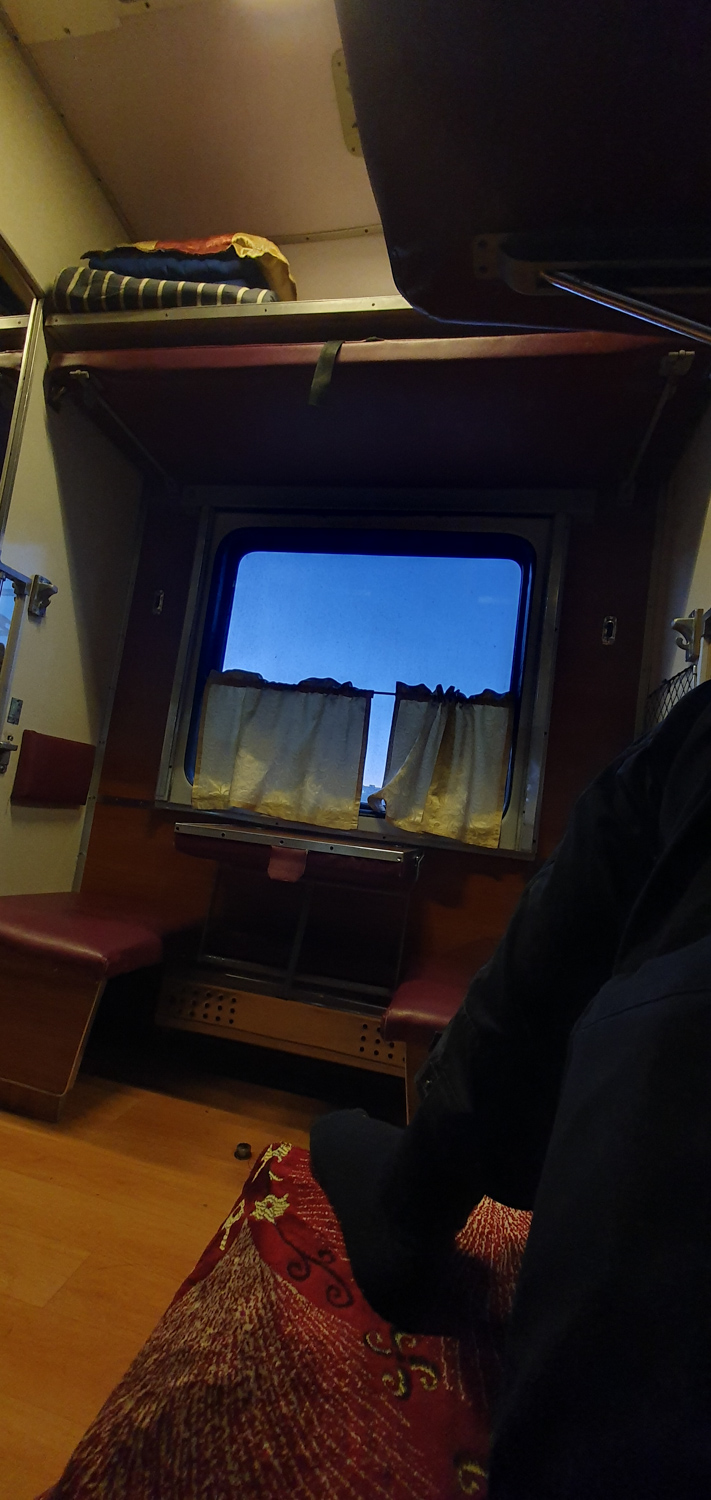

I woke up a bunch of times during the night, and I loved the lights which I managed to catch with my phone.
At 5AM the train arrived at Sukhbaatar, and soon after I left the train and started to walk boldly towards the forest area. There were not so many people there at that time, and I stuck out really bad on my way towards the forest, being an obvious tourist.
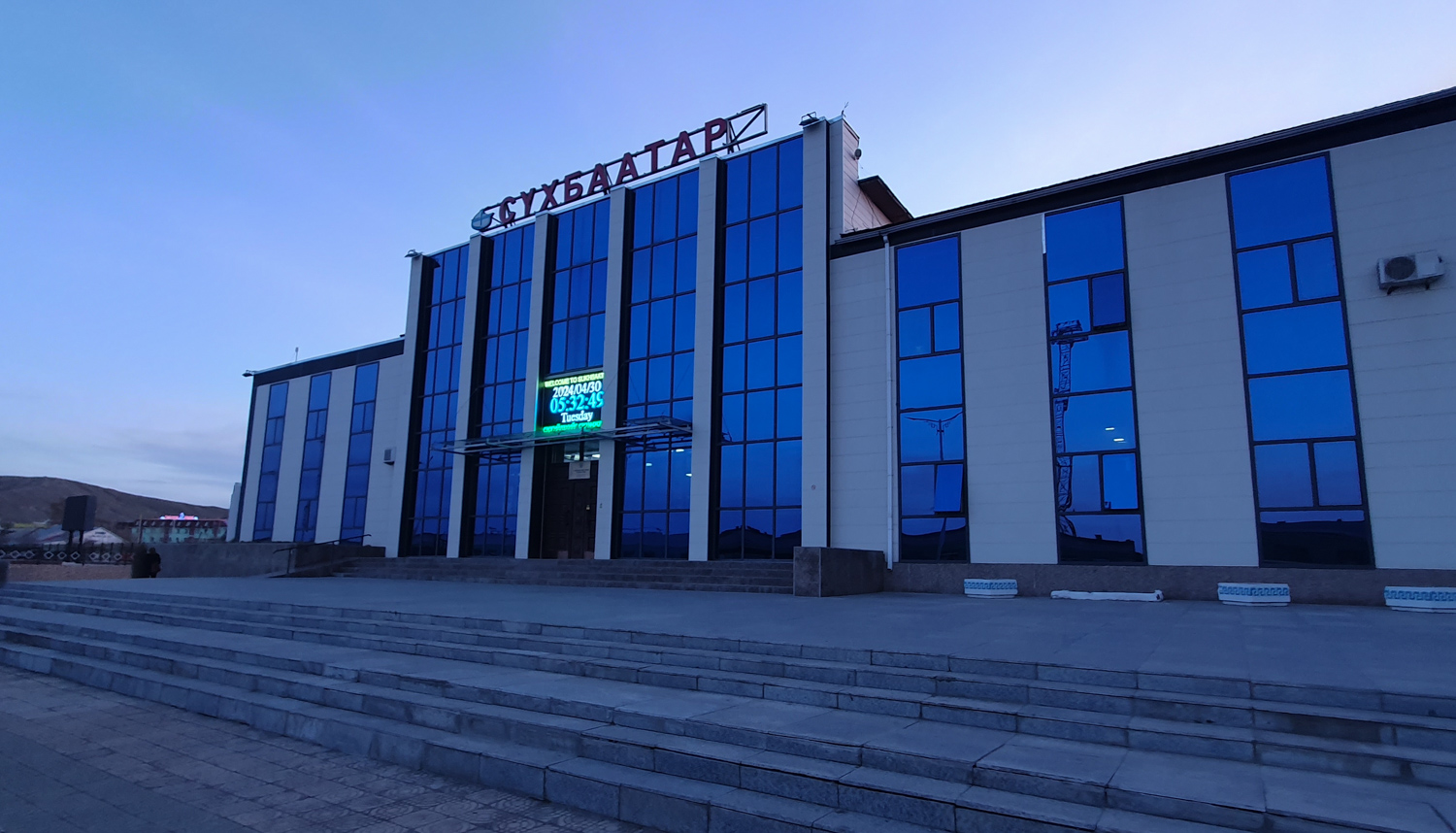
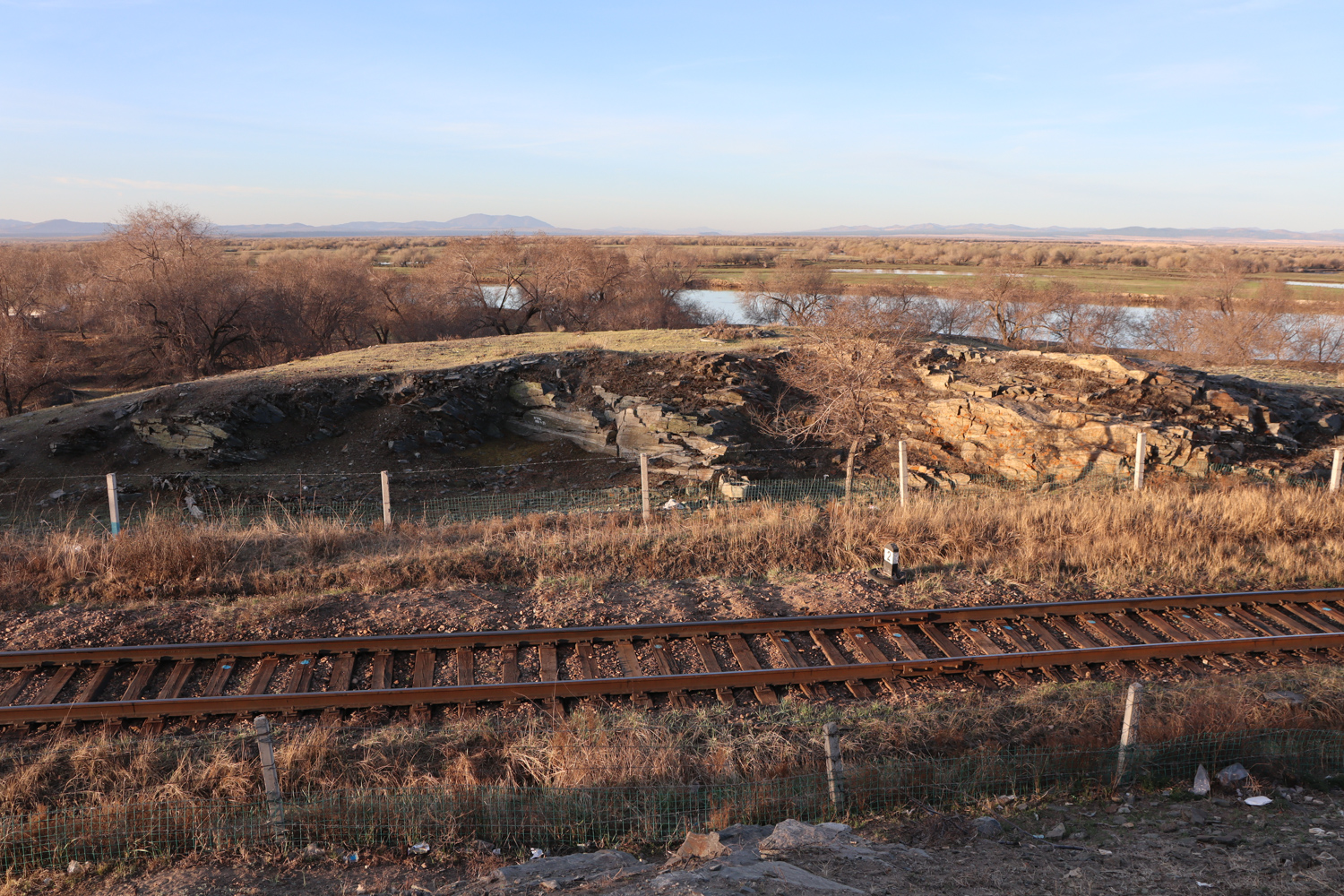
I walked through the city, along a small river, through a grove towards a very special point – the goal was a sweet spot over the Selenge river, called Saikhanii Khutul.
The weather was ideal for hiking – cold but sunny. This keeps me warm enough to walk comfortably but any excess warmth is shaven off my body so I am not overheated.
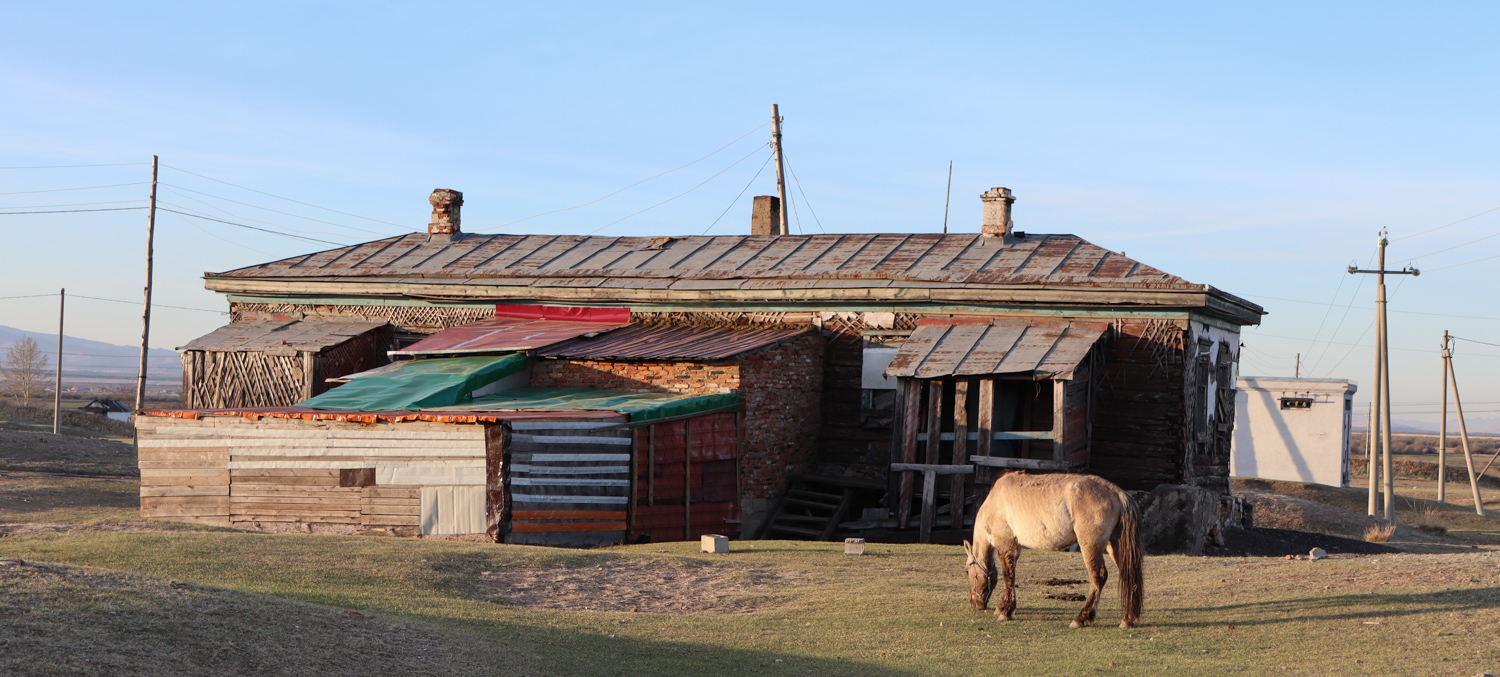
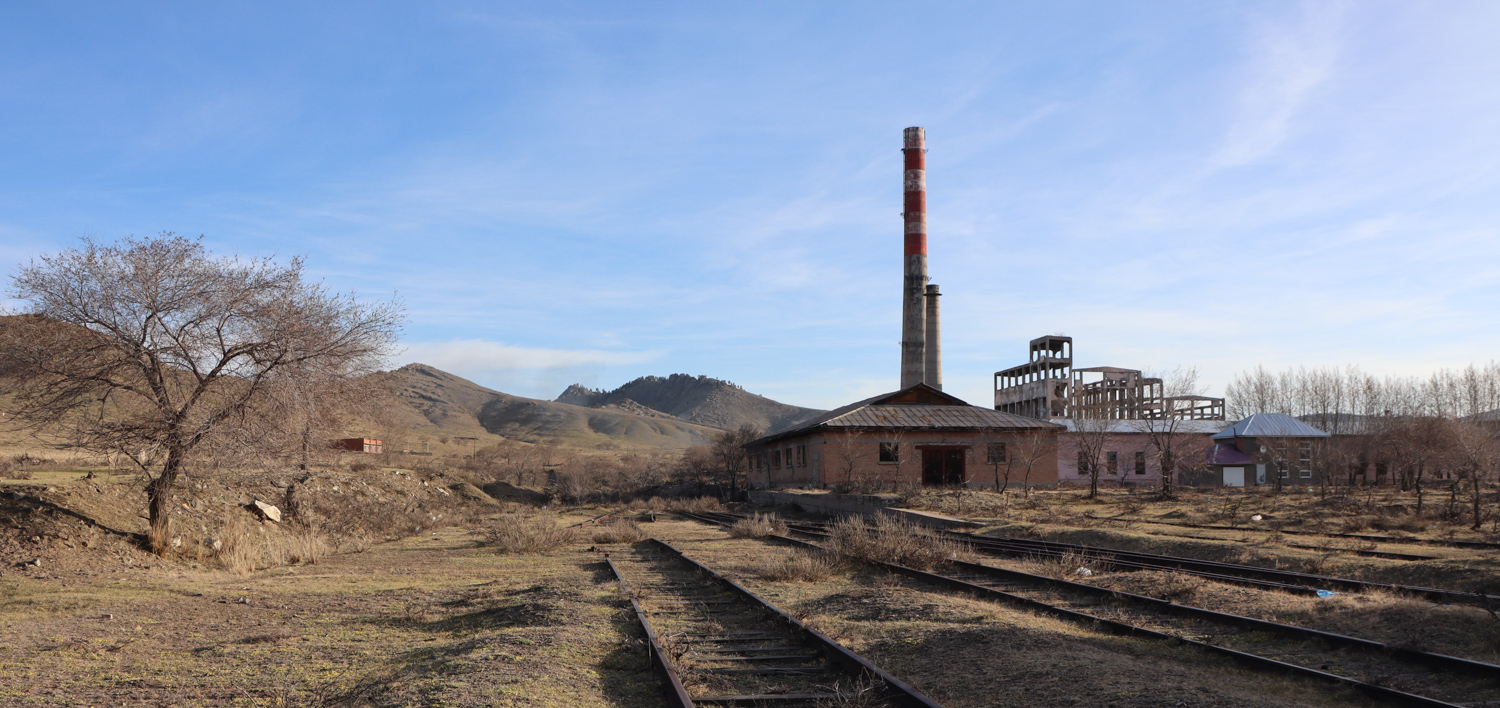
On my way there I ended up in some sort of discontinued industrial ruin. It looked like no one was there for a long time, so I had my The Last of us moment in an eerie environment. It is named Slotmbiev acc to Google maps (?!) but no further explanation was found.
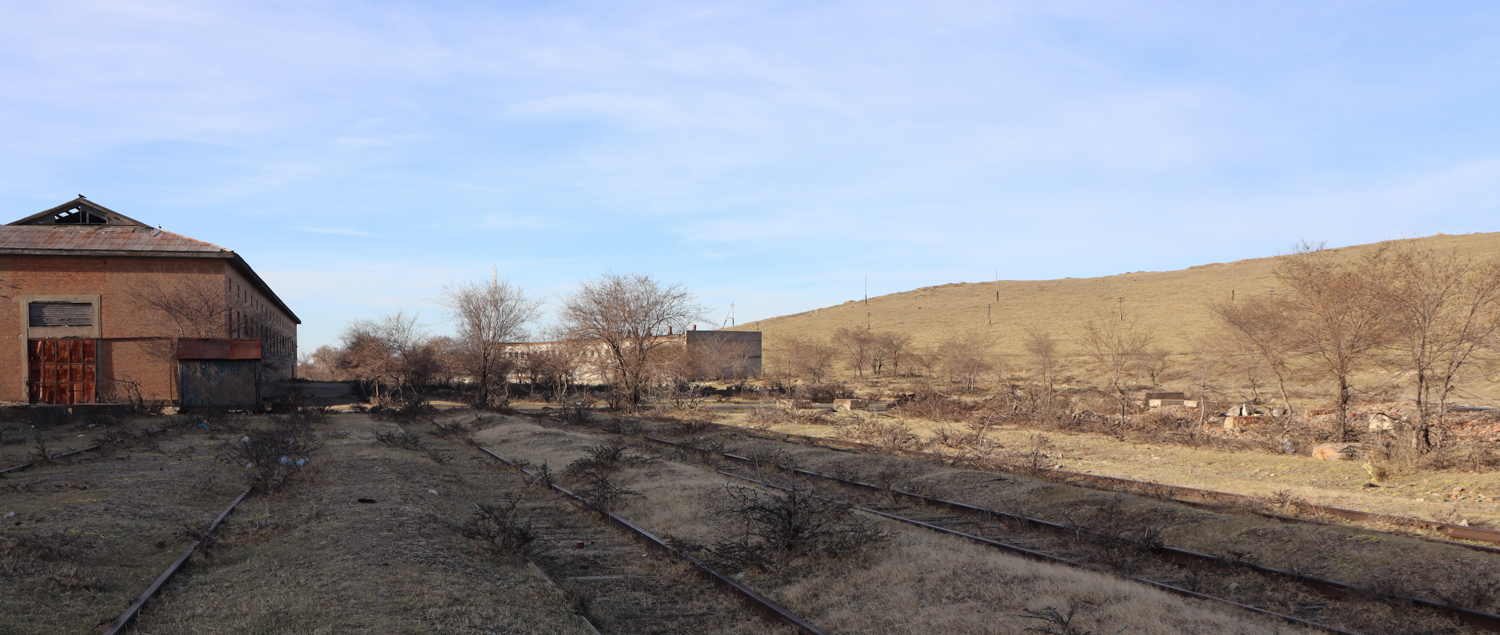
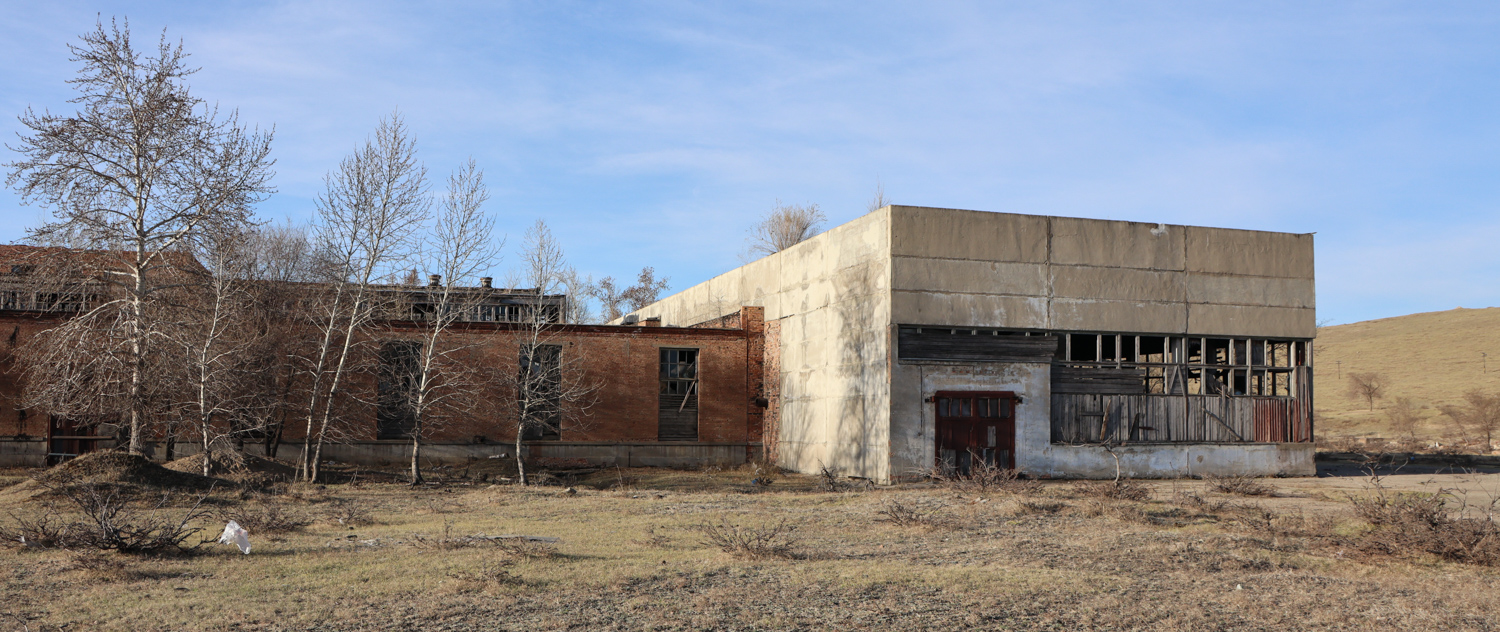
Camel’s Neck Pass / Saikhanii Khutul / The beautiful pass
At the end of this streak lies Saikhanii Khutul. Known in Mongolian as “The Beautiful Pass,” it marks the meeting point of two of Mongolia’s great rivers – the Orkhon and the Selenge – which merge here before beginning their journey toward Lake Baikal in Russia.
Historically, Saikhanii Khutul carried a different name—Temeen Khuzuutiin Khutul, or “Camel’s Neck Pass.” Its present name is said to have been inspired by Mongolia’s revolutionary leader, General D. Sukhbaatar. During the 1921 liberation campaign, Sukhbaatar reportedly paused here, took in the scene, and exclaimed that it was “a truly beautiful pass.” This moment left such a strong impression that the place was renamed in honor of his words. It also served as a rest stop for soldiers during the same period, adding a layer of national memory to its scenic charm.
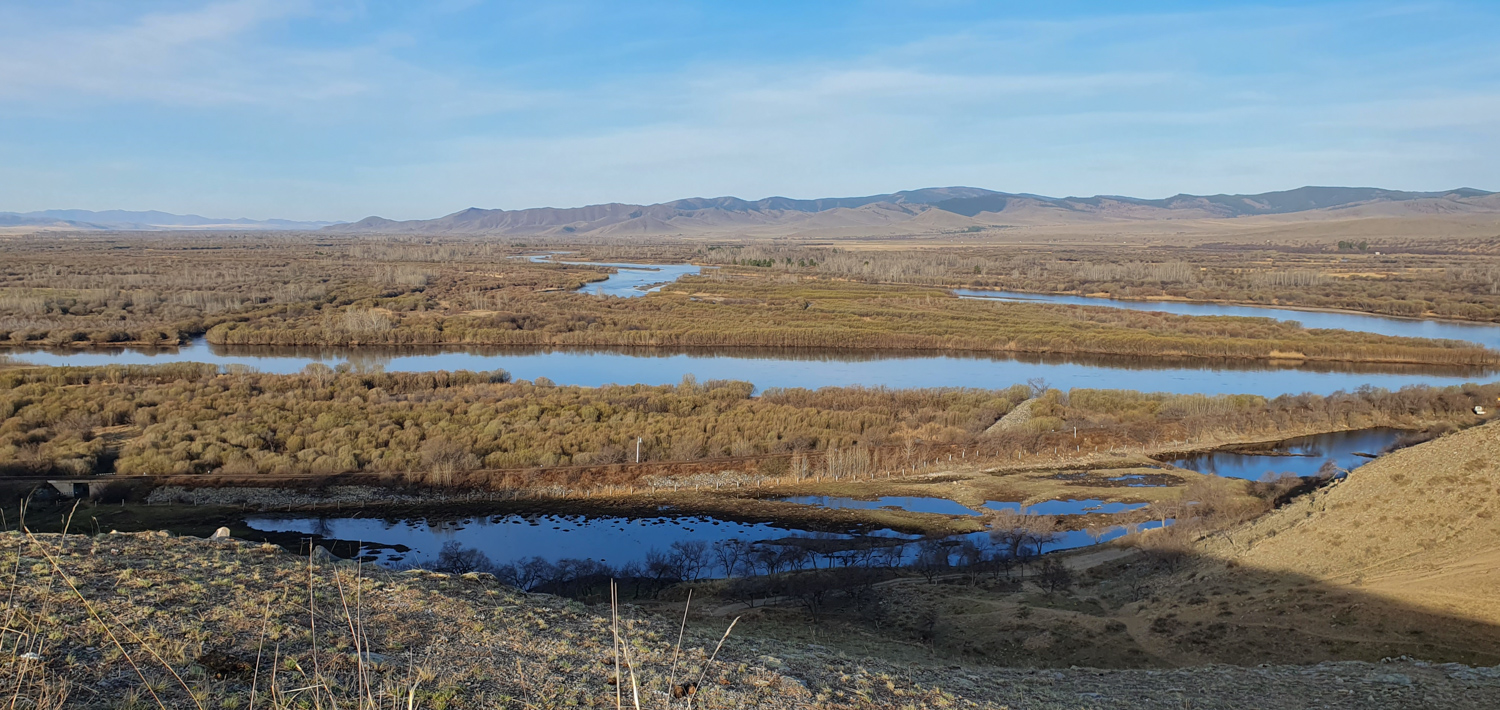
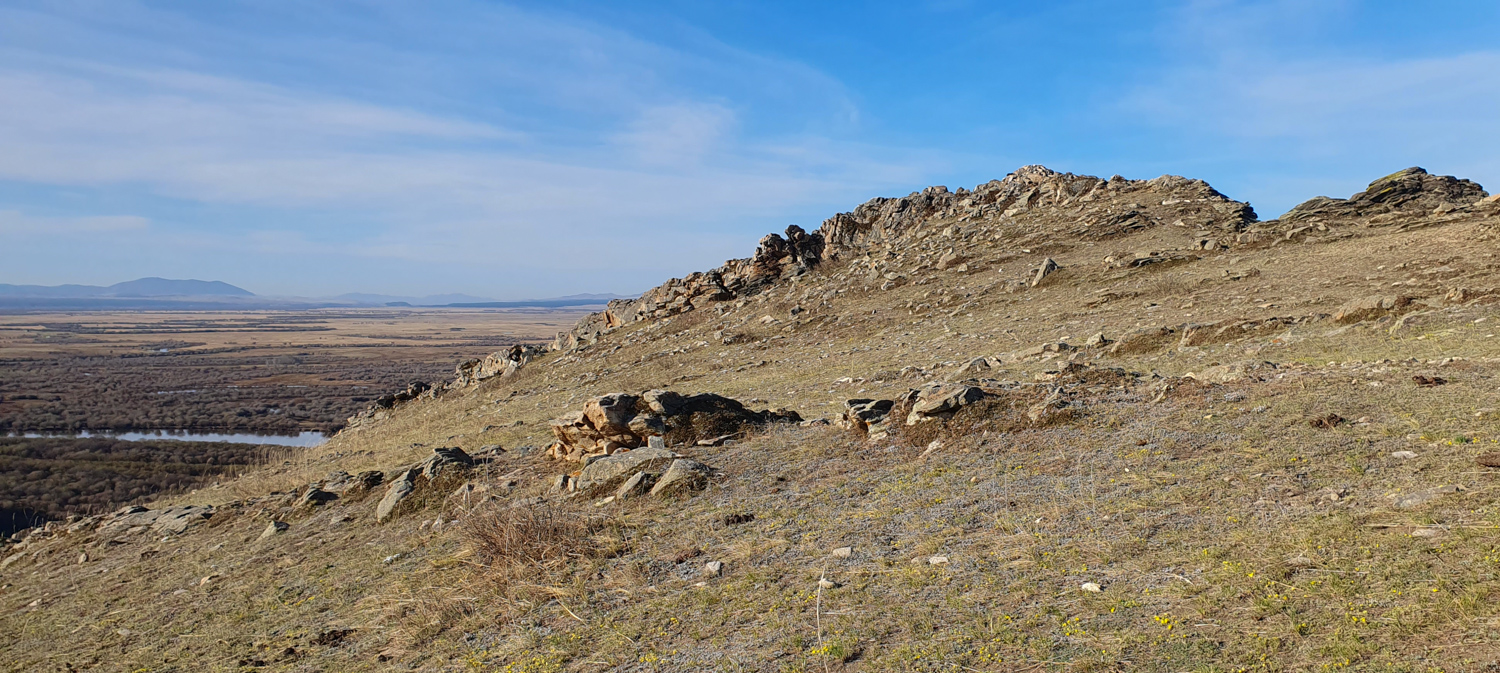
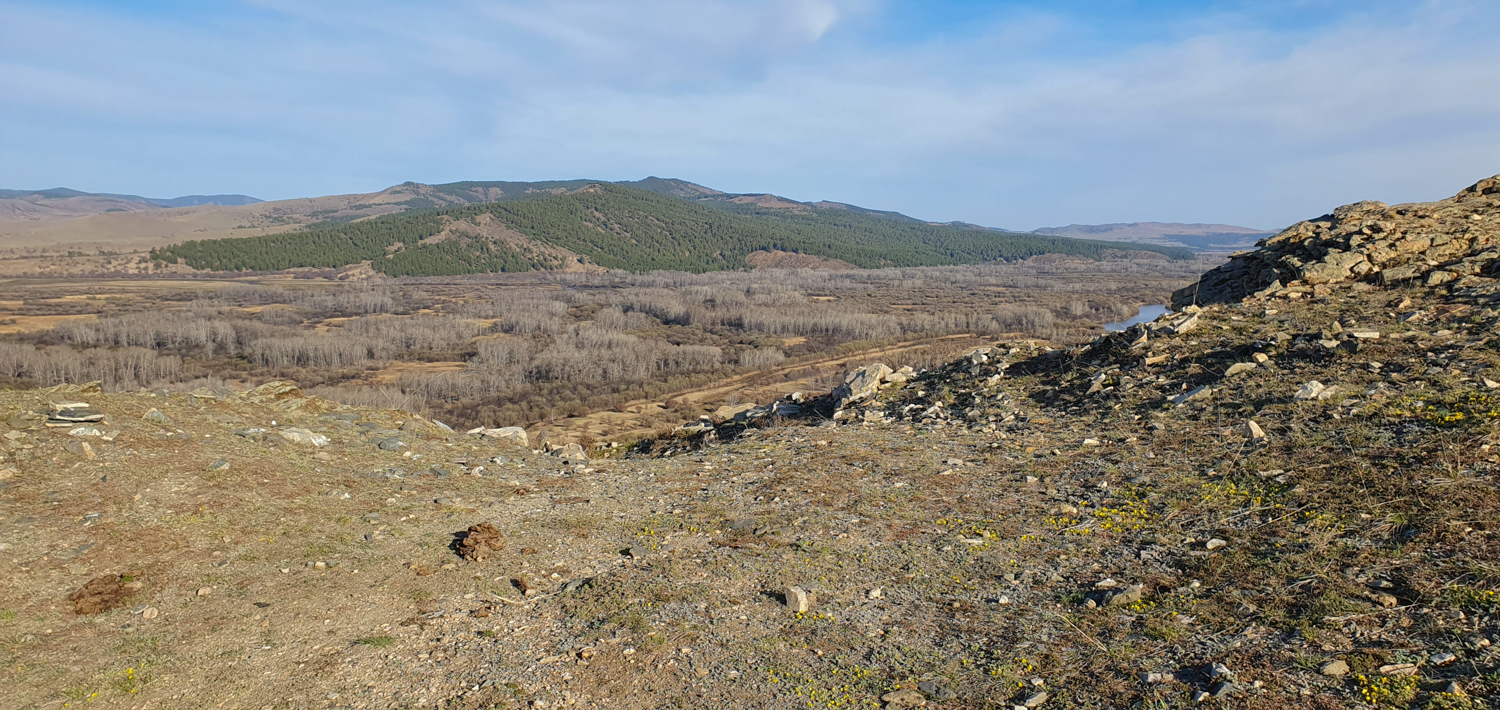
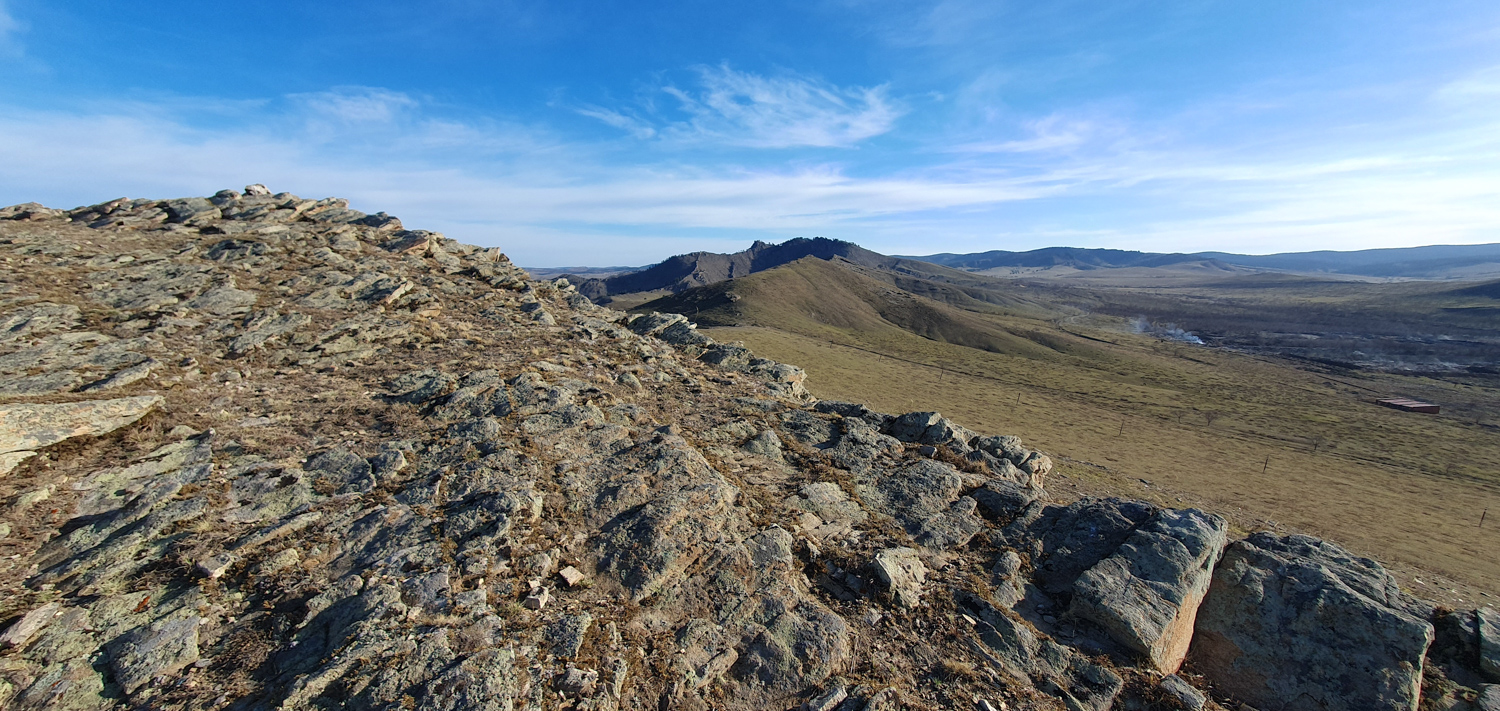
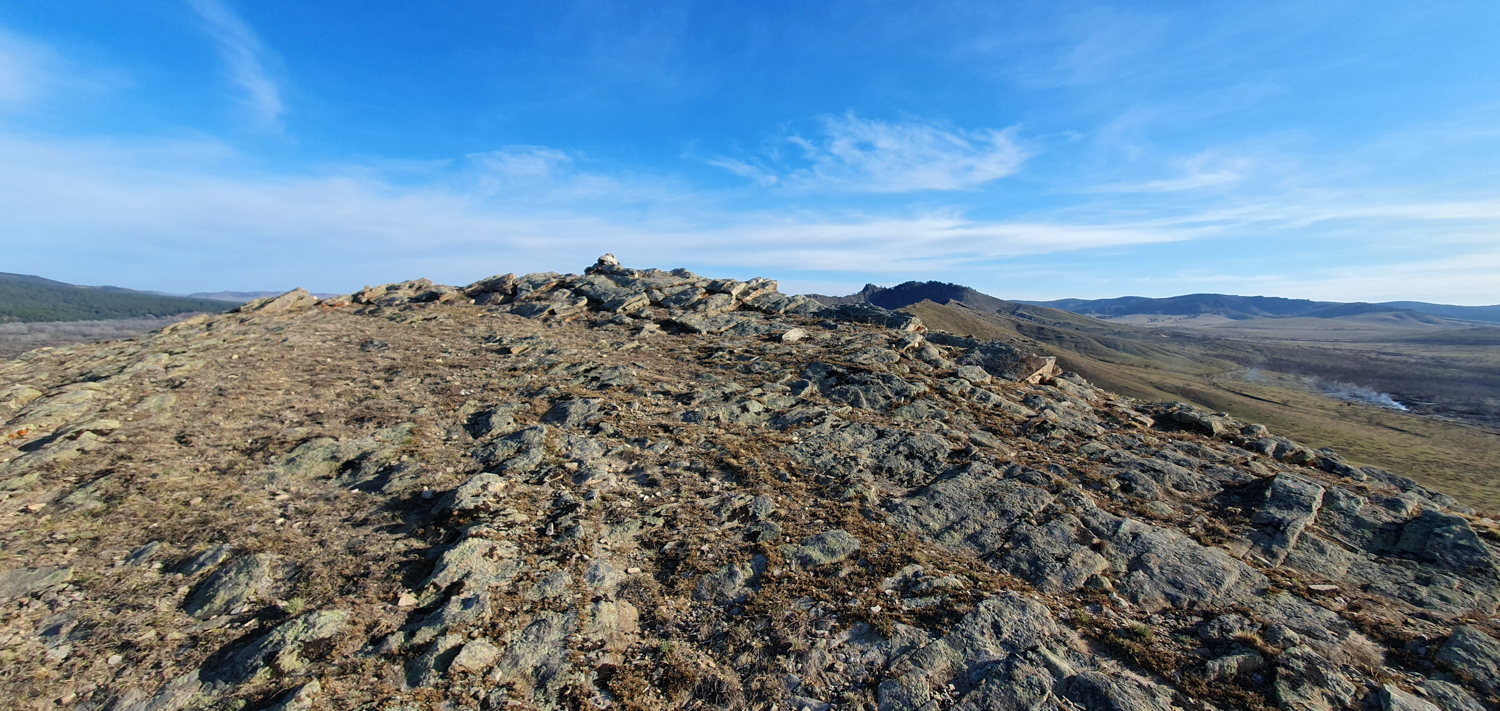
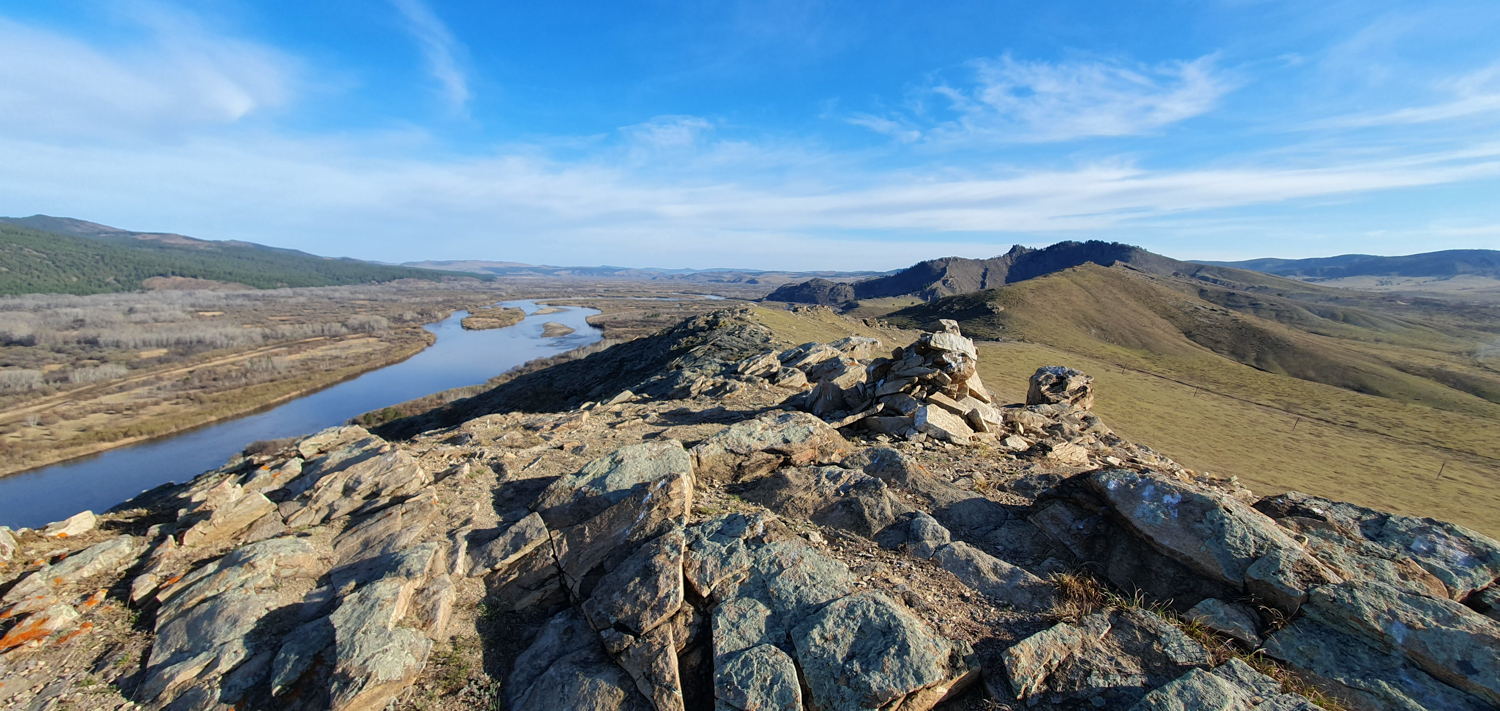
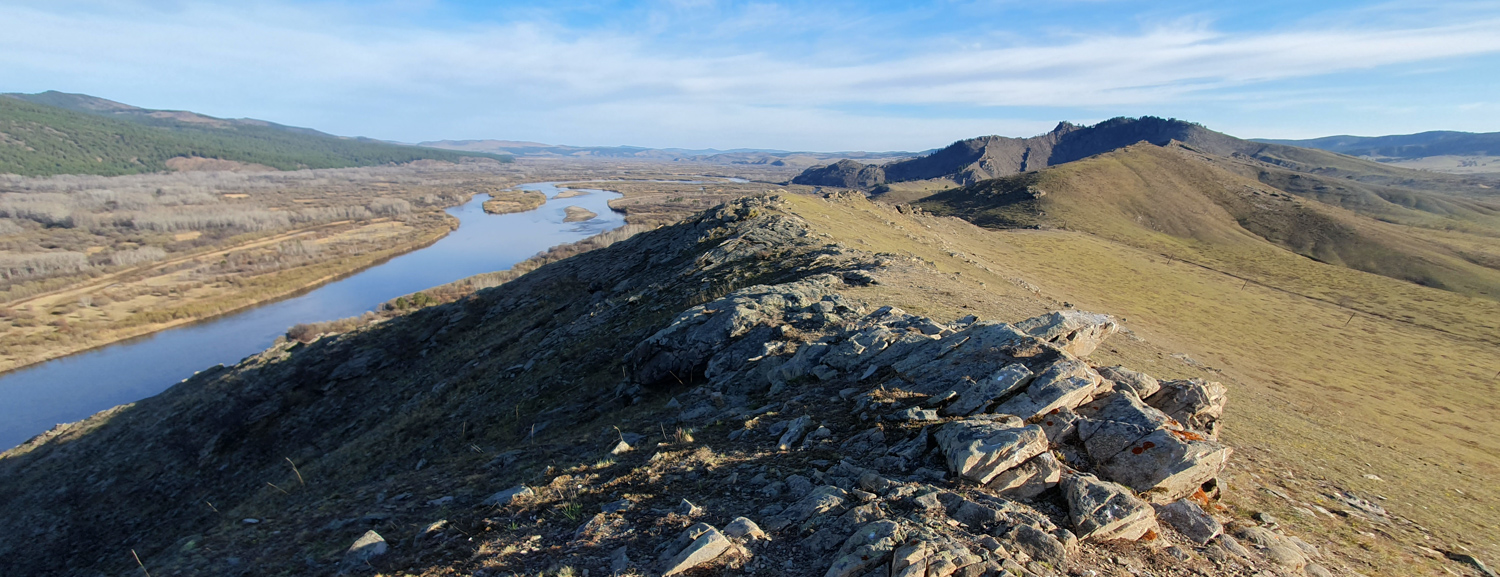
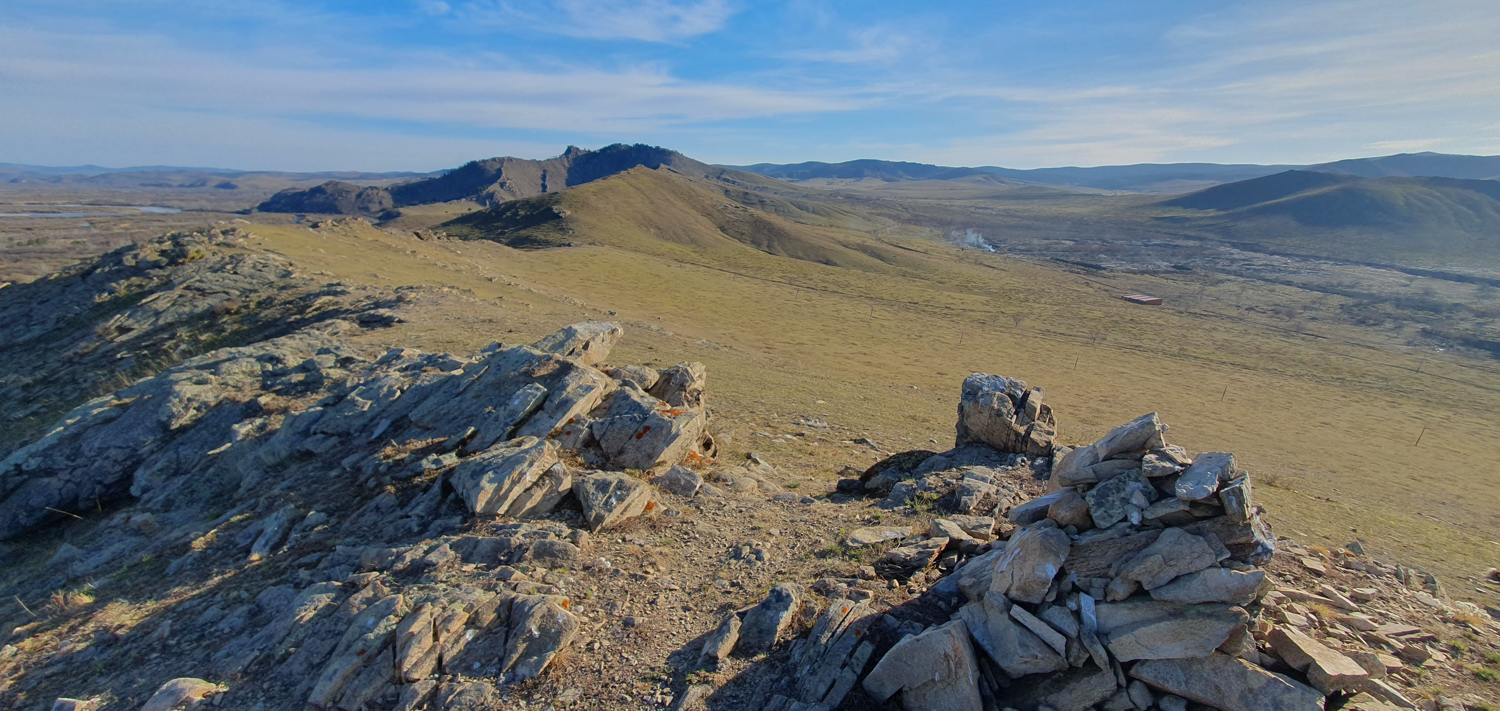
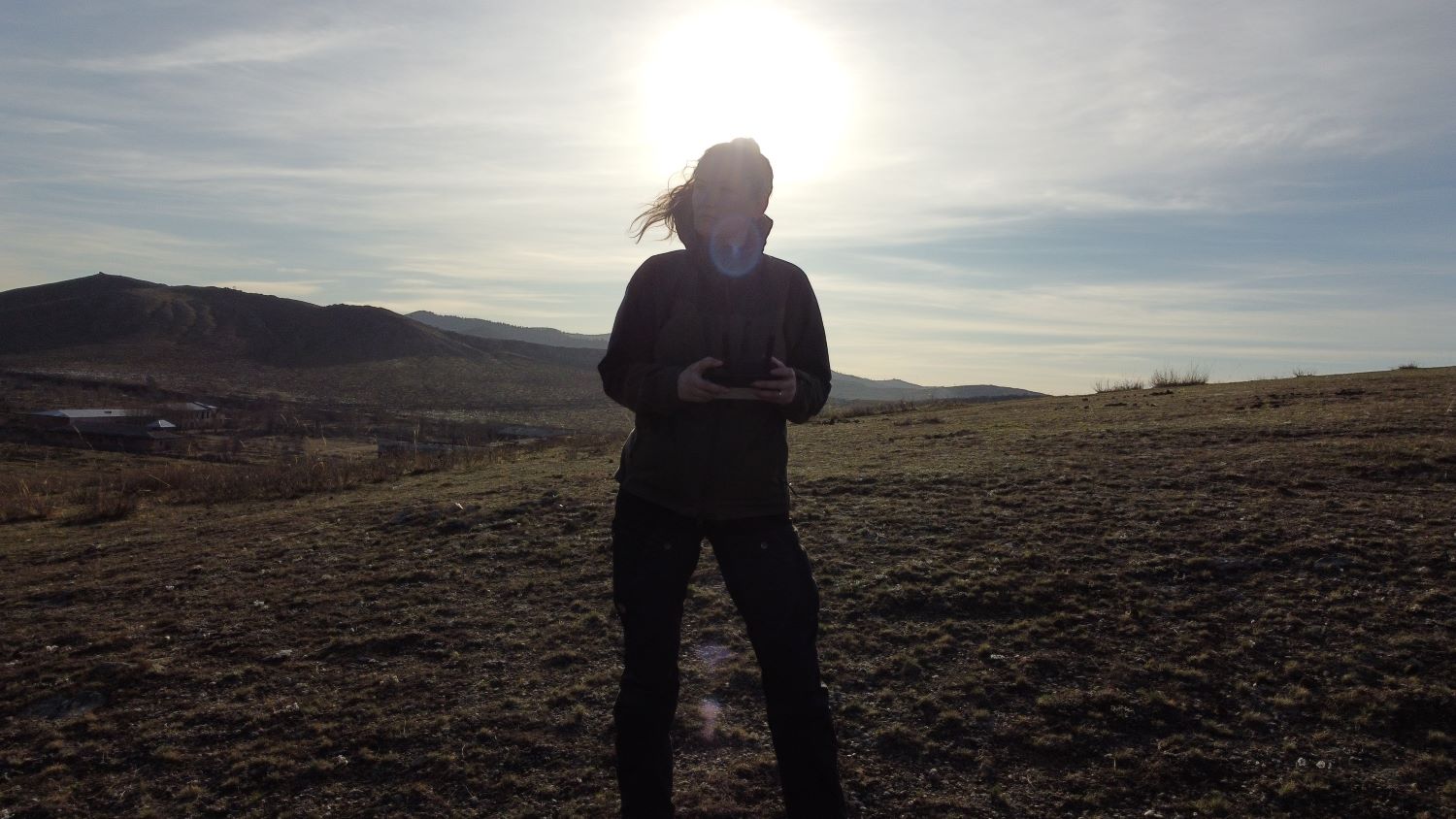
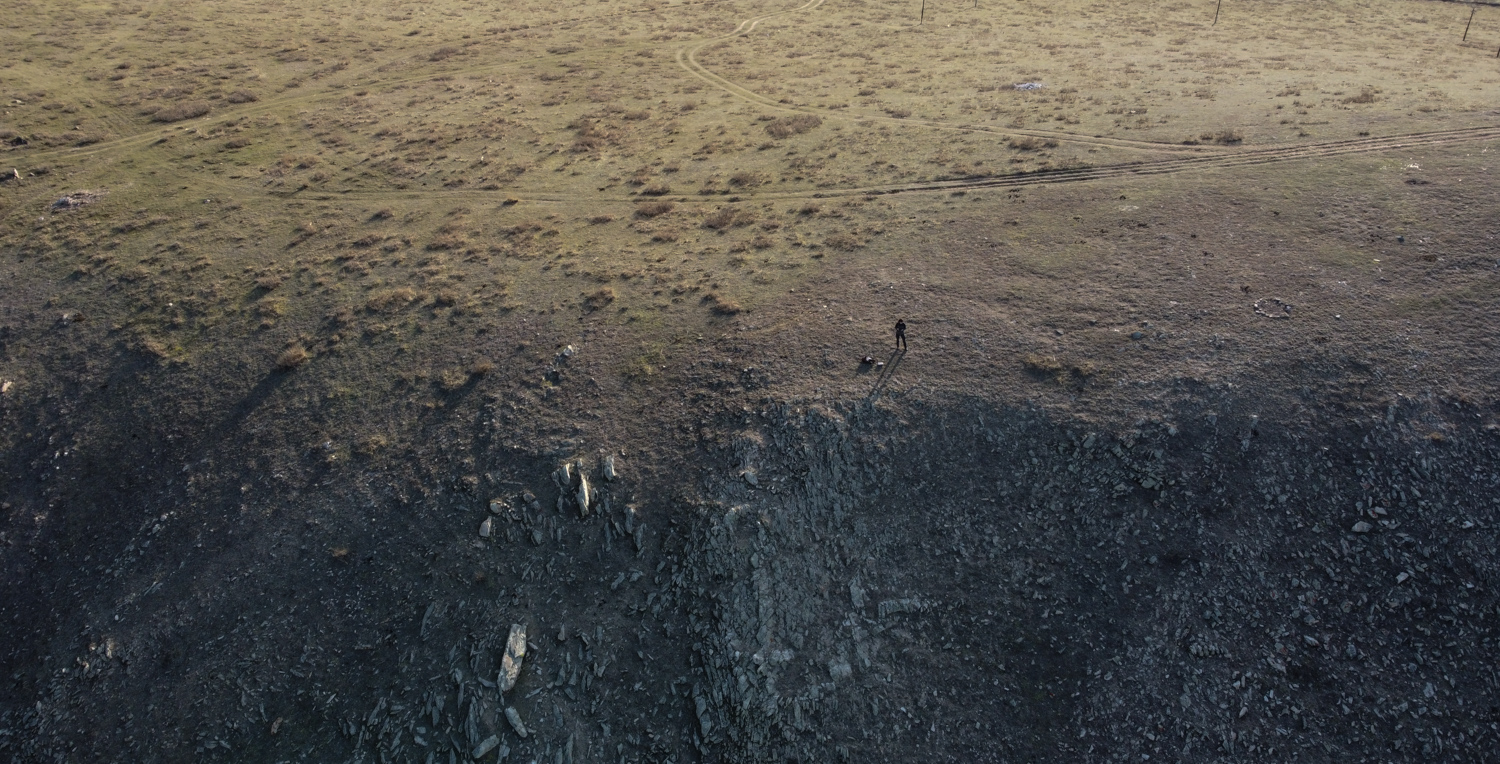
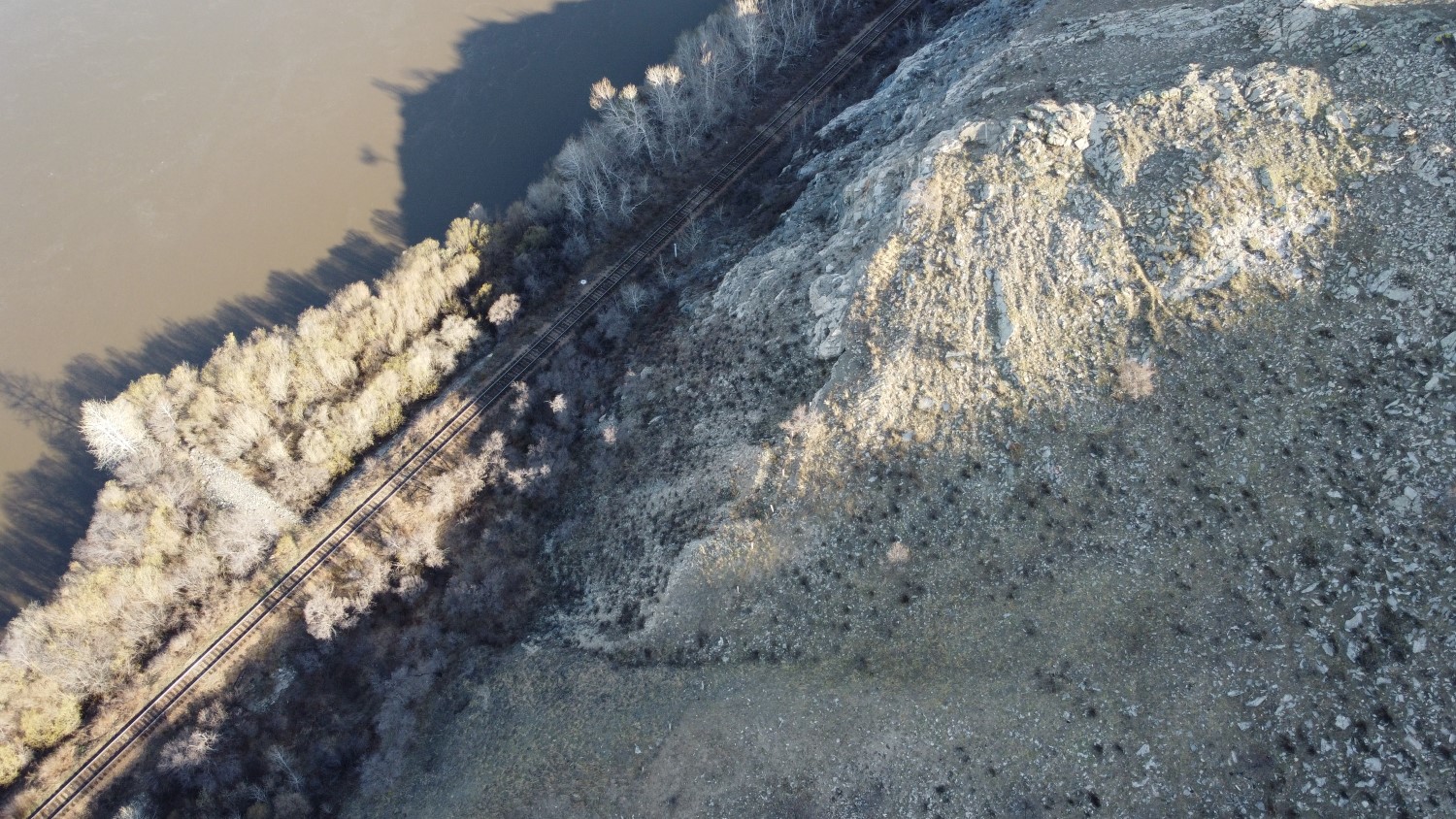
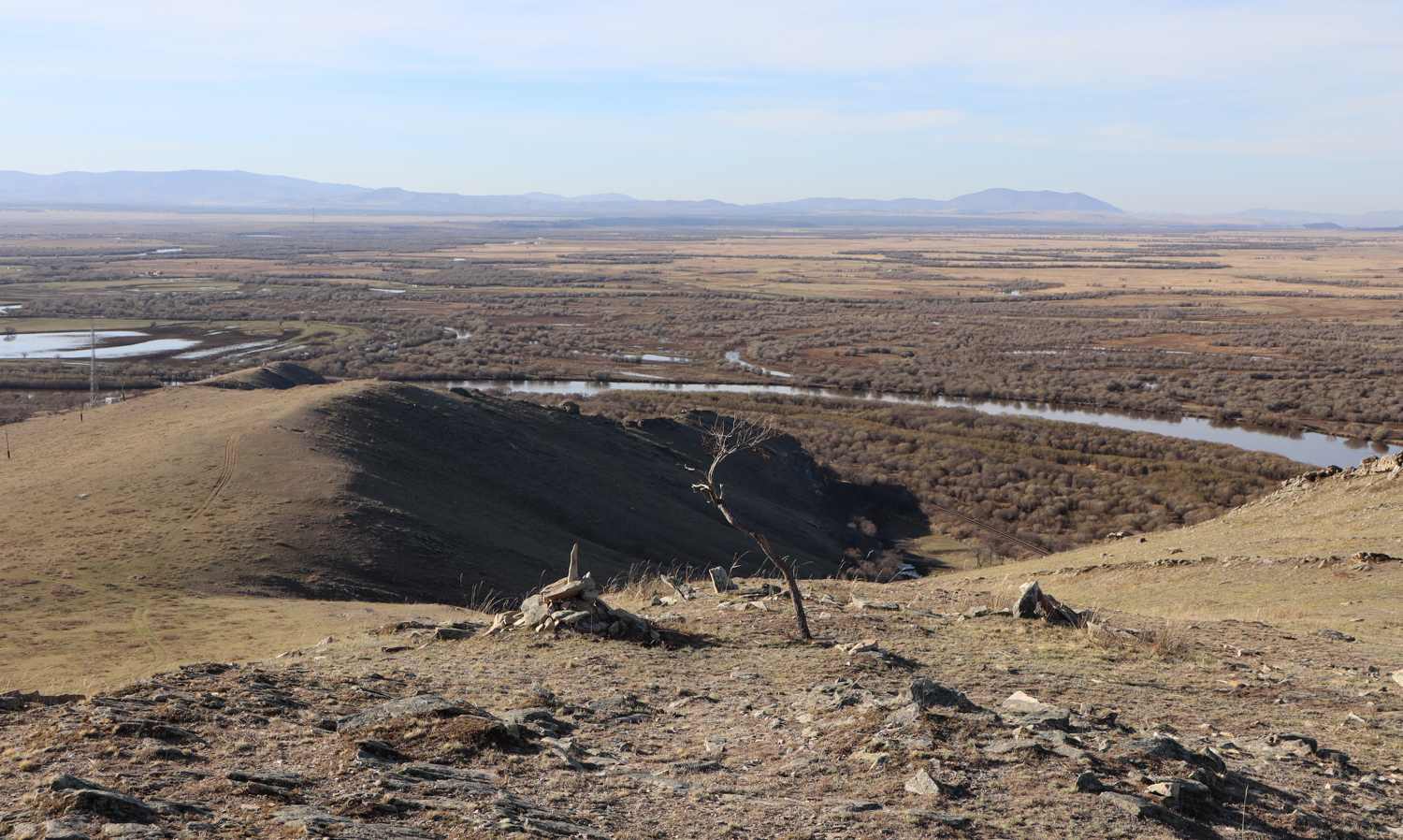
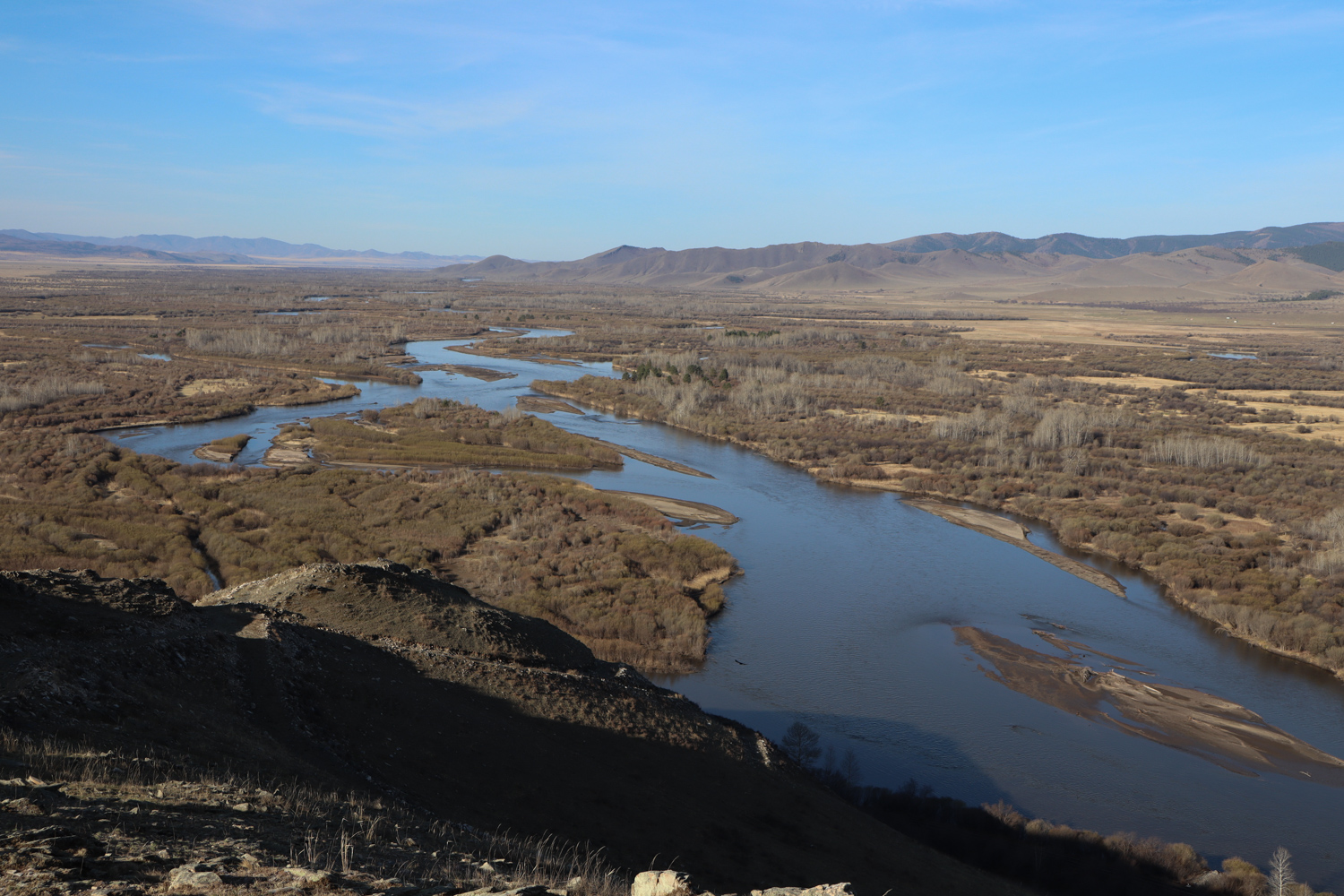

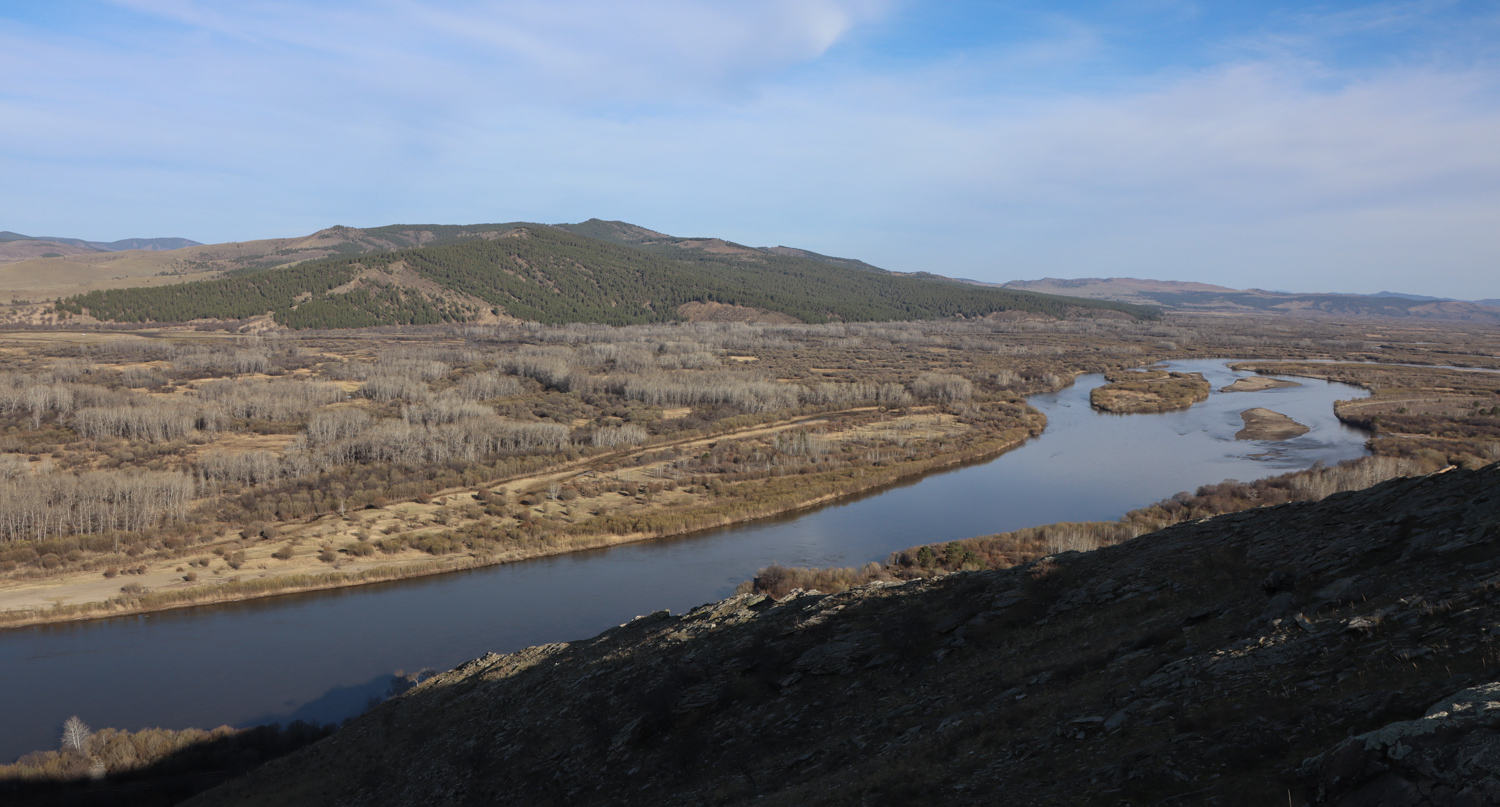
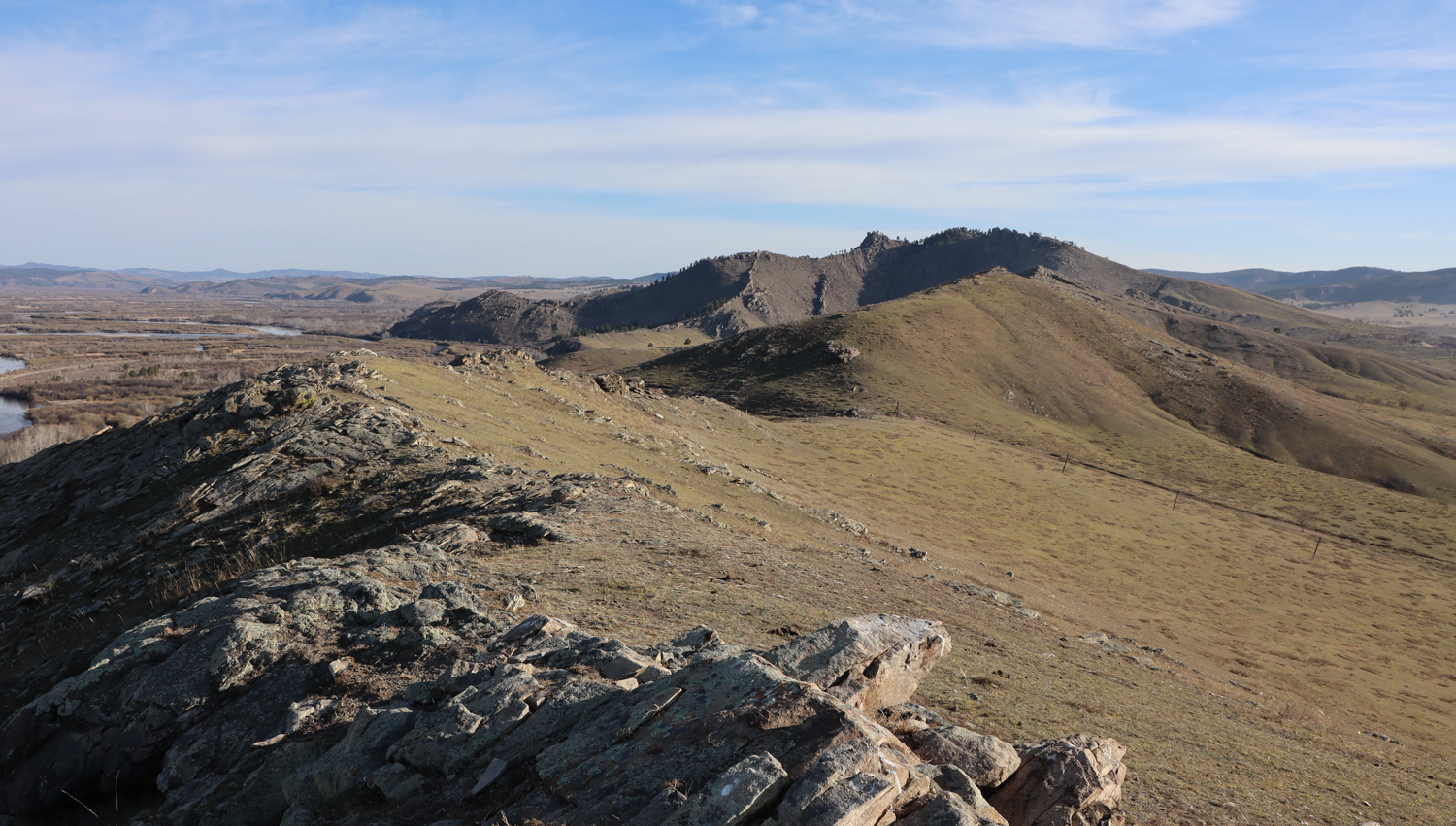
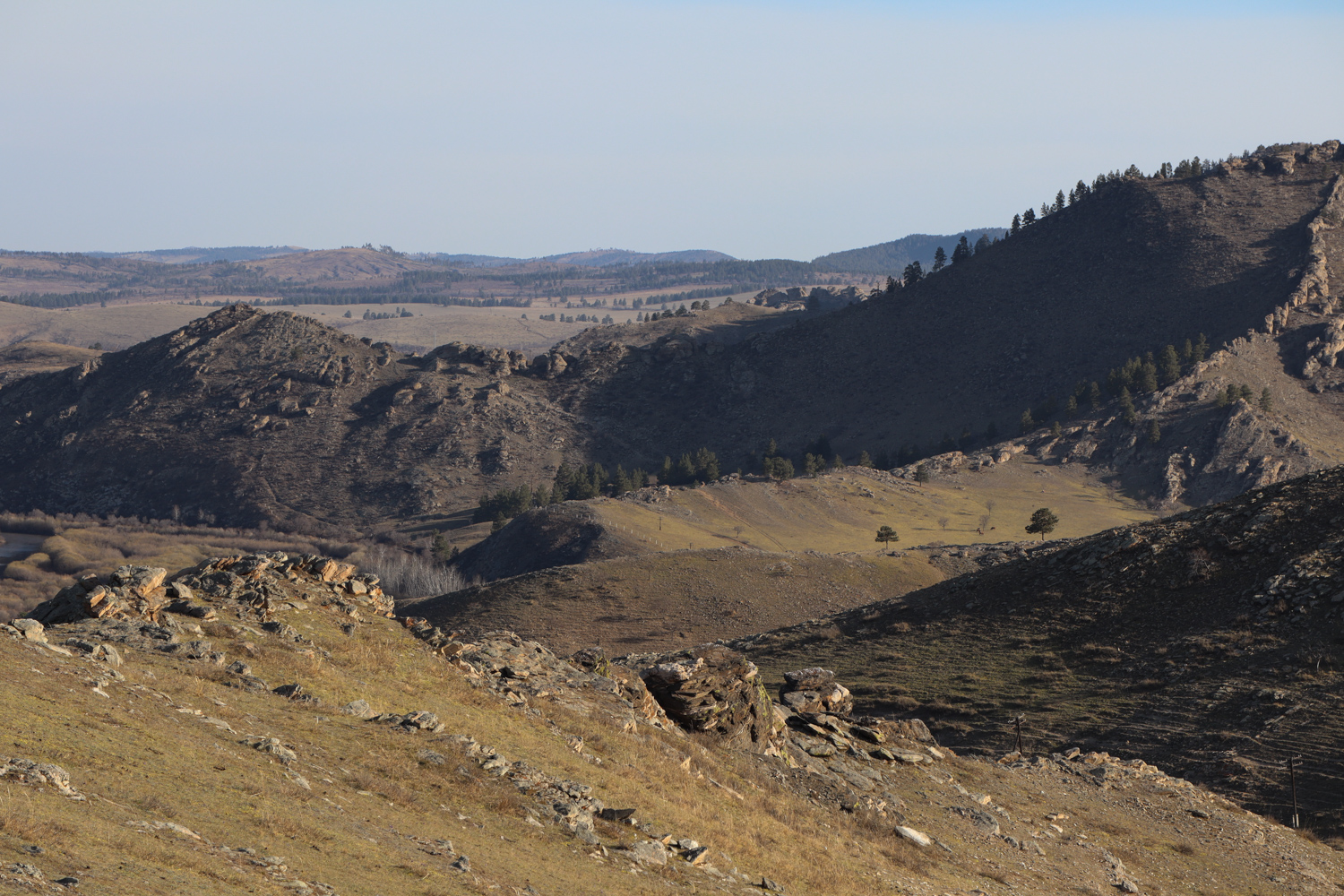
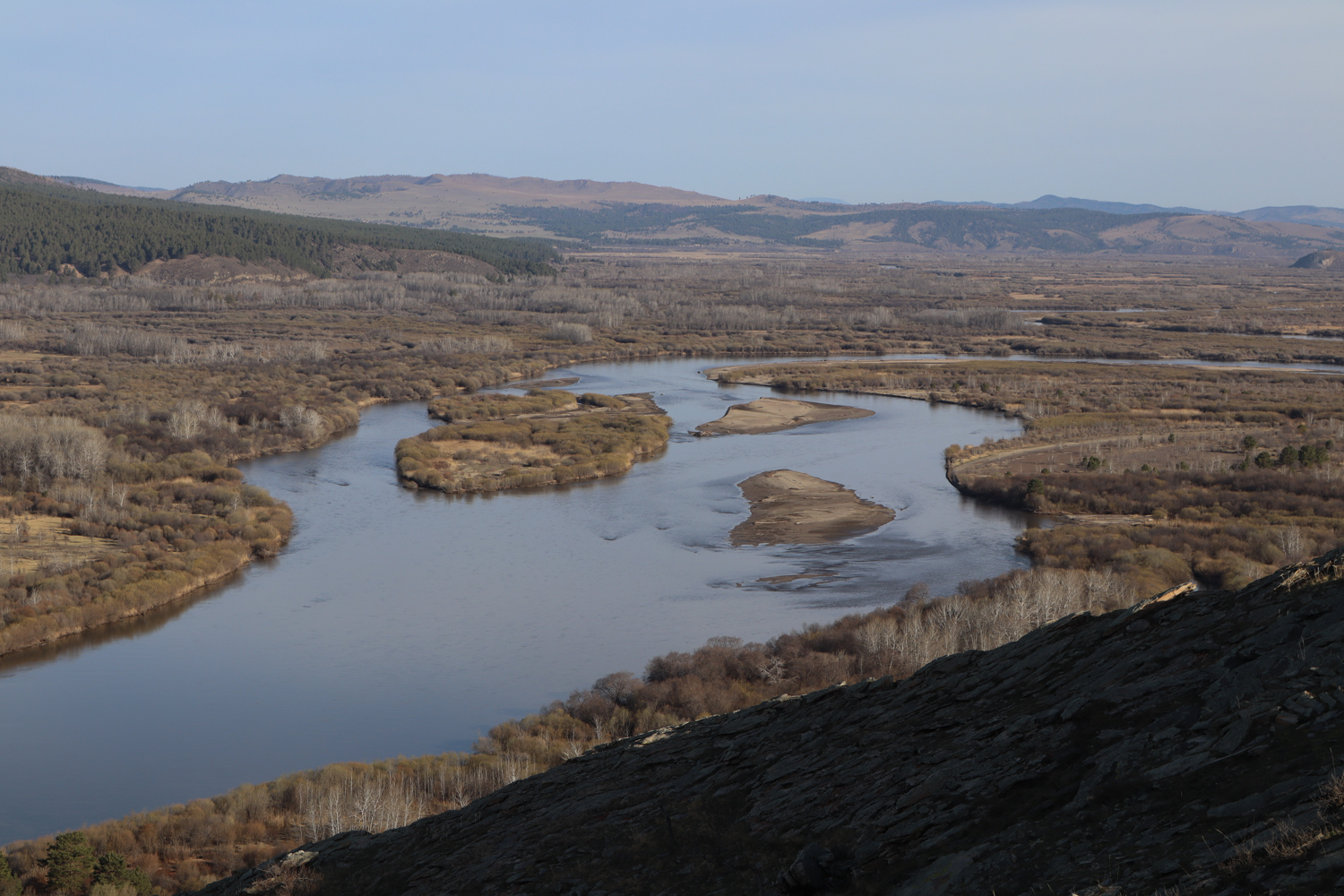
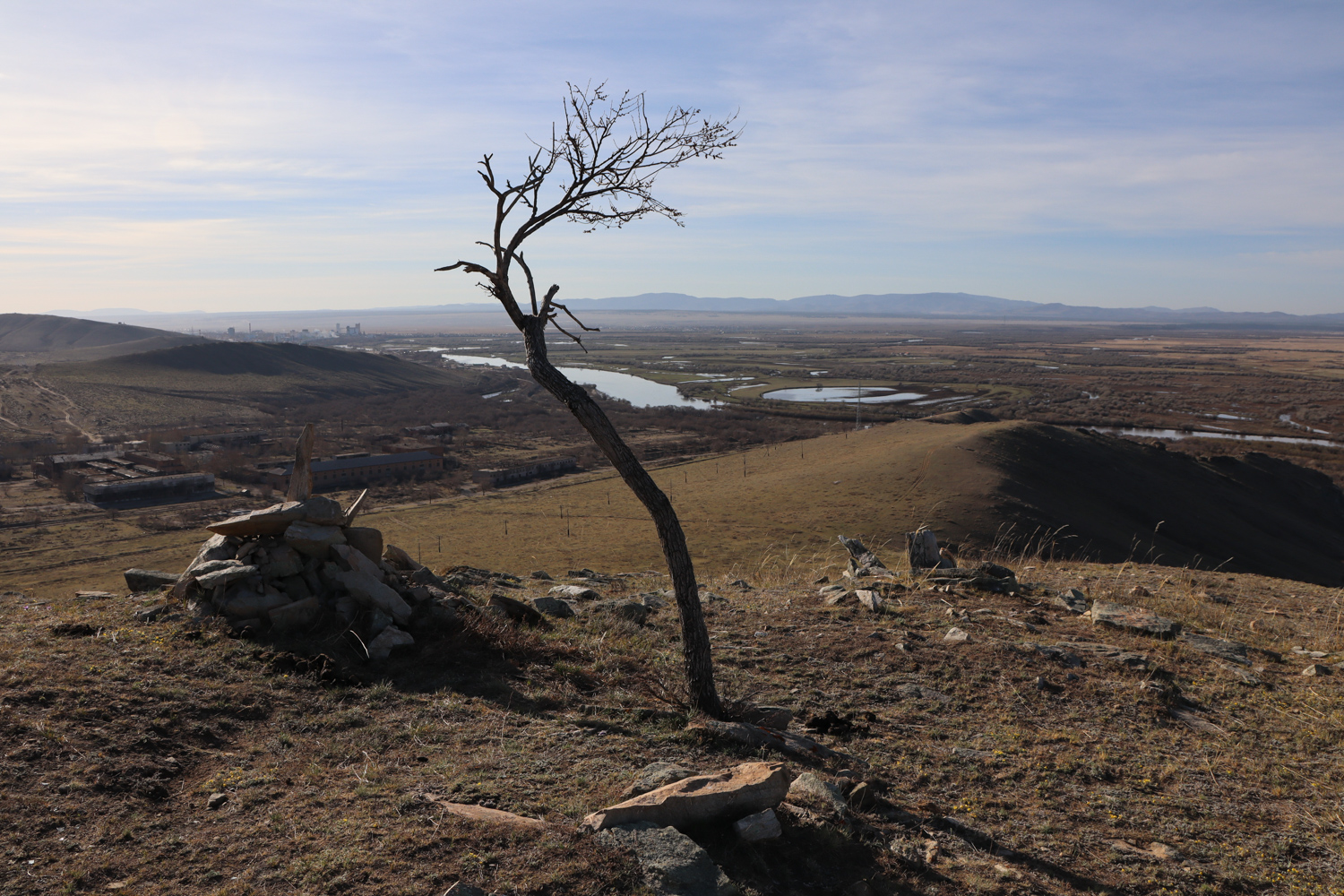
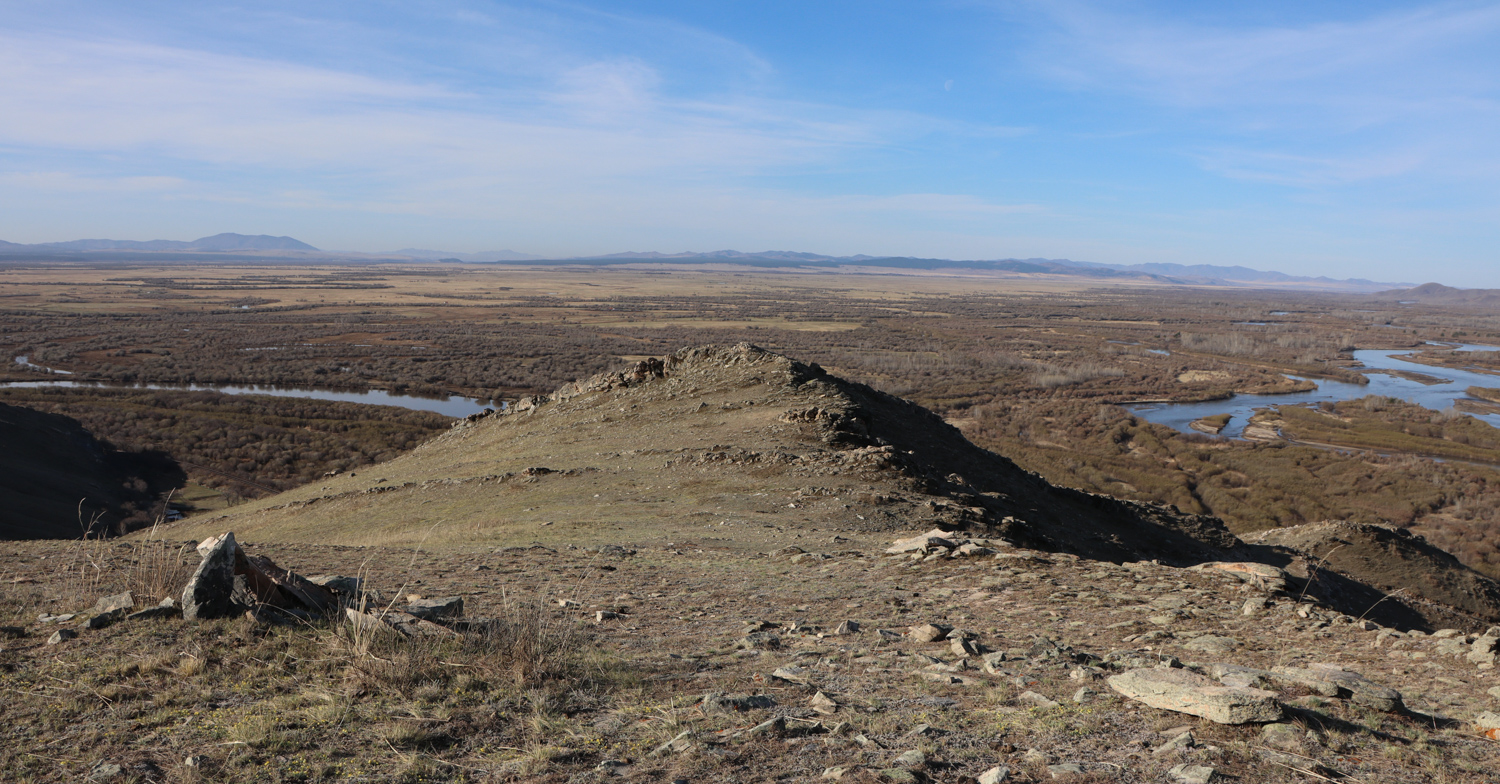
It is located 3,5 km from the Russian border. You could literally see it from the top of the hill that I climbed on.
The entire time there were several wild dogs (or at least stray dogs) following me. I am not really comfortable with the idea of being bitten by a rabid animal in the middle of nowhere to begin with, so I was deciding if I should continue towards the forest. It was quite close, but these dogs were really worrisome.
Towards the steppe
After I was done with Saikhanii Khutul, it was time to return to the city centre, take a look at the main square, eat an ice cream, restock the water supply – and continue walking.
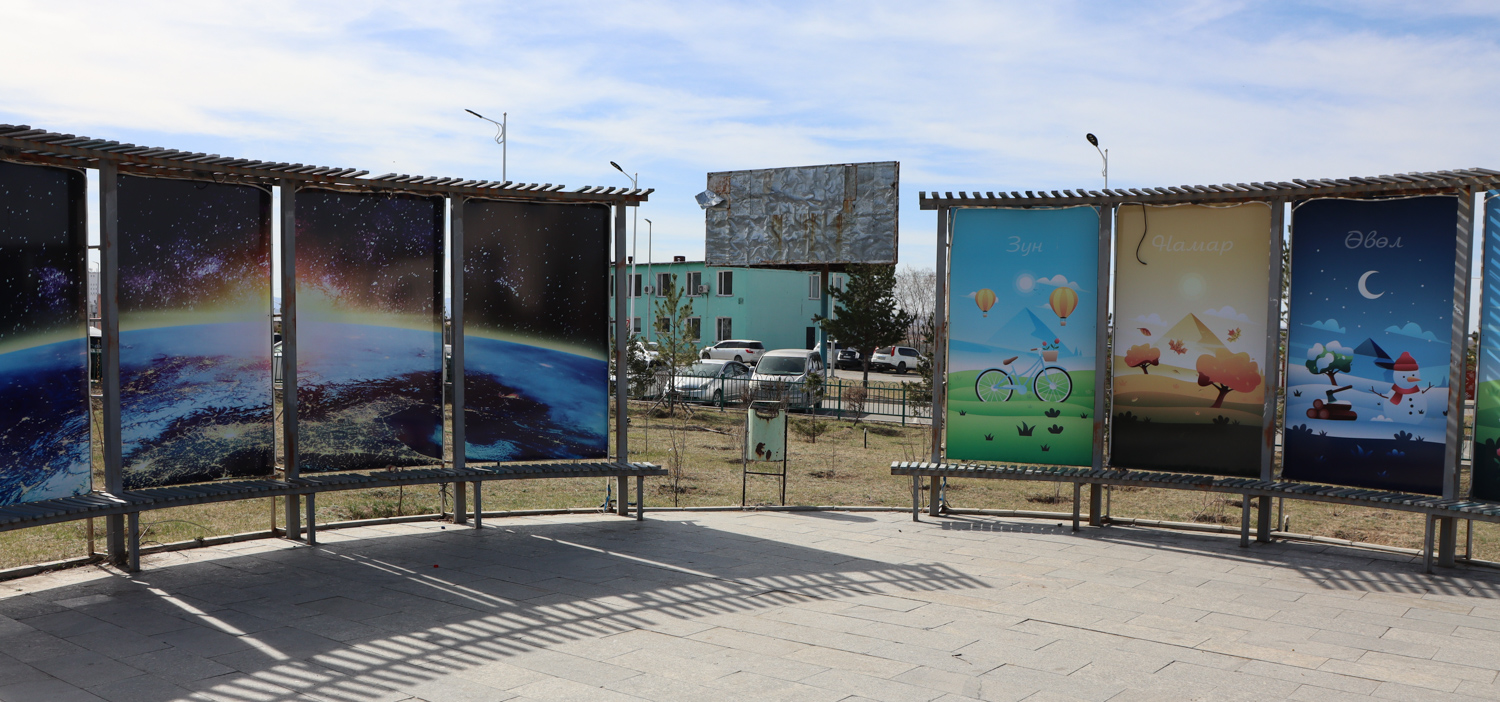
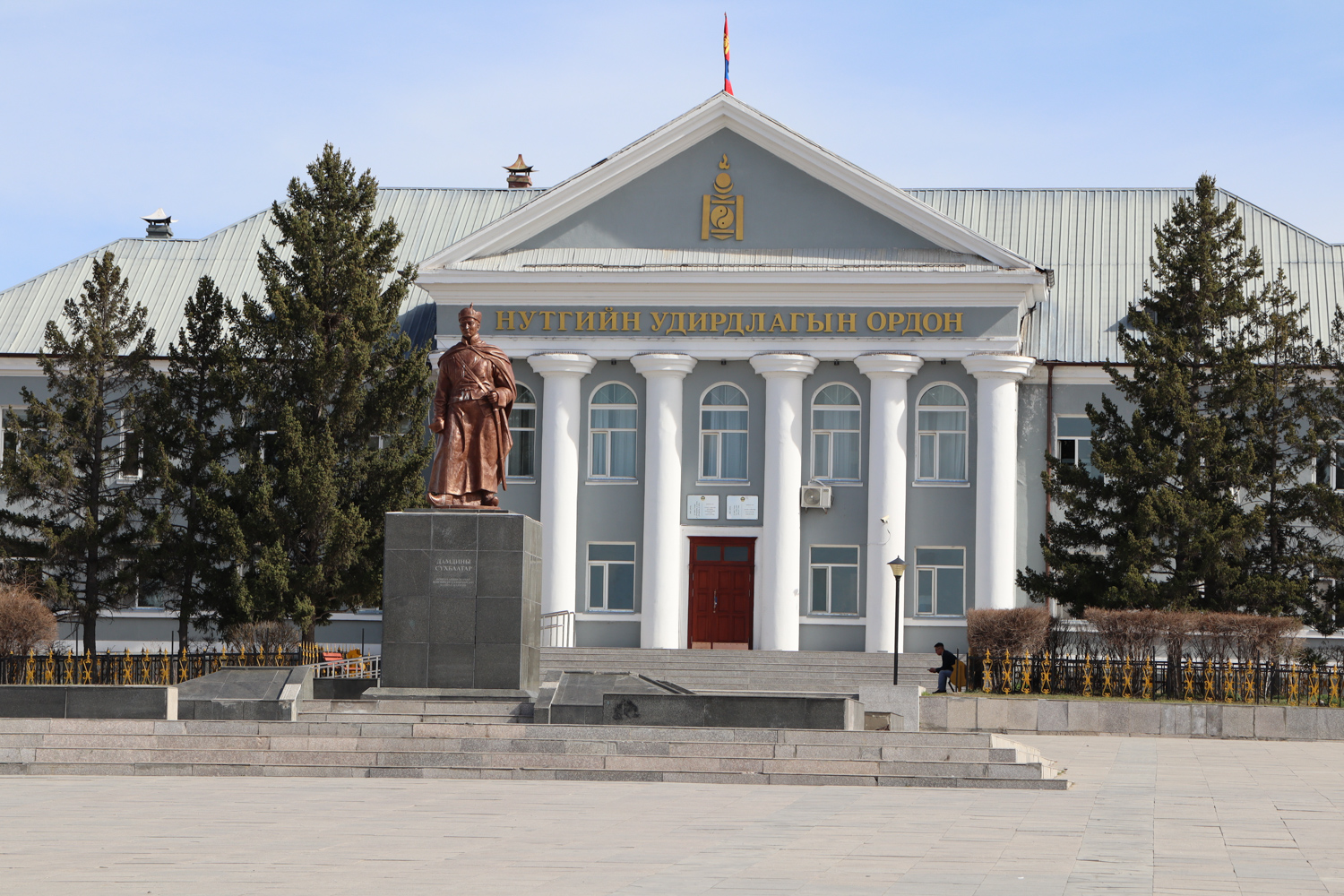
To reach it, I spent hours walking on a steppe, entirely exposed. There are almost no trees, bushes or anything there.
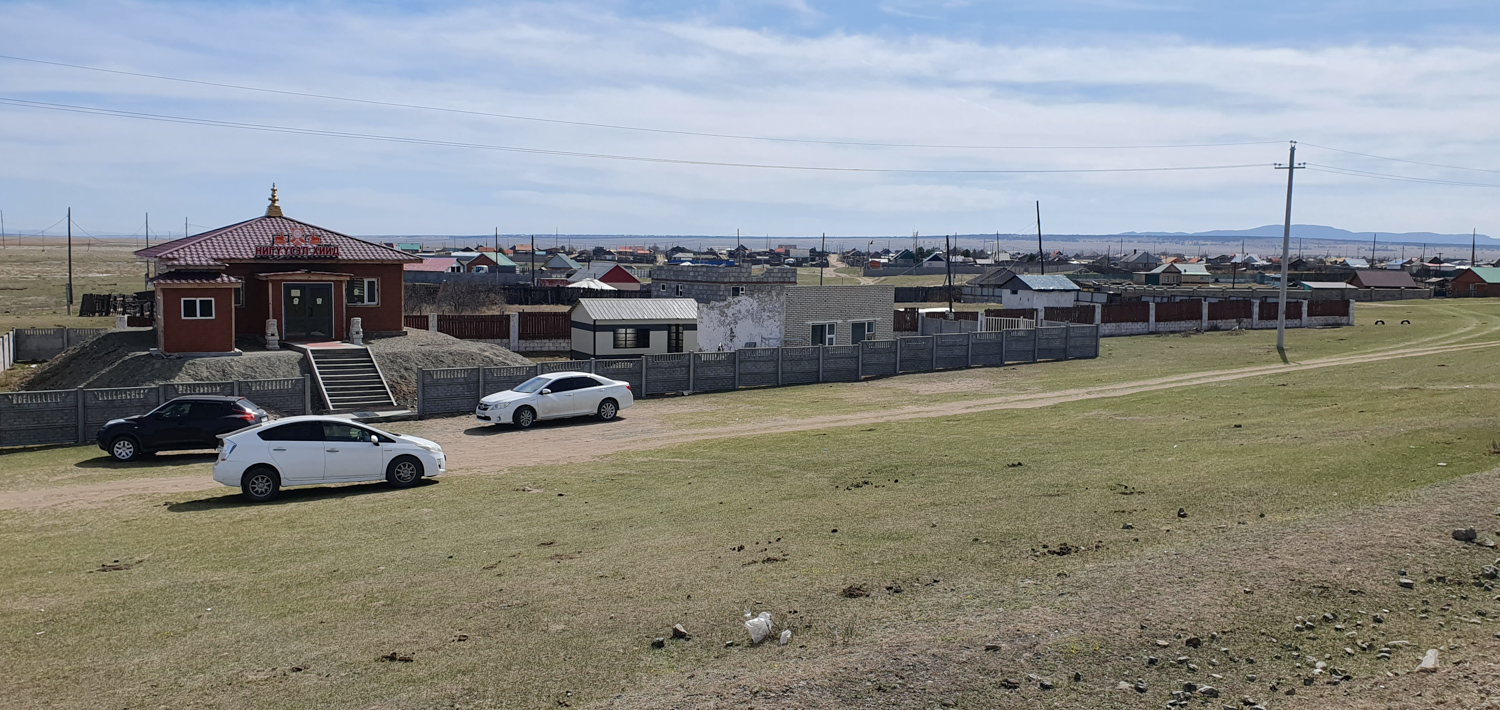
The next step was going to the other side of Sukhbaatar, visiting the Eej mod tree.
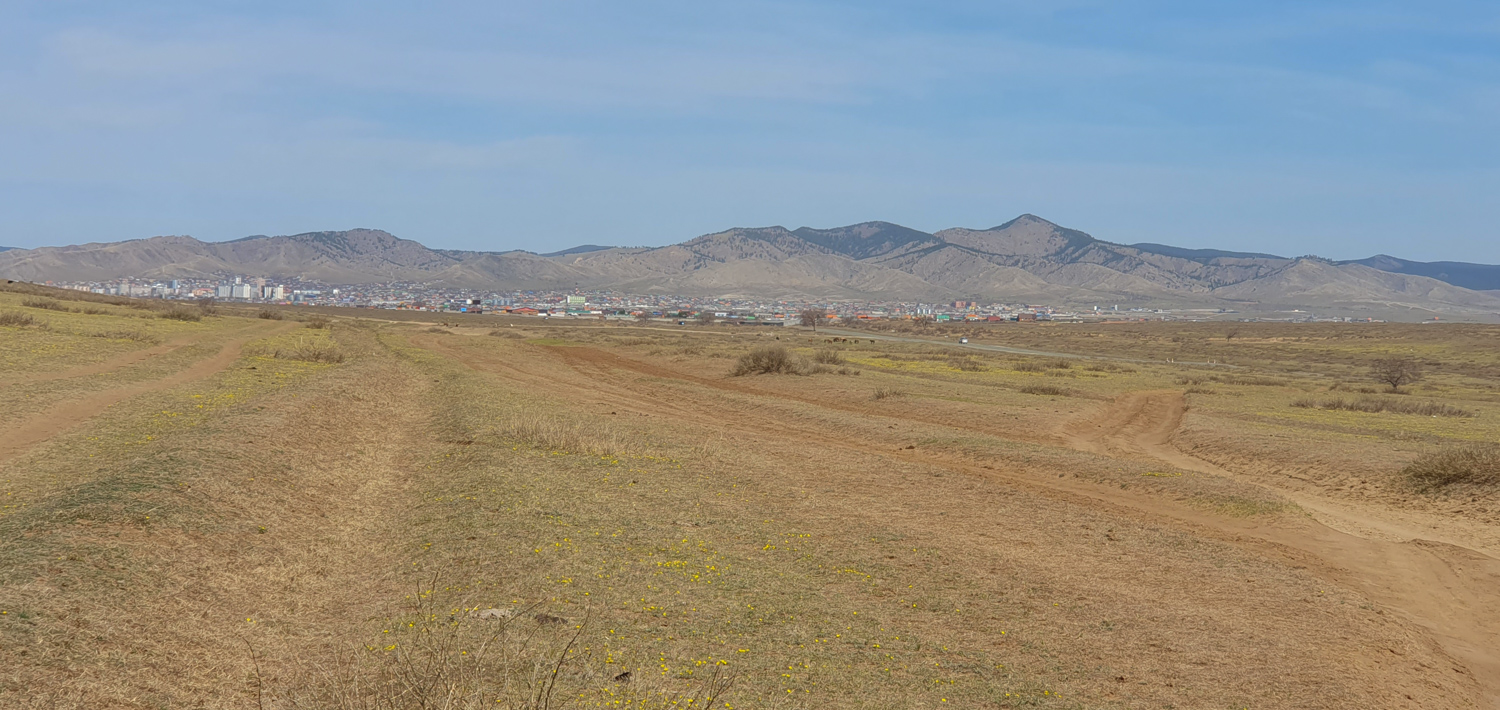
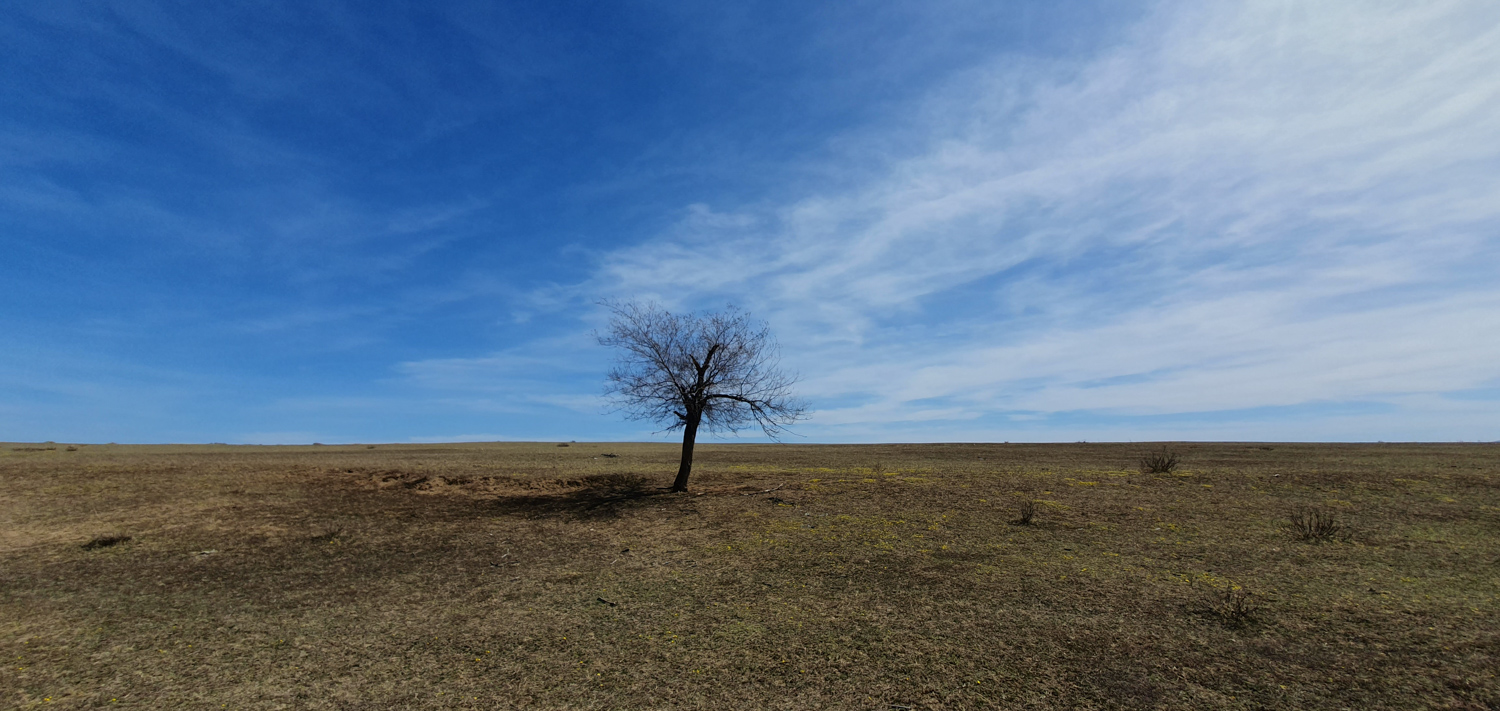
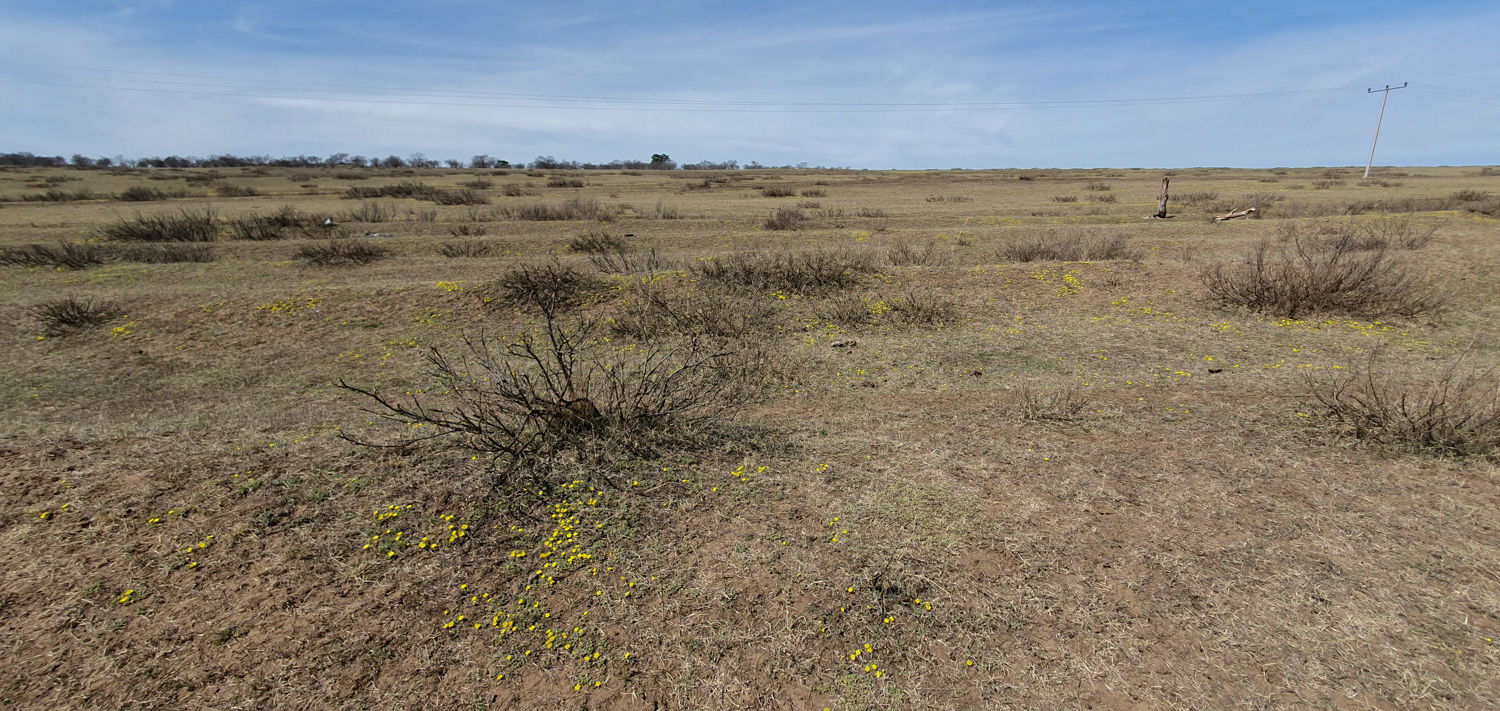
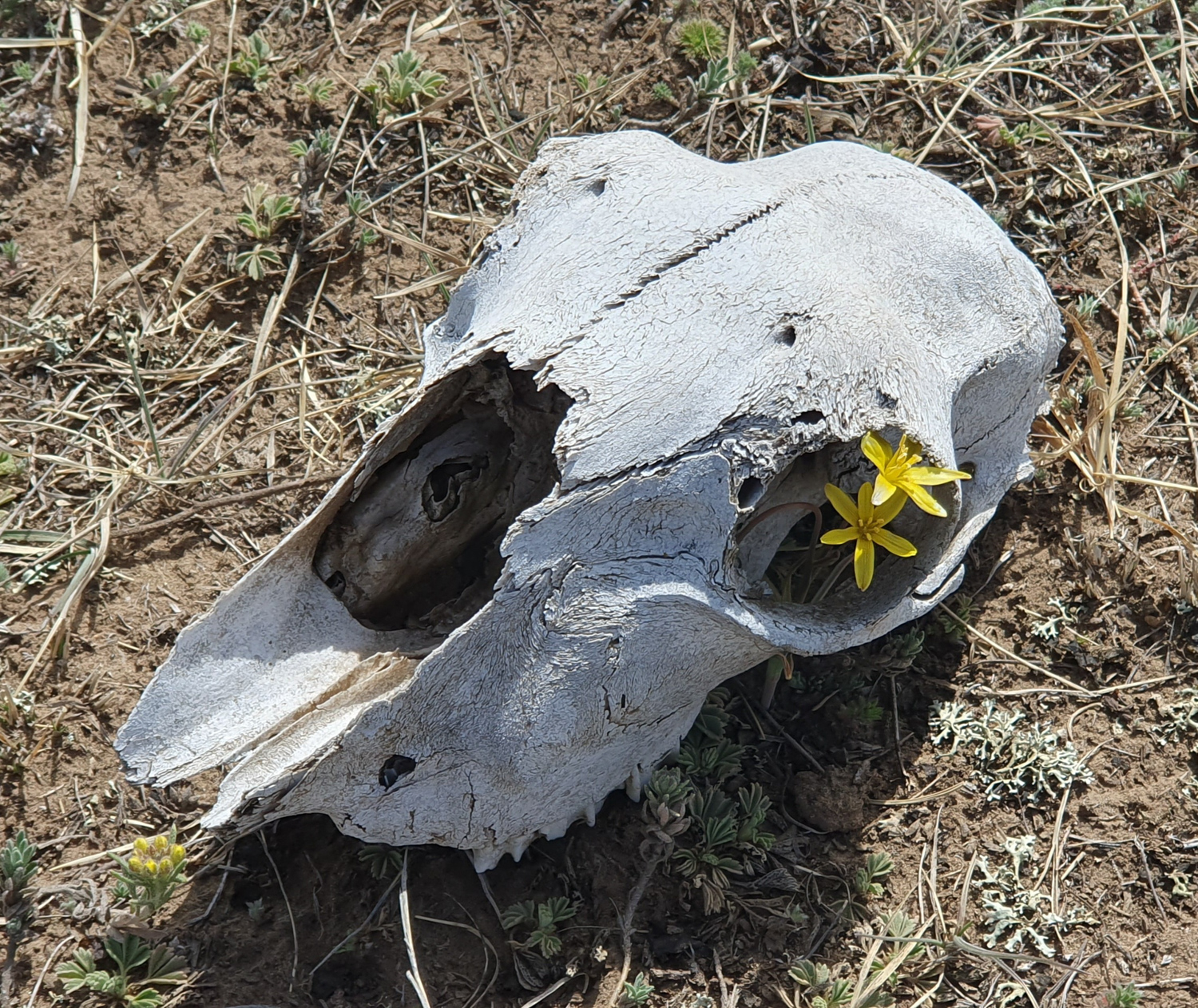
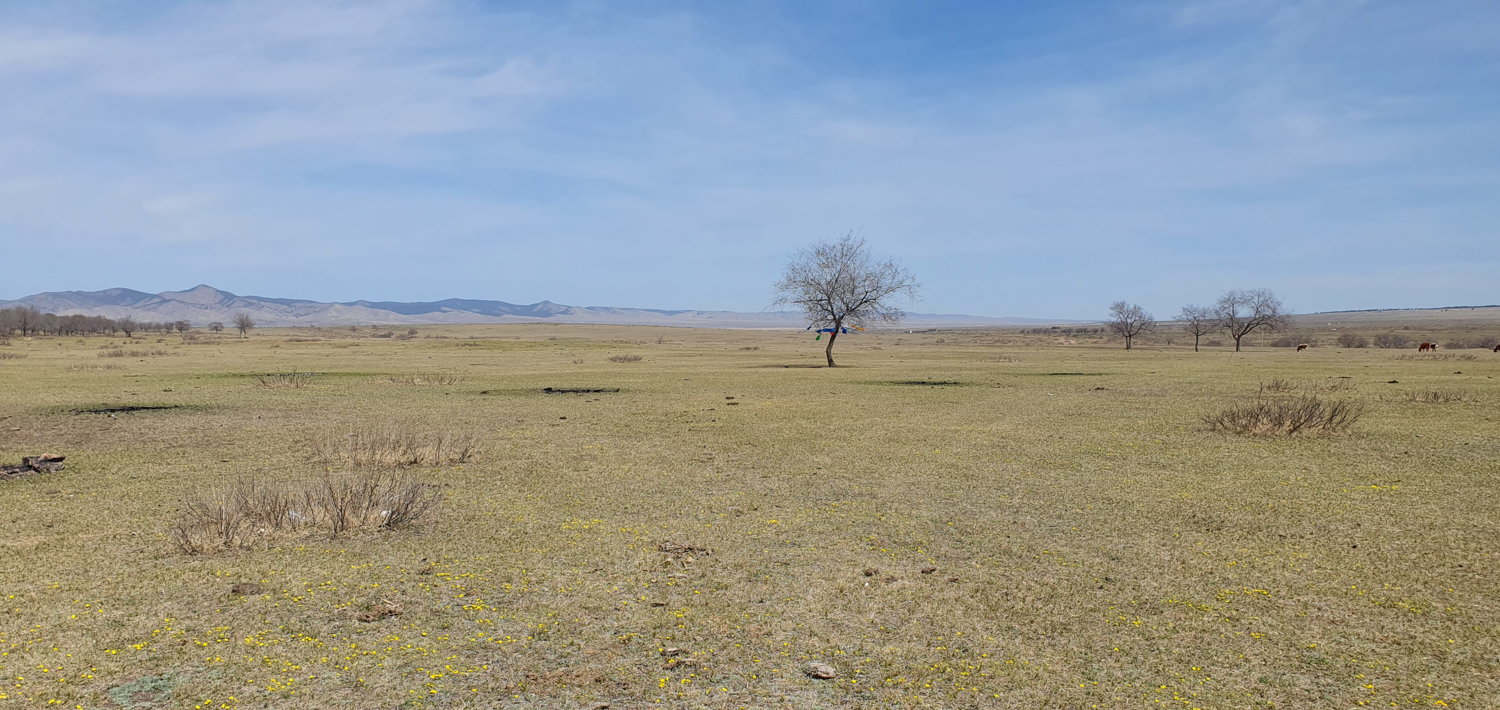
Just plain steppe. It is extremely comfortable to walk on. I would say that it is the best surface I strolled on. It is sandy, with grass, and it was quite dry that day.
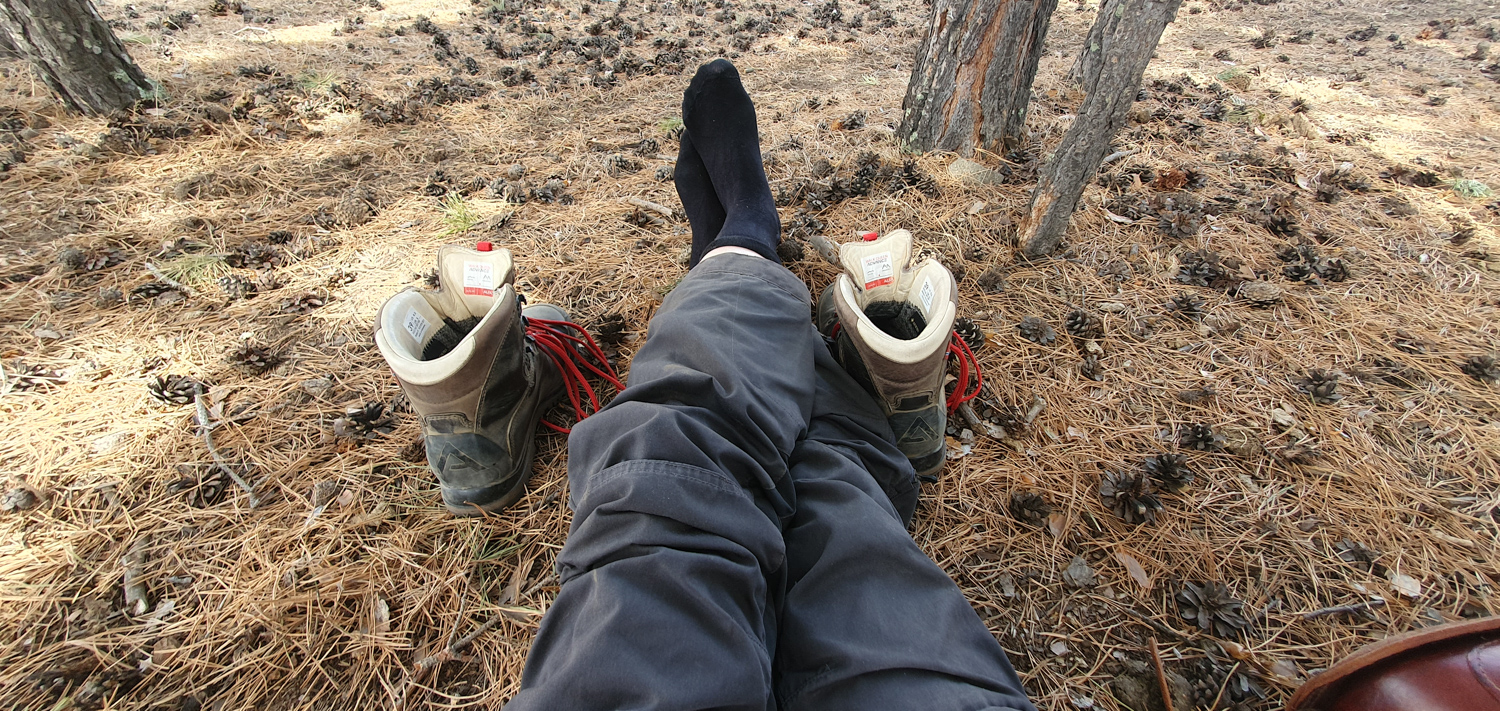
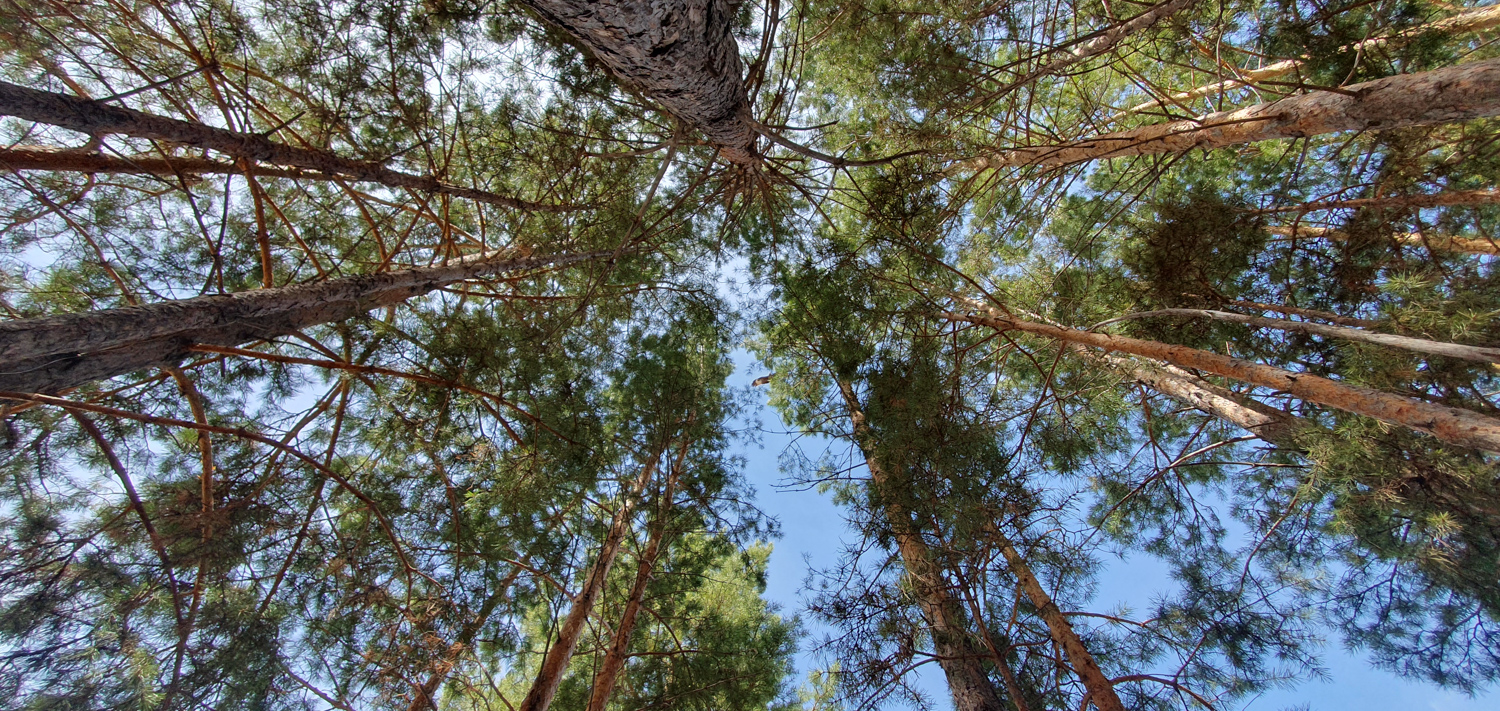
Near the Eej mod lies a tiny grove. It works like a charm when a heavy walker decides to sit down and have a moment of peace in the middle of nowhere.
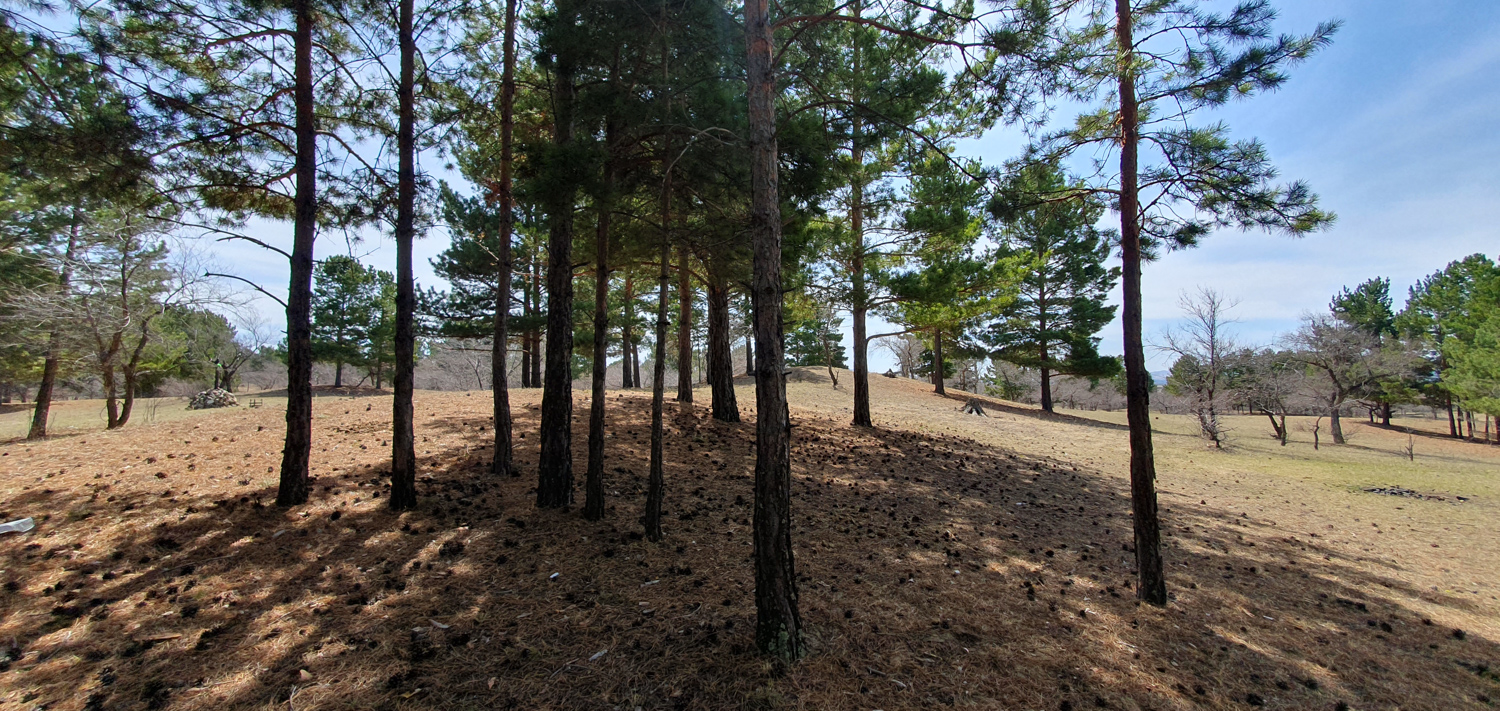
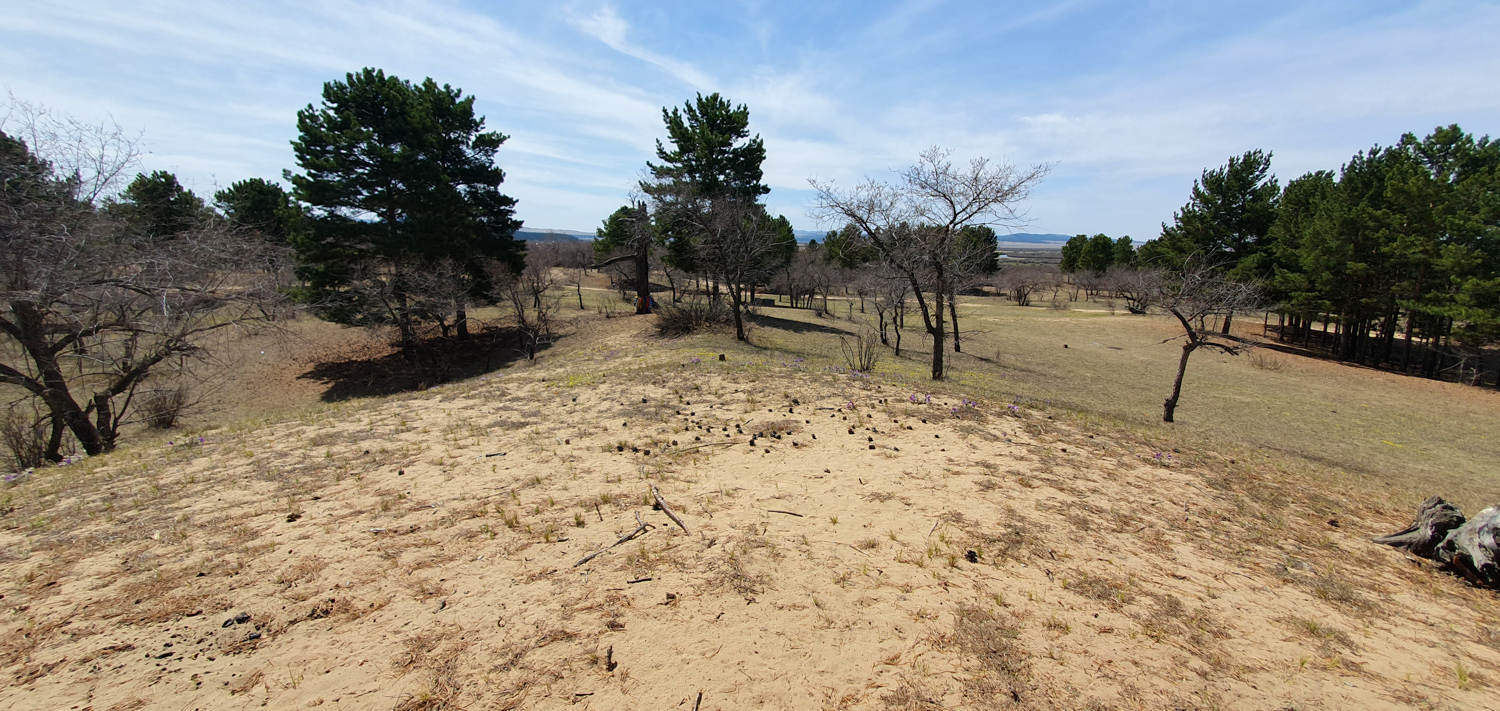
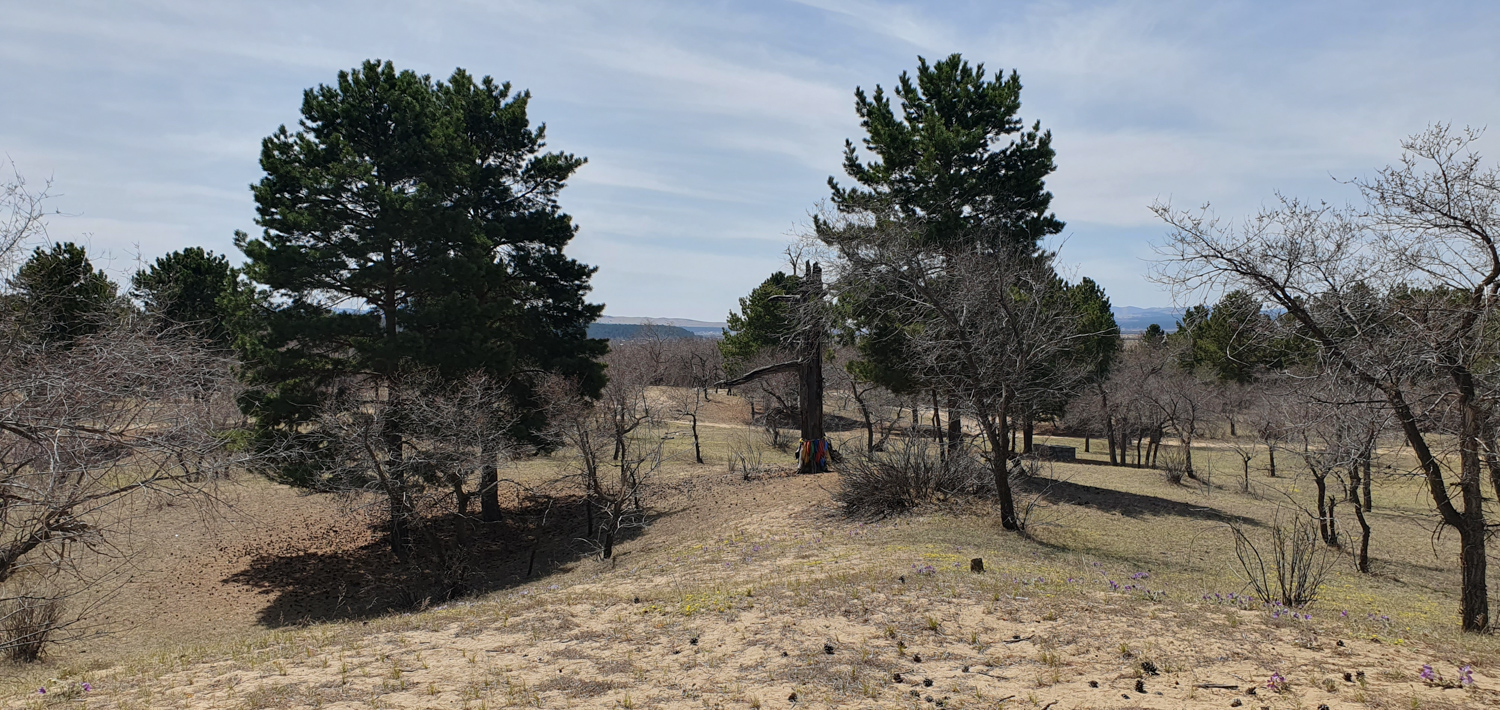
Eej mod tree
Eej Mod, or “Mother Tree” is deeply rooted in Mongolia’s ancient shamanistic traditions, Eej Mod is far more than a simple tree; it is a place of worship, a site of pilgrimage, and a powerful symbol of the living connection between humans, nature, and the spirit world. Long before Buddhism reached Mongolia, nomadic peoples were making offerings here, seeking blessings from the spirit believed to inhabit the tree.
For centuries, shamans from across the country have gathered at Eej Mod to perform rituals, call upon the tree’s power, and enter trance states to communicate with spirits. Visitors – whether shamans, local herders, or curious travelers – are greeted by the flutter of blue silk khatag scarves tied to branches, each representing a prayer or wish. Offerings such as milk, vodka, butter, matches, tea bricks, and even miniature solar-powered prayer wheels are placed at the base of the tree. The surrounding fence, remarkably, is built from tea bricks, a tangible blend of spiritual symbolism and local creativity.
The rituals here follow a deep tradition. Many pilgrims circle the tree three times while casting offerings, while others place their heads into the hollow of the tree stump to receive a special blessing. Shamans may drum, chant, and run around the tree to invoke its spiritual presence, creating an atmosphere filled with the scent of incense, the sound of rhythmic beats, and the cawing of ravens overhead.
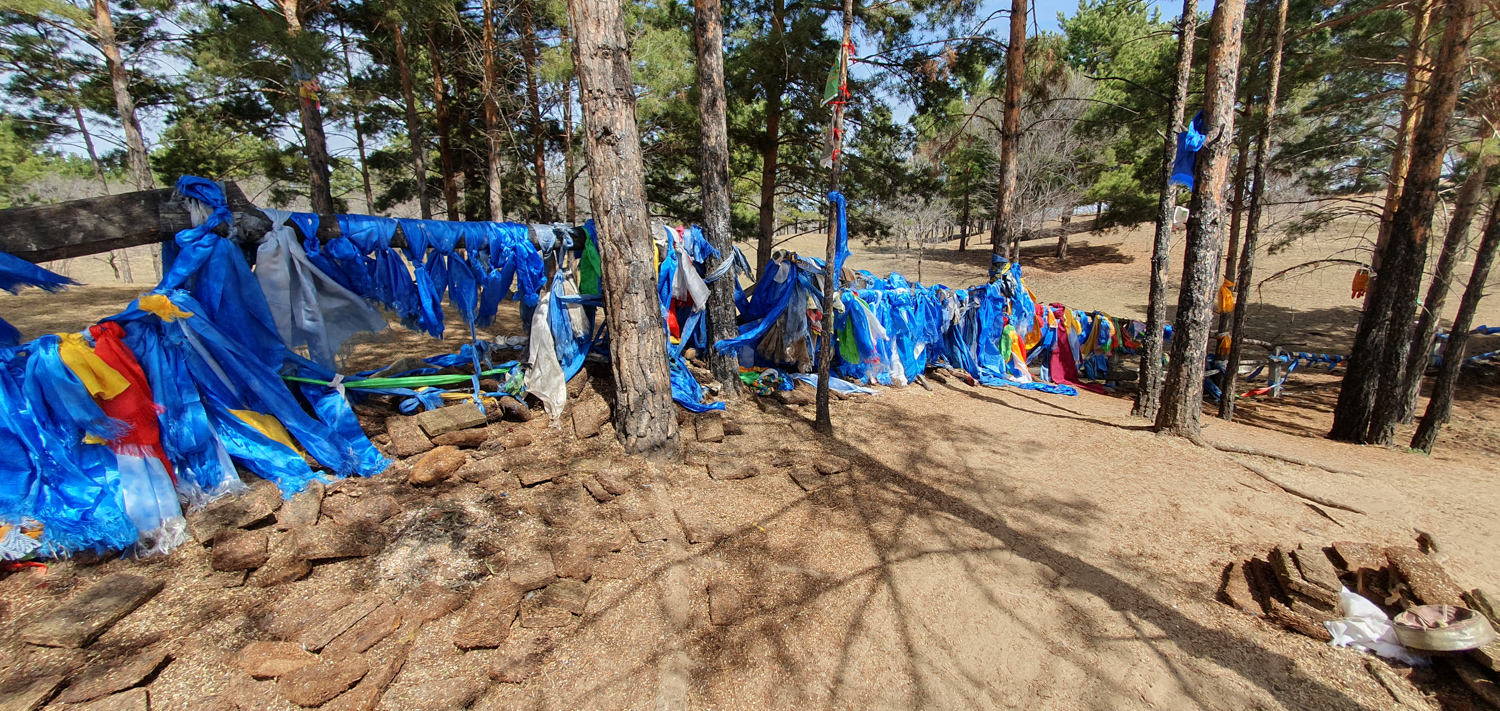
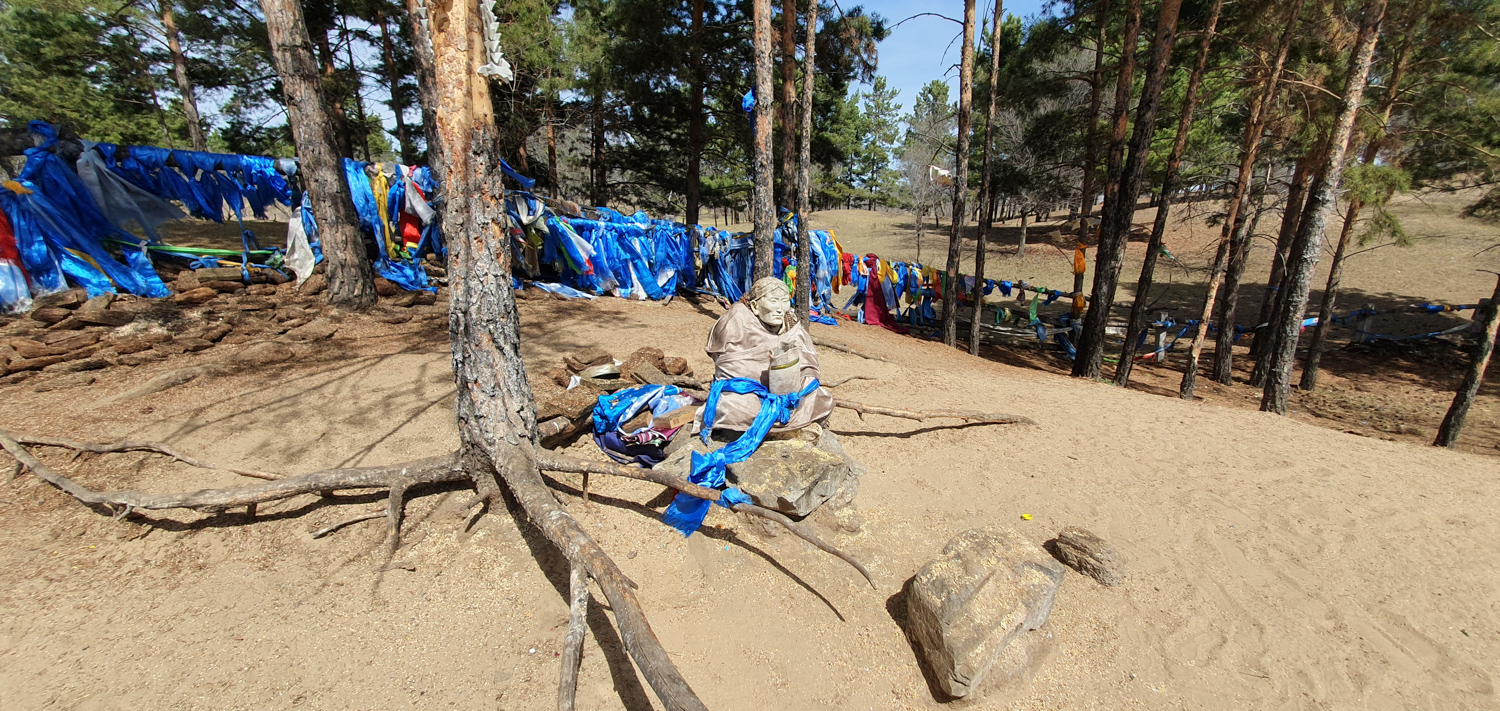
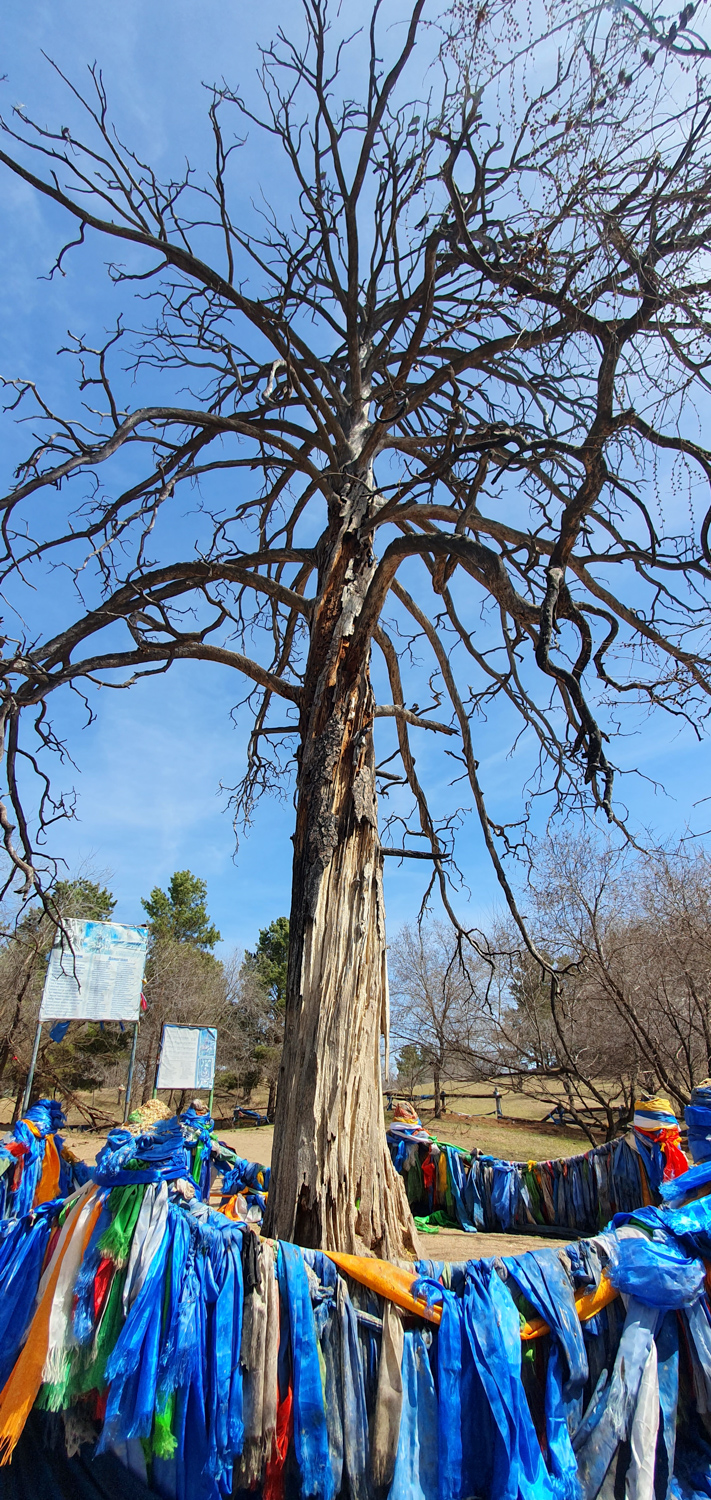
Yet the site has faced hardship. In 2015, a fire caused by incense destroyed most of the original Mother Tree, leaving only its stump. Despite the loss, devotion has not diminished. The stump remains draped in scarves and butter offerings, and nearby trees have since been elevated to sacred status. A traditional Mongolian ger stands near the shrine, continuing to anchor the site’s ritual life.
The spiritual energy here draws not only Mongolians but also pilgrims from Japan, Korea, and China, creating an international circle of devotion. The site’s blend of shamanism and Buddhism reflects the spiritual syncretism that characterizes much of Mongolia’s religious life. Though modest in appearance, the Mother Tree holds immense symbolic weight, embodying the bond between the land and its people.
Eej Mod is more than a religious landmark – it is a living cultural memory. For some, it is a place to seek guidance, for others, a destination to honor tradition, and for many, simply a space to feel the quiet power of Mongolia’s spiritual landscape. Whether approached in faith or curiosity, the Mother Tree offers an experience that is at once grounded in nature and steeped in centuries of reverence.
Going back
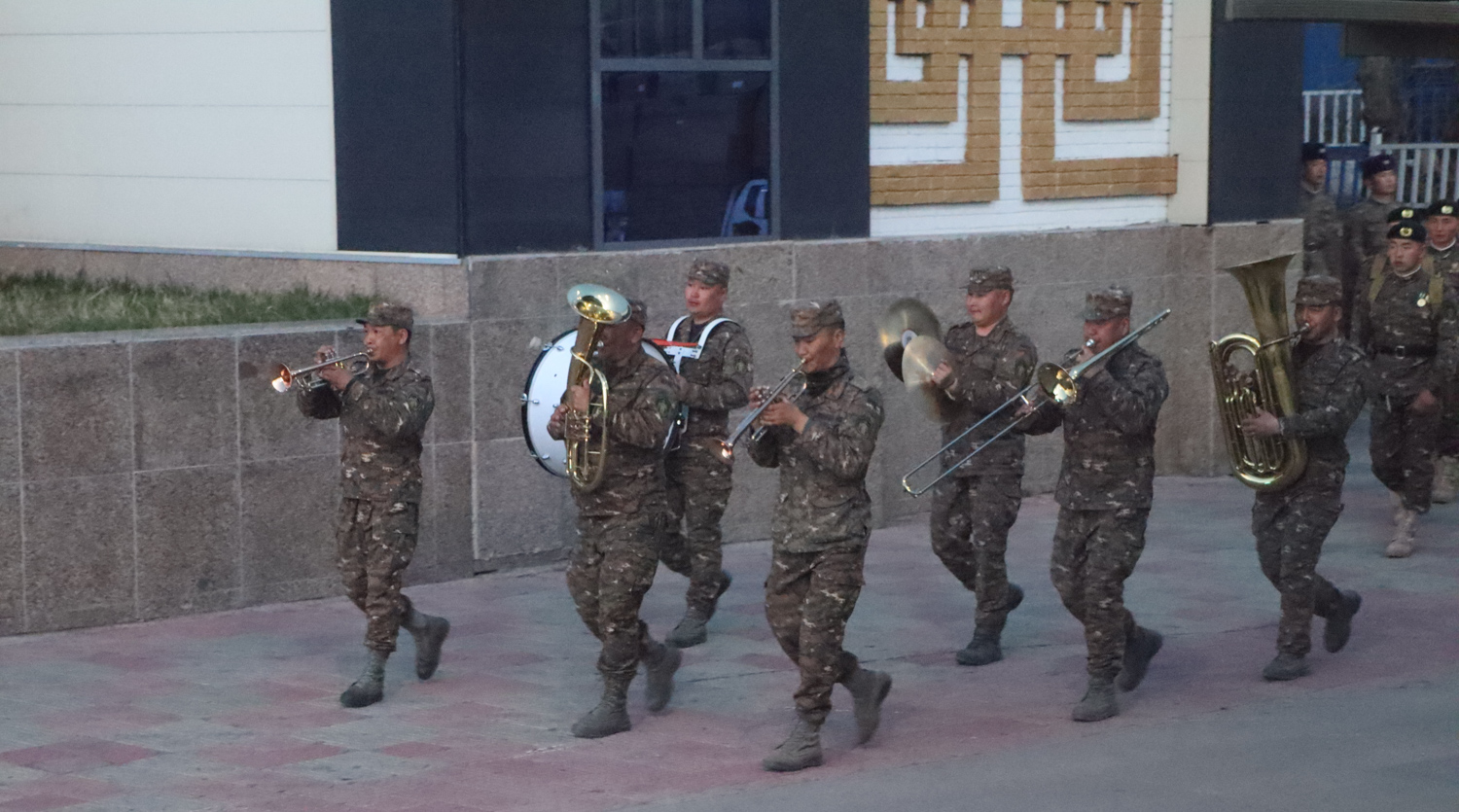
End of the walk was rounded up with an excellent khuushuur again. On the train station I have spend quite a lot of time cooling down my feet, wondering how a leg which was broken 10 months before that trip handled all this without being destroyed in the process and enjoying the train ride back to Ulaanbaatar in peace. When the train departed, a local musical corps were saying goodbye to young soldiers, going to who knows where, fighting for who knows what purpose.
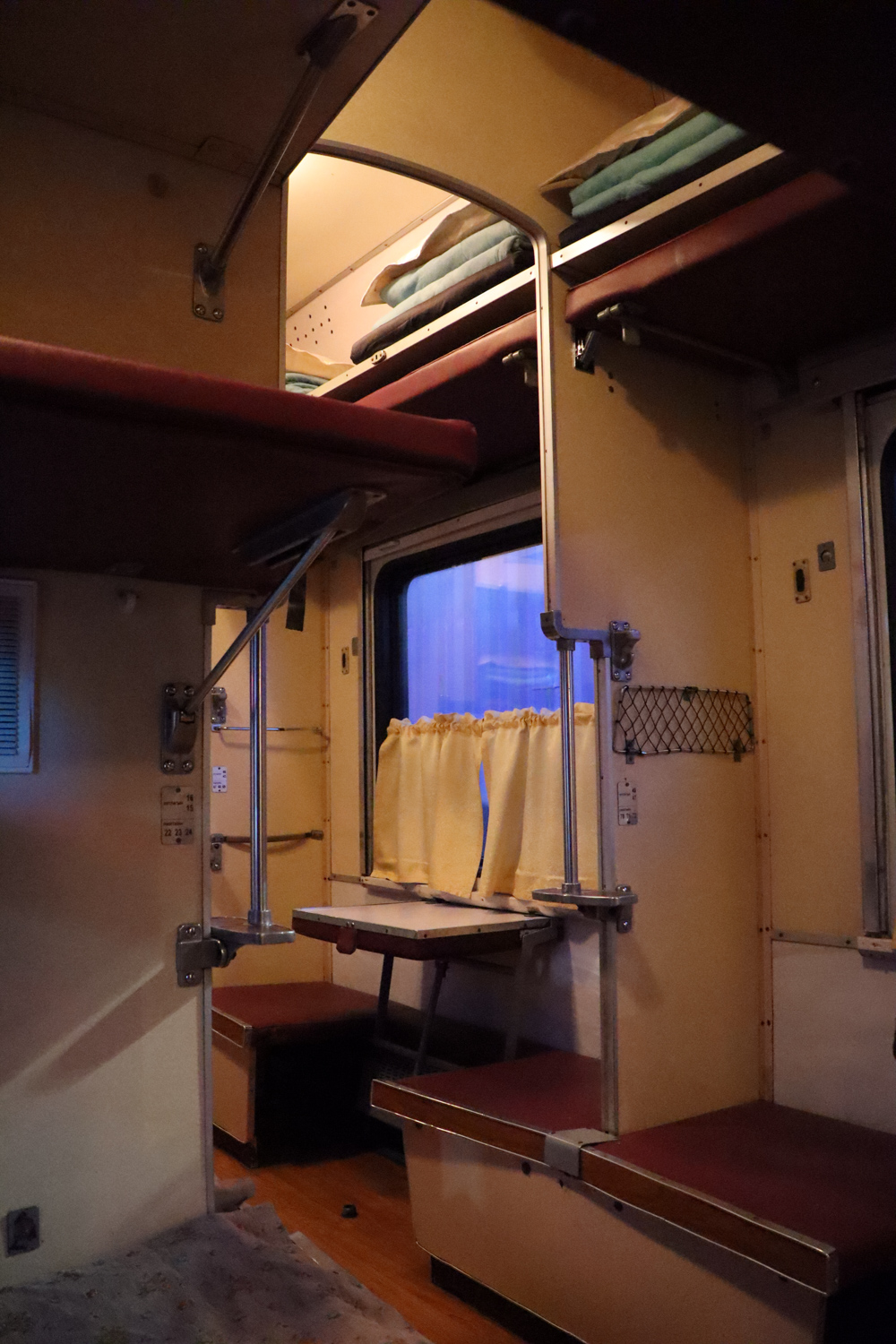
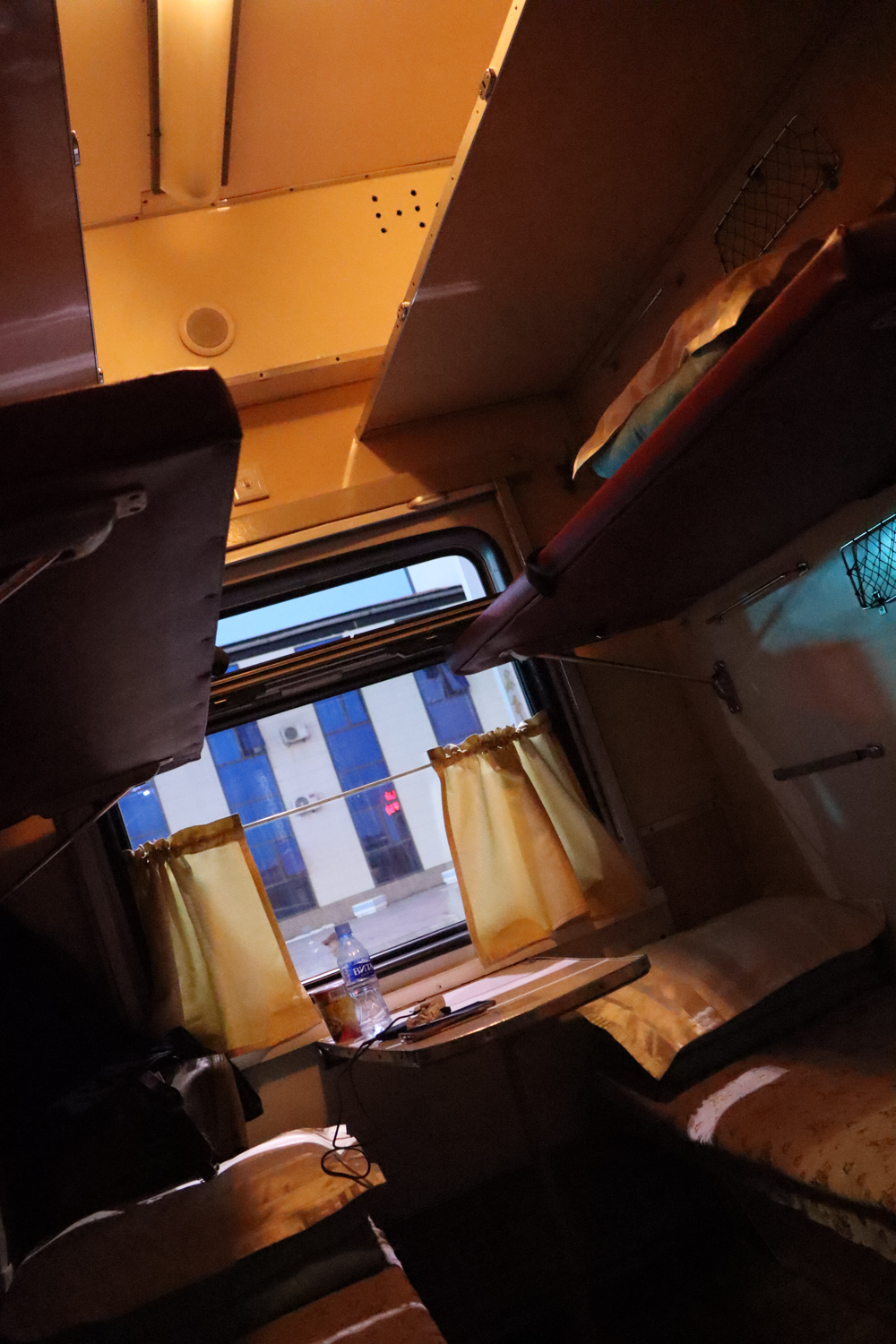
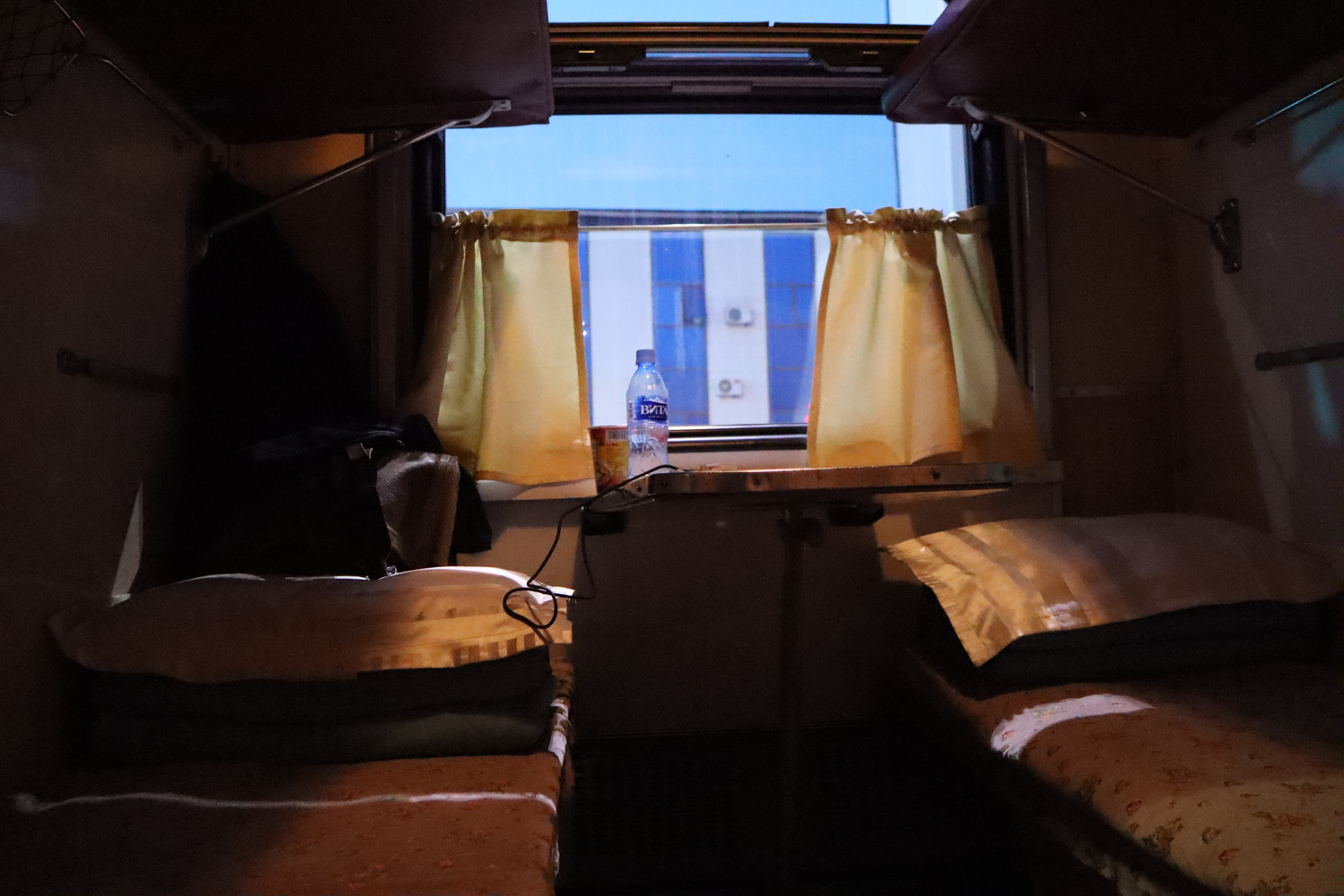
I also had a moment to take a few pics without people on the train in the frame.
The trains in Mongolia are a top notch experience for us who love trains, enjoy the socialist-regime scent because we recognize it from our childhood, and do not mind having entirely random people around us.



&media=https://svartberg.org/wp-content/uploads/2025/08/20240430_074428.jpg)