Preparation for the trip to Uzbekistan
 Ivana
Ivana
Time to visit Uzbekistan
The trip to Oman was rescheduled, and I was desperate to fly away to some land I have never visited before. I was checking several possible options and decided to go with Uzbekistan, known for its extremely rich history and culture, natural beauty and cordial attitude towards the tourists.
I chose late April, which brought the perfect weather – it was expected for Tashkent, Bukhara, Samarkand and Fergana to be consistently warm for the period; the expected daily temperatures were between 20-26C, and during the night between 10-13. After the latest 20:00 I am in my room anyway, recapitulating the stuff I saw during the ongoing day and preparing for the challenges which arrive on the next day. In reality, it was 30 degrees every day, but due to low humidity, it was more bearable than one’d expect.
Sunup around 5:30 and sundown around 19:00 give me a lot of time to explore; over 13 hours of sunlight with low rain probability sounded very useful. I walked, and I walked a lot.
People & culture
Flying to the Faroe islands for a vacation is like leaving Norway for a trip to a nearby archipelago. The culture is almost identical; the only difference is the language, which even Norwegians residing along the southern coast are able to understand. Landing in Mongolia, on the other hand, came with full blown cultural differences. Neither are better or worse; Norwegians and Mongolians are products of their histories and cultures, and therefore just different and it is reflected in the best possible way while visiting Mongolia. Norwegians are famously reserved and distant, while Mongolians would approach you on the street, asking you directly where are you from, what are you doing 6 000 km away from your home.
I am not a fan of generalization and reducing millions of people of a nation to a few superficial and reductionist denominators, but all I did read about Uzbek people really boils down to the locals being: direct, cordial, inviting, curious. Proud to be good hosts. Ready to go the extra mile when it comes to helping others. This reminded me heavily of Mongolians. The only differences are their respective religions. I came to Uzbekistan open minded and ready to absorb everything that the day may bring, and I was rewarded by feeling safe and respected.
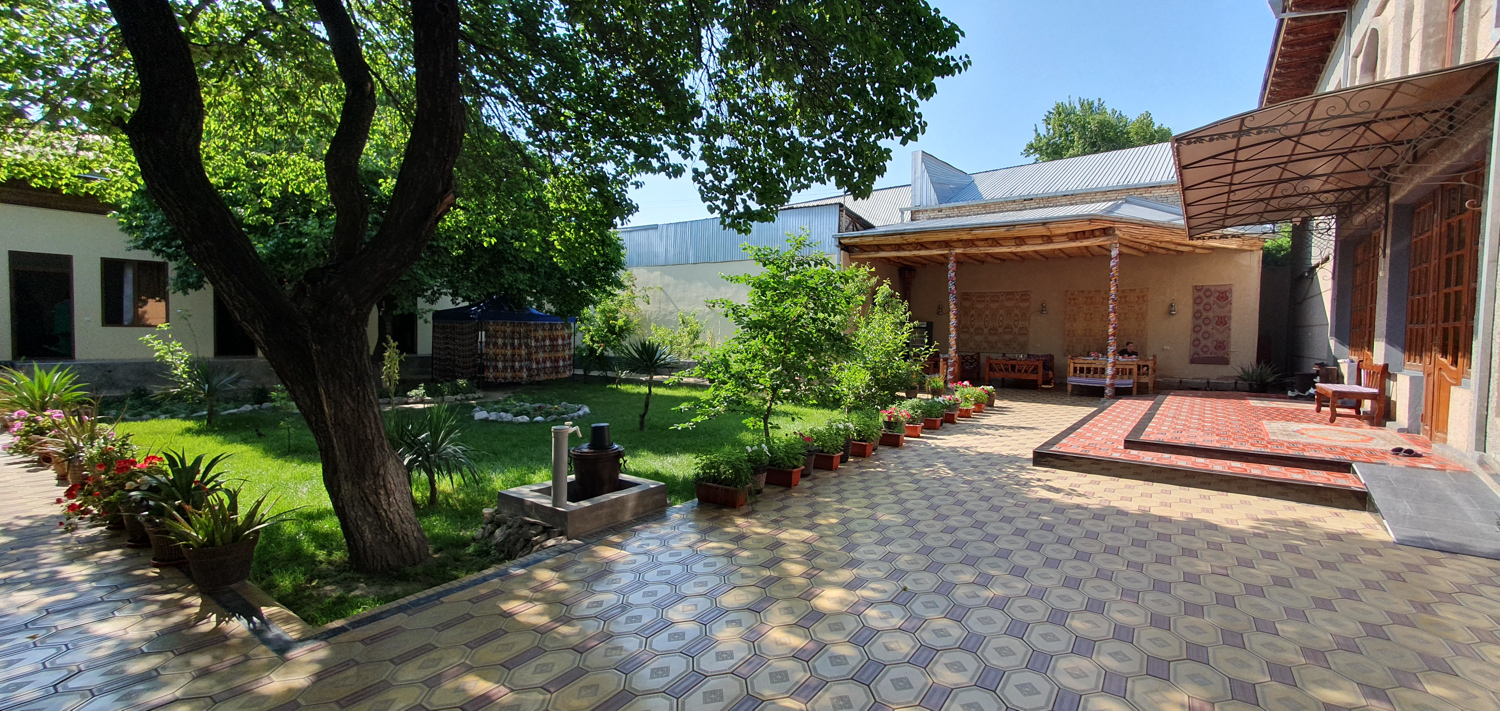
Uzbek food
Uzbek food is a universe for itself. I have been reading about it for a long time and I was looking forward to it immensely. The food text needs to be entirely separate, because it deserves tons of books, not just a small paragraph 
Language barrier
The Uzbek people speak the Uzbek language, from the Turkic branch of languages. Due to historical connections with the Soviet Union, their second language is Russian. Literally everyone is fluent in Russian. And I really do not mean “iffy Russian with a strong strange accent” – no, the Uzbek sound like the Russian language is their native.
That being said, it’s good to be aware that the English language knowledge is very limited among the population. There were only 2 Uzbek people who spoke fully fluent English while I was in Uzbekistan, and both belong to the very young age group of under 25, which grew up with the internet and way more exposure to pop culture compared to their parents.
Older people cannot communicate in English at all. It is also very disrespectful to expect from everyone in every country to speak it like a native to begin with. My strong advice would be to translate some basic sentences, phrases, numbers and similar stuff to Uzbek and learn how to pronounce them. Start with “salam!” (“hello”) and “rahmat!” (“thank you”), as this is very appreciated by locals. It clearly implies that you showed interest in local culture and want to be friendly with the hosts.
For me it was very helpful to have a Croatian background. Croatian and Russian share similar vocabulary, with different pronunciation and accentuation, but if I speak in Croatian, and Uzbek speak in Russian, we can have a simple conversation running smoothly enough.
The Russian cyrillic letter system is omnipresent, even though it has been slowly but actively replaced with latin letters. I am very lucky to read the Russian cyrillic letters almost fluently (after some point I assume or crunch out from the context) as this helps tremendously with tickets, street names and other practical stuff.
What the Uzbek lack in vocabulary is being compensated by their enthusiasm to ask questions and show interest irrespective of communication barriers. If you are ordering food, they will pull the Google translator out and start the microphone, just to be sure you’ll get the food you want to.
Personal safety
While visiting Uzbekistan I felt extremely safe. To the point that I was subconsciously almost actively seeking any signs of danger coming from the environment just to feed the inner saboteur. I felt very seen and noticed, despite my plan to stay within the mimicry outlines with my clothes and behaviour. The locals were starting the conversations all the time, but there was no actual threat whatsoever. I also cannot imagine what I could even do to provoke someone’s reaction with the intention to harm me. The locals are very friendly and incredibly respectful.
Uzbek cities which I visited
I visited Tashkent, Bukhara, Samarkand and Margilan. During ten full days of stay I made almost 2 000 km by trains and over 200 km by foot. There are countless attractions of religious, secular and everyday simple life’s nature to be seen, from madrasas, museums and mosques to farmer’s market stands with wolf teeth and halva.
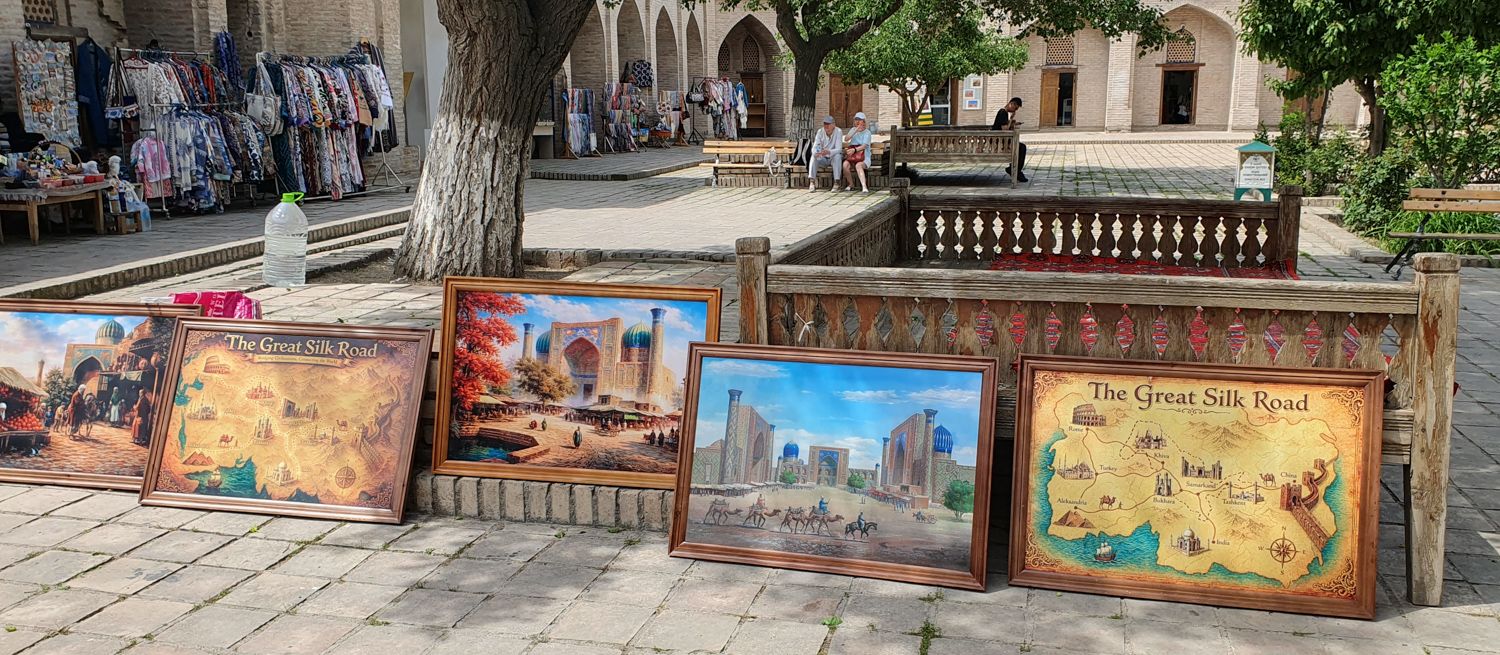
Bukhara and Samarkand have a rich historical background; they were central nodes of the Silk Road and large cultural and merchant centers of Central Asia. Just a tiny insight, as I will delve deeper in this subject later: Bukhara is 2 500 years old. Samarkand’s age is estimated at between 2 700 and 3 000 years. At that time, approximately:
- began the rise of the early Greek city states (= poleis such as Athens, Sparta, and Corinth, that shared a common language, religion, and culture but operated as separate countries)
- Assyria began expanding militarily
- Kingdoms of Israel were reigned by kings like David and Solomon
- Early Rome was founded
- in India Buddhism was being born
- In China, Confucius was defining social order
Unfortunately, they do not get enough attention. Not even sure why. The only ones I ever heard talking about these places are history nerds who know the value and importance of Samarkand and Bukhara.
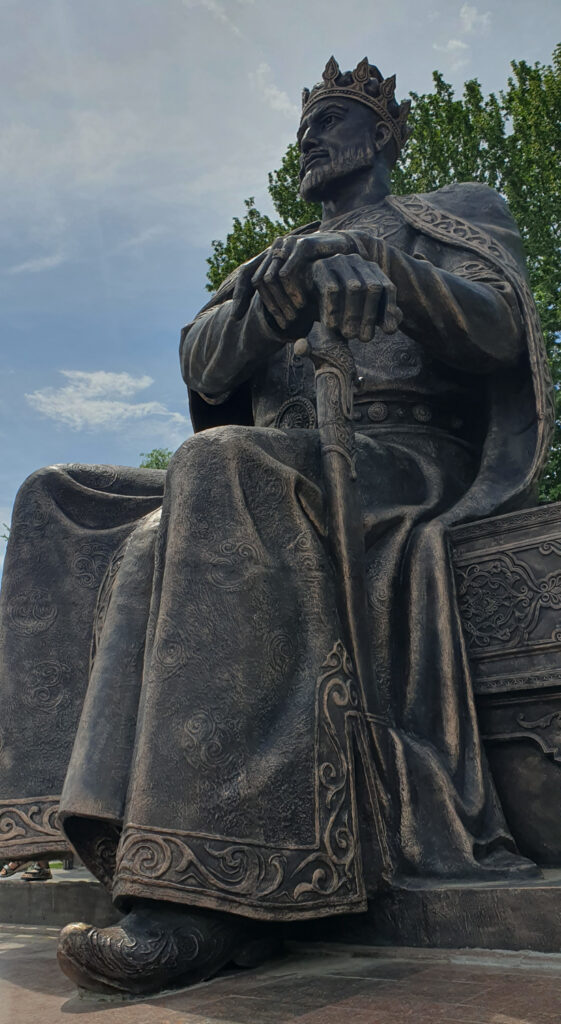
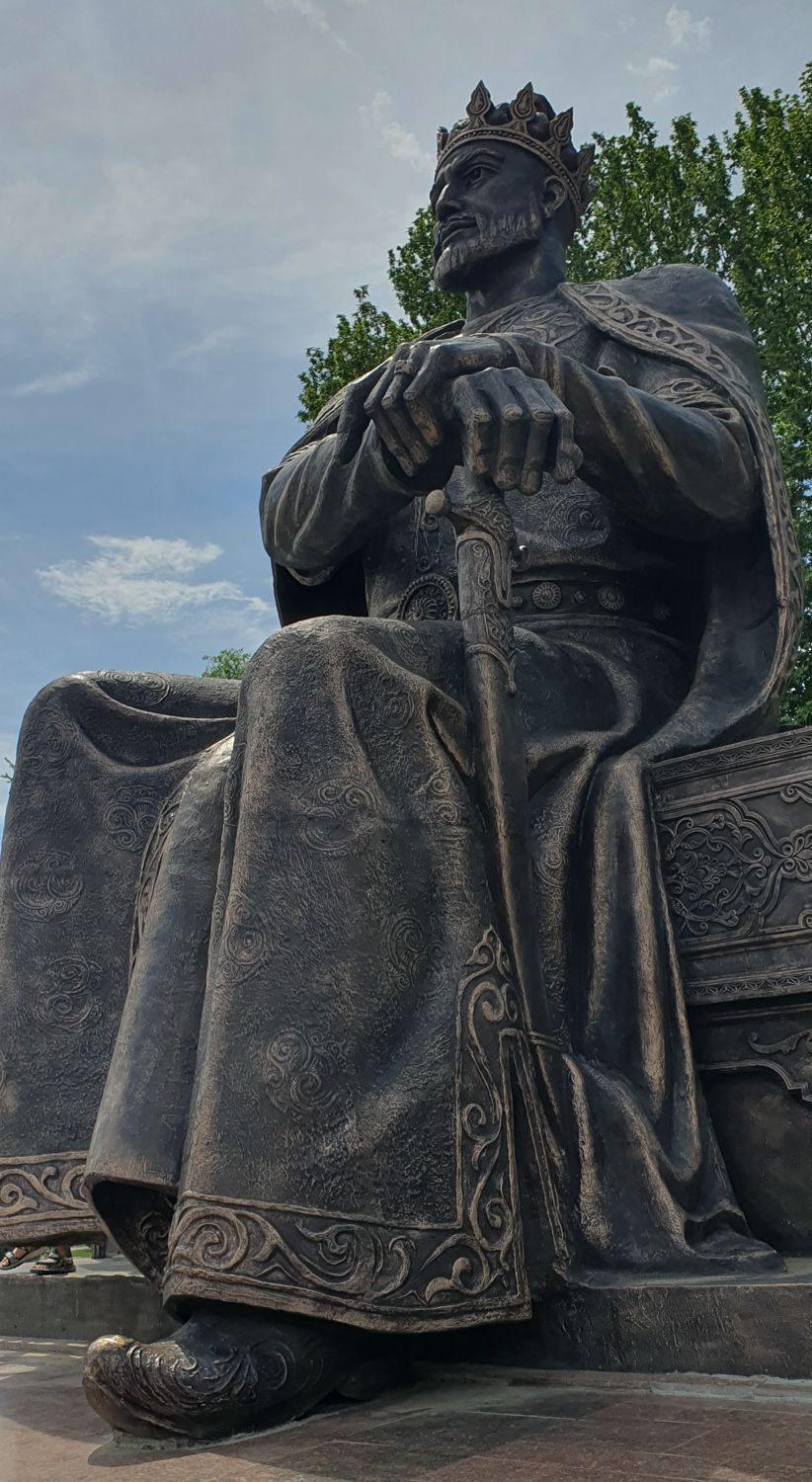
Amir Timur’s statue in Samarkand
Cultural guidelines
Uzbekistan is an islamic country. Compared to many other countries with predominantly Muslim populations, it is considered to be moderate in terms of strictness and quite secular, which is often attributed to the alliance with the Soviet Union. This means that it is not expected to be covered while walking through the cities, but common sense (and posters hanging at the entrances) demand wearing loose clothes, covered head and shoulders, and avoiding display of affection while entering religious objects and places of cultural importance.
Moving around in Uzbekistan
I made approx 1 800 km by train while exploring Uzbekistan. Trains are my favorite means of crossing distances within a country, so Uzbekistan was no exception. The tickets are easy to buy before the trip, the trains are comfortable and precise enough and if I ever go back again to Uzbekistan, I will gladly travel by train again.